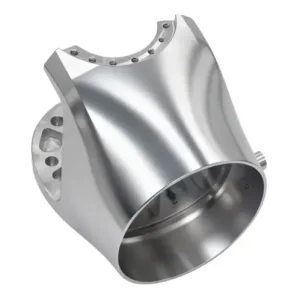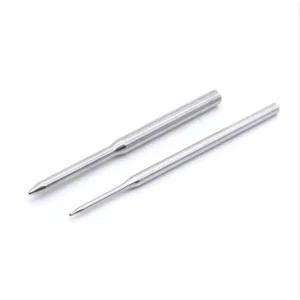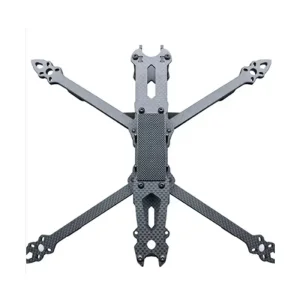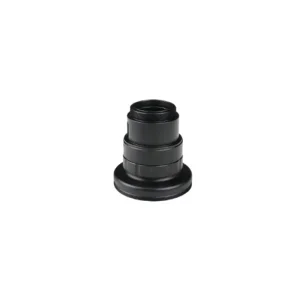
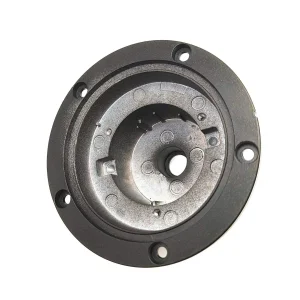
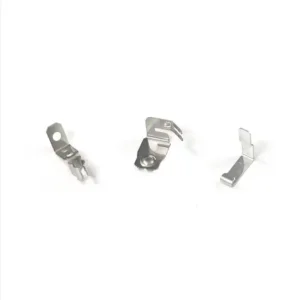
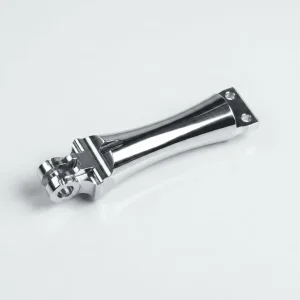
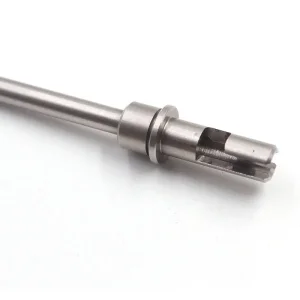
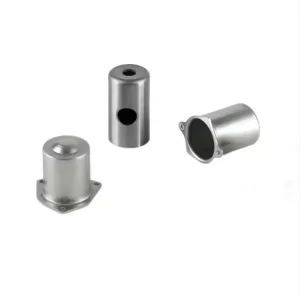
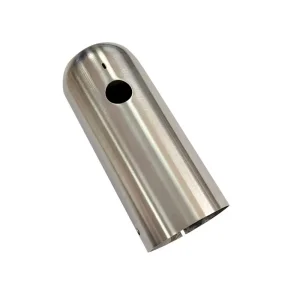
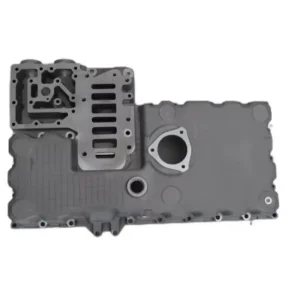
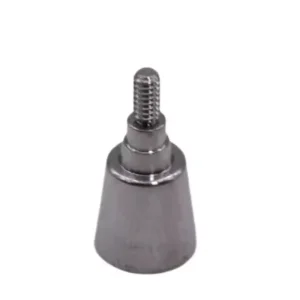
Featured Precision Machined & Cast OEM Components
The Global Commercial & Industrial State of 4-Axis Machining
In modern high-precision manufacturing, 4-axis CNC machining bridges the gap between conventional 3-axis prismatic milling and fully continuous 5-axis sculpting. By adding an rotational A-axis or C-axis rotary table to standard XYZ Cartesian movements, manufacturing engineers unlock multi-sided indexing, tombstone fixturing, and complex cylindrical machining in a single setup.
The global computer numerical control (CNC) machining market, valued at over USD 85 Billion, is experiencing unprecedented acceleration driven by the rapid growth of electric vehicles (EVs), physical AI robotics, next-generation medical devices, and commercial space exploration. Among multi-axis configurations, 4-axis CNC machining centers represent the single highest ROI capital investment for contract manufacturers and OEM suppliers. They eliminate costly re-fixturing steps, drastically reduce stack-up geometric errors, and significantly decrease machine cycle times.
From an engineering perspective, 4-axis machining provides critical advantages when dealing with rotary features such as splines, helical grooves, offset mounting bosses, and radial porting. Rather than moving a part across four or five separate 3-axis setups—each introducing datum alignment errors—a modern 4-axis machining supplier utilizes continuous rotary encoders and rigid hydraulic clamping to execute multi-face features with positional tolerances holding under ±0.005 mm (5 microns).
| Kinematic Metric | Standard 3-Axis Milling | 4-Axis Machining (Indexing / Continuous) | Simultaneous 5-Axis Machining |
|---|---|---|---|
| Degrees of Freedom | X, Y, Z Linear | X, Y, Z Linear + A or C Rotary Axis | X, Y, Z Linear + A/B/C Dual Rotary Axes |
| Fixture Setups Required | 4 to 6 Setups per complex part | 1 to 2 Setups (Tombstone / Rotary Index) | Single Setup (One-Shot Complete) |
| Geometric Tolerance Stack-Up | High (Accumulates across manual repositions) | Ultra-Low (Locked to central rotary centerline) | Minimal (Requires continuous RTCP control) |
| Machining Cost Efficiency | Low setup cost / High labor & cycle time | Optimal Sweet Spot for Volume & Precision | High Machine Rate & Tooling Investment |
| Typical Geometry Target | Flat plates, simple prismatic pockets | Cylindrical parts, multi-sided housings, splines | Complex sculptured impellers, organic molds |
Kinematic Advantages of 4-Axis Rotary Milling
Understanding how continuous rotary motion enhances dimensional integrity and dynamic balancing in critical mechanical assemblies.
Continuous vs. Indexing 4th Axis
4-axis machining operates in two distinct operational modes: 3+1 positional indexing (where the A-axis locks via hydraulic brake while XYZ mill) and true simultaneous 4-axis motion (G07.1/G107 cylindrical interpolation). Simultaneous 4-axis motion enables smooth helical cutting, complex eccentric shafts, and uniform deburring across non-planar curves.
Tombstone & Multi-Station Density
By mounting a four-sided tombstone on a horizontal 4-axis CNC indexer, throughput scales exponentially. Operators load 16 to 32 workpieces per cycle. The CNC machine automatically rotates through each face, maximizing spindle utilization hours and drastically lowering unit production costs for mid-to-high volume orders.
Elimination of Concentricity Errors
When turning shafts or boring multi-port valve bodies on traditional setups, reversing the workpiece leads to micro-misalignments. In a 4-axis turn-mill center, critical bores, cross-drilled oil channels, and outer snap-ring grooves are machined relative to a single rotational axis, maintaining tight concentricity under 0.008 mm TIR.
Rigid Surface Finish Superiority
By tilting or orienting the cutter vector using the rotary axis, tool length overhang can be minimized. Shorter cutting tools provide significantly higher static stiffness, preventing tool chatter and producing ultra-smooth surface finishes down to Ra 0.4 µm directly from the milling toolpath without post-polishing.
Key Industry Trends Transforming 4-Axis Manufacturing
How AI-assisted CAD/CAM, in-situ metrology, and smart automation are redefining precision metalworking standards.
AI-Driven Adaptive Toolpaths
Modern CAM algorithms utilize physics-based digital twins to dynamically adjust tool engagement angles and axial feed rates. By predicting cutter chip loads in real time during 4-axis rotary motion, tool wear is reduced by 35% while cutting speeds increase by up to 25% on tough aerospace alloys like Titanium Grade 5 and Inconel 718.
In-Situ Laser Inspection & Closed-Loop Feedback
Leading 4-axis machining suppliers integrate high-frequency optical touch probes and laser tool setters directly into the CNC controller. Key dimensions are inspected automatically between roughing and finishing passes. Thermal expansion offsets are applied instantly to compensate for shop floor environmental shifts.
Robotic Pallet Automation & Lights-Out Production
To deliver competitive manufacturing costs globally, 4-axis machine cells are paired with 6-axis articulated robots and standardized zero-point clamping receivers. Unattended 24/7 "lights-out" operation allows high-volume production schedules without sacrificing quality control or lead-time reliability.
Macro-Industry Engineering Solutions
Delivering mission-critical hardware components for high-reliability industrial sectors worldwide.
Robotics & Physical AI Hardware
Critical Challenges: Ultra-lightweight structures with high torsional rigidity, zero backlash joint seats, integrated cable routing channels.
4-Axis Solution: Machining aircraft-grade 7075-T6 aluminum and carbon-fiber composites on 4-axis rotary indexers allows finger joints, harmonic drive flexspline mounts, and robotic link housings to be finished with seamless internal bores and minimal weight profiles.
Automotive Powertrain & EV Drive Units
Critical Challenges: Complex cooling passages, high-concentricity bearing housings, low noise-vibration-harshness (NVH) requirements.
4-Axis Solution: Low-pressure aluminum die-cast housings and motor end bell structures are post-machined on 4-axis CNC centers. Bearing seats, mounting spigots, and fluid seals are machined in one setting to maintain sub-10-micron radial runout target.
Medical Devices & Surgical Tools
Critical Challenges: Biocompatible materials (Titanium Ti-6Al-4V ELI, Stainless Steel 316L, PEEK), burr-free micro-features, Ra 0.2 µm finish.
4-Axis Solution: Medical sleeve bushings, dental implant driver tools, and orthopedic prosthetic connectors are turned and cross-milled on Swiss-type 4-axis lathes, ensuring surgical precision and complete material lot traceability.
Aerospace & Hydraulic Systems
Critical Challenges: High-pressure seal integrity, intricate angled internal oil cross-holes, strict flight-safety compliance.
4-Axis Solution: Manifold blocks, valve sleeves, and actuators carved from solid stainless steel or titanium forged billets benefit from 4-axis tombstone indexing, ensuring perfect angular alignment of cross-drilled intersecting hydraulic channels.
Technology Roadmap & Strategic Outlook (2025–2030)
Our long-term commitment to continuous technical innovation, micro-precision machining capabilities, and sustainable manufacturing practices.
Sub-Micron Encoder Integration
Upgrading all 4th-axis rotary tables with high-resolution direct-drive optical rotary encoders offering 0.0001° angular positioning resolution to support next-generation optics and optical sensor housing contracts.
Hybrid Additive + 4-Axis Machining
Combining directed-energy deposition (DED) 3D metal printing with dynamic 4-axis CNC milling to create complex internal cooling channels within heavy-duty engine valves and specialized industrial tooling inserts.
Fully Autonomous Zero-Defect Factory
Implementing end-to-end digital twins connected to autonomous mobile robots (AMRs) for automated material loading, real-time tool compensation, and zero-defect dispatch across all customer projects.
Frequently Asked Questions on 4-Axis Machining
Technical responses from our engineering staff regarding DFM requirements, tolerances, material selection, and quality verification.
What is the fundamental engineering difference between 3-axis, 4-axis, and 5-axis CNC machining?
Standard 3-axis CNC machines operate along three linear axes (X, Y, and Z). A 4-axis machine adds a rotational axis (typically the A-axis, rotating around X, or the C-axis, rotating around Z). This allows the workpiece to be flipped or continuously spun during cutting without manual intervention.
5-axis machines add two rotational axes (A/B or B/C). While 5-axis machines excel at continuous organic surfaces (such as turbine blades), 4-axis machining is significantly more cost-effective for cylindrical geometries, splines, multi-sided electronic enclosures, and tombstone production runs.
What geometric tolerances can your 4-axis CNC machining facilities reliably hold?
Our standard production tolerances for CNC turned and 4-axis milled features are ±0.010 mm. For critical features—such as bearing press-fit bores, optical alignment sleeve diameters, and high-speed motor shafts—our high-precision machines achieve tolerances down to ±0.005 mm (5 microns).
Rotary indexing accuracy is controlled within ±5 arcseconds utilizing direct-drive rotary tables monitored by Zeiss Coordinate Measuring Machines (CMM).
Which materials are most commonly processed on your 4-axis milling equipment?
We work with a comprehensive spectrum of metals and engineering plastics, including:
- Aluminum Alloys: 6061-T6, 7075-T6, 2024, 5052, and ADC12 / A380 die-cast alloys.
- Stainless Steels: 303, 304, 316L, 17-4PH, 416, and 420.
- Exotic & Hard Metals: Titanium Grade 2 / Grade 5 (Ti-6Al-4V), Inconel 718, Brass C36000, Phosphor Bronze.
- Engineering Polymers: PEEK, POM (Acetal/Delrin), PTFE (Teflon), Nylon 6/6, ABS, and polycarbonate.
How does 4-axis machining lower unit costs for custom OEM orders?
Unit costs are primarily reduced through three manufacturing drivers: (1) Fixture Reduction: Machining four faces in one setup eliminates the labor cost of designing and loading 4 separate 3-axis fixtures. (2) Lower Scrap Rates: Accumulation of setup placement errors is eliminated, yielding nearly 100% first-pass pass rates. (3) Tombstone Efficiency: Multi-part tombstones allow continuous spindle runtime with minimal machine downtime during loading cycles.
What quality documentation and inspection reports are delivered with every shipment?
We adhere to strict E-E-A-T quality control standards. Every batch order can be shipped with:
- Raw Material Test Certificates: Traceable mill test reports (MTR) confirming chemical and mechanical composition.
- First Article Inspection (FAI) Report: Fully compliant with AS9102 standards.
- Full CMM Dimensional Inspection Reports: Measured key feature dimensions against customer 2D PDF drawings.
- Surface Finish & Treatment Certification: Anodizing, Passivation, Powder Coating, or RoHS compliance documentation.
How do I start a 4-axis machining quotation request with your engineering team?
Simply send your CAD files (3D formats: STEP, IGES, X_T, STL; 2D formats: PDF, DWG) along with your required quantity, material spec, and surface finishing notes to our engineering team. We sign Non-Disclosure Agreements (NDAs) upfront and provide a detailed DFM analysis and quote within 24 hours.