High-Precision CNC Machining Showcase (Top Tier Export Solutions)
Engineered for defense, semiconductor, medical, and aerospace applications. Inspected via automated CMM with full sub-micron traceability.
State of Global CNC Manufacturing: Sourcing Realities & Technology Horizons
Navigating high-mix low-volume production, sub-micron tolerances, and global supply chain resilience.
In the contemporary landscape of high-precision hardware manufacturing, Computer Numerical Control (CNC) machining has evolved from basic subtractive metalworking into an ultra-precise, digitalized engine driving modern aerospace, semiconductor, surgical robotics, and next-generation mobility. As global OEMs evaluate their sourcing strategies, the demand for verified CNC machining product exporters capable of maintaining tight tolerances down to ±0.005 mm while providing fully traceable material and quality certifications has escalated dramatically.
The global precision machinery sector is currently witnessing a profound architectural shift. Sourcing managers are no longer purely focused on unit purchase cost; instead, procurement decisions are governed by total cost of ownership (TCO), risk mitigation against micro-cracking and thermal distortion, and immediate access to advanced 5-axis Simultaneous Milling and Swiss-Type Lathe automation. Advanced manufacturing hubs, particularly the specialized hardware integration ecosystem of Shenzhen, offer an unprecedented concentration of raw material metallurgy, post-processing surface treatments, and rapid-prototyping-to-mass-production scalability.
Metallurgical Solutions & Multi-Axis Processing Capabilities
Understanding material behavior under high cutter speeds, thermal expansion coefficients, and stress-relief protocols.
High-Conductivity Copper & Aluminum Alloys
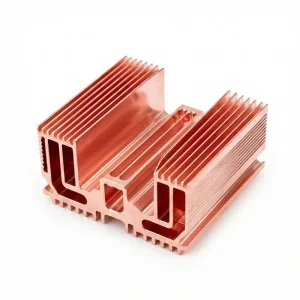
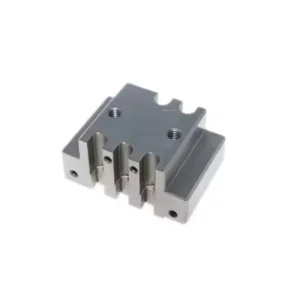
Machining oxygen-free high-thermal-conductivity copper (C11000/C10200) and aerospace aluminum alloys (6061-T6, 7075-T651). Specialized cutter geometries prevent burr formation, strain hardening, and tool gumming during deep micro-channel heatsink milling.
Titanium & Medical-Grade Stainless Steel
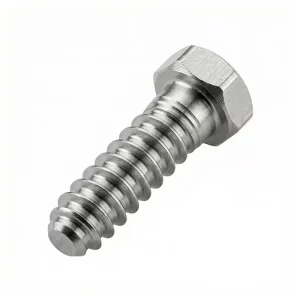
Expert processing of Ti-6Al-4V (Grade 5) and 316L/17-4PH stainless steel. Utilizing high-pressure coolant systems (70+ Bar) and PVD-coated carbide tooling to maintain structural integrity for orthopedic implants and bone screw threads.
Composite & Carbon Fiber CNC Milling
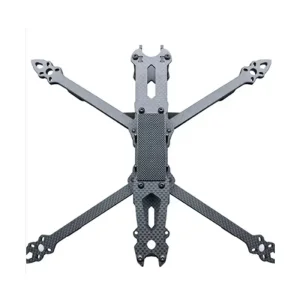
Dust-controlled high-speed milling for 3K/12K woven carbon fiber plate assemblies. Engineered toolpaths prevent delamination, edge fraying, and fiber pull-out for lightweight UAV frames and structural drone components.
Precision Engineering Technical Tolerance Matrix
| Process Parameter | Standard CNC Milling / Turning | Precision Multi-Axis CNC | Ultra-Precision Swiss & EDM |
|---|---|---|---|
| Dimensional Tolerance | ±0.05 mm (±0.002 in) | ±0.010 mm (±0.0004 in) | ±0.005 mm (±0.0002 in) |
| Surface Roughness (Ra) | Ra 3.2 μm (125 μin) | Ra 1.6 μm – Ra 0.8 μm | Ra 0.4 μm (Mirror Polish Option) |
| Positioning Accuracy | ±0.015 mm | ±0.005 mm | ±0.002 mm |
| Applicable Materials | AL 6061, Brass, Mild Steel | AL 7075, Stainless 304/316, POM | Ti-6Al-4V, Inconel 718, Copper C11000 |
| Quality Verification | Digital Caliper, Micrometer | Optical Projector, Height Gauge | 3D Automated CMM, Laser Scanner |
Macro Industry Solutions & Custom Hardware Integrations
Deployment of specialized CNC machined sub-assemblies across critical global sectors.
Aerospace & Unmanned Aerial Systems (UAS)
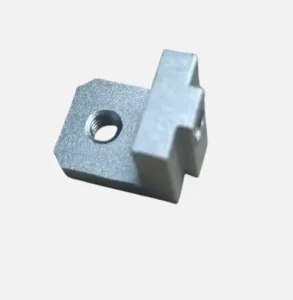
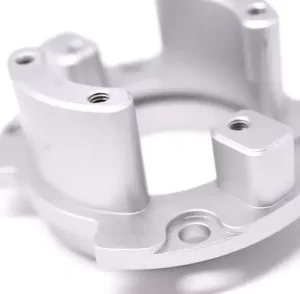
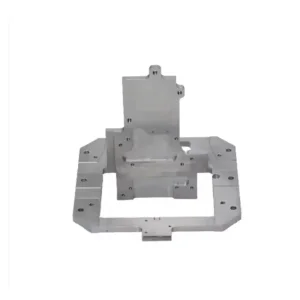
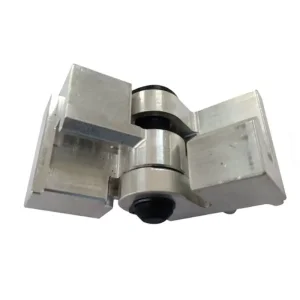
Aerospace structures demand an exceptional strength-to-weight ratio and uncompromising structural integrity under high fatigue loads. Our custom 5-axis CNC machined aluminum mounting brackets and carbon fiber drone frame kits are designed to withstand extreme vibrational stresses while reducing payload mass.
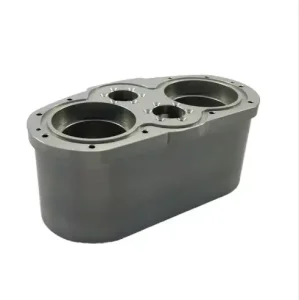
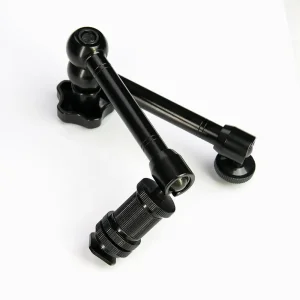
From complex gearbox shells to articulating mounting arms, every geometric feature is verified to adhere to strict GD&T parameters, ensuring seamless integration into agricultural mapping drones, FPV racing rigs, and commercial aerospace platforms.
Semiconductor & Optical Instrumentation
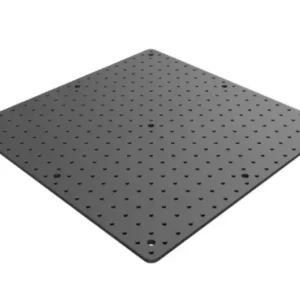
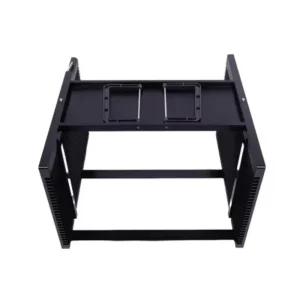
Semiconductor fabrication facilities operate in vacuum or ultra-clean environments where outgassing and particle generation cause catastrophic yield failures. We supply solid aluminum optical breadboards and 8-inch semiconductor wafer carriers machined with extreme surface flatness (≤ 0.02 mm over 300 mm span).
Anodization and electropolishing techniques are rigorously executed to yield non-magnetic, corrosion-resistant surfaces suitable for wafer transfer systems, lithography alignment modules, and high-precision laser optics setups.
Medical Implants & Surgical Instrumentation
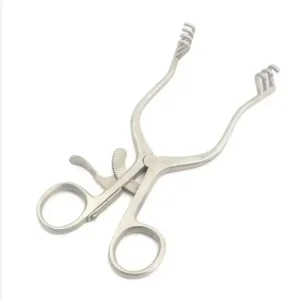
Medical hardware requires absolute biocompatibility and flawless surface finishing. Utilizing Swiss-type precision lathes and micro-milling centers, we manufacture titanium bone screws, joint replacements, and custom stainless steel surgical retractors.
Production follows strict ISO 13485 workflow protocols, including ultrasonic cleaning, passivation, and lot-traceable raw material verification to guarantee zero contaminant retention during surgical insertion.
Robotics, EV Powertrains & Thermal Management
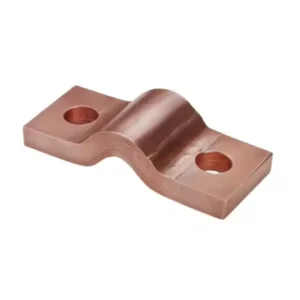
The rapid expansion of electric vehicles (EV) and industrial automation demands advanced thermal management and robust mechanical joints. Our custom flexible laminated copper busbars deliver efficient high-current distribution with minimized electrical resistance.
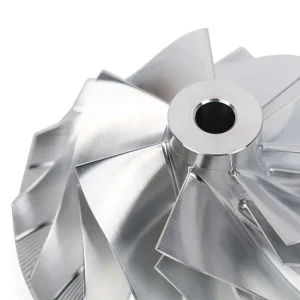
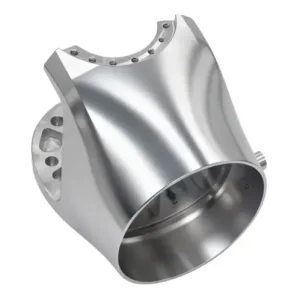
Simultaneously, 5-axis CNC machined robot joint housings and high-speed billet impellers provide high torque handling and fluid compression efficiency for autonomous robotic systems and turbochargers.
Localization Support, Quality Governance & Export Compliance
Eliminating international procurement friction through rigorous quality control and transparent export protocols.
In-House Inspection & FAI Reports
Every shipment is accompanied by a comprehensive First Article Inspection (FAI) report generated via 3D Coordinate Measuring Machines (CMM). Measurements cover critical dimensions, concentricity, perpendicularity, and surface roughness profiles.
IP Protection & NDA Enforcement
Intellectual property protection is paramount. We sign legally binding Non-Disclosure Agreements (NDAs) before acquiring CAD/STEP files. All engineering data remains stored on secure, encrypted internal servers with limited personnel access.
RoHS, REACH & Material Traceability
Raw materials are sourced strictly from accredited mills with batch-specific Material Test Reports (MTR). Full compliance with RoHS 3.0 and REACH regulations ensures seamless import approval across European and North American customs border control.
Technology Roadmap: Next-Generation CNC Machining Evolution
Integrating Artificial Intelligence, closed-loop metrology, and sustainable manufacturing practices into subtractive engineering.
As industrial automation accelerates towards Industry 4.0, our manufacturing roadmap integrates AI-driven computer-aided manufacturing (CAM) algorithms with real-time spindle monitoring. This hybrid smart setup provides actionable predictive advantages over traditional machining centers:
Adaptive Adaptive High-Speed Toolpaths
By leveraging dynamic trochoidal milling algorithms, cutting tool load remains completely constant even inside sharp internal corners. This prevents tool chatter, reduces thermal shock, and enables up to 40% faster material removal rates (MRR) without compromising component tolerances.
In-Situ Laser Inspection & Closed-Loop Control
Implementing automated touch probes and optical laser sensors directly inside the machine enclosure. Real-time thermal expansion offset compensation ensures that multi-hour machining passes maintain micron-level consistency across entire batch runs.
Frequently Asked Questions (Technical & Export Purchasing)
Clear, direct responses to critical procurement questions from global engineering teams.
What is your minimum order quantity (MOQ) for custom precision CNC parts?
We support full-lifecycle manufacturing, offering flexible order volumes from single-piece functional prototypes to medium-volume pilot runs and high-volume mass production. Our engineering team reviews your drawing files to recommend the most economical production route (such as prototype 5-axis milling versus progressive die tooling or investment casting).
How do you maintain and verify dimensional tolerances down to ±0.005 mm?
Sub-micron accuracy is maintained by combining high-rigidity 5-axis machining centers in climate-controlled cleanrooms with automated optical and touch-probe CMM inspection. Every critical feature specified on 2D engineering drawings is measured, recorded, and certified in the First Article Inspection (FAI) report before dispatch.
Which CAD file formats do you require for Design for Manufacturability (DFM) feedback?
We accept 3D CAD files in STEP (.stp), IGES (.igs), and SolidWorks (.sldprt) formats alongside 2D PDF or DWG drawings with explicit GD&T specifications, thread standards, and surface finish tolerances. Our DFM engineers reply with detailed feedback within 24 hours.
What surface finishing options are available for exported CNC components?
We provide comprehensive in-house and audited partner surface finishing including Type II/III hard anodizing, bead blasting, chemical passivation, nickel/gold plating, powder coating, electropolishing, laser engraving, and custom PVD titanium coatings.
How are export logistics and customs documentation managed?
We handle complete export logistics including customs brokerage, correct HS Code classification, Certificate of Origin (COO), RoHS/REACH compliance documentation, and export-grade protective packaging (vacuum-sealed packaging, VCI anti-rust wrapping, and custom wooden crates) to ensure undamaged arrival worldwide.
Additional High-Precision CNC Machining Solutions
Browse our specialized hardware assemblies engineered for global OEM export.