
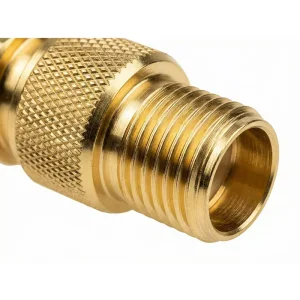
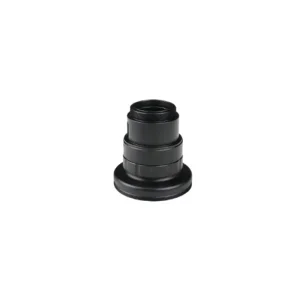
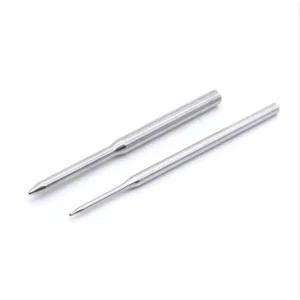
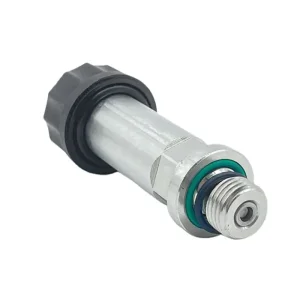
Featured Precision Turned Components
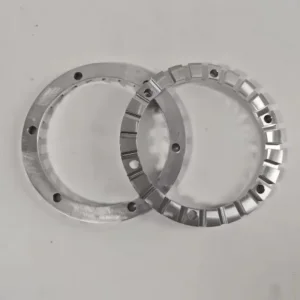
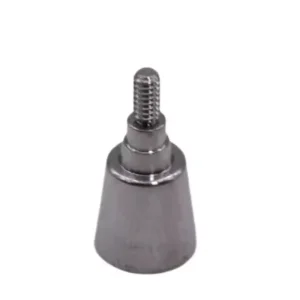
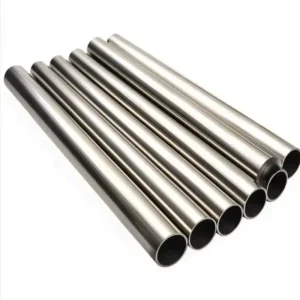
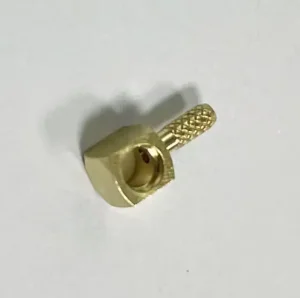
Explore our top-tier micro-turned components, custom threaded inserts, and specialized optical and fluid dynamic hardware.
Global Industrial Landscape of Precision Turned Components
Analyzing market dynamics, micro-machining trends, and the technological pivot toward multi-axis Swiss CNC turning.
"The demand for precision turned parts is expanding rapidly as sub-assemblies across aerospace, medical implant technology, electric vehicle (EV) powertrains, and optical sensors require micron-level repeatability and seamless surface integrity."
Shift Toward Micro-Machining
Modern hardware architectures demand miniaturization without sacrificing mechanical strength. Precision turned parts—such as capillary medical sleeves (OD 1mm-8mm) and micro dental implant drivers—demand lathe spindles operating at ultra-high RPMs paired with live-tooling capabilities to eliminate secondary setup errors.
Total Cost of Ownership (TCO)
Global procurement divisions are shifting away from evaluating piece-part price in isolation. Instead, strategic buyers focus on landed yield, zero-defect quality rates, and DFM (Design for Manufacturability) support to prevent costly downstream assembly disruptions.
Swiss-Type CNC Lathe Dominance
Unlike conventional fixed-headstock lathes, Swiss sliding-headstock automatic lathes support the workpiece right at the guide bushing. This eliminates deflection caused by cutting forces, enabling long length-to-diameter ratios while maintaining cylindrical tolerances down to ±0.005mm.
The China Precision Turning Manufacturing Advantage
How industrial ecosystem aggregation, advanced machinery, and agile engineering execution establish unassailable competitive parameters.
Integrated Supply Chains
Shenzhen and Guangdong hardware hubs aggregate raw material refining, precision tooling suppliers, specialized surface finishers (anodizing, passivating, PVD), and heat treatment facilities within a 30-mile radius, cutting production lead times by 50%.
High-Density Multi-Axis CNCs
Chinese precision turned parts exporters feature extensive fleets of 7-axis and 9-axis dual-spindle Swiss lathes. Milling, cross-drilling, back-boring, and thread whirling are executed in a single cycle setup, guaranteeing absolute concentricity.
24/7 Rapid Prototyping
Equipped with automated bar loaders and robotic part unloaders, turnarounds on First Article Inspection (FAI) prototypes take as little as 48 hours from initial STEP file evaluation to physical delivery.
Rigorous Metrology Reports
Advanced exporters do not merely cut metal; they provide full documentation packages including CMM dimensional reports, raw material spectrometer analysis, RoHS compliance certificates, and PPAP Level 3 documentation.
Material Engineering & Surface Finishing Matrix
A comprehensive guide to selecting alloys, heat treatments, and specialized coatings for turned components.
| Material Family | Common Alloy Grades | Machinability & Characteristics | Typical Applications | Optimal Surface Finishing |
|---|---|---|---|---|
| Stainless Steel | 304, 316L, 17-4PH, 416, 420 | High corrosion resistance, tough chip breaking. 316L offers superior biocompatibility. | Sensor housings, medical bushings, thermowells, hydraulic valve cores. | Passivation (ASTM A967), Electropolishing, PVD Coating. |
| Brass & Copper | C36000 (Free-Cutting), C3604, Tellurium Copper | Exceptional machinability, excellent electrical/thermal conductivity, anti-galling. | Threaded insert connectors, knurled pins, electrical terminals, RF adapters. | Electroless Nickel Plating, Bright Acid Tin, Gold Plating. |
| Aluminum Alloys | 6061-T6, 7075-T6, 2024-T3, 6082 | Lightweight, outstanding strength-to-weight ratio, easy to turn at high cutting speeds. | Optical lens barrels, aerospace fittings, control knobs, sealing rings. | Type II Anodizing, Type III Hardcoat Anodizing, Laser Engraving. |
| Titanium Alloys | Grade 2 (Commercially Pure), Grade 5 (Ti-6Al-4V) | Extreme strength, low thermal conductivity, requires low cutting speeds & high coolant flow. | Orthodontic micro screws, dental abutments, surgical connectors, aerospace pins. | Anodizing Type II/III (Color Anodizing), Mechanical Polishing. |
| Engineering Plastics | PEEK, POM (Delrin), PTFE, Ultem 1000 | Non-conductive, chemical resistant, requires sharp diamond tooling to prevent burr formation. | Insulating bushings, fluidic manifolds, low-friction sleeve bearings. | Deburring, Vapor Polishing, Cryogenic Deburring. |
Mission-Critical Application Scenarios
Where precision turned components serve as the core functional backbone across high-tech industries.
Medical & Implantology
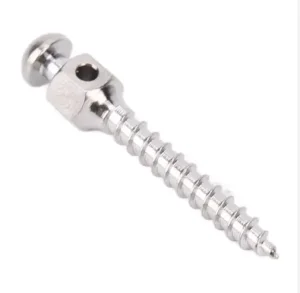
Precision titanium micro implant screws and dental abutment drivers require flawless microscopic threads, burr-free chamfers under 50x magnification, and strict cleanroom cleaning protocols to meet ISO 13485 standards.
Hydraulics & Fluid Power
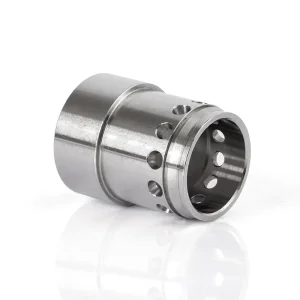
Hydraulic solenoid valve cores for heavy machinery demand micro-inch spool clearances, hardened stainless steel surfaces, and stepped turned geometry to prevent oil bypass under pressures exceeding 350 bar.
Optoelectronics & Photonics
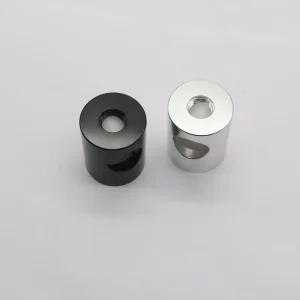
Lens barrels and optical housing components utilize black-anodized aluminum turned bodies. Threads must maintain true pitch accuracy to guarantee smooth focal adjustment and eliminate stray light reflection.
Future Trends: Industry 4.0 & Sustainable Machining
How smart manufacturing, AI quality monitoring, and eco-friendly practices are reshaping precision turning.
AI-Driven Predictive Tool Wear
Integrating acoustic emission sensors and spindle vibration monitors allows turned part manufacturers to predict tool wear before dimensional drift occurs, ensuring consistent CPK values > 1.67 on long production runs.
Green Turning & Lead-Free Compliance
With strict global RoHS and REACH directives, precision suppliers are transitioning to Eco-Brass (Lead-Free Brass) alloys and adopting Minimum Quantity Lubrication (MQL) systems to minimize hazardous waste.
Digital Twin & Automated Inspection
Automated optical sorting machines equipped with 360-degree high-resolution cameras inspect turned threads, chamfers, and knurls at speeds up to 500 parts per minute, ensuring zero defective parts reach customer assembly lines.
Frequently Asked Questions
Engineering and commercial answers to help procurement teams evaluate precision turning capabilities.
What is the difference between conventional CNC turning and Swiss-type CNC turning?
What tolerances can your precision turning process reliably achieve?
How do you ensure concentricity and runout on stepped shafts?
What quality documentation is supplied with custom turned parts orders?
Can you manufacture custom knurling patterns on brass and stainless connectors?
What is your minimum order quantity (MOQ) for prototypes vs. mass production?
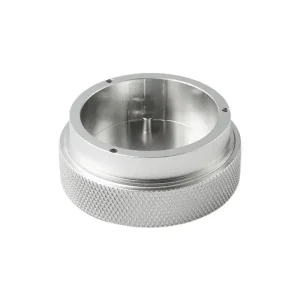
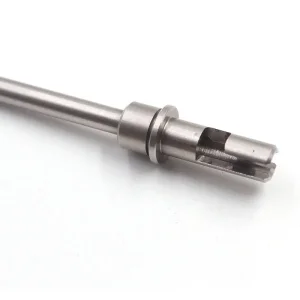
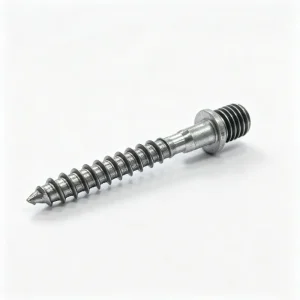
Specialized Medical & Industrial Turned Hardware
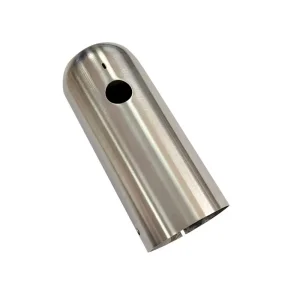
Review our high-grade stainless steel filter sleeves, orthodontic implant screws, stepped shafts, and custom fasteners.
Accelerate Your Precision Hardware Sourcing Today
Submit your 2D drawings (PDF/DWG) or 3D CAD files (STEP/IGES) for a comprehensive DFM evaluation and transparent price quote within 24 hours.