
Precision Custom Machined Components & Assemblies (Part I)
Explore our top-tier engineered hardware solutions manufactured under strict ISO 9001:2015 quality standards.
Global Industrial Landscape & Supply Chain Resilience in Stainless Steel Fabrication
The global stainless steel fabrication market is undergoing a paradigm shift driven by high-efficiency fiber lasers, automated robotics, stringent cleanroom specifications, and sustainable manufacturing practices.
Shift Toward High-Yield Alloys
Global procurement teams are rapidly transitioning from legacy carbon steel and baseline 304 alloys toward duplex (e.g., 2205) and super-austenitic grades (e.g., 904L, 316L SS). This transition is propelled by the need for superior pitting resistance, prolonged life-cycle performance, and reduced material thickness via higher tensile yields.
Precision & Ultra-Clean Finish
Modern semiconductor fabrication equipment, hydrogen fuel cell infrastructure, and pharmaceutical processing reactors require electro-polished surfaces (Ra < 0.28 µm) and zero-contamination weld seams. OEM partners must maintain cleanroom assembly facilities and automated orbital welding systems.
Risk Mitigation & Nearshoring
To guard against geopolitical supply chain shocks, multinational enterprises demand vertically integrated OEM manufacturing hubs in China capable of handling complete metal processing in-house—from raw material laser cutting and CNC forming to certified surface finishing and non-destructive testing (NDT).
Comprehensive Engineering Routes & Fabrication Processes
Sunmy Hardware utilizes end-to-end manufacturing control systems, integrating multi-axis laser cutting, high-tonnage CNC press braking, robotic TIG/MIG welding, and precision metal stamping.
1. High-Power Fiber Laser Cutting & Punching
Our facility operates 12kW to 30kW CNC fiber laser cutting systems capable of slicing stainless steel plate up to 50mm thickness with zero heat-affected zone (HAZ) distortion. Nitrogen assist-gas systems prevent edge oxidation, eliminating post-process grinding and ensuring ideal conditions for downstream welding.
- Positional Accuracy: ±0.03 mm
- Max Sheet Dimensions: 2500mm x 6500mm
- Assist Gas Control: Ultra-pure N₂ (99.999%) for oxide-free cut surfaces
2. Multi-Axis CNC Bending & Roll Forming
Equipped with multi-axis CNC press brakes featuring real-time laser angle-measurement systems, we ensure consistent springback compensation across varying material lots. From simple bracketry to complex, multi-bend enclosure structures, angular tolerance is maintained to within ±0.25°.
- Bending Force: Up to 500 Tons
- Dynamic Tooling: Custom radius dies to eliminate surface micro-cracking
- Radius-to-Thickness Ratio: Optimized DFM guidance for tight radiuses
3. Precision Robotic Welding & Orbital GTAW
For hermetic seals, pressure vessels, and food-grade fluid lines, our AWS D1.6 certified welders employ robotic TIG, laser beam welding (LBW), and closed-loop orbital TIG. Internal purge monitoring systems prevent back-side oxidation ("sugaring"), ensuring maximum corrosion resistance.
- Certifications: AWS D1.6, ASME Section IX certified weld procedures
- NDT Verification: Dye penetrant (PT), Radiographic (RT), and Hydrostatic testing
- Back-Purging: Argon/Hydrogen shielding mixtures for sanitary welds
4. Deep Drawing & Progressive Stamping
For high-volume OEM programs, progressive metal stamping dies and hydraulic deep drawing presses convert raw stainless steel coil into intricate electronic shields, battery contacts, and fluid control housings with automated in-die sensing.
- Press Capacity: 25 to 800 Tons
- In-Die Quality Sensing: Automatic jam and thickness variation detection
- Material Spectrum: Full hard to annealed 301, 304, and 316 spring steels
Stainless Steel Grade Selection Matrix & DFM Engineering
Selecting the ideal stainless steel grade requires balancing yield strength, formability, pitting resistance equivalent number (PREN), and cost efficiency. Review our benchmark matrix below.
| Grade | UNS Standard | Yield Strength (MPa) | PREN Rating | Key Properties | Primary OEM Applications |
|---|---|---|---|---|---|
| AISI 304 / 304L | S30400 / S30403 | ≥ 205 | 18.0 - 20.0 | Excellent formability, standard corrosion resistance, cost-effective baseline. | Server enclosures, brackets, general food equipment, PDU chassis. |
| AISI 316 / 316L | S31600 / S31603 | ≥ 220 | 23.0 - 25.0 | Added 2-3% Molybdenum for superior chloride pitting and crevice corrosion resistance. | Marine fittings, biopharm reactors, chemical fluid conduits, medical devices. |
| Duplex 2205 | S31803 / S32205 | ≥ 450 | 32.0 - 35.0 | Mixed austenitic-ferritic microstructure; twice the yield strength of 316; resistant to SCC. | Offshore oil & gas manifolds, pressure vessels, chemical tankers, heavy structural frames. |
| 17-4 PH | S17400 | ≥ 790 - 1170 | N/A (Martensitic) | Precipitation hardening grade combining extreme mechanical strength with decent corrosion resistance. | Aerospace fasteners, turbine blades, high-load robotic joints, pump shafts. |
| Ferritic 430 | S43000 | ≥ 260 | 16.0 - 17.5 | Magnetic, nickel-free, economical grade with good thermal conductivity and oxidation resistance. | Appliance trim, automotive exhaust heat shields, architectural cladding. |
Minimum Bend Radius Rule
To prevent outer tensile cracking during CNC press brake operations, maintain an internal bend radius equal to or greater than the material thickness ($R \ge 1t$) for 304/316 grades, and $R \ge 1.5t$ for high-strength duplex steels.
Hole-to-Edge Distance
Laser cut or punched holes should be positioned at a minimum distance of $2.5 \times t$ (thickness) away from bend lines to prevent severe hole distortion due to localized material stretching.
Passivation & Surface Finish
Following welding and machining, all components undergo citric or nitric acid passivation per ASTM A967 to restore the protective passive chromium oxide ($\text{Cr}_2\text{O}_3$) surface layer, passing 100-hour salt spray tests (ASTM B117).
Sector-Specific OEM Implementations & Case Scenarios
Our engineering solutions serve tier-1 industrial clients across North America, Europe, and Asia-Pacific. Explore how our fabricated parts meet extreme operating environments.
Sanitary Fluid Handling Systems
Challenge: Client needed ultra-clean 316L bio-reactor fluid manifolds with zero dead-leg zones and Ra < 0.38 µm internal micro-finish.
Solution: Implemented 5-axis orbital TIG welding with internal argon purge tracing, followed by mechanical fine-polishing and automated electropolishing. 100% video borescope weld inspection verified absolute penetration with zero internal crevice formation.
5-Axis Robot Arm & Cleanroom Housings
Challenge: High dynamic inertia required lightweight yet structurally rigid housing assemblies for semiconductor transfer arms.
Solution: Combined CNC milled 17-4PH stainless steel pivot joints with laser-cut thin-gauge 304 skeletal frames, reducing overall mass by 28% while maintaining structural deflection within < 0.02mm under maximum load.
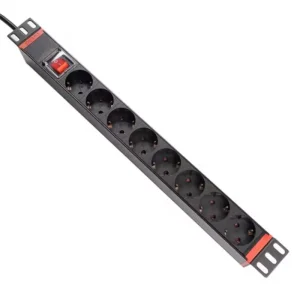
Heavy-Duty Smart PDU & Rack Housings
Challenge: Rapid expansion of hyperscale AI centers required high-amperage (16A/32A) modular power distribution enclosures with EMC shielding.
Solution: Progressive die stamping of cold-rolled stainless steel chassis with integrated PEM fastener installation, conductive chromate plating, and automated busbar alignment checks.
Rigorous Quality Control, Auditing Standards & Global Compliance
Every component manufactured at Sunmy Hardware undergoes rigorous full-lifecycle verification to guarantee global supply chain safety, regulatory compliance, and complete material traceability.
Material Integrity Verification (EN 10204 3.1 Traceability)
Raw stainless steel stock is sourced directly from tier-1 steel mills (e.g., Baosteel, Tsingshan). Every batch is verified upon intake using portable X-ray Fluorescence (XRF) Spectrometers to confirm chemical heat numbers, Nickel/Chromium percentages, and mechanical properties. Physical Mill Test Reports (MTRs) compliant with EN 10204 3.1 are supplied with every delivery.
Metrology & Dimensional Assurance
Our quality assurance laboratory is equipped with temperature-controlled Coordinate Measuring Machines (CMM), 2D Optical Profile Projectors, surface roughness testers (Mitutoyo), and ultrasonic thickness gauges. Critical geometric tolerances—including position, runout, parallelism, and flatness—are certified prior to batch release via First Article Inspection (FAI) reports.
Environmental & Regulatory Compliance
All surface finishing procedures—including passivation, powder coating, anodizing, and electropolishing—fully comply with global environmental mandates: EU RoHS (Restriction of Hazardous Substances), REACH (SVHC compliance), and Conflict Mineral reporting standards.
Export Logistics & Tariff Optimization
We provide comprehensive global shipping support including DDP, FOB, and CIF terms. Custom export packaging (heavy-duty wooden crates with VCI corrosion inhibitor bags) guarantees protection against oceanic salt spray during transit.
Future Outlook: Industry 4.0 & Smart Stainless Steel Fabrication
Sunmy Hardware is investing heavily in next-generation manufacturing technology, bridging physical metallurgical craftsmanship with digital intelligence.
AI-Driven Nesting & DFM Analysis
Automated CAD/CAM integration algorithms calculate optimal sheet cut nesting in real-time, boosting raw material utilization efficiency to over 92% while minimizing scrap waste and lowering piece-part costs for customers.
Automated Robotic Welding Cells
Deployment of 6-axis collaborative robots (Cobots) paired with high-frequency pulse TIG power units ensures 100% repeatable weld bead width, eliminates human error, and doubles production output speed on large volume structural frames.
Digital Twin Material Tracking
Every batch of stainless steel plate or drawn capillary tubing is assigned a unique digital twin barcode, enabling real-time tracking of laser time, bend sequence operator, weld inspection logs, and final CMM reports via our ERP portal.
Frequently Asked Technical & Sourcing Questions (FAQ)
Get instant clarity on common engineering, quality control, prototyping, and procurement questions regarding stainless steel fabrication services.
What is the difference between 304 and 316L stainless steel for custom fabrication?
While both 304 and 316L are austenitic stainless steels offering good strength and formability, 316L contains 2% to 3% Molybdenum, significantly enhancing its resistance to pitting and crevice corrosion in chloride, acidic, and marine environments. The "L" in 316L designates low carbon content (≤ 0.03%), which prevents harmful carbide precipitation during welding, preserving corrosion resistance along weld zones without requiring post-weld solution annealing.
What standard tolerances can your factory hold for laser cutting and CNC bending?
Our standard production tolerances are:
• Fiber Laser Cutting: ±0.05 mm to ±0.1 mm depending on plate thickness.
• CNC Press Brake Bending: Angular tolerance of ±0.25°, linear bend location tolerance of ±0.15 mm.
• CNC Precision Machining: Down to ±0.005 mm on critical bore diameters and bearing surfaces verified by CMM.
How do you prevent heat distortion during welding of thin stainless steel sheets?
Stainless steel has a lower thermal conductivity and higher coefficient of thermal expansion compared to mild steel, making it prone to warpage. We mitigate distortion by using:
1. Precision CNC copper-chilling fixtures to absorb excess heat rapidly.
2. High-frequency pulsed TIG or low-heat Laser Beam Welding (LBW).
3. Intermittent stitch welding patterns rather than continuous long single-pass runs.
4. Stress-relief thermal annealing when required by design specifications.
What surface treatments are available for stainless steel assemblies?
We provide a comprehensive range of in-house and partner-certified surface finishes:
• Passivation: Citric or Nitric acid treatment per ASTM A967.
• Electropolishing: Achieves ultra-smooth mirror surfaces (Ra < 0.2 μm) for medical and semiconductor cleanroom standards.
• Bead / Glass Blasting: Provides uniform matte satin finishes, removing weld heat tint.
• Mechanical Polishing: From #4 satin line polish up to #8 mirror finish.
• PVD & Powder Coating: Custom decorative or high-durability polymer coatings.
Can you manufacture low-volume prototypes before scaling to mass production?
Yes. We support agile hardware development. We offer quick-turn rapid prototyping via single-hit CNC punching, soft-tool laser cutting, and 3D printed bend tooling. Prototype lead times typically range from 3 to 7 working days, allowing your engineering team to validate form, fit, and function prior to investing in high-volume progressive stamping dies or dedicated robotic welding fixtures.
How is Intellectual Property (IP) protected when submitting CAD drawings?
We enforce strict IP security protocols. Non-Disclosure Agreements (NDAs) are executed prior to reviewing 3D STEP/IGES files. Customer engineering data is stored on encrypted local servers with access restricted exclusively to authorized project managers and DFM engineers. Your custom designs are never shared, white-labeled, or subcontracted to third parties.
Precision Custom Machined Components & Assemblies (Part II)
Discover additional custom-engineered hardware components produced for automotive, aerospace, battery, and electronic industries.
Request an Engineering DFM Review & Instant Quote
Upload your 3D CAD models (STEP, IGES, SolidWorks) or 2D technical drawings. Our senior metallurgical engineers respond with detailed Design for Manufacturability (DFM) feedback and itemized pricing within 24 hours.