
Featured OEM Precision Components
Explore our high-performance cast metal and custom engineered assemblies tailored for demanding automotive, industrial, and electronic applications.
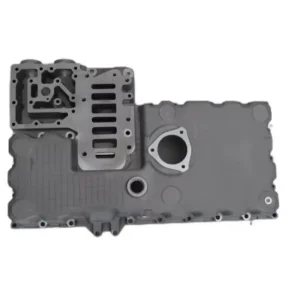
China Premium Low-Pressure Cast Aluminum Alloy Clutch Oil Pan
Request Technical Quote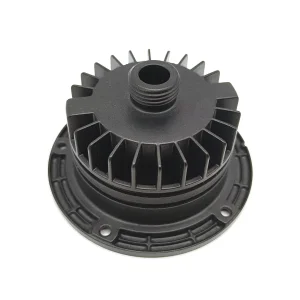
High-Quality Custom Die Cast Aluminum Finned Housings & End Caps
Request Technical Quote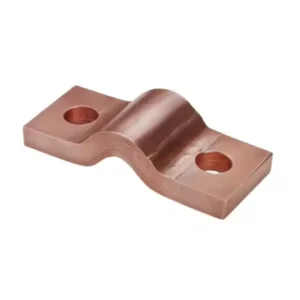
OEM Custom Flexible Laminated Copper Busbars for Battery & Electrical
Request Technical Quote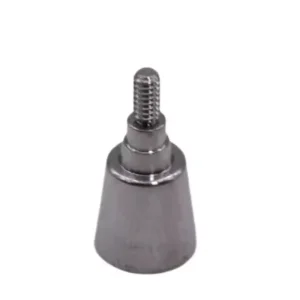
ODM Custom CNC Turned Titanium Abutment Implant Driver & Connector
Request Technical Quote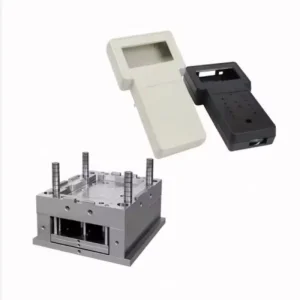
OEM Custom POS Terminal Housing - ABS Shell & Silicone Keypad Assembly
Request Technical Quote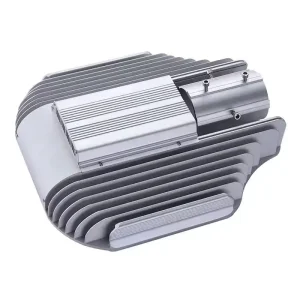
ODM Custom Die-Cast Aluminum LED Luminaire Housing
Request Technical Quote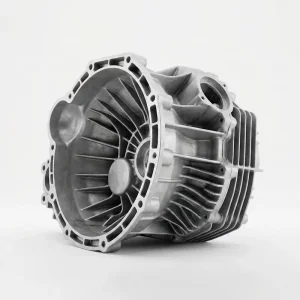
OEM Aluminum Die-Cast Transmission Housing Manufacturer
Request Technical Quote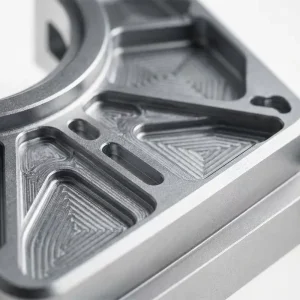
Custom Lightweight Aerospace Structural Components from China
Request Technical QuoteExecutive White Paper: Metallurgical Mastery & Process Selection in OEM Precision Casting
In modern industrial manufacturing, selecting an ideal OEM precision casting parts supplier is no longer merely a cost-reduction exercise; it is a critical strategic decision that governs structural integrity, thermal dissipation, mechanical reliability, and lifecycle total cost of ownership (TCO). Precision casting bridges the gap between raw liquid metallurgy and near-net-shape geometry, enabling original equipment manufacturers to produce highly complex, thin-walled, and load-bearing components that would be economically unviable or physically impossible to machine entirely from solid billet.
Achieving defect-free castings with precise dimensional accuracy requires deep metallurgical control, optimized gating/riser design, advanced mold thermal management, and seamless integration with secondary CNC post-machining. This technical guide outlines the fundamental physics, material properties, and quality control systems required for engineering-grade custom casting production.
1. Precision Casting Process Matrix: Matching Physics to Application
No single casting process fits every engineering requirement. Understanding the nuanced trade-offs between solidification speeds, surface finish, structural density, and tooling capital investment is essential for procurement leaders and mechanical design engineers alike:
High-Pressure Die Casting (HPDC)
Best for: High-volume aluminum and zinc components requiring tight tolerances and thin wall sections (down to 1.5mm).
- Injection pressures up to 100 MPa
- Cycle times under 45 seconds
- Surface roughness: Ra 1.6 to 3.2 µm
- Ideal for: Transmission cases, LED housings, electronics enclosures
Investment Casting (Lost Wax)
Best for: Intricate structural parts in stainless steel, alloy steels, and superalloys where machining is difficult.
- Linear tolerance: ISO 8062 CT4-CT6
- Eliminates draft angles in many features
- Superior grain structure and mechanical strength
- Ideal for: Aerospace brackets, medical impellers, valve bodies
Low-Pressure Die Casting (LPDC)
Best for: Critical automotive drivetrain components requiring high ductility, pressure tightness, and T6 heat treatment capability.
- Laminar bottom-up die filling minimizes gas entrapment
- Superior mechanical properties compared to HPDC
- High material utilization yield (>90%)
- Ideal for: Clutch oil pans, suspension knuckles, engine blocks
Metallurgical Insights: Porosity Control in Pressure Die Casting
Gas porosity and shrinkage voids are the primary structural failure modes in cast metals. By implementing Vacuum-Assisted High-Pressure Die Casting (V-HPDC), cavity pressure is pulled down below 50 mbar prior to metal injection. This dramatic reduction in trapped air enables downstream T6 solution heat treating and precipitation hardening without surface blistering, achieving yield strengths exceeding 240 MPa in A356-T6 alloys.
2. Advanced Engineering Material Selection Matrix
The choice of alloy dictates corrosion resistance, thermal conductivity, tensile strength, and weight efficiency. Below is an engineering overview of commonly cast materials processed in our facilities:
| Alloy Standard | Primary Casting Method | Tensile Strength (MPa) | Thermal Cond. (W/m·K) | Key Industrial Applications |
|---|---|---|---|---|
| A380 / ADC12 | High-Pressure Die Casting | 310 - 330 | 96 | Telecom housings, gearboxes, electrical enclosures |
| A356.0 (T6) | LPDC / Investment Casting | 290 - 330 | 150 - 160 | Automotive wheels, clutch oil pans, structural frames |
| 316L Stainless Steel | Investment Casting (Lost Wax) | 515 - 620 | 16.3 | Chemical valves, marine hardware, medical sleeve bushings |
| Ductile Iron (QT450-10) | Shell Mold / Resin Sand | 450 - 550 | 36 | Hydraulic manifolds, pump bodies, heavy equipment links |
| Ti-6Al-4V (Grade 5) | Vacuum Investment Casting | 895 - 1000 | 6.7 | Aerospace structural brackets, surgical implants, drivers |
The China Precision Casting Advantage: Scale, Speed & Supply Chain Integration
Why Tier-1 global equipment OEMs partner with advanced Chinese casting manufacturers to de-risk production schedules and maximize margin performance.
Fully Integrated Industrial Clusters
China's Yangtze and Pearl River Delta casting hubs house complete vertical supply chains within a 50km radius. Raw ingot refining, custom toolmaking, heat treatment, surface plating, and multi-axis CNC machining operate seamlessly without international transport delays.
Rapid Tooling & Mold Prototyping
Leveraging high-speed 5-axis CNC mold carving, 3D printed sand molds, and direct metal sintering (DMLS), prototype samples are delivered in as little as 10 to 14 days. This enables physical design verification before committing to high-cavity steel tooling production.
Comprehensive Quality Quality Assurance (QA)
Leading Chinese foundries integrate standard-compliant inspection workflows including 100% CMM coordinate measurement, real-time X-ray non-destructive flaw detection, optical emission spectroscopy (OES) melt verification, and salt-spray corrosion chamber testing.
Industry Trends Shaping Precision Casting (2025–2030)
Technological shifts transforming classical foundry operations into intelligent, automated, and carbon-optimized manufacturing ecosystems.
1. AI Simulation & Digital Twin Solidification
Traditional trial-and-error mold revisions are being replaced by finite element simulation engines (e.g., Magmasoft, ProCAST). Machine learning algorithms predict thermal shrinkage stress, misruns, and micro-porosity during the gating design phase, reducing tooling engineering modification costs by over 70%.
2. Hybrid Near-Net Casting & 5-Axis CNC Integration
The boundary between casting and machining is blurring. OEM programs increasingly leverage ultra-precise near-net castings with minimal stock allowance (0.5mm - 1.2mm), which are immediately transferred via robotic arms into 5-axis CNC machining cells for critical surface finishing and thread tapping.
3. Mega-Casting (Gigacasting) Structural Integration
Driven by the electric vehicle (EV) sector, multi-part stamped sheet metal assemblies are being consolidated into single, large-scale die-cast aluminum structural nodes. This reduces vehicle body weight by up to 20% and eliminates hundreds of robotic spot welds.
4. Sustainable Metallurgy & Recycled Secondary Alloys
With global ESG mandates expanding, top-tier foundries are adopting low-carbon secondary aluminum ingots refined via green hydro-electric power. Closed-loop scrap recovery systems inside the factory ensure that gates, risers, and machining chips are melted in-house with zero loss in alloy purity.
Cross-Industry OEM Solutions & Localized Application Scenarios
Precision casting components serve as structural and functional backbones across demanding global industries. Below are localized technical applications engineered by our specialized manufacturing teams:
Automotive & Commercial Drivetrains
Components such as Low-Pressure Cast Aluminum Clutch Oil Pans and Transmission Housings must withstand continuous hydraulic shock, high vibration, and fluid pressure without leakage. Vacuum casting combined with CNC flange milling ensures dynamic flat sealing down to 0.02mm flateness tolerance.
High-Power Outdoor LED & Thermal Electronics
Die-Cast Aluminum Finned Housings utilize custom high thermal conductivity aluminum alloys (e.g., YL102/ADC12 modified). Intricate multi-fin geometries maximize surface convection area for high-bay street luminaires and 5G telecom remote radio units (RRU).
Medical Devices & Surgical Hardware
Precision CNC Turned Titanium Abutments and investment-cast surgical sleeves require bio-compatible materials (Ti-6Al-4V, 316L SS) produced in controlled cleanroom finishing environments. Micro-turned thread pitches hold tolerances within ±0.005mm.
Renewable Energy & Battery Systems
Custom Laminated Copper Busbars and aluminum battery enclosure plates accommodate high-current electrical distribution in energy storage systems (ESS) and electric vehicle battery packs, providing low contact resistance and maximum flame resistance.
Aerospace & Defense Structures
Lightweight investment-cast titanium and aluminum brackets reduce payload weight while enduring extreme structural fatigue loads. 100% radiographic inspection (X-ray) ensures zero internal void defects before flight deployment.
Industrial Automation & Robotics
High-rigidity servo motor end bells, robot arm joints, and vacuum manifold blocks engineered with internal cooling channels allow automated assembly systems to operate continuously under intense duty cycles.
Global OEM Procurement Framework: How to Request Technical Quotes
To accelerate technical review and receive accurate engineering quotes within 24 hours, follow our standardized purchasing specification template.
Essential Technical Data Required in Your RFQ Package
- 3D & 2D CAD Models: STEP, IGES, or Parasolid files alongside 2D PDF drawings detailing Geometric Dimensioning and Tolerancing (GD&T).
- Material Grade & Standard: Explicitly state alloy requirements (e.g., ASTM A356-T6, DIN EN AC-46000, JIS ADC12).
- Annual Volume Projections: Estimate sample quantities, initial production trial lot sizes, and expected annual peak volume (EAV).
- Surface Treatment & Secondary Finishing: Specify surface roughness (Ra), shot peening, anodizing type (Class II/III), powder coating thickness, or electroplating specs.
- Inspection & Quality Certifications: Define required documentation (e.g., FAI, PPAP Level 3, Material Test Report to EN 10204 3.1, CMM Inspection Reports).
Understanding Tooling & Unit Cost Amortization
Precision casting pricing is divided into two primary financial components:
- Non-Recurring Engineering (NRE) / Tooling Cost: Covers the die design, CNC mold cavity cutting, core pull mechanisms, and initial trial casting (T1 samples). Mold tooling is a one-time investment owned entirely by the customer.
- Piece Part Price: Calculated based on liquid metal mass, casting cycle time, runner scrap ratio, secondary CNC machining time, surface finishing, and export protective packaging.
Precision Sheet Metal, Stamping & Machined Assemblies
Explore our specialized enclosure systems, high-speed turned fasteners, and custom electronic sheet metal fabrications.
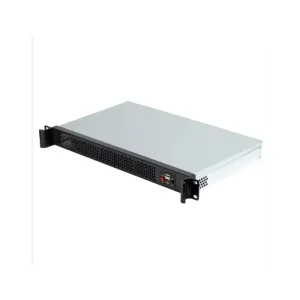
OEM China 1U Rackmount Server Chassis - Custom Sheet Metal Stamping Enclosure
Request Technical Quote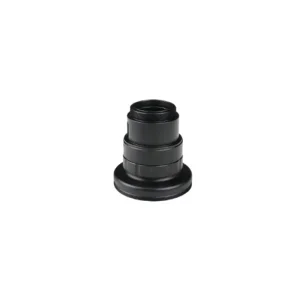
Custom Black Anodized Aluminum Lens Barrel Optical Housing Components
Request Technical Quote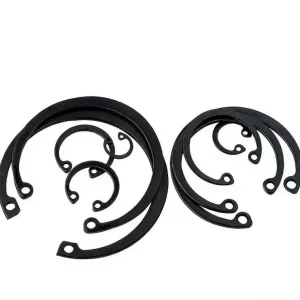
Premium DIN 471 C-Type External Retaining Rings Fasteners
Request Technical Quote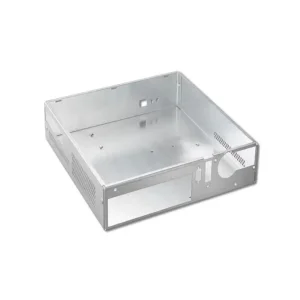
OEM Custom Aluminum Electrical Enclosure Control Box
Request Technical Quote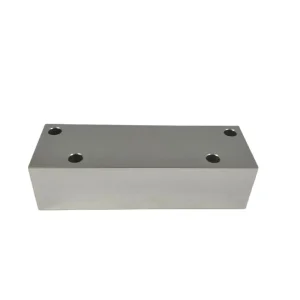
China Custom CNC Machined Aluminum Vacuum Manifold Block
Request Technical Quote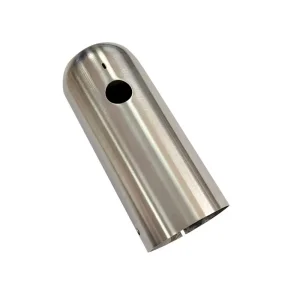
China Custom Precision CNC Turned Medical Sleeve Bushing Service
Request Technical Quote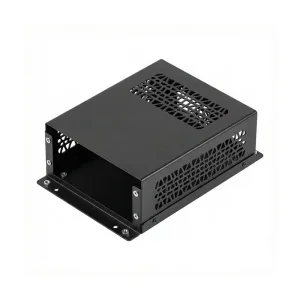
China Custom Aluminum Electronic Enclosure & Power Box
Request Technical Quote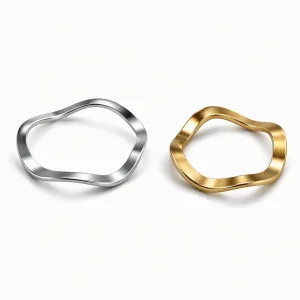
OEM Custom Precision Stamped Wave Spring Washers Supplier
Request Technical QuoteFrequently Asked Questions (Technical & Commercial FAQ)
Comprehensive engineering clarity on design rules, tolerance capability, quality documentation, and cross-border logistics.
Q1: What standard casting dimensional tolerances can your factory reliably maintain?
Our casting tolerances strictly align with ISO 8062 (GB/T 6414) standards. For Investment Casting (Lost Wax), we achieve ISO 8062 CT4 to CT6. For High-Pressure Aluminum Die Casting, as-cast tolerance classes range from CT5 to CT7. Critical mating surfaces, bearing journals, and O-ring sealing grooves are post-machined on our 5-axis CNC machining centers to hold tight linear tolerances down to ±0.005 mm.
Q2: How does your foundry prevent gas porosity and shrink voids in pressure die castings?
We mitigate porosity through a multi-stage engineering protocol: First, we run MAGMA/ProCAST solidification simulations to optimize gate sizing and overflow placement. Second, we deploy High-Vacuum Die Casting (V-HPDC) technology, pulling die cavity pressure below 50 mbar during shot execution. Third, we enforce strict degassing procedures using automatic rotary nitrogen purging prior to ladle dipping. Final parts undergo 100% real-time X-ray inspection to confirm structural density.
Q3: What thermal heat treatment options are available for cast aluminum parts?
We provide complete heat treatment services in-house or through certified metallurgical partners. Common treatments include T5 (artificially aged after casting for stress relief and stability), T6 (solution heat treated, quenched, and artificially aged for maximum yield strength and ductility), and T61. T6 treatment for A356 aluminum components increases tensile strength up to 310 MPa and elongation up to 8%.
Q4: What quality documentation accompanies international orders?
Every shipment is packed with complete, traceable quality documentation based on your customer quality requirements. Standard packages include raw material chemical analysis (OES report), mechanical properties test reports (tensile/yield/hardness), CMM 3D dimensional inspection sheets, First Article Inspection (FAI) reports per AS9102 / PPAP Level 3, and RoHS / REACH material compliance statements.
Q5: Can you assist with Design for Manufacturability (DFM) optimization before tooling?
Yes. Our senior engineering team conducts a thorough DFM review for every incoming drawing set prior to quotation. We analyze draft angles (recommending 1° to 2° for die casting), wall thickness uniformity (to prevent sink marks), radii fillet transitions, and parting line placement. We provide actionable 3D feedback models showing how to lower tool tooling wear and decrease unit production cost.
Q6: What is your standard production lead time for tooling and mass production?
For die casting and investment casting tooling, prototype steel molds take 20 to 30 calendar days. T1 initial sample parts are provided immediately following mold trial. Upon FAI approval by the buyer, production run lead times average 3 to 4 weeks depending on batch size, surface finishing, and secondary assembly requirements.
Q7: How do you protect buyer Intellectual Property (IP) and proprietary CAD files?
IP security is paramount. We sign formal non-disclosure agreements (NDAs) before reviewing any technical file packages. All CAD drawings are stored on secure internal servers with strict role-based access control. We never outsource core proprietary designs to non-audited third parties.
Q8: What surface finishing treatments can be applied to precision cast parts?
We provide an extensive portfolio of surface finishes: shot peening, sandblasting (Grit 80-120), mechanical polishing, chemical chromate conversion (Alodine 1200/TCP), anodizing (Type II Clear/Color, Type III Hardcoat), electrostatic powder coating, liquid spray painting, and electroless nickel plating (ENP) for high corrosion environments.
Q9: How do you handle low-volume high-mix (LVHM) custom orders versus high-volume runs?
We operate flexible production lines configured for both prototype/low-volume batches and continuous mass manufacturing. For low-volume prototyping (1 to 500 units), we utilize rapid investment casting, 3D printed sand molds, or direct CNC machining from solid billet to avoid costly hard tooling investments.
Q10: What international logistics and shipping terms (INCOTERMS) do you support?
We support all standard INCOTERMS 2020, including EXW, FOB (Shenzhen/Ningbo/Shanghai), CIF, CFR, DDP (Delivered Duty Paid), and DAP. Our export logistics team coordinates custom wood crate packaging, sea freight, air express, and international customs brokerage for seamless door-to-door delivery.
Ready to Optimize Your OEM Precision Casting Supply Chain?
Upload your 3D CAD files (STEP, IGES) and 2D engineering drawings today. Our senior metallurgical engineers will evaluate your part geometry, perform DFM analysis, and deliver a comprehensive factory-direct quote within 24 hours.