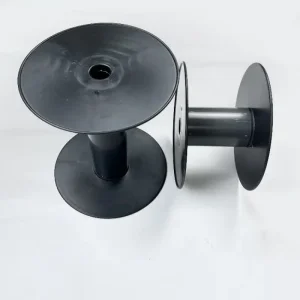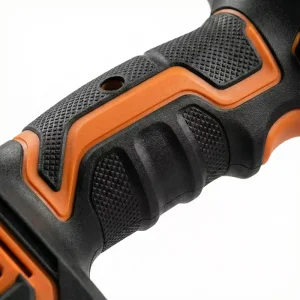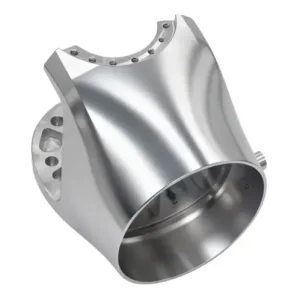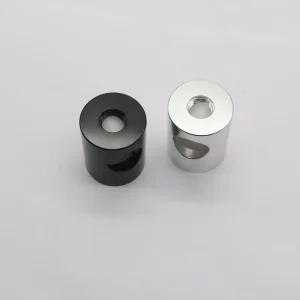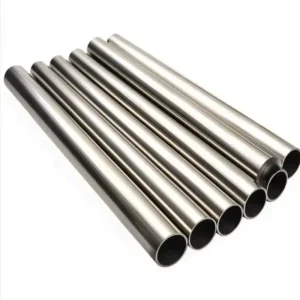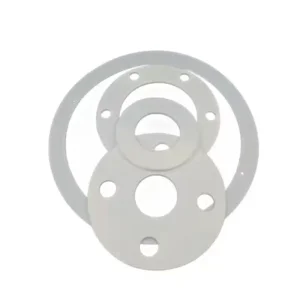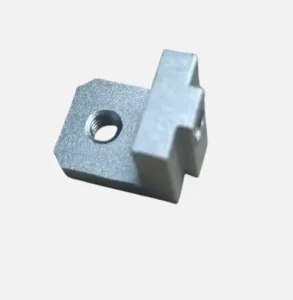
Precision Engineering Catalog - Part I
Explore our top-tier precision-machined, casted, and stamped custom OEM hardware engineered for rigorous industrial applications.
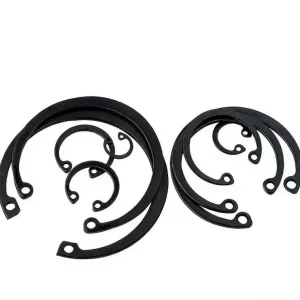
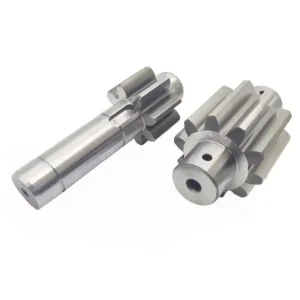
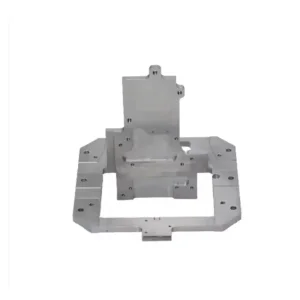
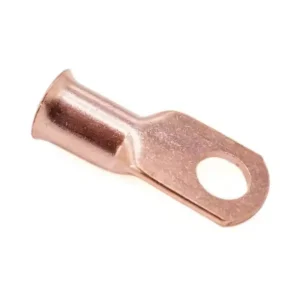
Global Commercial Landscape of Industrial Metal Casting
Evaluating macroeconomic trends, demand vectors, and supply chain shifts defining contemporary metal foundry engineering.
The global metal casting market represents the foundational backbone of modern industrial infrastructure, generating critical components for aerospace assemblies, automotive powertrains, heavy construction machinery, hydraulic flow control systems, and renewable energy grids. As industrial equipment scales in mechanical complexity, procurement requirements have shifted drastically from mass-commodity castings toward engineered, high-integrity OEM custom casting parts that deliver near-net shapes with rigorous internal soundness, zero volumetric defect tolerances, and optimized strength-to-weight ratios.
Modern industrial cast components—encompassing sand casting, investment (lost-wax) casting, high-pressure die casting (HPDC), and gravity die casting—are subjected to extreme thermal stresses, corrosive fluid dynamics, and cyclical mechanical loading. Consequently, Tier-1 original equipment manufacturers (OEMs) require foundry partners capable of synthesizing metallurgical expertise with cutting-edge digital control. Strategic sourcing managers no longer select foundries solely based on raw tonnage pricing; instead, selection hinges on a manufacturer's capacity for Design for Manufacturability (DFM) iteration, non-destructive testing (NDT) capabilities, and microstructural homogeneity.
Why Chinese OEM Casting Factories Lead Global Manufacturing Efficiency
From rapid tooling to fully integrated multi-axis post-machining, Chinese casting facilities offer unprecedented agility and technical precision.
Full Supply Chain Density
China's casting hubs in Guangdong and Zhejiang integrate raw material refining, sand pattern design, tool making, precision casting, heat treatment, and surface finishing within short geographical radii, eliminating logistics bottlenecks.
- Instant access to specialized alloy formulations (A380, ADC12, Ductile Iron GGG50, SS316L).
- In-house tooling creation cuts mold lead times by 50% compared to Western counterparts.
AI & Simulation-Driven DFM
Advanced Chinese foundries employ numerical flow and solidification software (MAGMASOFT®, AnyCasting) prior to tool steel cutting. This predictive engineering eliminates shrinkage cavities, cold shuts, and air entrapment early in design.
- Virtual gating and riser optimization reduces material waste.
- Predictive grain structure modeling ensures uniform mechanical performance.
Hybrid CNC Post-Machining Integration
Casting alone rarely meets modern dynamic sealing or bearing journal tolerances. Leading Chinese factories pair high-capacity foundries directly with 5-axis CNC machining centers, CMM inspection, and robotic finishing lines under one roof.
- Seamless transition from raw casting to ultra-precise micro-finished parts.
- Eliminates multi-vendor markup and secondary handling damage.
Industrial Casting Process & Metallurgical Selection Matrix
Compare mechanical properties, dimensional precision, and economic volume thresholds across primary industrial casting disciplines.
| Casting Process | Primary Alloys | Dimensional Tolerance | Surface Roughness (Ra) | Min Wall Thickness | Economic Lot Size |
|---|---|---|---|---|---|
| Investment Casting (Lost-Wax) | Stainless Steel (304/316L), Carbon Steel, Superalloys, Aluminum | ± 0.10 mm – ± 0.30 mm | 3.2 μm – 6.3 μm | 1.5 mm | 100 – 50,000 pcs |
| High-Pressure Die Casting (HPDC) | Aluminum (A380, ADC12), Zinc (Zamak 3/5), Magnesium (AZ91D) | ± 0.05 mm – ± 0.15 mm | 0.8 μm – 3.2 μm | 0.8 mm | 3,000 – 500,000+ pcs |
| Green Sand & Resin Sand Casting | Ductile Iron (QT450-10, GGG50), Gray Iron (HT250), Cast Steel | ± 0.50 mm – ± 1.50 mm | 12.5 μm – 25.0 μm | 4.0 mm | 10 – 5,000 pcs |
| Gravity & Low-Pressure Die Casting | Aluminum Alloys (A356.0-T6, AlSi7Mg) | ± 0.20 mm – ± 0.40 mm | 3.2 μm – 6.3 μm | 3.0 mm | 500 – 20,000 pcs |
Localized Heavy-Industry Application Scenarios
Engineered metal cast parts optimized for grueling working conditions across diverse global sectors.
Automotive & EV Powertrains
High-pressure aluminum die-cast housings for electric vehicle battery enclosures, motor end bells, and transmission gearboxes requiring ultra-low porosity, structural rigidity, and thin-walled thermal dissipation fins.
Heavy Construction & Mining
Heavy-section resin sand ductile iron castings (QT500-7) for hydraulic excavator mainframes, bucket linkage assemblies, and track rollers capable of absorbing extreme impact shear forces and harsh environmental abrasion.
Fluid Dynamics & Valve Control
Precision investment-cast 316L stainless steel pump impellers, butterfly valve bodies, and chemical processing manifolds engineered for zero leak tightness under pressure up to 10,000 PSI and high corrosive resistance.
Aerospace Structural Brackets
Vacuum-assisted investment cast titanium and high-strength aluminum structural frames with post-machined interface lugs designed to meet strict AS9100 weight-reduction and fatigue-life thresholds.
Global OEM Procurement Standards & Quality Verification Protocols
How leading industrial supply chain officers mitigate risk, enforce metallurgical standards, and ensure 100% batch-to-batch repeatability.
1. Chemical & Metallurgical Validation
Every melt batch undergoes real-time optical emission spectrometry (OES) analysis before pouring. Mill Test Reports (MTRs) compliant with EN 10204 3.1 are provided alongside microscopic nodular graphite evaluation for iron castings.
2. Non-Destructive Testing (NDT)
Critical structural castings undergo industrial X-ray radiography to verify zero subsurface gas porosity or inclusions. Ultrasonic testing (UT) and dye penetrant inspection (PT) ensure complete surface flaw elimination.
3. Coordinate Measuring Machine (CMM)
Post-machined casting features are measured in temperature-controlled Metrology labs using Zeiss multi-sensor CMMs. First Article Inspection (FAI) reports following PPAP Level 3 protocols are submitted prior to mass production release.
Future Trends in Industrial Casting & Foundry Technologies
The convergence of Additive Manufacturing, Giga-casting, and Sustainable Green Foundry Initiatives.
The global metal casting industry is undergoing its most radical transformation since industrial electrification. Chief among these trends is the rapid adoption of 3D-printed sand molds and binder jetting technology, which allows foundries to produce complex prototype sand molds directly from 3D CAD files in hours, completely bypassing traditional wooden or metal pattern creation costs.
Additionally, the automotive sector's shift toward "Giga-Casting" (ultra-large high-pressure die casting machines ranging from 6,000 to 12,000 tons of clamping force) is consolidating dozens of stamped sheet metal parts into single integrated cast chassis structures. Concurrently, strict decarbonization mandates are pushing Chinese and international foundries toward electric induction melting, closed-loop scrap recycling, and low-VOC resin binder systems to achieve carbon-neutral manufacturing benchmarks.
Frequently Asked Engineering & Sourcing Questions
Direct answers to crucial procurement, tolerance, and manufacturing inquiries from global procurement managers.
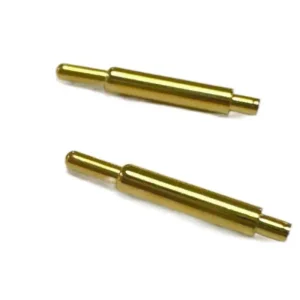
Precision Engineering Catalog - Part II
Browse additional high-precision OEM products tailored for industrial electronics, medical equipment, and advanced robotics.