
1. Global Automotive Casting Market Paradigm Shift
Analyzing structural light-weighting trends, power-train electrification, and the global macroeconomic landscape governing OEM automotive component sourcing.
Electrification & Structural Lightweighting
The global automotive manufacturing domain is undergoing its most radical transformation since the introduction of the assembly line. Driven by stringent global emissions regulations (such as Euro 7 and EPA Multi-Pollutant Standards) and the rapid transition toward Electric Vehicles (EVs), OEMs are prioritizing weight reduction to maximize battery range and efficiency.
Automotive casting has transitioned from heavy, static grey iron blocks to intricate, high-integrity aluminum alloys (A356, AlSi10Mg, ADC12) and ductile iron castings. Modern structural castings—such as shock towers, subframes, and battery enclosures—require exceptional ductility and crashworthiness, demanding advanced vacuum-assisted High-Pressure Die Casting (HPDC) technology.
Global Commercial Dynamics & Sourcing Challenges
Procurement executives at global Tier-1 automotive suppliers and OEMs face unprecedented challenges including supply chain volatility, fluctuating raw material costs, and strict ESG compliance mandates. Traditional localized foundry networks often struggle to balance high mold tooling costs with rapid prototyping speed.
Consequently, international buyers are aligning with integrated OEM manufacturing hubs capable of offering single-source accountability—combining tool design, casting, post-CNC precision machining, non-destructive testing (NDT), and surface finishing under an IATF 16949 certified umbrella.
2. Advanced Casting Process Technologies & Megacasting
Evaluating state-of-the-art foundry engineering: High-Pressure Vacuum Die Casting, Low-Pressure Investment Casting, and Integrated Large-Format Body Castings.
Vacuum High-Pressure Die Casting (HPDC)
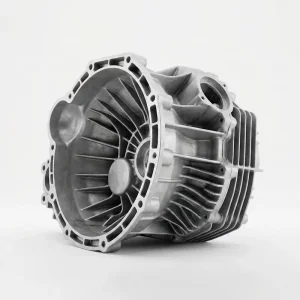
For high-volume aluminum automotive parts such as transmission casings, e-motor housings, and structural brackets, vacuum-assisted HPDC eliminates gas porosity within the mold cavity. This enables heat treatment (T6/T7) to achieve yield strengths exceeding 230 MPa and elongation rates > 10% for critical crash-relevant nodes.
Megacasting & Integrated Body Structures
Pioneered by leading EV OEMs, Giga-casting consolidating up to 70 stamped sheet-metal components into a single large-format aluminum die-cast rear or front underbody module. This dramatically reduces vehicle assembly line footprints, cuts body-in-white (BIW) weight by 20%, and lowers manufacturing CAPEX.
Precision Silica Sol Investment Casting
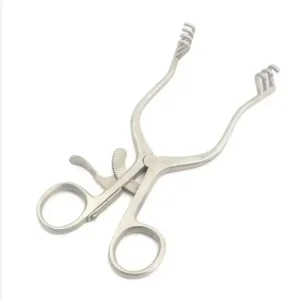
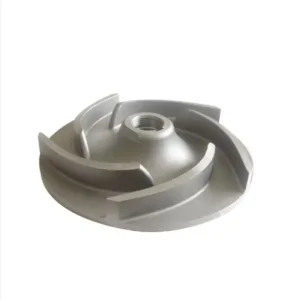
When producing intricate stainless steel turbocharger manifolds, exhaust valves, or medical-grade surgical hardware, lost-wax investment casting delivers tight net-shape tolerances (CT4-CT6) with surface roughness as low as Ra 3.2 µm, minimizing expensive secondary machining operations.
Manufacturing Process Comparison Matrix
| Casting Process | Compatible Alloy Grades | Standard Dimensional Tolerance | Minimum Wall Thickness | Surface Finish (Ra) | Typical OEM Applications |
|---|---|---|---|---|---|
| High-Pressure Die Casting (HPDC) | ADC12, A380, AlSi9Cu3, AlSi10Mg | ISO 8062 CT4 - CT6 | 1.5 mm | 1.6 – 3.2 µm | Transmission Cases, E-Motor Bells |
| Low-Pressure Die Casting (LPDC) | A356.2, AlSi7Mg0.3 (T6) | ISO 8062 CT5 - CT7 | 3.0 mm | 3.2 – 6.3 µm | Automotive Wheels, Suspension Knuckles |
| Investment Casting (Lost Wax) | 316L, 17-4PH, CF8M, Alloy Steel | ISO 8062 CT3 - CT5 | 1.0 mm | 1.6 – 3.2 µm | Turbochargers, Surgical Retractors |
| Ductile Iron Sand Casting | QT450-10, GGG40, EN-GJS-500-7 | ISO 8062 CT7 - CT9 | 4.0 mm | 12.5 – 25 µm | Engine Blocks, Brake Calipers, Axle Housings |
3. OEM Purchasing Criteria: Quality, Compliance & Risk Management
How global procurement directors mitigate cross-border sourcing risks through standardized quality verification and full traceability.
Mandatory Quality Management Frameworks
Procuring enterprise-grade casting components requires rigorous validation at every gate of production. Sunmy Hardware adheres strictly to key automotive quality protocols:
- IATF 16949 Certification Alignment: Comprehensive process control from initial DFM (Design for Manufacturability) analysis through melt preparation and heat treatment.
- PPAP Level 3 Documentation: Submission of complete Production Part Approval Process packages, including Process Flow Diagrams, PFMEA, Control Plans, and Dimensional Results.
- Full Material Traceability: Every batch is supplied with EN 10204 3.1 chemical composition analysis and mechanical test certificates (tensile strength, yield strength, elongation, and Brinell hardness).
Advanced Non-Destructive & Dimensional Verification
Zero-defect policies require state-of-the-art metrology and internal flaw inspection to prevent field failures in structural and pressure-containing components:
- Industrial X-Ray & CT Scanning: Detection of internal shrinkage cavities, gas porosity, and inclusions down to micro-level dimensions.
- Coordinate Measuring Machines (CMM): High-precision Zeiss CMM inspection ensuring machined hole locations, geometric tolerances (GD&T), positioning, and flatness within ±0.005 mm.
- Spectrometric Alloy Verification: Real-time optical emission spectroscopy prior to casting pour to guarantee exact elemental chemistry.
4. China Industry 4.0: Supply Chain Resilience & Efficiency
Leveraging Shenzhen and the Pearl River Delta’s world-class hardware industrial ecosystem for unmatched turnaround times, cost optimization, and technical agility.
Industrial Cluster Synergies
Located in Shenzhen, Guangdong, Sunmy Hardware operates within the world’s most comprehensive manufacturing ecosystem. Raw material sourcing, precision tooling fabrication, specialized heat treatments, and surface anodizing/plating facilities are located within a 50-kilometer radius. This cluster reduces tooling lead times from months to weeks.
Digital Twin & Automated Tooling
By integrating MAGMA soft flow simulation and CAD/CAM digital twin modeling prior to steel mold cutting (using H13 or SKD61 die steel), engineers eliminate mold trial iterations. Automated high-speed CNC machining centers ensure consistent tool repeatability across million-cycle die lifetimes.
Total Cost of Ownership (TCO)
China’s highly optimized supply chain combines competitive energy costs, skilled engineering talent, and automated cell layout to deliver 15% to 30% total unit cost savings compared to Western European or North American foundries—without compromising quality or delivery schedules.
5. Automotive Sub-system Application Scenarios
In-depth engineering applications of custom OEM casting and precision machining across core vehicle assemblies.
Electric Powertrain & Drive Units (E-Axles)
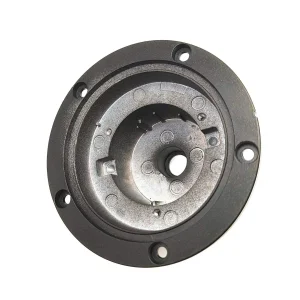
Component Focus: Integrated Motor & Inverter Housings, Reduction Gear Cases, Stator End Bells.
Technical Challenge: High thermal dissipation demands paired with electromagnetic shielding (EMI) and fluid-tight sealing under 2.5 bar hydraulic pressure.
Engineering Solution: Vacuum die-cast A356-T6 aluminum featuring internal cooling channels, post-CNC milled O-ring sealing grooves, and 100% helium leak testing.
Chassis, Steering & Suspension Systems
Component Focus: Control Arms, Steering Knuckles, Subframe Crossmembers, Shock Towers.
Technical Challenge: High fatigue resistance under dynamic road impact loads, extreme strain tolerance, and weight minimization.
Engineering Solution: Low-Pressure Die Casting (LPDC) or squeeze casting using high-purity aluminum alloys, subjected to full T6 heat treatment and ultrasonic flaw detection.
Battery Pack Thermal Management & Enclosures
Component Focus: Battery Tray Corner Nodes, Liquid Cooling Plates, High-Voltage Junction Enclosures.
Technical Challenge: Corrosion resistance against harsh road salt environments, precise mounting flatnesses across large footprints (< 0.2 mm over 1000 mm span).
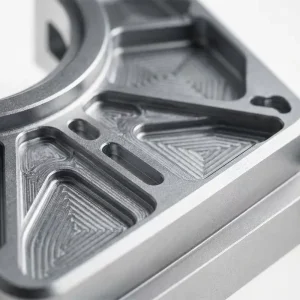
Engineering Solution: High-speed 5-axis CNC machining of die-cast structural nodes, matched with automated powder coating or hard anodizing finishes compliant with ISO 9227 salt-spray tests (> 1000 hours).
Internal Combustion & Hybrid Powertrains
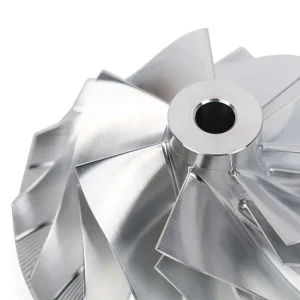
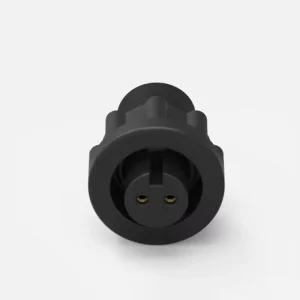
Component Focus: Turbocharger Compressor Wheels, Exhaust Manifolds, Water Pump Housings, Fuel Injector Connectors.
Technical Challenge: Extreme thermal stability (operating temperatures up to 1050°C for turbochargers) and chemical resistance against aggressive fluids.
Engineering Solution: 5-axis CNC machining of billet aluminum or investment casting using heat-resistant nickel-chromium stainless steel alloys.
Frequently Asked Questions (FAQ)
Addressing engineering, procurement, quality control, and logistical queries from global automotive buyers.
What specific alloy grades does Sunmy Hardware utilize for automotive structural and powertrain castings?
We work with a broad spectrum of automotive-grade metals customized to functional performance needs:
- Aluminum Die Casting: ADC12, A380, A356, AlSi10Mg, AlSi9Cu3, and low-copper ductile alloys specifically developed for crashworthiness.
- Investment Casting (Stainless & Alloy Steel): 304, 316L, 17-4PH, 4140, 8620, and heat-resistant HK/HP series alloys for exhaust components.
- Cast Iron & Ductile Iron: GGG40, GGG50, QT450-10, QT500-7 for brake calipers, flywheels, and heavy-duty axle housings.
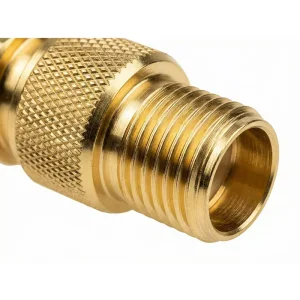
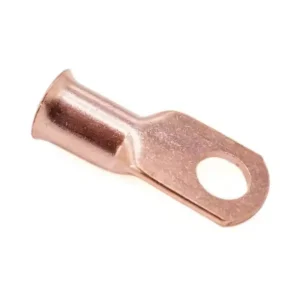
- Copper & Brass Alloys: High-conductivity C11000 copper for battery busbars and knurled brass fittings for gas-tight seals.
How does your engineering team control internal porosity in die-cast aluminum transmission and motor housings?
Porosity control is achieved through a multi-tier engineering strategy: First, we utilize vacuum-assisted High-Pressure Die Casting (HPDC) to extract air from the die cavity prior to shot injection. Second, we run numerical mold filling and solidification simulations (MAGMA/ProCAST) to optimize gate positions and overflow wells. Third, every critical housing undergoes 100% X-ray inspection and helium mass spectrometer leak testing to guarantee structural and sealing integrity.
What precision machining tolerances can be achieved on die-cast parts after casting solidification?
While raw casting tolerances typically fall within ISO 8062 CT4–CT6, our in-house 3, 4, and 5-axis CNC machining operations achieve critical feature tolerances down to ±0.005 mm. Bore concentricities, bearing journal alignments, and gasket sealing surface flatnesses are verified using CMM inspection equipment in temperature-controlled laboratory environments.
What documentation is included in your Production Part Approval Process (PPAP)?
We provide full PPAP Level 3 documentation standard for OEM programs, including: Design Records, Process Flow Diagrams, Process Failure Mode and Effects Analysis (PFMEA), Control Plan, Measurement System Analysis (MSA), Dimensional Results, Material & Performance Test Results (EN 10204 3.1), Initial Process Capability Studies (Cpk > 1.67), and Authorized Inspection Reports.
How are Intellectual Property (IP) and proprietary CAD designs protected during cross-border RFQs?
Protection of customer intellectual property is central to our business code. Prior to receiving 3D CAD models (STEP, IGES, Parasolid) or technical drawings, we execute a legally binding Non-Disclosure Agreement (NDA). All engineering files are hosted on encrypted internal servers, accessible strictly by assigned project engineers. We sell directly to OEM accounts with zero third-party broker exposure.
What secondary surface treatments are performed in-house or through certified tier-1 partners?
We provide comprehensive surface finishing solutions tailored for corrosion resistance, thermal management, and aesthetic appearance: Shot blasting (sand/bead), hard-coat anodizing (Type II & III), chromate conversion coating (RoHS compliant), electro-galvanizing, nickel/tin plating, powder coating, e-coating (electrophoretic painting), and PVD coating.
What is the standard lead time for prototype tooling versus production molds?
Rapid CNC prototypes or 3D printed metal samples can be delivered within 5 to 7 business days. Prototype die-cast tooling or rapid soft tooling takes approximately 2 to 3 weeks. High-volume multi-cavity production die-casting molds (certified for 100,000 to 500,000 shots) are manufactured and qualified via initial T1 samples within 4 to 6 weeks.
Accelerate Your Automotive Casting Project
Partner with Shenzhen Sunmy Hardware Co., Ltd. for factory-direct engineering DFM analysis, rapid tooling, and certified volume casting production. Send your 2D/3D drawings for a 24-hour response under NDA.