OEM China Die-Cast Aluminum Transmission Housing - Supplier & Factory Solutions for Structural Integrity and Cooling Efficiency Supplier, Product
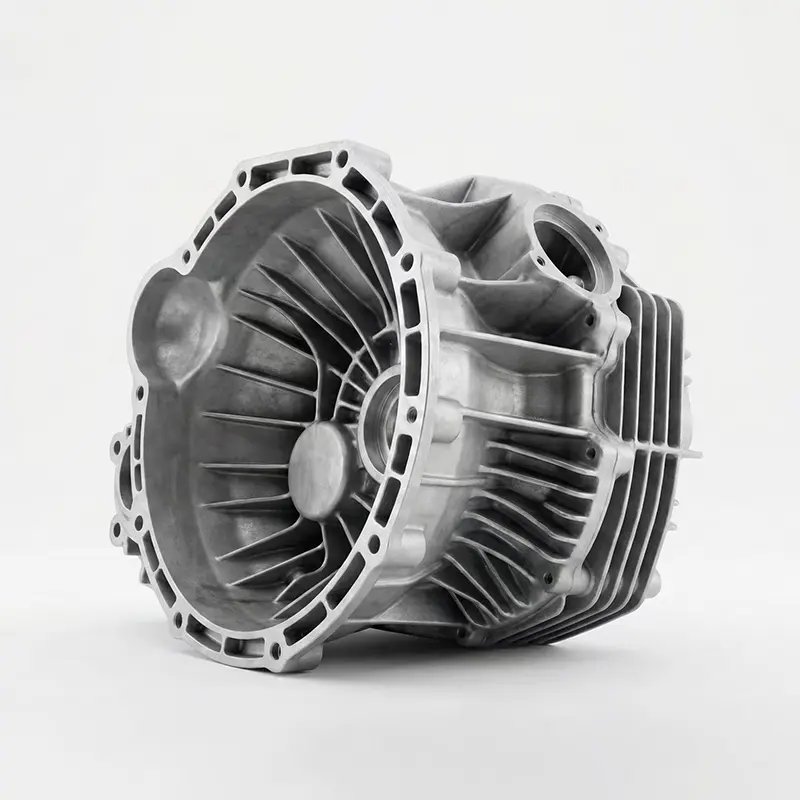
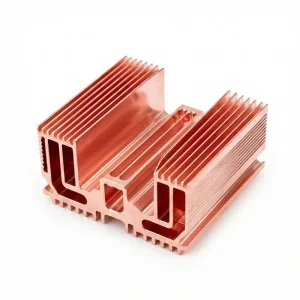
Product Features: Our housing design incorporates advanced internal ribbing for enhanced structural integrity, alongside specially designed cooling fins that ensure optimal thermal management. Capability: As a leading China supplier, Sunmy Hardware offers a comprehensive one-stop solution, ranging from detailed mold flow analysis to precision CNC machining of all mating surfaces. Partner with our factory to experience superior quality and service tailored to your needs
This complex aluminum housing is a key component for automotive transmission systems. It demonstrates Sunmy Hardware's capability to manage complex geometries that require both lightweight characteristics and high structural strength. This project highlights our expertise in bridging the gap between raw casting and precision post-machining.
Key Specifications
Material
Aluminum Alloy ADC12
Process
High-Pressure Die Casting (HPDC) + CNC Milling
Weight
2.5 kg
Mold Cavity
1*1
Surface Treatment
Shot Blasting
Manufacturing Process Insight
1
Mold Flow Analysis
Before production, we simulate the filling process to optimize gate locations, minimizing porosity and air pockets.
2
High-Pressure Die Casting (HPDC)
We use a 400T cold chamber die casting machine with ADC12 aluminum alloy to form the complex shape, including the thin cooling fins.
3
Precision Post-Machining
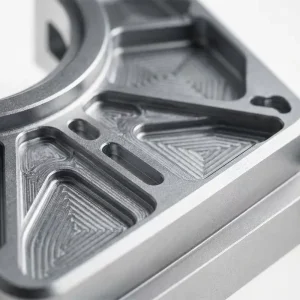
After casting, the part is transferred to a 4-axis CNC machining center. We mill the mating surfaces and bore the bearing holes to H7 tolerance, ensuring perfect assembly alignment.
Key Features & Benefits
Thermal Management
Integrated cooling fins maximize surface area for rapid heat dissipation, critical for protecting internal gears.
Weight Reduction
Optimized wall thickness reduces overall vehicle weight without compromising durability.
Complex Internal Structure
Includes cast-in ribs and bosses that would be too costly to produce via machining alone.
Surface Treatment
Shot blasting removes flash and burrs, providing a uniform matte texture ready for assembly or painting.
Technical FAQ
Q1: What is the typical mold life?
A1: Our high-quality tool steel molds (H13) typically last for 50,000 to 100,000 shots depending on maintenance.
Q2: Can you control porosity in the casting?
A: Yes, through vacuum-assist die casting and strict parameter control, we minimize porosity to meet automotive standards.
Q3: Do you offer leak testing?
A3: Absolutely. We can design custom fixtures to perform air decay leak testing on every housing.
Other Products
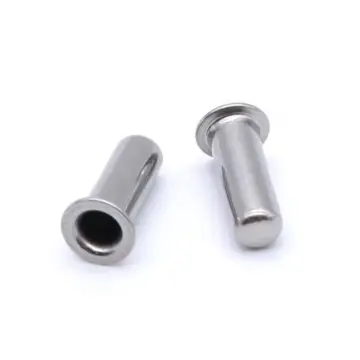
Custom SS316 Deep Drawn Closed-End Flanged Sensor Housing for Temperature Probes (4mm OD)
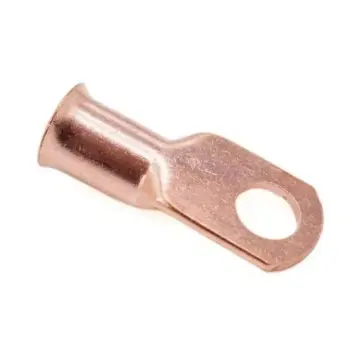
Custom Tinned Copper Lug Ring Crimp Terminal Battery Wire Connector & Metal Stamping Brass Plug
Custom Laser Cut & Welded Heavy Equipment Control Panel
Custom Phosphor Bronze and Steel Stamping Battery Contacts for AG13, CR2032, and CR2450 Coin Cells
Get a Fast, Technical Quote & Free DFM Review
Don't let tolerance stack-up delay your product launch. Submit your project details, and our engineering team will evaluate your design for manufacturability before the first cut.
Frequently Asked Questions
Q
What aluminum alloy is used and why is ADC12 preferred for automotive housings?
ADC12 aluminum alloy is widely used in automotive die casting due to its excellent fluidity, good mechanical strength, and superior corrosion resistance. It allows the casting of thin-walled, complex geometries while maintaining the structural integrity required for transmission applications.
Q
What is the minimum order quantity (MOQ) for this aluminum housing?
MOQ depends on the complexity and tooling requirements of your specific project. We accommodate both prototype runs and high-volume production orders. Please contact our team with your drawings for a tailored quote and MOQ recommendation.
Q
What tolerances can be achieved after CNC post-machining?
After CNC milling and boring, we routinely achieve tolerances of ±0.05mm on mating surfaces and H7 tolerance on bearing bores. Tighter tolerances may be achievable depending on feature geometry — our engineering team will review your DXF/STEP files and advise accordingly.
Q
Can the surface treatment be customized beyond shot blasting?
Yes. In addition to shot blasting, we offer options such as anodizing, powder coating, and chemical conversion coating (Alodine/Chromate). The right treatment depends on your functional requirements — for example, anodizing improves corrosion resistance, while powder coating provides a decorative finish.
Q
How long does it take from tooling approval to first production samples?
Typically, mold fabrication takes 4–6 weeks after design approval. First article inspection (FAI) samples are then provided for your review before mass production begins. Expedited tooling options may be available for urgent projects.
Q
What quality certifications and inspection standards do you follow?
We operate under ISO 9001 quality management standards and apply IATF 16949-aligned processes for automotive components. Each batch undergoes dimensional inspection using CMM equipment, and we provide full material traceability, inspection reports, and COC documentation upon request.