High-Quality Custom Stainless Steel Mounting Bracket from China Suppliers - High-Quality Production by Leading Factory Products, Exporter
Product Description
Product Overview
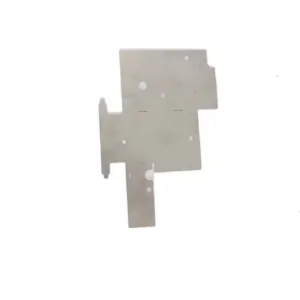
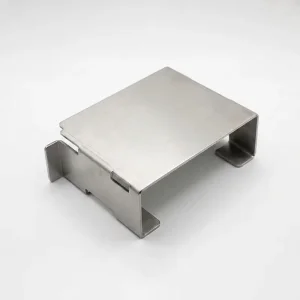
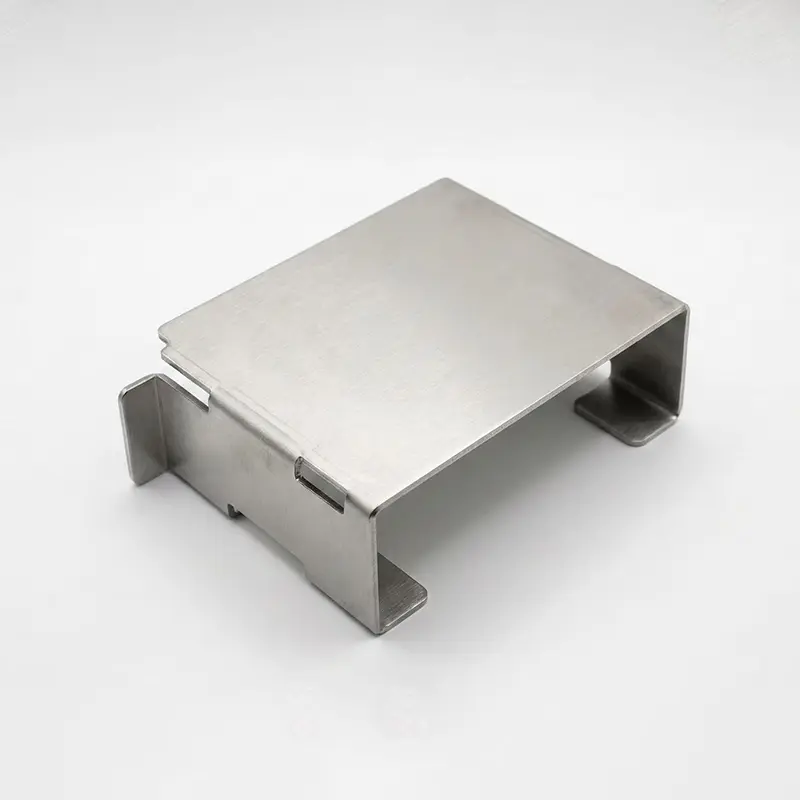
This robust mounting bracket is engineered for heavy-duty machinery applications. Manufactured from high-grade Stainless Steel 304, it is designed to withstand vibration, environmental stress, and high loads. This part exemplifies our sheet metal stamping capabilities, offering consistent quality for high-volume orders.
Key Specifications
| Material | Stainless Steel 304 |
| Thickness | 2.0 mm |
| Process | Progressive Die Stamping / Bending |
| Tolerance | ±0.1mm |
| Finish | Brushed / Deburred |
Manufacturing Process Insight
Progressive Die Stamping
For high efficiency, we utilize a progressive die setup. The steel strip is fed through multiple stations where cutting, punching, and bending occur sequentially with each press stroke.
Precision Bending
The U-shape geometry is formed with controlled spring-back compensation to ensure the dimensions remain within tolerance after release.
Deburring
All stamped parts undergo a tumbling process to remove sharp edges, ensuring safety during handling and installation.
Key Features & Benefits

High Consistency
Stamping ensures that the 10,000th part is identical to the first, perfect for automated assembly lines.

Corrosion Resistance
SS304 material provides excellent rust protection, suitable for outdoor or harsh industrial environments.

Cost-Effective
Once the tooling is made, the unit price drops significantly compared to laser cutting or machining.

Clean Aesthetics
The surface features a brushed finish that hides scratches and looks professional.
Technical FAQ
Q1: What if I only need a few prototypes before opening a mold?
A1: We can use Laser Cutting and CNC Bending to produce prototypes without expensive tooling costs.
Q2: What represents the biggest cost in stamping?
A: The initial tooling (mold) cost. However, this is a one-time investment that pays off in low unit costs for volume production.
Q3: What is the max thickness you can stamp?
A3: We can stamp stainless steel up to 6mm thick, depending on the part geometry and press tonnage required.
Other Products
Custom SS316 Deep Drawn Closed-End Flanged Sensor Housing
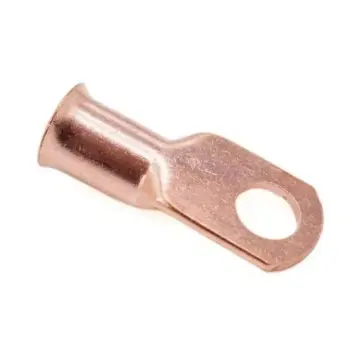
Custom Tinned Copper Lug Ring Crimp Terminal Battery Wire Connector
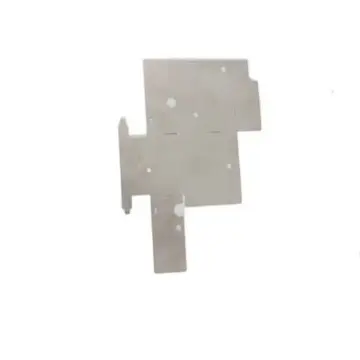
Custom Laser Cut & Welded Heavy Equipment Control Panel
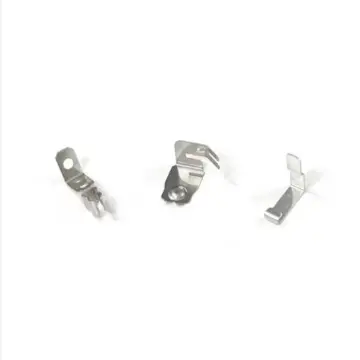
Custom Phosphor Bronze and Steel Stamping Battery Contacts
Get a Fast, Technical Quote & Free DFM Review
Don't let tolerance stack-up delay your product launch. Submit your project details, and our engineering team will evaluate your design for manufacturability before the first cut.
Frequently Asked Questions
QWhat materials can be used for sheet metal stamping besides Stainless Steel 304?
In addition to SS304, we work with a wide range of materials including SS316, carbon steel, galvanized steel, aluminum alloys, copper, and brass. Material selection depends on your application's requirements for strength, corrosion resistance, conductivity, and weight.
QWhat is the typical lead time for a stamped bracket from tooling to delivery?
For new tooling, the typical lead time is 3–5 weeks from design approval to first article samples. Once the mold is approved, production lead time for bulk orders is generally 2–4 weeks depending on quantity and finishing requirements.
QWhat is the minimum order quantity (MOQ) for stamped parts?
Our MOQ varies by part complexity and tooling investment. For progressive die stamping, MOQ is typically 1,000–5,000 pieces. For prototype or low-volume needs using laser cutting and CNC bending, there is no strict MOQ — even single pieces are accepted.
QCan you provide surface treatment options beyond brushing?
Yes. In addition to brushing and deburring, we offer electropolishing, passivation, powder coating, zinc plating, nickel plating, anodizing (for aluminum), and painting. The right finish depends on your corrosion protection, appearance, and functional requirements.
QDo you offer DFM (Design for Manufacturability) review before production?
Absolutely. Our engineering team provides a free DFM review for every new project. We analyze your CAD drawings or 2D prints to identify potential issues such as tight radii, material spring-back, hole-to-edge distances, and tolerance stack-up — helping you avoid costly revisions later.
QHow do you ensure dimensional accuracy and quality consistency across large production runs?
We use in-process quality control with CMM (Coordinate Measuring Machine) inspection, go/no-go gauges, and first article inspection (FAI) reports. Progressive die tooling inherently delivers high repeatability, and our QC team performs regular sampling checks throughout production to maintain the ±0.1mm tolerance standard.