
The Evolution of Modern OEM Aluminum Die Casting
A technical synthesis on macro supply chains, high-pressure die casting (HPDC) innovations, and structural lightweighting for global enterprise procurement teams.
The global manufacturing ecosystem is undergoing a fundamental structural transition. As industries accelerate toward electrification, carbon neutrality, and hyper-automated smart infrastructure, the demand for lightweight, high-integrity metal components has transformed the OEM aluminum die casting landscape. Modern aluminum die casting is no longer merely a process of forcing molten metal into steel molds; it is an integrated discipline combining computational fluid dynamics (CFD), metallurgy, real-time sensor analytics, and sub-micron post-machining metrology.
For original equipment manufacturers (OEMs) operating across Tier-1 automotive, telecommunications infrastructure, industrial robotics, and aerospace, selecting an OEM manufacturing partner requires evaluating deep metallurgical competencies, total cost of ownership (TCO) models, and resilient global logistics architectures. This whitepaper systematically breaks down the critical technical vectors defining next-generation aluminum die casting and provides actionable procurement frameworks to maximize information gain and operational efficiency.
Engineering Alloys & Metallurgical Optimization
Matching mechanical properties, thermal management targets, and structural loads with optimized aluminum die-casting alloys.
Selecting the appropriate alloy formulation is the single most decisive factor in governing component performance, yield rates, and tool longevity. In high-pressure die casting (HPDC), eutectic and near-eutectic Aluminum-Silicon (Al-Si) systems predominate due to their excellent fluidities, narrow freezing ranges, and superior resistance to hot tearing during rapid solidification cycles.
Our foundry operations utilize strict spectrographic heat verification, melt degassing via rotary argon lances, and custom modification elements (such as Sr and Na refinement) to engineer superior grain structures across standard and proprietary alloys:
| Alloy Grade | Tensile Strength (MPa) | Yield Strength (MPa) | Thermal Cond. (W/m·K) | Primary Technical Characteristics | Primary Industrial Applications |
|---|---|---|---|---|---|
| A380 / ADC10 | 320 | 160 | 96.2 | Optimal balance of castability, mechanical strength, and pressure tightness. Highly fluid. | Gear housings, engine brackets, electronic enclosures, general structural hardware. |
| ADC12 / A383 | 340 | 170 | 96.0 | Higher Si content lowers melting point and enhances mold-filling characteristics for thin walls. | Complex telecommunications heat sinks, thin-wall covers, intricate valve bodies. |
| A356 / AlSi7Mg0.3 | 290 (T6) | 220 (T6) | 150.0 | Exceptional ductility, high fracture toughness, and heat-treatability (T5/T6 capable via vacuum HPDC). | EV structural nodes, suspension arms, wheel hubs, critical pressure vessels. |
| AlSi10Mg(Fe) | 300 | 180 | 110.0 | High corrosion resistance, superior thermal dissipation, and excellent weldability. | 5G antenna array housings, inverter enclosures, outdoor power electronics. |
Rotary Degassing & Melt Cleanliness
Hydrogen gas solubility spikes dramatically in liquid aluminum. We deploy automated rotary degassing units injecting high-purity Argon gas combined with fluxing agents to keep dissolved H₂ levels strictly under 0.12 cm³ per 100g of metal, preventing internal pinhole porosity.
Real-Time X-Ray NDT Inspection
Every critical structural component undergoes non-destructive testing (NDT) via automated X-ray inspection cells calibrated to ASTM E505 standards. This guarantees micro-porosity levels comply with Tier-1 automotive fatigue-life requirements.
Secondary Aluminum & Carbon Footprint Reduction
In line with global ESG directives, our facility integrates up to 85% certified post-industrial secondary aluminum alloys (e.g., recycled A380 ingot formulations), reducing embodied carbon by up to 92% compared to primary smelter ingots without compromising mechanical yield.
High-Pressure Die Casting (HPDC) vs. Alternative Processes
Evaluating trade-offs between HPDC, Low-Pressure Die Casting (LPDC), Gravity Permanent Mold, and 5-Axis CNC Machining.
A core challenge faced by global procurement officers and hardware engineering leads is identifying the optimal manufacturing process route based on annual volume, geometric complexity, tooling amortization, and mechanical density requirements. The table below outlines the cross-functional process trade-offs:
| Evaluation Parameter | High-Pressure Die Casting (HPDC) | Low-Pressure Die Casting (LPDC) | Gravity Investment Casting | Full CNC Billet Machining |
|---|---|---|---|---|
| Economic Production Volume | > 2,500 - 500,000+ pcs/yr | 500 - 20,000 pcs/yr | 100 - 5,000 pcs/yr | 1 - 1,000 pcs/yr |
| Minimum Wall Thickness | 1.0 mm – 1.5 mm (Thin-wall capability) | 3.0 mm – 4.0 mm | 2.5 mm – 3.0 mm | 0.8 mm (Feature dependent) |
| Cycle Time per Unit | 15 to 60 seconds | 3 to 8 minutes | 10 to 30 minutes | 15 minutes to 4 hours |
| Tooling Initial Capital (NRE) | High ($15,000 – $120,000+) | Moderate ($8,000 – $35,000) | Low ($2,000 – $10,000) | Zero Tooling NRE (Fixture only) |
| Surface Finish (As-Cast) | Ra 1.6 to Ra 3.2 µm | Ra 3.2 to Ra 6.3 µm | Ra 3.2 to Ra 6.3 µm | Ra 0.8 to Ra 1.6 µm |
Design for Manufacturability (DFM) Engineering Protocol
Achieving defect-free casting results requires strict adherence to DFM principles before steel is cut for dies. Our engineering office performs complete computational fluid dynamics (CFD) gating and thermal solidification simulation using MAGMAsoft® and Moldflow® to detect cold shuts, air entrapment, and shrink porosity in advance.
Draft Angle Optimization
Proper draft angles prevent surface galling during ejection. We specify a minimum of 1.0° to 1.5° on internal core pins and 0.5° to 1.0° on outer cavity walls, tailored to the specific thermal expansion coefficient of the selected alloy.
Uniform Wall Thickness Transition
Abrupt wall thickness variations trigger localized thermal mass zones, leading to shrink void formation. Our engineers re-architect geometry to maintain wall uniformity within ±15%, utilizing cored-out pockets and structural ribbing.
High-Vacuum Venting Systems
For high-integrity gas-tight housings, we integrate multi-stage chill-block vacuum evacuation valves that reduce cavity ambient pressures down to <50 mbar prior to liquid metal injection, allowing T6 heat treatment without blistering.
Cross-Industry Engineering Solutions
Custom aluminum die-casting modules built for extreme thermal, mechanical, and environmental stress profiles.
Automotive & Electric Powertrains
High-integrity structural die castings including EV battery pack module trays, traction motor end bells, inverter housing covers, and lightweight chassis nodes. Engineered for high fatigue limits and crash-relevant energy absorption.
5G Telecom & Cloud Hardware
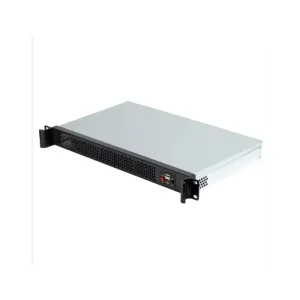
Thermally optimized outdoor Active Antenna Unit (AAU) chassis and 1U/2U server heat sink enclosures. Featuring high-density cooling fin structures cast with zero draft using specialized collapsible cores and high-K conductivity alloys.
Industrial Robotics & Automation
Low-inertia articulated arm segments, planetary gearboxes, and servo motor housings. Post-machined on multi-axis CNC centers to ensure concentricity, bore parallelism within 8 microns, and zero oil leakage under high hydraulic pressure.
Global Quality Systems, Metrology & Compliance
Comprehensive inspection protocols ensuring 100% drawing compliance and zero-defect delivery.
Quality control at our manufacturing facility is not a reactive gate; it is a systematic closed-loop quality system integrated into every stage of the manufacturing workflow. Certified to ISO 9001:2015 and fully compliant with IATF 16949 core tools, we supply comprehensive First Article Inspection (FAI) packages, full dimensional PPAP Level 3 documentation, and trace material certifications with every production lot.
3D Coordinate Measuring Machine (CMM)
Equipped with temperature-controlled metrology labs utilizing Zeiss CMM systems with laser scanning heads. Volumetric accuracy holds to 1.2 + L/350 µm for complex geometric dimensioning and tolerancing (GD&T) verification.
Surface Finishing & Environmental Testing
In-house quality validation for secondary surface operations including hard-coat anodizing, powder coating, chromate conversion (RoHS-compliant REACH protection), and salt spray corrosion testing per ASTM B117 (up to 1,000 hours without red rust).
PPAP & Advanced Quality Documentation
Full production part approval process (PPAP) capability including PFMEA (Process Failure Mode and Effects Analysis), Control Plans, Gage R&R studies, and material mill test reports (MTR) mapped directly to heat numbers.
Megacasting, AI Quality Monitoring & Sustainable Horizons
Strategic advancements driving next-generation die-casting competitiveness through 2030.
As original equipment manufacturers seek further consolidation of complex assemblies, die-casting technology is scaling up dramatically. The trend toward Megacasting (Giga-casting)—utilizing ultra-large HPDC presses ranging from 6,000 to 12,000 tons of clamping force—is replacing dozens of stamped sheet metal parts with single, integrated aluminum castings. This dramatically reduces vehicle assembly footprints, lowers production overhead, and eliminates hundreds of robotic spot-welding stations.
Simultaneously, our digital manufacturing roadmap leverages artificial intelligence (AI) directly on the casting floor. Real-time sensor arrays track plunger velocity curves, intensification pressure spikes, and mold temperature distributions across thousands of consecutive shots. Machine learning algorithms analyze shot profiles instantly to reject out-of-spec castings before downstream CNC machining operations begin.
Frequently Asked Questions (FAQ) for OEM Buyers
Direct technical clarity on tooling lifecycles, lead times, porosity management, and process economics.
What is the typical lifespan of an aluminum die-casting tool (die mold)?
For standard aluminum alloys (such as A380 or ADC12), high-grade premium H13 (1.2344) or Premium Die Steel (die-stress relieved) inserts typically yield a tool life of 100,000 to 150,000 shots before requiring insert refurbishment or replacement. Proper die preheating, thermal cycling control, and automated lubricant spraying maximize tooling longevity.
How does your factory prevent gas and shrinkage porosity in pressure-tight parts?
We deploy a tri-layer porosity mitigation framework: 1) Rotary argon melt degassing to reduce dissolved hydrogen gas below 0.12 cm³/100g; 2) MAGMAsoft® fill and thermal simulation to position overflow wells and vacuum chill blocks correctly; 3) High-vacuum valve assisted HPDC to pull cavity pressures below 50 mbar before metal injection.
Can aluminum die castings undergo T6 heat treatment without surface blistering?
Standard HPDC parts cannot undergo T6 solution heat treatment due to trapped gases expanding at elevated temperatures (500°C+), causing surface blisters. However, using our advanced Vacuum-Assisted High-Pressure Die Casting or Squeeze Casting processes, gas levels are kept low enough to allow full T6 heat treatment for maximum tensile strength and elongation.
What are the standard production lead times from CAD design to First Article Samples (T1)?
For custom aluminum die-cast components, DFM analysis and mold design require 3–5 working days. Tooling fabrication requires 30–40 calendar days. First Article Inspection (FAI) samples with CMM reports are delivered within 5 days of T1 trial execution. Rapid prototyping via 3D metal printing or billet CNC machining is available within 5–7 days for early design validation.
How do you protect international buyer IP and technical drawing confidentiality?
Intellectual Property security is governed by legally binding Non-Disclosure Agreements (NDAs) signed prior to file transfer. Customer CAD data is stored on encrypted, access-restricted servers isolated from public networks. We work directly with enterprise OEMs without third-party broker handoffs.

Accelerate Your Hardware Development Program
Upload your 3D CAD files (STEP, IGES, SolidWorks) or 2D PDF drawings to receive a comprehensive DFM review and formal quotation within 24 hours.
Request Engineering RFQ & DFM Analysis