
High-Precision Components & Custom Assemblies
Explore our top-tier multi-material, turned, and custom machined components built to strict global procurement specifications.
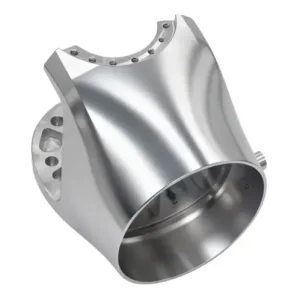
ODM High-Precision Custom 5-Axis CNC Machined Robot Joint & Housing Parts Service, Quotes
View Product Specs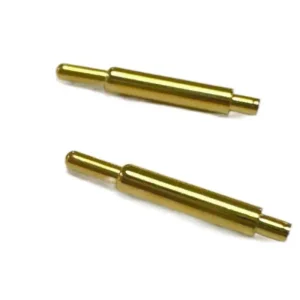
China Precision Turned Custom Gold-Plated Brass Spring Pogo Pin High-Precision Connector Accessory for PCB
View Product Specs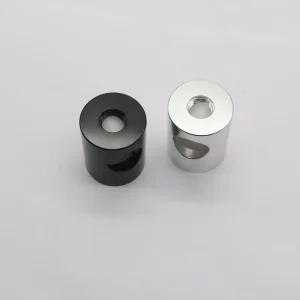
Custom Custom Precision CNC Turned Stainless Steel Medical Components Manufacturer, Quotes
View Product Specs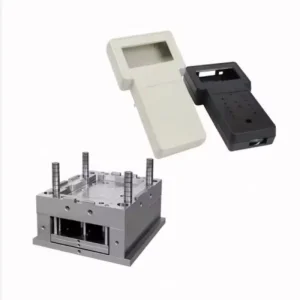
OEM Custom OEM POS Terminal Housing Precision ABS Shell & Silicone Keypad Assembly Manufacturers
View Product Specs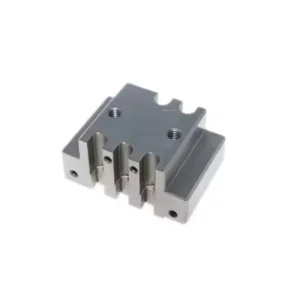
ODM OEM Precision CNC Machining Aluminum Parts & Custom Industrial Components Manufacturer
View Product Specs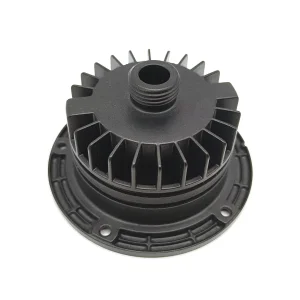
High-Quality Custom Die Cast Aluminum Finned Housings & End Caps Products, Quotes
View Product Specs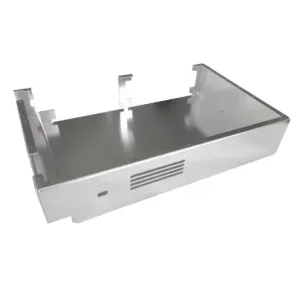
China Custom Precision Sheet Metal Fabrication - Stainless Steel & Aluminum Cabinet Enclosures
View Product Specs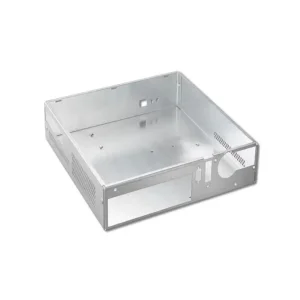
OEM Custom Aluminum Electrical Enclosure Control Box Supplier, Product
View Product SpecsUnlocking Next-Gen Manufacturing: The Strategic Value of ODM 2-Shot Molding
In modern precision manufacturing, traditional single-material injection molding supplemented by secondary glue bonding or mechanical snap-fitting fails to satisfy the rigorous structural, aesthetic, and IPX8 ingress protection standards demanded by Tier-1 OEM procurement teams.
What is ODM 2-Shot Molding (Double-Shot Injection)?
Two-Shot (2K or Double-Shot) injection molding is an automated, highly sophisticated manufacturing process wherein two distinct polymer resins—typically a rigid structural substrate (e.g., PC, ABS, PA66, PBT) and a soft elastomeric resin (e.g., TPE, TPU, Silicone, or contrasting color resin)—are sequentially injected into a single specialized mold cavity via rotating index plates or core-back mechanisms.
Unlike standard overmolding which requires manual operator transfer between two separate molding presses, ODM 2-Shot molding executes both injection steps within a single continuous thermal cycle. This eliminates contamination risk, ensures sub-micron placement accuracy, and establishes molecular-level polymer chain entanglement at the interface.
The Physics of Interfacial Molecular Bonding
The core engineering breakthrough of 2K molding lies in thermal fusion and inter-diffusion. When Shot 1 (first substrate) is injected, its surface skin solidifies to form the core geometry while retaining partial surface enthalpy. As the mold indexes to Station 2, the molten polymer of Shot 2 impinges upon the substrate surface under controlled cavity pressure and melt temperature.
This controlled thermodynamic environment melts the boundary layer of Shot 1, allowing polymer chains to inter-diffuse across the boundary layer. The resulting chemical bond strength often exceeds the shear strength of the elastomer itself, creating an unyielding, seamless joint resistant to thermal cycling, chemical exposure, and mechanical fatigue.
Polymer Compatibility Matrix for 2-Shot Molding
Selecting chemically compatible resin pairs is paramount to achieving chemical cohesion without needing mechanical keyways or undercut interlocks.
| Rigid Substrate (Shot 1) | Soft Elastomer (Shot 2) | Chemical Adhesion Grade | Mechanical Interlock Needed? | Primary Industry Applications |
|---|---|---|---|---|
| Polycarbonate (PC) | TPE / TPU (Polyester-based) | Excellent (Chemical Bond) | No | Medical Monitors, Ergonomic Hand Tools |
| ABS / PC+ABS Alloy | TPE (Styrenic TPE-S) | Excellent (High Fusion) | No | Automotive Dashboards, Smart POS Shells |
| Polyamide (PA6 / PA66) | TPU / Modified TPE | Good (Requires Temperature Control) | Recommended for dynamic loads | Under-the-hood Automotive, Power Tools |
| PBT / PET Polyester | Custom Formulated TPE | Moderate to Good | Optional | Waterproof Electrical Connectors, Switches |
| Polypropylene (PP) | TPO / SEBS-based TPE | Excellent (Non-polar match) | No | Consumer Packaging, Fluid Seals, Caps |
Macro Procurement Drivers Shaping 2-Shot Molding Demand
Global supply chains are undergoing structural transformations. Strategic buyers in Europe and North America are transitioning from multi-tier assembly vendors to direct ODM 2-Shot manufacturing partners.
1. Elimination of Secondary Assembly Lines
Traditional product assembly requires manual placement of rubber gaskets, ultrasonic welding, or solvent gluing. This introduces variance, elevated labor costs, and high scrap rates. ODM 2-Shot molding integrates sealing beads, soft-grip handles, and structural windows directly inside the mold cavity, cutting operational touchpoints by up to 60%.
2. IPX7 & IPX8 Waterproofing Standards
Next-gen consumer electronics, wearable medical diagnostics, and outdoor industrial sensors demand absolute liquid and dust ingress resistance. Co-molded elastomeric seals bonded directly to rigid enclosures create a perpetual hermetic boundary that withstands thermal shock, immersion, and vibration far better than liquid-dispensed foam or separate O-rings.
3. Miniaturization & Multi-Material Aesthetics
As devices shrink in size, housing tolerances become extremely tight. 2-Shot injection allows micro-thin elastomer walls (down to 0.6mm) over rigid substrates, dual-color clear lens windows, translucent back-lit logos, and tactile buttons to be executed seamlessly without flash or particulate contamination.
Engineered Solutions Across High-Reliability Sectors
Sunmy Hardware tailors tool architecture, resin selections, and quality validation workflows to meet the stringent regulatory mandates of global vertical markets.
Automotive & EV Power Systems
Modern Electric Vehicle (EV) battery management modules, high-voltage busbar isolators, and interior haptic switches require flame-retardant, high-dielectric polymers paired with vibration-dampening elastomers.
- Materials: PA66+30%GF with heat-stabilized TPE / Silicone overmolding.
- Tooling: Rotary platter 2K molds with independent temperature zone control.
- Compliance: IATF 16949 production line auditing & PPAP Level 3 documentation.
Medical Devices & Diagnostics
Surgical handpieces, micro-fluidic diagnostic cassettes, and respiratory mask seals demand biocompatible resins processed in particulate-controlled environments to eliminate cytotoxic risks.
- Materials: USP Class VI Polycarbonate (PC) co-molded with Liquid Silicone Rubber (LSR).
- Environment: ISO Class 8 Cleanroom injection molding & vision inspection.
- Compliance: ISO 13485 quality standard & full lot raw material traceability.
Smart Consumer & POS Terminals
Handheld POS terminals, ruggedized smartphones, and smart home controllers demand shock-absorbing perimeter bumpers fused seamlessly to high-impact cosmetic housings.
- Materials: PC/ABS alloy structural shell co-molded with UV-resistant TPU.
- Finishing: In-mold decoration (IMD) paired with soft-touch elastomeric grips.
- Testing: 1.5-Meter concrete drop test validation & sweat corrosion resistance.
Industrial Automation & Robotics
Robotic gripper fingers, industrial cable strain reliefs, and control box sealing caps require severe chemical resilience against hydraulic oils, lubricants, and continuous flex fatigue.
- Materials: PBT / PA66 housing co-molded with oil-resistant fluoropolymer TPE.
- Precision: Multi-cavity mold index precision controlled within ±0.003mm.
- Durability: 5-Million cycle continuous flex fatigue certification.
2-Shot Molding vs. Alternative Manufacturing Routes
Evaluating the trade-offs between tooling capital expenditure (CAPEX) and unit manufacturing cost (OPEX) is essential for engineering leaders.
| Evaluation Parameter | ODM 2-Shot Molding (2K) | Standard Overmolding (2-Step) | Secondary Mechanical Assembly |
|---|---|---|---|
| Initial Tooling Cost (CAPEX) | Higher (Complex rotary plate / core-back tool design) | Moderate (Two separate simpler molds) | Lower (Single mold + assembly fixtures) |
| Part Cycle Time | Fastest (20-40 sec complete part) | Slow (Requires manual transfer & cooling) | Slowest (Includes manual assembly steps) |
| Bond Durability & Quality | Molecular Fusion (Zero delamination) | Variable (Risk of surface oxidation between shots) | Low (Relies on adhesive degradation or snaps) |
| Dimensional Tolerance | Micron-level (Single clamping alignment) | Moderate (Part loading registration variance) | Low (Cumulative tolerance stack-up) |
| Break-Even Production Volume | > 10,000 units / year | 2,000 – 10,000 units / year | < 2,000 units / year |
Engineering DFM Insight: Managing Differential Volumetric Shrinkage
A frequent failure mode in multi-shot tooling is component warping caused by differing volumetric shrinkage rates between rigid substrates (e.g., PC shrinking at 0.5-0.7%) and elastomers (e.g., TPE shrinking at 1.5-2.2%). At Sunmy Hardware, our mold design engineers utilize Moldflow® 3D thermal stress analysis to optimize gate location, control cavity cooling differential, and pre-compensate mold cavity dimensions, guaranteeing net-shape alignment after ejection.
Zero-Defect Quality Control & Global Supply Compliance
We safeguard your brand reputation through rigorous quality verification protocols and complete supply chain transparency.
CMM & Optical Inspection
Every first-article inspection (FAI) report includes Zeiss 3D Coordinate Measuring Machine (CMM) dimensional data, laser surface profiling, and key characteristic capability studies (Cpk ≥ 1.67).
Interfacial Peel & Shear Testing
We execute standardized ASTM D903 180-degree peel tests and shear stress pull testing on 2K material bonds under ambient, high-humidity, and thermal shock conditions (-40°C to +125°C).
Material Certification & RoHS
All engineering polymers and elastomers are sourced directly from certified global producers (Sabic, Covestro, DuPont, Kraiburg TPE). Full lot-traceable material test reports (MTR), RoHS, REACH, and UL94 flame ratings accompany every delivery.
Technology Roadmap: What Lies Ahead for 2-Shot Molding
As smart hardware demands higher functional integration, Sunmy Hardware is investing in next-generation manufacturing capabilities.
In-Mold Electronics (IME) Integration
Combining printed flexible capacitive sensors directly between Shot 1 and Shot 2 resin cycles, creating 3D touch-active surfaces without physical mechanical buttons.
Bio-Based & Recycled TPE Compounds
Formulating ISCC Plus-certified bio-attributed TPEs and PIR/PCR engineering rigid substrates to assist Fortune 500 brands in meeting Scope 3 carbon reduction targets.
AI In-Mold Cavity Sensor Monitoring
Piezoelectric cavity pressure transducers connected to real-time closed-loop machine controls automatically adjust injection velocity to compensate for viscosity batch variations.
Frequently Asked Questions by Global Procurement Teams
Get immediate clarity on minimum order quantities, tooling timelines, IP protection, and material selection guidelines.
What is the typical tooling lead time for an ODM 2-Shot injection mold?
How does Sunmy Hardware guarantee strong chemical bonding between Shot 1 and Shot 2 resins?
Can 2-Shot molding be used for clear window applications with soft seals?
What is the Minimum Order Quantity (MOQ) for custom 2-Shot molded parts?
How do you safeguard our proprietary product designs and IP during ODM co-development?
What quality inspection reports accompany 2K part shipments?
Explore More Precision Hardware & Custom Manufacturing Solutions
From high-speed turned connectors to die-cast motor housings and complex gear sets, discover our complete engineering capabilities.
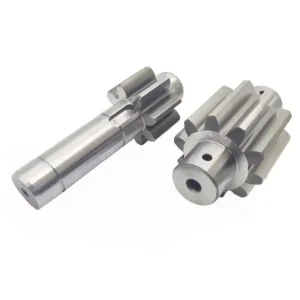
OEM Custom CNC Machined Spur Gears & Gear Shafts - Automotive Transmission Systems | China Suppliers
View Product Specs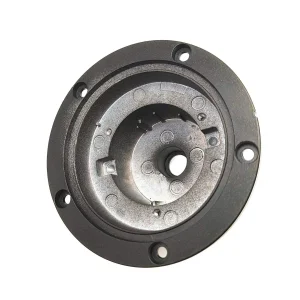
China Custom Die-Cast Aluminum Motor End Bell Housing Suppliers, Service
View Product Specs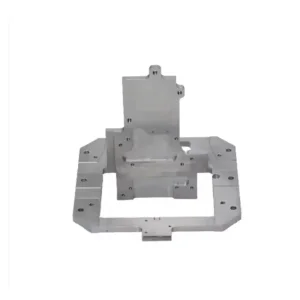
OEM High-Precision CNC Machined Metal Brackets & Frames - Wire EDM & Milling for Aerospace
View Product Specs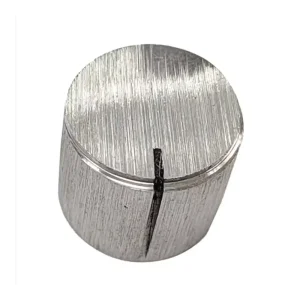
ODM Custom Plastic Injection Molded Control Knob Factory in China | Premium Metallic Finish
View Product Specs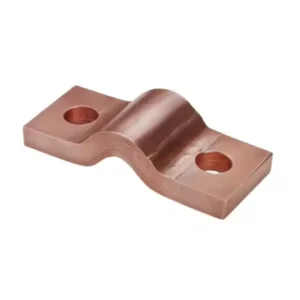
OEM Custom Flexible Laminated Copper Busbars for Battery & Electrical Equipment - China Factory
View Product Specs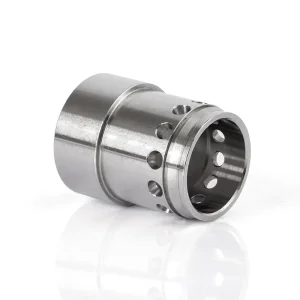
OEM Custom CNC Stainless Steel Drilled Filter Sleeve & Flow Control Valve Component Product
View Product Specs
Custom Custom CNC Turned Titanium Abutment Implant Driver & Prosthetic Connector | China Suppliers
View Product Specs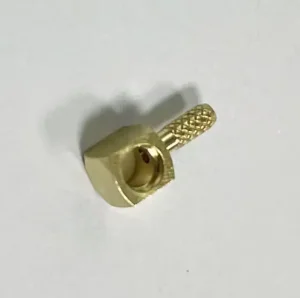
ODM Custom CNC Machining Brass Insert Connector with Knurled Pin OEM Service, Exporter
View Product SpecsReady to Optimize Your Multi-Material Part Manufacturing?
Submit your 3D CAD files (STEP, IGES, X_T) today. Our senior engineering team will provide a non-disclosure agreement (NDA), comprehensive DFM moldflow analysis, and a competitive manufacturing proposal within 24 hours.