
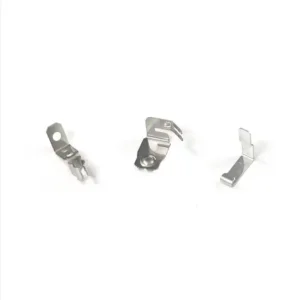
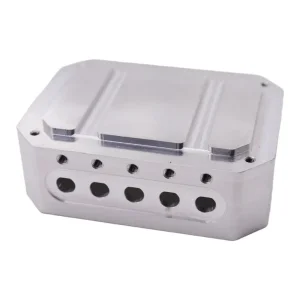
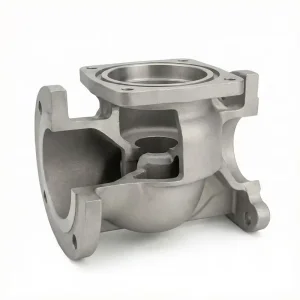
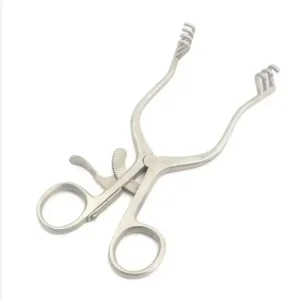
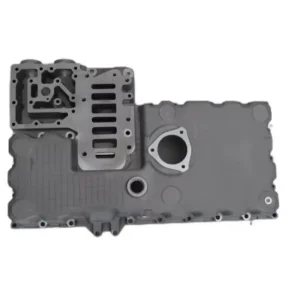
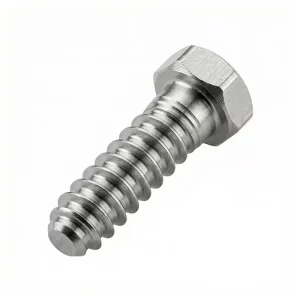
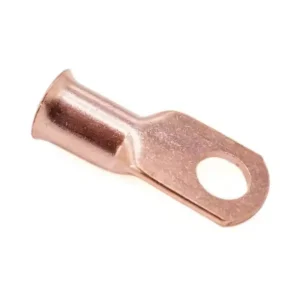
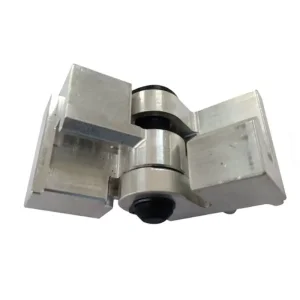
Featured OEM Precision Hardware Products
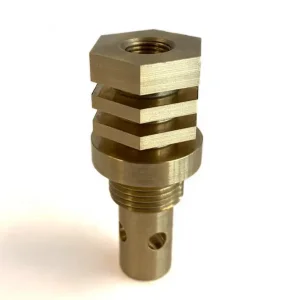
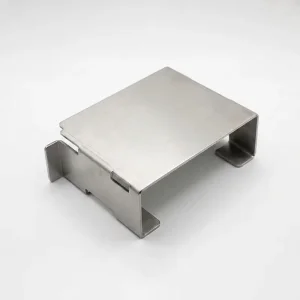
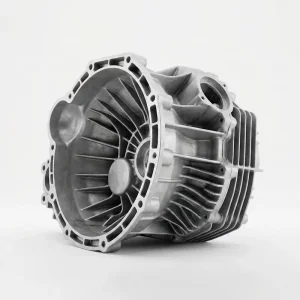
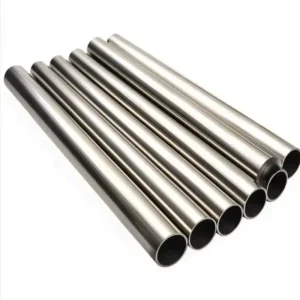
High-precision engineering components tailored for global export supply chains, featuring verified metallurgical and dimensional accuracy.
The Paradigm Shift in B2B SLA Printing Procurement
How modern Stereolithography (SLA) additive manufacturing is redefining rapid prototyping, bridges-to-production, and direct functional part manufacturing for global OEMs.
In the evolving ecosystem of advanced manufacturing, Stereolithography (SLA) 3D printing has transitioned from a pure rapid prototyping tool into an indispensable, production-grade additive technology. For industrial buyers, strategic sourcing managers, and chief technology officers, evaluating a High-Quality SLA Printing Manufacturer & Exporter requires looking beyond standard print bed dimensions. It demands a rigorous assessment of resin photopolymer chemistry, optical galvanometric beam precision, Z-axis repeatability, post-processing thermal protocols, and ISO-certified quality assurance frameworks.
Unlike fused deposition modeling (FDM) or selective laser sintering (SLS), SLA leverages ultra-precise ultraviolet (UV) lasers to cure liquid photosensitive resins layer by layer. This mechanism achieves unparalleled surface smoothness (Ra values down to 0.2 µm - 0.4 µm) and isotropic mechanical behavior. As industrial supply chains seek agility against geopolitical volatility, direct digital manufacturing via SLA offers zero-tooling setup costs, immediate CAD-to-part execution, and drastically compressed product launch cycles.
“SLA printing enables a structural shift in hardware engineering—bridging the gap between initial DFM (Design for Manufacturability) verification and high-volume injection molding without upfront tooling exposure.”
Global Procurement Metrics & Benchmarks
- Dimensional Tolerance: Standard ±0.05 mm for parts under 100 mm; ±0.15% for macro components.
- Layer Thickness Resolution: Micro-step control ranging from 25 microns (0.025 mm) to 100 microns (0.1 mm).
- Isotropic Tensile Strength: Up to 65 MPa with high-performance engineering photopolymers.
- Heat Deflection Temperature (HDT): Custom resin formulations enduring up to 280°C under load.
- Material Compliance: RoHS, REACH, ISO 10993 (Medical Biocompatibility Class VI), and UL94 V-0 flame retardancy.
Macro-Industry SLA Additive Engineering Solutions
Tailored photopolymer printing protocols serving mission-critical applications across global tier-1 industrial sectors.
Aerospace & Wind Tunnel Fluidics
Aerospace engineering demands light-weighting combined with rigid aerodynamic fidelity. Our high-modulus SLA resins produce wind tunnel models with zero surface drag friction and internal conformal flow channels for heat-exchanger validation.
- Scale wind tunnel aerodynamic testing models
- Conformal cooling liquid flow manifolds
- Lightweight structural ducting prototypes
Automotive Lighting & Ergonomic Verification
Automotive R&D requires crystal-clear optical components for light guide validation and pre-production headlight housings. SLA optical-grade PMMA-like acrylic resins deliver 90%+ light transmission post-polishing.
- Transparent light pipes & reflector lenses
- Full-scale dashboard instrument mockups
- Investment casting patterns for engine blocks
Medical Devices & Surgical Instruments
Utilizing USP Class VI certified biocompatible resins, our SLA facility manufactures patient-specific surgical guides, anatomical diagnostic models, and ergonomic handles for specialized surgical instruments.
- Autoclavable patient-specific surgical jigs
- CT/MRI derived anatomical bone models
- Hearing aid shells and dental aligner molds
Industrial SLA Photopolymer Resin Chemistries & Specifications
Select the exact material formulation tailored to your mechanical, thermal, and electrical performance requirements.
| Resin Classification | Simulated Standard Material | Tensile Modulus (MPa) | Elongation at Break (%) | HDT @ 0.45 MPa (°C) | Key Engineering Applications |
|---|---|---|---|---|---|
| ABS-Like Tough Resin | High-Impact ABS / PC | 2,300 - 2,800 | 12% - 20% | 58°C - 68°C | Snap-fit enclosures, functional housings, automotive interior trim. |
| High-Temperature Thermal Resin | PEEK / PBT Glass-Filled | 3,200 - 3,800 | 2% - 5% | 230°C - 280°C | Hot air/fluid manifolds, electrical testing fixtures, vulcanized rubber molds. |
| Optical Clear Acrylic Resin | PMMA / Polycarbonate | 2,100 - 2,500 | 6% - 10% | 52°C - 60°C | Fluid flow visualization, light pipes, lenses, microfluidic chips. |
| Flexible / Elastic Polymer | Silicone / Shore 60A-80A TPU | 15 - 45 (Tensile) | 110% - 160% | N/A | Gaskets, seals, ergonomic overmolds, cushioning pads. |
| Ceramic-Reinforced Composite | Filled Composite / Aluminum | 8,500 - 10,500 | 1% - 2% | 290°C | Wind tunnel testing, extreme stiffness fixtures, space launch components. |
Technical Comparison: SLA Additive vs. CNC Machining vs. Injection Molding
Understanding unit economics, turnaround timelines, and geometric capabilities to optimize your Bill of Materials (BOM).
SLA Industrial 3D Printing
- Tooling Cost: $0 (Direct Digital Manufacturing)
- Lead Time: 24 - 48 Hours for complex parts
- Geometric Freedom: Unlimited (Internal voids, undercuts, complex organic lattices)
- Optimal Volume: 1 - 500 units bridge production
Precision CNC Machining
- Tooling Cost: Fixtures & CAM programming ($200 - $1,000)
- Lead Time: 3 - 7 Days
- Geometric Freedom: Line-of-sight cutter restrictions; multi-axis required
- Optimal Volume: 10 - 2,000 metallic/plastic parts
Plastic Injection Molding
- Tooling Cost: High NRE Steel/Aluminum Molds ($3,000 - $50,000+)
- Lead Time: 3 - 6 Weeks for tool build
- Geometric Freedom: Strict draft angles, uniform wall thickness required
- Optimal Volume: 5,000 - 1,000,000+ mass production
State-of-the-Art Quality Assurance & Global Export Compliance
Ensuring every resin lot, laser sweep, and post-cured component adheres to international industrial tolerances and stringent traceability standard operating procedures.
Metrology & Metrological Inspection
Our Quality Control (QC) laboratory is equipped with ZEISS Coordinate Measuring Machines (CMM), Keyence optical 3D flash scanners, and laser interferometers. Every SLA production run undergoes:
- First Article Inspection (FAI) reports with full AS9102 layout compliance
- 100% critical feature verification against 2D GD&T customer engineering drawings
- Differential Scanning Calorimetry (DSC) testing for resin degree of polymerization (Tg)
- Spectrophotometer color matching and UV stability aging verification
Global Door-to-Door Supply Chain Localization
As premier SLA exporters, we eliminate cross-border friction through comprehensive logistics management and local compliance protocols:
- DDP (Delivered Duty Paid) shipping to North America, Europe, United Kingdom, and Asia-Pacific
- Strict Non-Disclosure Agreements (NDA) backed by secure encrypted CAD cloud servers
- Customized export packaging with vacuum-sealed desiccant protection against humidity deformation
- Complete material traceability: RoHS, REACH, and SDS documentation supplied with every shipment
Next-Generation SLA Technology Roadmap (2025–2030)
Investing in futuristic additive technologies to provide our enterprise partners with permanent competitive advantages.
AI Galvo Path Optimization
Machine-learning algorithms predicting thermal shrinkage vectors and dynamically compensating laser galvo speeds in real-time for true zero-warpage prints.
Multi-Material SLA Curing
Simultaneous dual-vat printing systems combining rigid structural polymers with flexible elastomeric sealings in a single contiguous build cycle.
Continuous Liquid Interface
Oxygen-permeable dead zones allowing continuous layerless growth, elevating build speeds by up to 25x while delivering isotropic strength comparable to injection molding.
Bio-Based Photopolymers
Eco-friendly plant-derived photosensitive resins reducing carbon footprint while maintaining high heat deflection and impact resistance standards.
Additional OEM Precision Manufacturing Products
Explore our expanded export catalog featuring die-casting, precision stamping, sensor housings, and custom electronics enclosures.

Industrial SLA Printing & Procurement FAQ
Technical insights and operational answers for procurement directors, product designers, and quality assurance leads.