
Featured Industrial & Lighting Castings
Explore our export-grade precision casting components engineered for thermal efficiency, high tensile durability, and exact mechanical fits across global industrial applications.
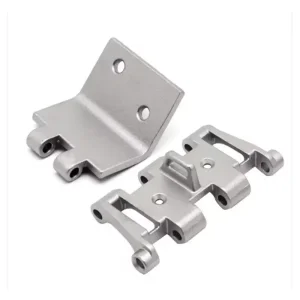
OEM Custom Stainless Steel Investment Casting & Precision Machining Parts for Industrial Application
Request Product Quote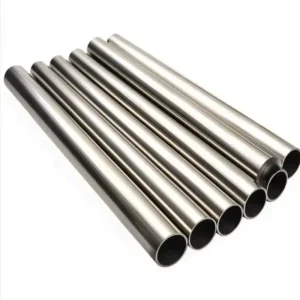
OEM Custom Precision Capillary Stainless Steel Pipe / Tube 1mm - 8mm | China Supplier
Request Product Quote
Custom Stainless Steel Investment Casting & Precision Machining Parts for Industrial Use
Request Product Quote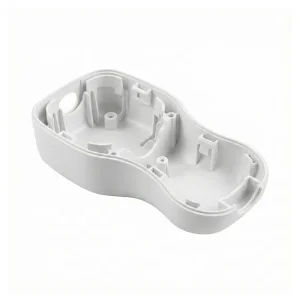
ODM Custom Medical Device Housing - High-Quality Precision Cast Solutions
Request Product Quote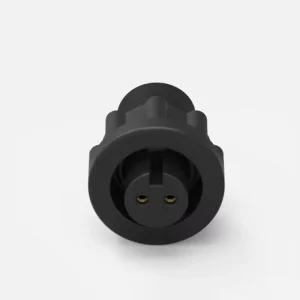
Custom IP67 2-Pin Waterproof Circular Connector - Durable Nylon Series
Request Product Quote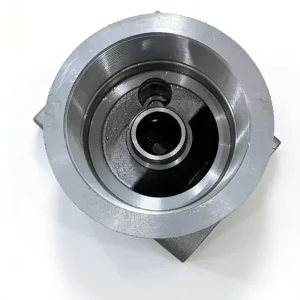
High-Quality Custom OEM Precision Cast Iron Hydraulic Pump Housing Products
Request Product Quote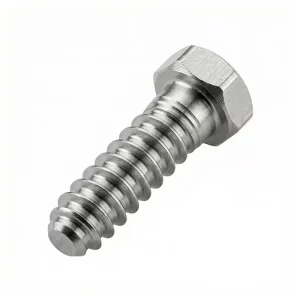
China Titanium Medical Implant Bone Screw - Precision Turned & Machined
Request Product Quote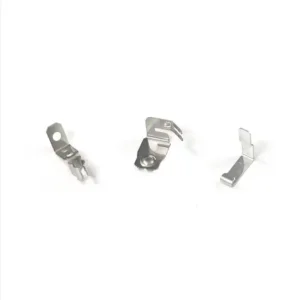
OEM Custom Battery Contacts for AG13, CR2032, CR2450 Coin Cells - Phosphor Bronze & Steel
Request Product QuoteMacro-Industry Solutions: Next-Generation Lighting Fixture Casting Excellence
The global commercial, architectural, and industrial luminaire market is undergoing a seismic paradigm shift. Transitioning from traditional high-intensity discharge (HID) and fluorescent systems to ultra-high-density LED arrays and smart municipal lighting networks demands unprecedented thermal dissipation capacity, structural rigidity, and zero-defect ingress protection (IP67 to IP68). As an industry-leading lighting fixture casting manufacturer and exporter, we deliver custom-engineered casting solutions that directly address the core failure modes of modern high-lumen luminaires.
Thermal Dissipation & Fin Geometry
LED junction temperature ($T_j$) directly dictates lumen maintenance (L70/B10 life expectancy) and chromaticity stability. Our high-pressure aluminum die castings (utilizing A360, A380, and ADC12 silumin alloys) integrate ultra-thin, high-aspect-ratio cooling fins directly into the housing structure. By minimizing boundary layer thermal resistance, our castings achieve thermal conductivity levels up to 160 W/m·K, keeping high-bay and stadium light junctions below critical thermal thresholds.
Structural Integrity & Wind-Load Rigidity
Outdoor pole-mounted streetlights, high-mast floodlights, and marine-grade flood fixtures operate under intense dynamic loads, including hurricane-force wind stress and severe mechanical vibration. Utilizing advanced MAGMAsoft flow simulation, we eliminate internal gas porosity, cold shuts, and shrinkage voids during the casting cycle, ensuring high yield strength, superior fracture toughness, and total mechanical resistance against vibration fatigue.
IP67 & IP68 Ingress Sealing Surfaces
A major challenge in OEM luminaire export is maintaining watertight integrity over 10+ years of environmental exposure. Standard raw castings often present parting-line mismatch or micro-porosity near gasket grooves. Our secondary 5-axis CNC machining centers finish mating flanges and continuous O-ring channels to flatnesses under 0.03 mm, ensuring zero water ingress under immersion and high-pressure washdowns.
Material Selection & Process Engineering Comparison
Choosing the correct casting methodology and alloy chemical composition is vital for balancing unit cost, weight, surface finish capability, and thermal performance. Below is a engineering evaluation matrix comparing core casting processes utilized for global lighting fixture manufacturing.
| Casting Methodology | Primary Alloys | Thermal Conductivity | Wall Thickness Min. | Dimensional Tolerance | Best Application Scenario |
|---|---|---|---|---|---|
| High-Pressure Die Casting (HPDC) | ADC12, A380, A360, AlSi10Mg | 96 - 113 W/m·K (ADC12) 113 - 150 W/m·K (A360) |
1.5 mm | ±0.05 mm (As-Cast) ±0.005 mm (CNC Post) |
High-volume streetlights, high-bay housings, commercial LED downlight bezels. |
| Investment Casting (Lost Wax) | 316L, 304 Stainless Steel, Brass, Titanium | 15 - 25 W/m·K (Stainless) 110 W/m·K (Brass) |
1.0 mm | ±0.10 mm (As-Cast) ±0.005 mm (CNC Post) |
Architectural facade luminaires, harsh marine spots, hazardous chemical lighting. |
| Low-Pressure Die Casting (LPDC) | A356.0, AlSi7Mg0.3 | 150 - 170 W/m·K (T6 treated) | 3.0 mm | ±0.20 mm | Heavy-duty industrial explosion-proof enclosures requiring ultra-low porosity. |
| Gravity Sand Casting | Cast Iron, Ductile Iron, ZL101 Aluminum | 45 W/m·K (Cast Iron) 140 W/m·K (ZL101) |
4.5 mm | ±0.50 mm | Historical urban lamp posts, heavy industrial pump & fixture bases, low-volume runs. |
Global Landscape: Driving Efficiency in Lighting Manufacturing
The international lighting market is undergoing rapid evolution driven by energy codes (such as DLC 5.1 Premium, EU ErP directives, and Title 24), municipal smart city initiatives, and the rapid deployment of wireless mesh IoT nodes into street light cobra heads. OEM procurement teams face mounting pressure to reduce bill-of-materials (BOM) costs while elevating reliability and aesthetic appeal.
Smart City IoT Integration
Modern municipal lighting fixtures are no longer passive metal shells; they are digital edge nodes. Castings must now accommodate NEMA 7-pin or Zhaga Book 18 receptacles, internal antenna cavities, and optics lenses without compromising electromagnetic shielding (EMI/RFI) or seal integrity. Our custom casting molds incorporate complex slide mechanisms to produce multi-axis sensor ports in a single shot.
Decarbonization & Recycled Aluminum
European and North American buyers are increasingly enforcing Scope 3 emissions targets. We support green sourcing by utilizing up to 85% certified secondary recycled aluminum in our die-casting process. This slashes embedded carbon footprint per fixture by over 60% compared to primary smelter ingots, without sacrificing tensile properties or surface finish quality.
Total Cost of Ownership (TCO) Optimization
By offering turn-key solutions—from raw casting and DFM tooling design to automated CNC deburring, shot blasting, chromate conversion, and exterior TGIC powder coating—we eliminate sub-tier contractor hand-offs. This consolidated workflow reduces supply chain transit lead times by 35% and drastically minimizes defect scrap rates.
Tailored Field Application Scenarios
Lighting fixtures operate under vastly distinct environmental pressures depending on their installation location. Our engineering team customizes casting alloys and surface pre-treatments based on strict end-use application parameters.
Municipal & Roadway Lighting
Requirements: Lightweight ADC12 or A360 die cast aluminum housings with low wind-resistance coefficient, tool-less latch access doors, and IP66 sealing.
Solution: High-speed 800-ton to 1600-ton cold chamber die casting machines create sleek, thin-walled cobra head fixtures with integrated mounting slip-fitters, passivated with fluorocarbon powder coat for 10-year UV stability.
Explosion-Proof & Hazardous Location
Requirements: Class I Division 1 / Division 2 and ATEX directive compliance. Thick flame-proof walls, high burst strength, zero internal micro-cracks.
Solution: Low-pressure aluminum casting (A356-T6) or investment cast stainless steel 316 housings with flame-path joint surfaces CNC-ground to micro-inch roughness standards.
High-Bay Industrial Warehouses
Requirements: Extreme heat dissipation for high-lumen outputs (20,000 to 60,000 lm) operating continuously in ambient temperatures up to 55°C.
Solution: Radiating radial fin designs casting with high-purity aluminum alloys, maximizing natural convection stack effects to keep driver boxes cool.
Architectural & Landscape Spotlights
Requirements: High aesthetic appeal, intricate decorative geometry, compact form-factor, and high resistance to soil acid and moisture.
Solution: Investment casting stainless steel or brass components with mirror polishing, electro-plating, or anodized finishes that maintain flawless visual appearance.
Technology Roadmap & Compliance Assurance
To maintain an unshakeable competitive edge, our production facilities integrate AI-driven inspection systems, automated robotics, and strict international standard compliance frameworks.
AI Simulation & Moldflow DFM
Prior to cutting tool steel molds (using premium H13 or SKD61 die steel), our casting engineers run comprehensive MAGMAsoft melt-flow and solidification simulations. This identifies potential air entrapment, thermal hot spots, and shrinkage porosity, enabling mold gate optimizations before physical production.
X-Ray & CMM Quality Control
Our in-house quality inspection laboratory is equipped with ZEISS 3D Coordinate Measuring Machines (CMM) for sub-micron geometric verification, Optical Emission Spectrometers for batch melt alloy validation, and Industrial X-Ray Non-Destructive Testing (NDT) scanners to guarantee internal density.
Global Regulatory Compliance
All lighting fixture castings exported to Europe, North America, and Australia are guaranteed to meet ANSI/UL 1598, UL 8750, CE EN 60598, RoHS 3.0, and REACH environmental requirements. We supply complete First Article Inspection (FAI) reports and material test certificates (MTC per EN 10204 3.1) with every shipment.
B2B Procurement & Engineering Q&A
Direct answers to the most common questions raised by global OEM lighting buyers, engineers, and sourcing directors.
What is the typical mold life and tooling ownership policy for custom lighting castings?
All custom die-casting molds and investment casting tooling manufactured by our factory remain 100% the intellectual property of the customer. We offer a guaranteed tooling lifespan (typically 100,000 shots for aluminum die casting molds using H13 steel). We handle all routine mold maintenance, polishing, and storage at zero extra charge during the product lifecycle.
How do you prevent salt-spray corrosion on aluminum castings used in coastal or streetlight applications?
We employ a multi-stage automated surface treatment process. First, raw castings undergo precision shot-blasting and mechanical deburring. Next, a zirconium or chromate conversion coating (RoHS compliant) is applied to passivate the metal surface. Finally, an outdoor-grade TGIC polyester powder coating (AkzoNobel or PPG) is electrostatically deposited and cured, passing 1,000+ hours of continuous ASTM B117 salt spray testing without blistering or creepage.
Can you assist with thermal modeling and weight reduction (DFM) during the design phase?
Yes! Our engineering team specializes in Design for Manufacturability (DFM). By analyzing your 3D CAD models (STEP, IGES, SolidWorks), we can recommend draft angle adjustments, uniform wall thickness modifications, heat-sink fin optimizations, and mass reduction pockets that cut raw aluminum usage by 15-25% without diminishing thermal performance or structural strength.
What is your standard production lead time for prototype samples and mass export orders?
Rapid prototype samples created via CNC machining or 3D printing can be delivered within 5-7 business days. Tooling development and initial mold trial samples (T1) take 25 to 35 calendar days. Upon FAI sample approval, mass production casting and CNC machining runs require 3 to 4 weeks, with air freight or sea freight (DDP/FOB/CIF) options available worldwide.
How are waterproof gasket grooves inspected to ensure zero assembly defects?
Gasket seal tracks are key quality characteristics (KQC). We utilize 100% vision sensor camera inspection combined with optical CMM probes to verify groove depth, width, and surface roughness ($R_a < 1.6 \ \mu\text{m}$). For sealed assemblies, pneumatic decay pressure testing is performed to guarantee airtight and watertight performance under IP67/IP68 specifications.
Additional OEM Precision Cast & Machined Products
Browse our complete range of custom engineered hardware components exported globally to leading industrial, automotive, and electrical OEMs.
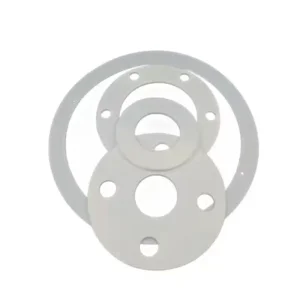
China High Precision CNC Turned White PTFE Washer Gasket Products
Request Product Quote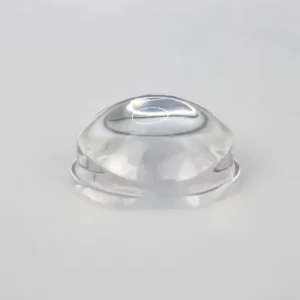
Custom High-Transparency PC Optical Components - Precision Molded Solutions
Request Product Quote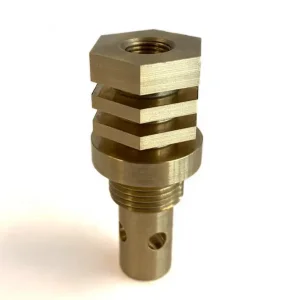
OEM Custom Precision CNC Machined Brass Cooling Block Exporters
Request Product Quote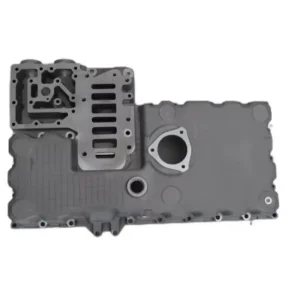
Automotive Transmission Retarder Engine Clutch Oil Pan - Low-Pressure Cast Aluminum Alloy
Request Product Quote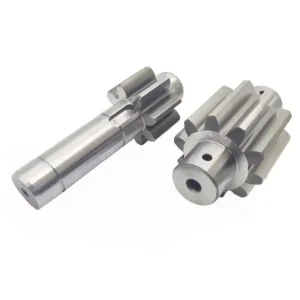
Custom CNC Machined Automotive Transmission Spur Gears and Gear Shafts
Request Product Quote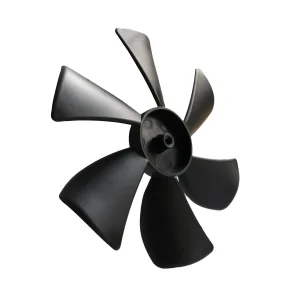
China Custom PA66-GF30 Injection Molded Motor Cooling Fan Blade | 6-Blade Axial Impeller
Request Product Quote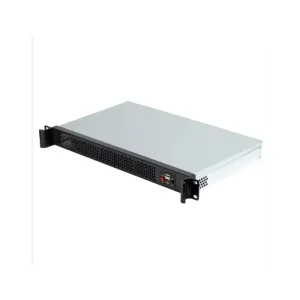
OEM 1U Rackmount Server Chassis Enclosure - Custom Sheet Metal Stamping
Request Product Quote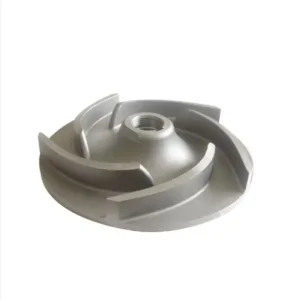
ODM High-Quality Centrifugal Slurry Pump with Open Impeller - Stainless Steel Casting
Request Product QuoteReady to Optimize Your Lighting Fixture Castings?
Submit your 2D/3D technical drawings (STEP, IGES, PDF) to our metallurgical engineering team. Receive a detailed DFM manufacturability analysis, thermal evaluation, and competitive B2B quotation within 24 hours under strict Non-Disclosure Agreement (NDA) protection.