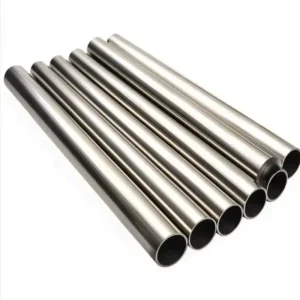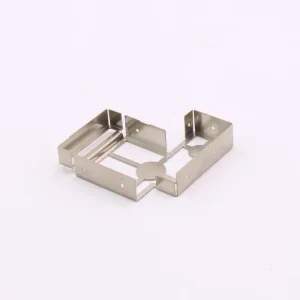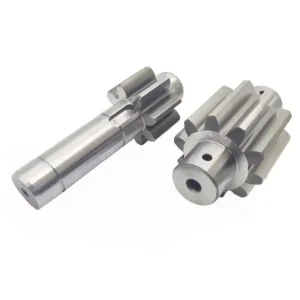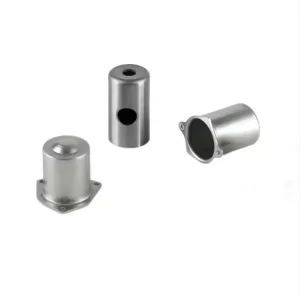
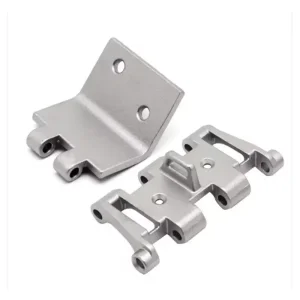
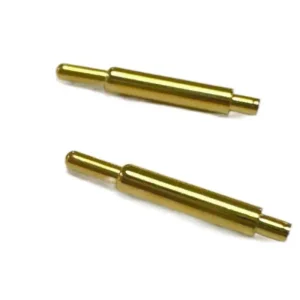
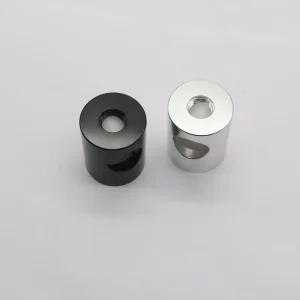
Featured OEM Precision Components
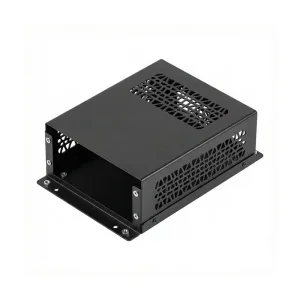
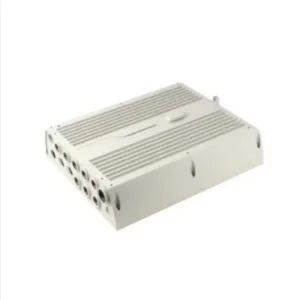
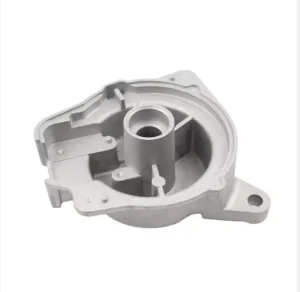
Explore our engineering-grade cast bodies, housings, turned fittings, and custom hardware produced under stringent ISO quality controls.
Global Fluid Handling Landscape & Valve Casting Evolution
Strategic analysis of global valve body procurement, metallurgical advancements, and decarbonization pressures reshaping fluid control manufacturing.
In modern industrial infrastructure, valve body castings constitute the mechanical backbone of fluid dynamic systems operating under extreme thermodynamic and corrosive stresses. From high-pressure subsea oil pipelines and cryogenic liquefied natural gas (LNG) terminals to nuclear primary cooling loops and ultra-pure semiconductor chemical distribution systems, the integrity of valve body casting directly governs system reliability, fugitive emission suppression, and environmental safety.
The global industrial valve market—projected to surpass USD 110 billion in valuation within the coming decade—is undergoing a fundamental structural transition. Procurement teams across North America, Europe, and the Asia-Pacific region are shifting away from traditional component sourcing toward strategic partnerships with integrated valve body casting manufacturers. Modern engineering demands are no longer limited to basic geometric conformance; they require advanced material science validation, digital twin solidification modeling, zero-defect metallurgical purity, and strict compliance with international pressure containment directives (such as ASME B16.34, API 6D, and EU PED 2014/68/EU).
Major Technological & Global Procurement Trends
Three primary vectors are reshaping how global Original Equipment Manufacturers (OEMs) evaluate and select China valve body casting factories:
- Decarbonization & Fugitive Emission Mitigation: Environmental regulations (e.g., ISO 15848-1 and EPA Method 21) have forced valve designers to minimize stem and shell leakage. Valve body castings must exhibit zero micro-porosity, flawless sealing surface integrity, and wall thickness uniformity capable of handling thermal cycling without micro-cracking.
- Transition to High-Performance Alloys: Industrial processes are transitioning to higher temperatures, working pressures, and aggressive media. Standard carbon steel (ASTM A216 WCB) is increasingly supplemented or replaced by austenitic stainless steel (ASTM A351 CF8/CF8M), Duplex/Super Duplex stainless steels (2205/2507), Nickel Alloys (Hastelloy, Inconel), and Titanium for severe service applications.
- Digital Twin & Predictive Foundry Simulation: Leading Chinese manufacturers have integrated finite element analysis (FEA) and computational fluid dynamics (CFD) into molten metal solidification simulations (MAGMASOFT / ProCAST). This eliminates air entrapment, shrinkage cavities, and hot tears prior to physical mold creation.
Global Standard Conformance
Fully compliant with API 6D, ASME B16.34, ISO 9001:2015, and PED 2014/68/EU standards for seamless international integration.
Metallurgical Excellence
Strict spectrographic alloy control, solution annealing, and non-destructive testing (UT, RT, MT, PT) ensure zero structural defects.
Precision CNC Machining
In-house multi-axis CNC finishing achieving tolerances down to ±0.005 mm on critical valve seats, flanges, and stem bores.
Valve Body Casting Process Methodologies
Selecting the optimal casting process depends on valve pressure ratings, dimensional tolerances, material grade, and production batch volume.
| Casting Methodology | Typical Valve Types | Suitable Alloys | Surface Roughness (Ra) | Dimensional Accuracy | Optimal Volume |
|---|---|---|---|---|---|
| Investment Casting (Silica Sol) | Ball, Globe, Check, Needle Valves (DN8 - DN150) | Stainless Steel (CF8M), Duplex, Super Alloys | 3.2 – 6.3 µm | ISO 8062 CT4 - CT6 | Medium to High Batch |
| Precision Shell Mold Casting | Butterfly, Control Valves, Plug Valves | Carbon Steel (WCB), Ductile Iron, Low Alloy Steel | 6.3 – 12.5 µm | ISO 8062 CT6 - CT8 | High Volume Industrial |
| Resin Sand Casting | Large Gate, Check & Waterway Valves (DN200 - DN2000+) | Cast Iron, Ductile Iron, Heavy WCB Steel | 12.5 – 25 µm | ISO 8062 CT8 - CT10 | Custom / Heavy Infrastructure |
| High Pressure Die Casting | Pneumatic Actuator Housings, Solenoid Valve Bodies | Aluminum Alloys (A380, ADC12), Zinc Alloys | 1.6 – 3.2 µm | ISO 8062 CT3 - CT5 | Mass OEM Production |
Primary Alloys & Material Specifications for Valve Manufacturing
The choice of material directly affects pressure containment capability, corrosion resistance in acidic or saline environments, and temperature thresholds:
- ASTM A216 Grade WCB: Standard carbon steel widely utilized for non-corrosive industrial applications, oil, water, and gas service up to 425°C.
- ASTM A351 Grade CF8M (316 SS): Molybdenum-bearing austenitic stainless steel offering superior resistance to pitting corrosion in chloride-rich environments and chemical processing systems.
- Duplex Stainless Steel (UNS S31803 / 2205, S32750 / 2507): Combines high yield strength (nearly double that of austenitic steels) with outstanding resistance to stress corrosion cracking, ideal for offshore oil platform manifold valves.
- Nickel-Based Superalloys (Hastelloy C276, Inconel 625): Engineered for ultra-severe service involving hot concentrated acids, sour gas (H2S), and subsea deepwater choke valves.
China Factory 4.0: Supply Chain Resilience & Automation
Combining automated foundry equipment, IoT-driven process monitoring, and integrated Shenzhen precision hardware capabilities.
China's industrial valve casting sector has evolved beyond simple labor cost advantages into a high-technology, capital-intensive manufacturing ecosystem. Chinese manufacturers have deployed smart factory platforms (Manufacturing Execution Systems - MES) that track molten metal heats from raw material charging through spectrographic analysis to final CMM dimensional inspection.
Automated Pouring Lines
Robotic pouring ladles ensure constant metal temperature and pour speed, minimizing slag inclusion and thermal shock defects.
Real-Time Spectrometry
Chemical composition verified prior to every tap via Optical Emission Spectrometry (OES), ensuring exact grade compliance.
Integrated Machining & QC
On-site CNC turning, 5-axis milling, CMM dimensional verification, and pressure testing within a single supply chain loop.
Global Procurement Requirements & Risk Mitigation
How leading global buyers qualify Chinese casting partners and ensure strict material traceability from raw heat to final delivery.
Sourcing valve bodies internationally requires systematic quality governance to prevent field failures, costly product recalls, or environmental compliance breaches. Experienced procurement managers implement structured Non-Destructive Testing (NDT) matrices tailored to the intended pressure rating and service criticality of the valve.
Comprehensive Quality Control & NDT Testing Suite
- Radiographic Testing (RT): X-ray or Gamma-ray inspection performed according to ASME B16.34 / ASTM E446/E186 to detect internal gas porosity, shrink cavities, and heavy inclusions in thick-walled valve bodies.
- Ultrasonic Testing (UT): High-frequency sound wave evaluation for detecting internal planar defects and measuring wall thickness consistency across complex valve geometries.
- Magnetic Particle Testing (MT) & Liquid Penetrant Testing (PT): Surface flaw identification (crack detection) on ferromagnetic steel (MT) and non-ferromagnetic stainless steel or alloy castings (PT).
- Positive Material Identification (PMI): XRF spectrographic verification performed on 100% of high-alloy and stainless steel components before shipping to guarantee material grade accuracy.
- Hydrostatic & Shell Pressure Testing: High-pressure water and helium leak testing verifying body structural integrity at 1.5x working pressure rating.
Localized Applications & Heavy Industrial Integration
Custom engineered valve body castings deployed in demanding environments across global key sectors.
Oil & Gas Onshore / Offshore
API 6D gate, globe, and check valves cast in Duplex SS and heavy WCB steel designed to withstand sour gas (H2S), high-pressure manifold service, and subsea conditions.
Municipal Water & Desalination
Large-scale resilient seat butterfly valve bodies and air release valves cast in ductile iron (GGG40/50) and Super Duplex 2507 for high-salinity seawater intake plants.
Chemical & Pharmaceutical
Ultra-smooth investment cast CF8M/CF3M valve bodies with polished internal flow channels minimizing fluid stagnation and bio-fouling risks.
Frequently Asked Questions by Valve Procurement Engineers
Expert answers addressing casting defect control, DFM optimization, tolerances, and export quality verification.
How do Chinese foundries control gas porosity and shrinkage in stainless steel valve castings?
Porosity and shrinkage are controlled using a three-tier approach: First, digital solidification simulation (MAGMASOFT/ProCAST) optimizes riser and runner placement before tooling manufacture. Second, vacuum degassing and precise molten metal temperature management eliminate dissolved gases. Third, ceramic filter screens trap non-metallic inclusions during pouring.
What minimum wall thickness can be achieved with investment cast valve bodies?
Using the Silica Sol investment casting process, wall thicknesses as thin as 2.5 mm to 3.0 mm can be reliably achieved for small-bore valve bodies (up to DN50). For larger sizes or higher pressure classes (ASME Class 600+), wall thickness is governed by ASME B16.34 calculations to guarantee structural containment.
What dimensional tolerances are standard for CNC post-machined valve castings?
While raw investment castings hold ISO 8062 CT4-CT6 tolerances, CNC post-machining achieves tight tolerances down to ±0.005 mm on critical features such as valve seat pockets, flange face roughness (Ra 3.2-6.3 µm serrated finish), and stem guide bores to ensure fugitive emission tightness.
Which documentation and material test reports (MTR) are provided with valve shipments?
Every shipment is accompanied by EN 10204 3.1 Material Test Certificates, including chemical heat analysis, mechanical tensile/yield/impact test data, heat treatment charts, 100% PMI reports, dimensional inspection reports (CMM), and NDT certification (RT/UT/MT/PT) as specified in the purchase order.
Can your factory reverse-engineer valve bodies from physical samples without CAD files?
Yes. Utilizing high-resolution 3D optical laser scanning and CMM coordinate mapping, our engineering team can capture complex internal flow geometry from a physical sample, generate 3D STEP/IGES CAD models, perform DFM stress analysis, and create new casting tooling efficiently.
What is the typical lead time for custom valve body prototype tooling and mass production?
Rapid 3D printed sand/wax prototypes can be supplied in 7 to 10 days. Permanent metal investment casting tooling and sample approval generally require 3 to 4 weeks. Upon First Article Inspection (FAI) approval, full production batch runs are completed in 3 to 5 weeks depending on volume.
Explore Additional Custom Hardware Solutions
Integrated manufacturing capabilities across precision turned parts, enclosures, stamping, and server hardware.