
Explore Our Engineered Production Portfolio
High-precision OEM custom parts supporting rapid prototyping and mass industrial runs.
Selective Laser Sintering (SLS): The Backbone of Modern Industrial Additive Manufacturing
Selective Laser Sintering (SLS) has evolved from an R&D rapid prototyping technique into a mission-critical powder bed fusion (PBF) production technology. Global manufacturing networks are increasingly migrating complex plastic components from traditional injection molding tooling to high-throughput SLS additive workflows to cut lead times, eliminate expensive tooling capital expenditure, and achieve unprecedented mechanical geometries.
Elimination of Tooling Bottlenecks
Traditional injection molding requires weeks or months of steel tool machining, draft angle optimization, and costly mold revisions. China SLS printing exporters empower global engineering teams to leap directly from CAD modeling to end-use thermoplastic production within days. By eliminating physical tooling, product managers can iterate designs dynamically, mitigate market launch risks, and operate lean on-demand inventory strategies.
Isotropic Mechanical Performance
Unlike standard Fused Deposition Modeling (FDM) which suffers from severe Z-axis interlayer weakness, SLS utilizes a high-power CO2 or Fiber laser to thermally fuse polymer powders inside a heated build chamber. This precise thermodynamic sintering process yields near-isotropic mechanical properties, ensuring that complex structural components exhibit uniform tensile strength, flexural modulus, and impact resistance across all three spatial axes.
Comprehensive Polymer & Composite Powder Selection
Understanding polymer degradation chemistry, laser energy density parameters, and thermal chamber sintering windows is paramount to selecting the right SLS polymer grade for demanding industrial applications.
Polyamide 12 (PA12 / Nylon 12)
The gold standard workhorse material in SLS additive manufacturing. PA12 exhibits high tensile strength (48-52 MPa), excellent chemical resistance to hydrocarbons, oils, and greases, and low moisture absorption (0.5%). Ideal for structural enclosures, snap-fit hinges, complex manifolds, and automotive ducting.
Glass-Filled Nylon (PA12-GF)
Compounded with 30-40% spherical glass beads, PA12-GF dramatically escalates flexural modulus (up to 3,800 MPa) and Heat Deflection Temperature (HDT @ 1.8MPa up to 150°C). Perfect for high-rigidity applications, enclosure housings subjected to thermal stress, and structural drone arms.
Thermoplastic Polyurethane (TPU)
An elastomeric polymer engineered for flexible, shock-absorbing applications. SLS TPU delivers exceptional elongation at break (>300%), dynamic fatigue endurance, and customizable Shore hardness ranges (Shore 85A - 95A). Applications include ergonomic grips, seals, gaskets, footwear, and lattice damping inserts.
SLS Material Performance Comparison Matrix
Empirical data compiled under ISO and ASTM testing standards for standard sintered condition:
| Polymer Grade | Tensile Strength (ISO 527) | Flexural Modulus (ISO 178) | Elongation at Break | HDT @ 1.8 MPa (ISO 75) | Key Industrial Feature |
|---|---|---|---|---|---|
| PA12 (Nylon 12) | 48 - 52 MPa | 1,650 - 1,850 MPa | 15 - 22% | 86°C | Balanced mechanical toughness & detail resolution |
| PA11 (Bio-Nylon) | 48 - 54 MPa | 1,400 - 1,600 MPa | 35 - 45% | 82°C | High impact resistance & bio-derived sustainability |
| PA12 Glass-Filled | 45 - 50 MPa | 3,600 - 4,000 MPa | 4 - 6% | 150°C | Extreme stiffness & elevated thermal endurance |
| PA2210 FR (Flame Retardant) | 46 - 49 MPa | 2,200 - 2,500 MPa | 6 - 10% | 145°C | UL94 V-0 certified flame resistance for aerospace/rail |
| TPU 88A / 95A | 18 - 25 MPa | 75 - 110 MPa | >320% | N/A | High elasticity, energy return & vibration absorption |
The Ecosystem Advantage: Why Source SLS Services from China?
China's additive manufacturing landscape has undergone a major transformation. Leading Chinese SLS exporters integrate advanced domestic and international powder bed fusion platforms (such as Farsoon Technologies, TPM3D, EOS, and 3D Systems) into large-scale, automated 3D printing clusters.
By leveraging robust raw material supply chains, automated post-processing suites (such as vapor smoothing and automated bead blasting), and highly skilled DFM engineering teams, Chinese suppliers offer significant cost advantages without sacrificing quality.
-
Strict Powder Refreshment Management: Precise 50% virgin and 50% recycled powder mixing ratios prevent orange-peel surface degradation and molecular thermal aging.
-
Automated Vapor Smoothing: Physico-chemical surface sealing achieves smooth finishes down to Ra <0.8 µm, enhancing water tightness and aesthetic appearance.
-
Advanced Nesting Algorithms: High-density 3D part nesting reduces laser travel time and powder waste, translating directly into lower unit costs for overseas buyers.
5-Stage Additive Quality Assurance Pipeline
Stage 1: DFM & Nesting Simulation
Verification of wall thickness, powder escape holes, and volumetric thermal expansion modeling.
Stage 2: Atmosphere & Laser Calibration
Nitrogen chamber inerting (<1.5% O2) and galvo-scanner focal calibration for consistent thermal delivery.
Stage 3: Tensile Bar Destruction Testing
Every build batch includes Z-axis tensile coupons tested to verify density and mechanical yield.
Stage 4: Automated Depowdering & Blasting
Micro-bead blasting cleans internal cavities, lattice channels, and fine thread details.
Stage 5: CMM & CT Scan Inspection
Opto-electronic 3D laser scanning and coordinate measuring machines verify dimensional accuracy.
End-Use Industrial Applications for Sintered Nylon Components
SLS additive manufacturing services support critical hardware deployments across high-performance global industries.
Aerospace & Unmanned Systems
Consolidated environmental control system (ECS) ducting, internal cabin brackets, customized drone bodies, and lightweight antenna mounts. SLS nylon provides exceptional strength-to-weight ratios essential for payload optimization.
Automotive & Electric Vehicles
Pre-series functional prototype bumpers, custom air intake manifolds, wire harness routers, and interior trim clips. Flame-retardant SLS resins allow direct vehicle road testing under under-hood thermal conditions.
Medical & Patient-Specific Devices
ISO 10993 and USP Class VI certified biocompatible PA12 surgical cutting guides, custom orthotic insoles, prosthetic limbs, and lightweight rehabilitation exoskeletons tailored to individual patient scans.
Robotics & Factory Automation
Custom End-of-Arm Tooling (EOAT), vacuum gripper plates with internal manifold lines, soft robotic pneumatic actuators, and cable management sleeves produced without complex assembly requirements.
Consumer Electronics & Wearables
Ergonomic earbud testing chassis, ruggedized field camera housings, VR headset frames, and water-tight protective enclosures finished with soft-touch rubberized or vapor-smoothed coatings.
Industrial Tooling & Jigs
Lightweight inspection fixtures, drill guides, assembly nests, and customized soft jaws designed to protect finished metal components during secondary CNC machining operations.
International Compliance & Streamlined Logistics
Exporting high-precision SLS parts globally requires strict adherence to international commercial standards, material traceability, and robust intellectual property protection protocols.
Leading Chinese exporters serve as integrated manufacturing partners, navigating international trade requirements smoothly to ensure fast delivery directly to your facility.
IP Protection NDA
Strict Non-Disclosure Agreements signed prior to CAD file transmission.
Material Traceability
Full batch certificates detailing powder chemical composition and lot numbers.
Express Logistics
DDP, DAP, and FOB air freight arrangements via DHL, FedEx, and UPS.
RoHS & REACH Compliance
Environmental testing compliance verification for EU and US markets.
DFAM (Design for Additive Manufacturing) Rules
Maximize performance and lower unit cost by adhering to these core SLS geometric parameters:
- Minimum Wall Thickness: Structural features >1.0 mm; non-structural walls can downscale to 0.8 mm.
- Powder Escape Holes: Enclosed hollow bodies require at least two 4.0 mm diameter egress ports for depowdering.
- Interlocking Clearance: Assembly clearances for fully printed-in-place moving joints must maintain a minimum 0.4 - 0.6 mm gap.
- Engraved Details: Text and embossed features should maintain a minimum width and depth of 0.5 mm for high legibility.
- Warping Prevention: Large flat planes should incorporate stiffening ribs or lattice structures to minimize thermal stress distortion.
Next-Generation Innovations in Additive Sintering
The additive manufacturing industry continues to evolve through advancements in laser optics, materials, and automated post-processing.
High-Temperature SLS (HT-SLS)
Processing ultra-performance thermoplastics such as PEEK, PEKK, and PEI (Ultem) at build chamber temperatures exceeding 300°C. HT-SLS replaces machined aluminum and titanium in extreme aerospace and oil/gas subsea environments.
Multi-Laser Sync Systems
Quad-laser array technology operating synchronously across large build volumes (e.g., 600 x 600 x 800 mm). Multi-laser printing increases build speed by over 300%, making high-volume SLS production competitive with traditional manufacturing.
AI-Powered In-Situ Inspection
Real-time melt pool monitoring using optical thermal cameras and machine vision algorithms. System intelligence automatically adjusts laser power density and recoater speed layer-by-layer to eliminate internal porosity defects.
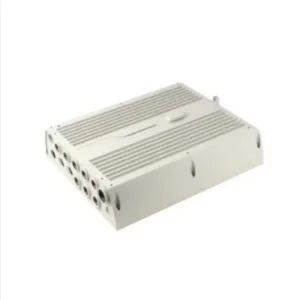
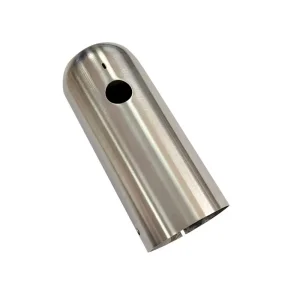
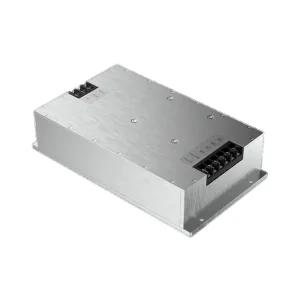
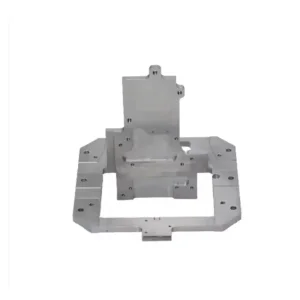
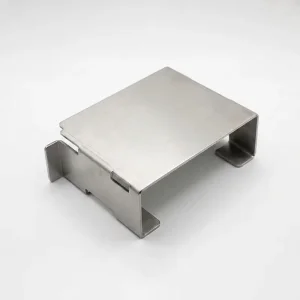
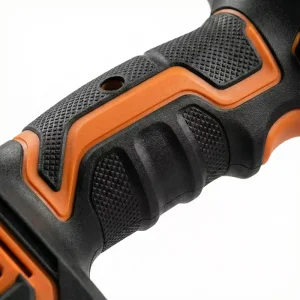
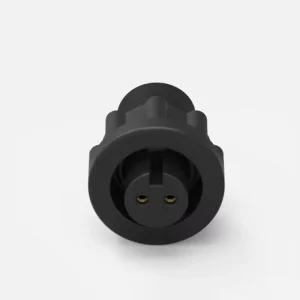
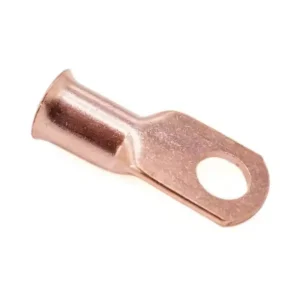
Explore Our Additional OEM & Hardware Products
Comprehensive CNC turned, die-cast, and metal stamped components engineered to exact client specifications.
Frequently Asked Questions (FAQ)
Comprehensive engineering and procurement guidance for ordering custom SLS 3D printed parts from China manufacturers.
- Media / Bead Blasting: Smooths surface roughness to Ra 4-6 µm.
- Vapor Smoothing: Chemical sealing that creates a sealed, semi-gloss surface with Ra <0.8 µm, enhancing water tightness and cleanability.
- Black Acid Dyeing: Deep penetration pigment dye that covers complex internal lattices without dimensional build-up.
- Hydro-Graphics & Painting: Custom color matching (Pantone/RAL) and clear coat sealing for consumer-facing aesthetics.
Accelerate Your Hardware Development with China SLS Printing
Send your CAD models today for a comprehensive DFM manufacturability review, instant material cost analysis, and production quotation within 24 hours.