
High-Precision OEM Components & Prototype Assemblies
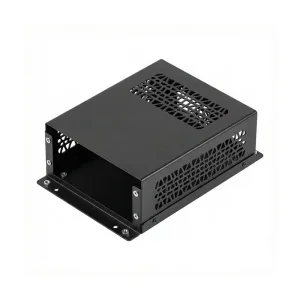
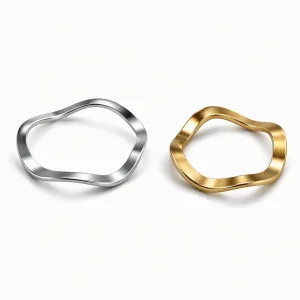
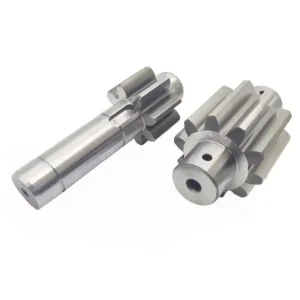
Engineered directly from customer CAD data with strict dimensional integrity, SPI finish standards, and fully verified material mill certifications.
Navigating NPI: The Strategic Role of OEM Prototype Molding Suppliers
In modern mechanical, automotive, aerospace, and medical device engineering, the bridge between concept modeling and full-scale manufacturing is governed by New Product Introduction (NPI) protocols. Selecting qualified OEM Prototype Molding Suppliers & Factories is no longer merely a purchasing decision; it is a fundamental risk mitigation strategy. Early-stage structural errors, poor gate placement, unoptimized cooling channel designs, and incorrect polymer selection can cost engineering teams hundreds of thousands of dollars in tooling modifications and months of delayed Time-to-Market (TTM).
At Shenzhen Sunmy Hardware Co., Ltd. (operating from Shenzhen's high-tech manufacturing hub since 2016), we integrate end-to-end prototyping methodologies. This engineering paper evaluates key technology selection criteria, macro supply chain dynamics, technical trade-offs across tooling materials, and modern metrology compliance required for global OEM success.
While 3D printing (SLA/SLM) excels at geometric validation, it fails to replicate isotropic resin behavior, weld-line mechanics, internal stress distributions, and true thermal dissipation seen in production-grade thermoplastics (e.g., PA66-GF30, PEEK, Polycarbonate). Rapid Prototype Tooling (Aluminum 7075 & P20 Steel) yields functional parts manufactured under realistic clamp forces and thermal cycles, providing empirical empirical data for regulatory compliance (FDA/RoHS) and field validation.
Prototype Molding & Tooling Technology Roadmap
Compare mechanical properties, lead times, tolerance stack-ups, and cost efficiency across primary rapid tooling routes.
| Manufacturing Technology | Typical Materials | Dimensional Tolerance | Lead Time (T1 Samples) | Tool Life (Cycles) | Best Use Case Scenario |
|---|---|---|---|---|---|
| Urethane / Silicone Casting | PU Resins (Simulated ABS, PP, Rubber) | ±0.15 mm / 100mm | 3 – 7 Days | 15 – 25 Casts per Mold | Design evaluation, trade shows, soft-feel grips |
| Rapid Aluminum Tooling (Al 7075) | ABS, PC, Nylon, POM, TPE, PMMA | ±0.02 mm to ±0.05 mm | 10 – 18 Days | 5,000 – 25,000 Parts | Functional prototyping, pre-series bridge production |
| Pre-Hardened Steel Tooling (P20/NAK80) | Engineering Plastics & Glass-Filled Grades | ±0.01 mm to ±0.02 mm | 15 – 25 Days | 50,000 – 250,000 Parts | Mid-volume production runs, cosmetic housings |
| Hardened Steel Tooling (S136 / H13) | All Polymers, Corrosive & Abrasive Resins | ±0.005 mm (with EDM) | 25 – 45 Days | 1,000,000+ Parts | High-volume automated mass manufacturing |
| 5-Axis CNC Direct Machining | Alloy Steels, Al 6061/7075, Brass, Titanium | ±0.005 mm | 2 – 5 Days | N/A (Direct Part) | Ultra-precision structural brackets, aerospace frames |
Tailored Prototype Engineering Across High-Tech Sectors
Our specialized tooling methodologies address strict structural, thermal, and regulatory requirements across key industries.
Automotive & EV Powertrain
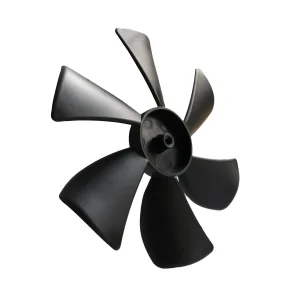
Overmolding and high-strength plastic fan blades (PA66-GF30) capable of withstanding extreme under-hood vibration and temperature swings up to 180°C.
- IATF 16949 Aligned Quality Processes
- Moldflow Warpage & Shrinkage Analysis
- Dynamic Balancing for Rotary Impellers
Medical & Orthodontic Devices
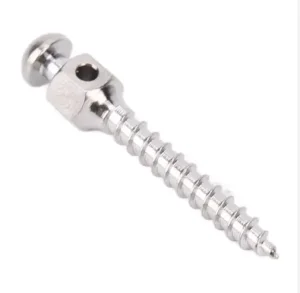
Ultra-compact micro-molding and precision Swiss lathe turning for biocompatible components including titanium orthodontic micro screws and surgical instrument housings.
- Cleanroom Molding Compatibility
- ISO 13485 Documentation Support
- Full Traceability & Biocompatibility MTC
Robotics & Aerospace Drones
5-Axis CNC milling combined with structural insert-molding to produce lightweight gearbox shells, universal joint bases, and high-frequency RF shield enclosures.
- Billet-to-Mold Hybrid Fabrication
- Wire EDM Down to ±0.005mm Tolerance
- Weight Optimization via FEA Simulations
Design for Manufacturability (DFM) & Tooling Engineering Workflow
Successful OEM prototype molding depends heavily on front-end engineering rigor. Before steel or aluminum block cutting begins, our senior tooling designers conduct rigorous digital validation:
1. Wall Thickness Uniformity & Sink Control
Non-uniform nominal walls induce differential cooling rates, generating internal stress, warpage, and cosmetic sink marks. Our DFM protocol mandates wall transitions within a 15–20% thickness ratio and incorporates coring out of thick sections with structural ribbing (rib-to-wall thickness maintained at 50–60% of base wall).
2. Draft Angle Optimization for Textured Surfaces
While standard polished cavities require 0.5° to 1° draft, heavily textured SPI/VDI finishes demand an additional 1° of draft per 0.025 mm of texture depth. Inadequate draft leads to scuffing, drag marks, and part ejection failure.
3. Advanced Gate & Runner Design
Gate location determines fiber orientation in glass-filled compounds (e.g., PA66-GF30) and governs shear stress. We employ submarine gates, edge gates, and hot runner valve gates configured via Autodesk Moldflow simulation to eliminate weld line positioning over high-stress structural bosses.
Anisotropic shrinkage in fiber-reinforced resins presents a major challenge in prototype molding. Glass fibers align parallel to flow lines, yielding significantly lower shrinkage along the flow axis (e.g., 0.2–0.4%) compared to the transverse direction (e.g., 0.8–1.2%). Custom mold tooling must compensate for anisotropic scaling in CNC tool paths.
6-Layer Quality Assurance & Metrology Inspection
Every single prototype batch and bridge production lot undergoes strict dimensional and material verification prior to global shipment.
Spectrometric Inspection
Verification of polymer resin lots, metallic chemical composition, and RoHS compliance certificates.
Full AS9102 / ISO Protocol
100% full-dimensional inspection of T1 samples against 2D CAD prints before approving production runs.
3D Coordinate Measuring
Micron-level probing for complex geometries, positional GD&T, true position, and concentricity.
Statistical Process Control
Automated hourly sampling during injection runs to track Cpk/Ppk process capability indexes.
Salt Spray & Thermal Shock
IP67 seal testing, salt fog chamber corrosion checks, and high/low temperature cycle testing.
VCI Protective Packaging
Vapor Corrosion Inhibitor (VCI) bags, anti-static foam, and reinforced wooden crates for oceanic freight.
Supply Chain Optimization & Intellectual Property Defense
Global procurement directors facing tight NPI schedules must balance unit economics against lead times, shipping volatility, and intellectual property safety. Sourcing prototype tooling from experienced Chinese manufacturing partners like Sunmy Hardware offers tangible structural advantages when governed by proper contractual and operational frameworks.
Encrypted Data Handling & Strict NDA Compliance
We execute non-disclosure agreements (NDAs) prior to receiving proprietary CAD files. Customer geometry, 2D drawings, and tooling files are maintained within isolated local servers with strict role-based access control. No third-party brokers or subcontracted trading vendors are given access to client IP.
Flexible Incoterms & Logistics Execution
Whether your supply chain requires EXW, FOB Shenzhen/Hong Kong, CIF, or DDP (Delivered Duty Paid) directly to your North American or European warehouse, Sunmy Hardware provides end-to-end export documentation, custom tariff classification, and air express prototyping dispatch (DHL/FedEx 3-day delivery).
Next-Gen Trends shaping Prototype Molding (2026–2030)
How artificial intelligence, hybrid tooling, and sustainable engineering polymers are revolutionizing rapid manufacturing.
AI-Powered Real-Time DFM
Machine learning models automatically identify localized wall thickness violations, undercut features, and draft errors directly inside CAD plugins, reducing quoting feedback windows from days to minutes.
Conformal Cooling via 3D Printed Steel Inserts
Direct Metal Laser Sintering (DMLS) enables toolmakers to insert curved internal cooling channels that follow complex cavity shapes, reducing cycle times by 30% and eliminating localized hot spots.
High-Performance Bio-Polymer Molding
Transition toward eco-friendly bio-based engineering thermoplastics and carbon-neutral resins requiring exact mold temperature regulation and modified injection speed profiles.
Custom Machined & Molded OEM Components
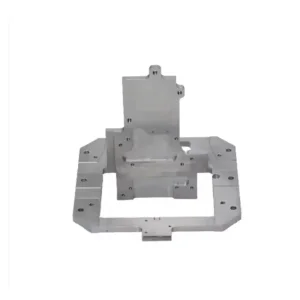
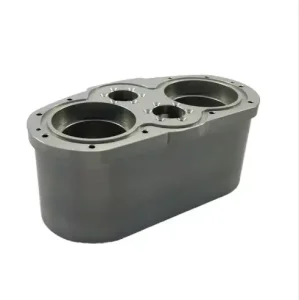
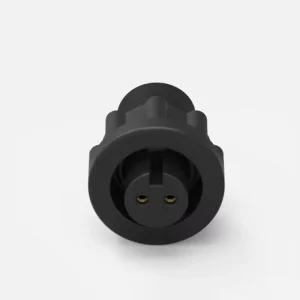
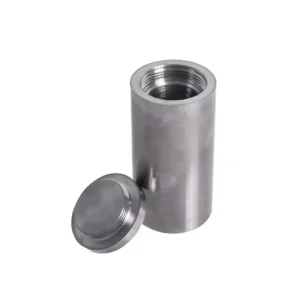
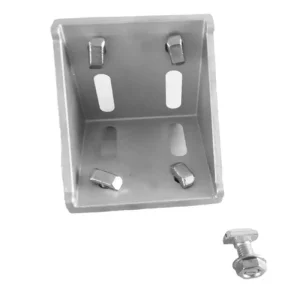
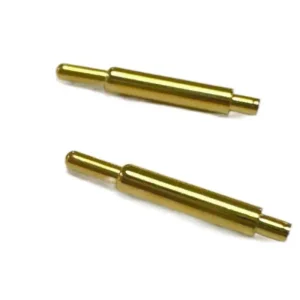
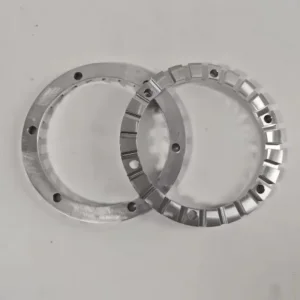
Explore our extended catalog of precision turned pins, connector seals, structural brackets, and specialized hardware.
Frequently Asked Questions (FAQ)
Detailed technical answers to common queries regarding prototype lead times, tooling modifications, tolerances, and quality certifications.
What is the typical turnaround lead time for T1 sample prototypes?
For rapid aluminum prototyping (7075-T6 steel/Al aluminum), initial T1 samples are typically delivered within 10 to 14 business days following CAD model approval and DFM sign-off. Complex multi-cavity pre-hardened steel tools (P20/NAK80) generally take 18 to 25 days depending on texture and EDM requirements.
How are engineering changes (ECOs) handled during prototype trials?
We follow a "steel safe" design philosophy. Features subject to potential design adjustments are initially machined small for internal dimensions (or large for external pins). This allows post-trial modification via simple CNC milling or EDM without requiring costly welding or core/cavity inserts.
What tolerances can Sunmy Hardware hold on custom molded & turned parts?
Our standard CNC milling tolerance is ±0.01 mm, with tight features holding up to ±0.005 mm via precision wire EDM and Swiss lathe turning. For injection molded plastics, standard tolerances follow DIN 16742-TG6 (approx. ±0.05 mm), with precision features held tighter upon engineering review.
What documentation accompanies prototype and production shipments?
Every shipment includes a comprehensive quality package: Material Mill Test Certificates (MTC), RoHS / REACH compliance statements, 3D CMM inspection reports, and a First Article Inspection (FAI) dimensional report covering all critical dimensions indicated on client 2D prints.