Featured Precision Engineering Components (Part I)


1. Global Industrial Landscape of Automotive Machining
Analyzing the macro-economic forces, electrification shifts, and strict quality frameworks defining OEM automotive parts manufacturing worldwide.
The global automotive industry is undergoing its most profound structural evolution in over a century. Driven by the dual mandates of powertrain electrification (EVs), Autonomous Driving Assistance Systems (ADAS), and aggressive structural lightweighting, original equipment manufacturers (OEMs) and Tier-1 suppliers are completely redefining component specifications. In this environment, **OEM automotive machining factories** serve as the technical backbone of modern vehicular production, turning complex engineering alloys into high-integrity propulsion, chassis, and electronic control hardware.
Traditional Internal Combustion Engine (ICE) components required heavy engine block casting and multi-stage cylindrical boring. Modern automotive machining, however, demands dynamic multi-axis CNC milling, high-precision Swiss turning, and intricate die-cast post-machining designed specifically for electric motor housings, planetary gearboxes, thermal management cold plates, and lightweight structural nodes. Tolerances that were once considered aerospace-only—such as ±0.005 mm position control and sub-micron surface roughness (Ra 0.4 µm)—are now standard requirements across high-volume automotive production lines.
Furthermore, maintaining compliance with strictly regulated global standards such as **IATF 16949:2016** (Automotive Quality Management System) and **ISO 9001:2015** is no longer optional—it is the baseline barrier to entry. Global automotive buyers demand verified traceability through Advanced Product Quality Planning (APQP), Production Part Approval Process (PPAP Level 3), Failure Mode and Effects Analysis (FMEA), and complete Coordinate Measuring Machine (CMM) inspection reporting. Modern OEM machining factories must blend state-of-the-art multi-axis CNC machinery with rigorous metrological discipline to guarantee zero-defect delivery across multi-thousand unit batches.
2. Advanced Manufacturing Processes & Material Engineering
A deep dive into 5-axis CNC machining, Swiss lathe turning, aluminum die casting, and metallurgical selection for high-stress automotive environments.
5-Axis CNC Milling & Turning
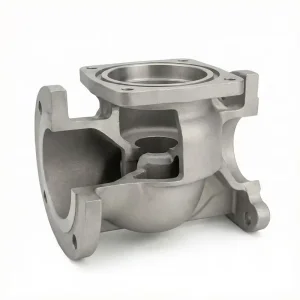
Enables single-setup machining of complex automotive geometries such as turbocharger impellers, transmission valve bodies, and structural knuckles. Reduces cumulative datum stack errors while maximizing geometric dimensioning and tolerancing (GD&T) fidelity.
Die Casting Post-Machining
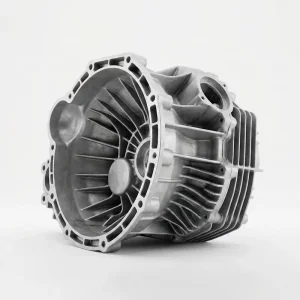
Combines high-volume aluminum (ADC12, A380) and magnesium alloy die casting with high-speed CNC finish milling. Ensures razor-thin wall structures maintain structural rigidity while achieving tight bearing bore fits and flat gasket sealing faces.
Micro-Precision Swiss Machining
Optimized for high-aspect-ratio turned components, including hydraulic valve spools, fuel injection needles, and sensor housing pins. Utilizes guide-bushing Swiss lathes to hold continuous micro-tolerances down to ±0.002 mm.
Technical Comparison of Automotive Engineering Alloys
Selecting the optimal material grade is critical for balancing power-to-weight ratios, corrosion resistance, dynamic fatigue durability, and thermal dissipation efficiency in OEM automotive systems.
| Material Specification | Tensile Strength (MPa) | Primary Automotive Application | Machinability & Finishing | Key Advantage |
|---|---|---|---|---|
| Aluminum 6061-T6 | 310 MPa | EV Battery Trays, Structural Brackets, Suspension Links | Excellent; Anodizing / Powder Coat | High strength-to-weight ratio, structural versatility |
| Aluminum 7075-T6 | 570 MPa | High-Stress Motorsport Chassis, Steering Knuckles | Good; Hard Anodizing | Aerospace-grade yield strength and fatigue limits |
| Die-Cast ADC12 / A380 | 310 / 330 MPa | e-Axle Housings, Transmission Cases, Inverter Enclosures | Superior for post-machining bores | Cost-efficient mass production of complex housings |
| Stainless Steel 316L / 17-4PH | 620 / 1070 MPa | Exhaust Valves, Fuel Rail Sensors, Turbochargers | Moderate; Wire EDM & CNC Turning | Extreme thermal stability and chemical resistance |
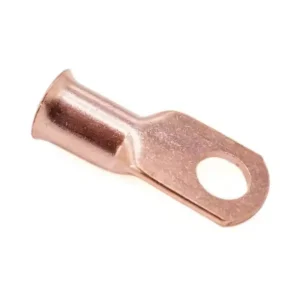
| Brass & Copper Alloys (C36000) | 390 MPa | Battery Busbars, Terminal Crimps, Electrical Connectors | Excellent; Tinned / Nickel Plating | Superior electrical and thermal conductivity |
3. Efficiency Architecture & Strategic Value of Chinese Machining Factories
Why modern hardware manufacturing clusters in Shenzhen and Guangdong offer unparalleled time-to-market and cost optimization advantages.
In the competitive global automotive sector, speed-to-market and total cost of ownership (TCO) dictate supply chain survival. Premier Chinese **OEM automotive machining factories**, concentrated in industrial innovation epicenters like Shenzhen and the Pearl River Delta, have evolved beyond simple labor arbitrage. Today, they represent fully integrated high-tech manufacturing hubs powered by digital tooling ecosystems, rapid Design for Manufacturability (DFM) feedback loops, and agile supply chain networks.
Key structural operational advantages include:
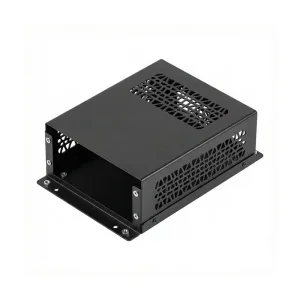
- Integrated Multi-Process Ecosystems under One Roof: Modern Chinese manufacturing facilities consolidate CNC 5-axis milling, precision lathe turning, aluminum die casting, sheet metal stamping, and plastic injection molding within single factory complexes or closely coupled localized clusters. This eliminates multi-vendor handoffs, dramatically reducing lead times from weeks to days.
- Automated 24/7 Dynamic Spindle Dispatching: Utilizing automated pallet changers (APCs) and robotic loading cells, Chinese facilities maintain ultra-high machine utilization rates (up to 92%). High capital efficiency translates directly into lower piece-part costs for global procurement teams.
- Rapid DFM Engineering & Prototyping Loops: Dedicated engineering teams provide detailed 3D DFM feedback within 24 hours of CAD file submission. By identifying tool access limitations, non-standard radius callouts, and thin-wall vibration risks prior to chip-making, potential tooling revisions are eliminated before production starts.
- Robust Raw Material Supply Chain Resilience: Immediate local access to certified aluminum billets, engineering thermoplastics (LSR, PTFE, PEEK), and specialized copper/tin stock protects production schedules from global raw material bottlenecks.
4. Localized Application Scenarios Across Vehicle Subsystems
Examining real-world implementation of custom CNC machined and cast components in EV powertrains, ADAS modules, and smart chassis systems.
EV Powertrain & e-Axle Assemblies
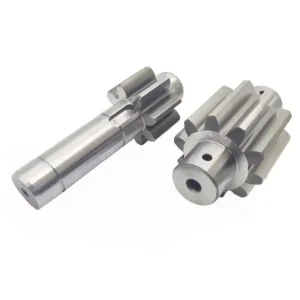
Machined motor housings, rotor shafts, and reducer gearboxes requiring precision coaxiality control (< 0.01 mm) to eliminate high-RPM harmonic vibration, gear whine, and thermal expansion inefficiencies in high-voltage electric drive units.
ADAS & Autonomous Sensor Housings
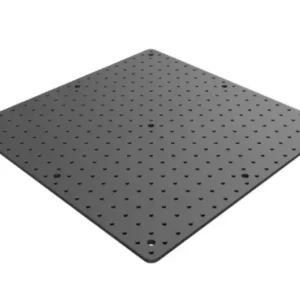
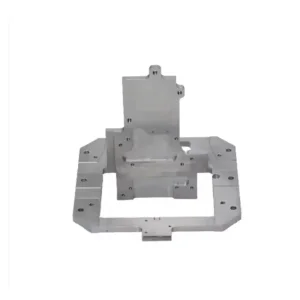
Custom CNC machined aluminum and optical-grade breadboards providing precise mounting points for LiDAR, RADAR, and stereo cameras. Ensures strict structural stiffness to prevent sensor recalibration drift caused by chassis road vibration.
Battery Thermal Management & Busbars
Precision-milled vacuum manifold blocks, liquid cold plate channels, and tinned copper terminal crimps engineered to dissipate intense heat during high-C-rate fast charging while maintaining IP67 electrical isolation.
5. Global Procurement Strategy & PPAP Risk Mitigation
A step-by-step framework for Tier-1 procurement directors to evaluate, audit, and onboard OEM machining vendors securely.
Sourcing critical automotive components across international borders requires a robust risk-mitigation framework. To ensure continuous operational line-rate efficiency and avoid costly recall liabilities, procurement teams must enforce stringent qualification gates prior to mass production tooling authorization.
Key Vendor Audit Gates for Automotive Sourcing:
- Quality Documentation & Compliance verification: Verify that the factory provides certified material mill test reports (MTRs), RoHS/REACH chemical compliance sheets, and full First Article Inspection (FAI) dimensional layout reports utilizing calibrated Coordinate Measuring Machines (CMM).
- Intellectual Property (IP) Protection Controls: Prior to transmitting native STEP or IGES files, ensure a legally binding non-disclosure agreement (NDA) is executed directly with the factory operator, preventing file sharing with unvetted sub-tier brokers.
- PPAP Level 3 Validation Protocol: For critical automotive production lines, require complete Production Part Approval Process (PPAP) submissions, including Process Flow Diagrams, Process FMEA (PFMEA), Control Plans, Gauge R&R studies, and Initial Process Capability Analysis (Ppk > 1.67).
- Dual-Tooling & Capacity Buffer Planning: Confirm that the OEM machining supplier maintains redundant CNC spindles, preventive maintenance logs, and backup power systems to prevent supply disruption during peak seasonal demand spikes.
6. Technological Trends Shaping Automotive Machining (2026–2030)
How AI-driven adaptive tool paths, digital twins, and sustainable green metallurgy are shaping the future of industrial hardware.
AI Tool Wear & Adaptive Milling
Machine-learning sensor arrays monitor real-time spindle load, thermal acoustic vibration, and cutter wear during continuous heavy milling. Real-time dynamic feeds automatically adjust to optimize tool life and achieve zero scrap rates.
Hybrid Additive & Subtractive Cells
Integrating 3D metal laser powder bed fusion (LPBF) with post-CNC precision milling allows internal conformal cooling channels to be built inside die-cast inserts and complex EV motor housings that are impossible to machine traditionally.
Sustainable Green Metallurgy
Automotive OEMs are enforcing recycled aluminum content (e.g., 90%+ recycled 6061 billet stock) alongside dry machining or Minimum Quantity Lubrication (MQL) cooling to lower the Scope 3 carbon footprint of custom metal components.
7. Comprehensive Technical FAQ & Expert Insights
Addressing core engineering, quality, lead time, and commercial queries for global automotive component sourcing.