
Global Enterprise Procurement Trends & Macro Industrial Demand Analysis
In the modern era of industrial manufacturing, the transition toward lightweighting, thermal efficiency, and high strength-to-weight ratio components has transformed global procurement strategies. Precision OEM aluminum stamping has emerged as a critical manufacturing methodology for global Tier-1 and OEM enterprises across North America, Europe, and the Asia-Pacific region. As industries transition to Electric Mobility (EV), 5G/6G Telecommunication Nodes, Aerospace Avionics, and Renewable Energy Systems, aluminum alloy stampings are increasingly replacing traditional steel and die-cast zinc components due to their superior specific strength, excellent corrosion resistance, and high electrical/thermal conductivity.
Global supply chain managers face double pressures: optimizing total cost of ownership (TCO) while ensuring zero-defect production tolerances under stringent operational deadlines. According to macro-industrial reports, the global metal stamping market is projected to reach $300+ Billion by 2030, with aluminum alloys accounting for the highest compound annual growth rate (CAGR). China's manufacturing ecosystem—specifically specialized engineering hubs like Shenzhen Sunmy Hardware—offers deep supply chain integration, combining high-speed automated progressive tooling with rigorous post-processing and international compliance.
Aluminum Alloy Material Selection Matrix for OEM Engineers
Choosing the correct aluminum alloy temper and grade is paramount to avoiding material fracture during deep drawing or springback errors during precision bending. Below is an engineering comparison matrix developed by our senior metallurgy team:
| Alloy Grade | Temper | Tensile Strength (MPa) | Thermal Conductivity | Formability Score | Primary OEM Applications |
|---|---|---|---|---|---|
| Al 1100 / 1050 | O / H14 | 90 - 145 | 220 W/m·K (Very High) | ★★★★★ (Excellent) | Thermal heat sinks, EMI shields, electrical busbars, transformer caps. |
| Al 3003 / 3105 | H14 / H24 | 140 - 200 | 160 W/m·K (High) | ★★★★☆ (Very Good) | EV battery cell cans, heat exchanger fins, HVAC enclosures, liquid cold plates. |
| Al 5052 / 5083 | H32 / H34 | 210 - 310 | 138 W/m·K (Medium) | ★★★★☆ (Good for Draw) | Automotive brackets, marine structural hardware, electronic chassis frames. |
| Al 6061 | T4 / T6 | 180 - 310 (T6) | 167 W/m·K (High) | ★★★☆☆ (Moderate/Post-Heat) | Aerospace structural mounts, heavy-duty automotive chassis, optical plates. |
| Al 7075 | O / T6 | 220 - 570 (T6) | 130 W/m·K (Moderate) | ★★☆☆☆ (Hot Stamping) | Defense components, high-stress aerospace brackets, robotic arm links. |
Advanced Tooling Architecture & Technical Manufacturing Roadmap
High-volume OEM aluminum stamping demands sophisticated tool engineering. Unlike mild steel, aluminum alloys possess a lower modulus of elasticity (~69 GPa), resulting in heightened elastic recovery—commonly known as springback. Furthermore, aluminum is prone to galling and friction welding inside the die during high-speed stamping operations.
Progressive Die Stamping
Ideal for complex, multi-featured components required in high volumes (100,000+ units). Raw aluminum coils are fed sequentially through multiple stations—punching, blanking, bending, coining, and embossing—yielding finished parts with minimized scrap and unit cost.
Deep Drawing & Hydroforming
Specifically used for seamless, box-like, or cylindrical geometries such as battery cans, sensor housings, and RF shielding enclosures. Utilizing specialized PVD-coated tool steels (D2 / DC53 / Carbide inserts) to eliminate material tearing and surface scoring.
FEA Simulation & Springback Compensation
Before cutting tool steel, our engineers run 3D Finite Element Analysis (FEA) using AutoForm and PAM-STAMP. By simulating grain direction, thinning behavior, and stress concentrations, we pre-modify die contours to counteract springback accurately on the first trial.
Automotive & Electric Mobility (EV)
EV battery tray structural crossmembers, busbar connection clips, heat shield wraps, and liquid cold-plate covers require flawless leak-tightness and vibration durability. We supply stamped aluminum components treated with trivalent chromate conversion (MIL-DTL-5541) for maximum corrosion resistance and bonding reliability.
Aerospace & Avionics Enclosures
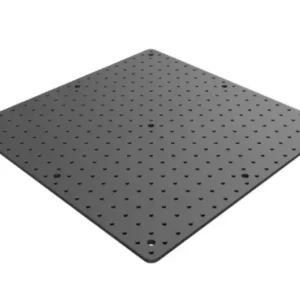
Weight reduction is directly tied to operational payload efficiency. Using aircraft-grade Al 6061-T6 and Al 7075, we perform precision stamping and CNC secondary machining to fabricate avionics chassis, optical breadboard mounting brackets, and sensor housings holding positional tolerances within ±0.01mm.
5G Telecom & Server Computing
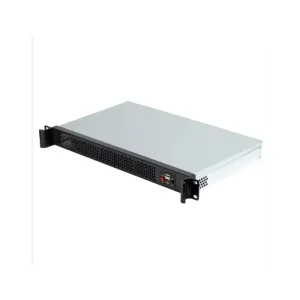
High-density 1U/2U server chassis, micro-waveguide covers, and EMI/RFI shielding cans demand superior planarity to maintain signal integrity. Our stamping presses feature automatic in-line optical flatness inspection to guarantee co-planarity within 0.05mm across large surface areas.
E-E-A-T Quality Governance: Testing, Metrology & Compliance Protocols
At Shenzhen Sunmy Hardware Co., Ltd., quality control is not an isolated inspection step; it is integrated directly into every stage of the manufacturing process. From raw material coil verification to final CMM dimensional reporting, our quality management system enforces complete auditability and zero-defect delivery.
Spectrometry Chemical Analysis
Every incoming batch of aluminum sheet stock undergoes X-ray fluorescence (XRF) spectrometry to confirm exact alloy chemical composition (Si, Fe, Cu, Mn, Mg, Cr, Zn, Ti limits) against ASTM and EN standards before entering production.
CMM & Optical Metrology
Outfitted with automated Zeiss Coordinate Measuring Machines (CMM) and Keyence 2D/3D optical measuring systems, we verify GD&T callouts including profile of a surface, true position, perpendicularity, and runout down to sub-micron accuracy.
Full FAI & Material Certification
Every shipment includes complete First Article Inspection (FAI) reports per AS9102 format, raw material mill test certificates (MTC), RoHS 3.0 & REACH SVHC compliance statements, and salt-spray corrosion test logs (ASTM B117).
Next-Generation Technology Roadmap & Future Engineering Outlook
As smart manufacturing converges with eco-conscious industrial policies, the aluminum stamping industry is undergoing rapid technological innovation. Sunmy Hardware remains at the forefront of this evolution by investing in cutting-edge R&D and digital manufacturing integration:
1. AI-Powered In-Line Vision Defect Recognition
By mounting high-resolution deep-learning camera arrays directly inside the progressive press beds, our vision systems detect surface scratches, micro-cracks, and burr heights exceeding 0.02mm in real time, automatically halting the stroke before non-conforming parts move forward.
2. Conformal Cooling Additive Tooling Inserts
For hot stamping high-strength 7075 alloys, we utilize 3D-printed tool steel inserts with internal conformal cooling channels. This technology accelerates thermal dissipation during die quenching, reducing cycle times by 35% while yielding homogeneous metallurgical strength.
3. Carbon-Neutral Closed-Loop Recycled Alloys
Supporting international ESG mandates, our facility operates closed-loop scrap segregation. Stamped off-cuts from Al 5052 and Al 6061 are segregated at the die, remelted, and re-rolled into secondary sheet stock, reducing embodied carbon by up to 85% compared to virgin primary aluminum extraction.
Ready to Accelerate Your OEM Aluminum Stamping Project?
Submit your 2D/3D CAD drawings (STEP, IGES, DXF, DWG, PDF) today. Our engineering team provides detailed DFM analysis, tolerance evaluations, and formal quotations within 24 hours under NDA protection.