
High-Precision Hardware Components & Assemblies
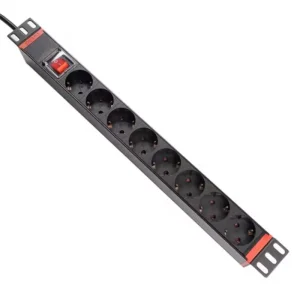
ODM Custom 8-Way German Standard 16A Rack-Mount PDU Power Strip - China Suppliers & Factory for Sheet Metal Fabrication Supplier, Factory
View Product Details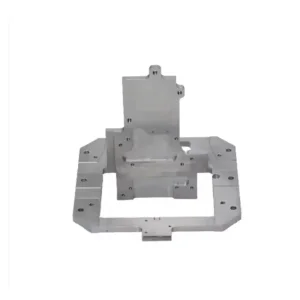
High-Quality High-Precision CNC Machined Brackets & Frames for Aerospace & Automotive | China Suppliers & Factory Manufacturer, Factories
View Product Details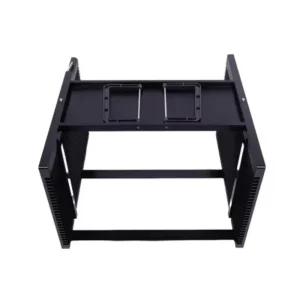
China Premium 8-Inch CNC Machined Aluminum Semiconductor Wafer Carrier Manufacturer, Exporter
View Product Details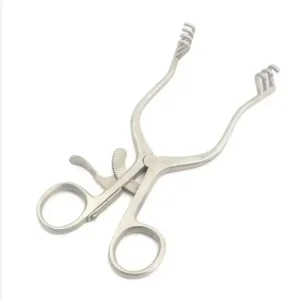
OEM High-Quality Custom Surgical Retractors from China Suppliers | Professional Stainless Steel Factory Products Product, Factory
View Product Details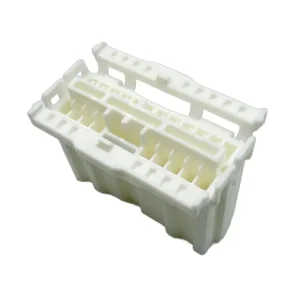
High-Quality High-Precision White PBT Automotive Electrical Connector Housing Exporters, Quotes
View Product Details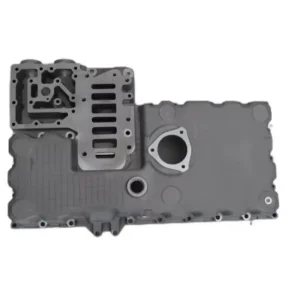
China Premium Low-Pressure Cast Aluminum Alloy Clutch Oil Pan - China Suppliers & Factory for Automotive Transmission Retarders Service, Products
View Product Details
High-Quality China Premium Automotive Transmission Retarder Engine Clutch Oil Pan - Low-Pressure Cast Aluminum Alloy from Suppliers & Factory Exporters, Factories
View Product Details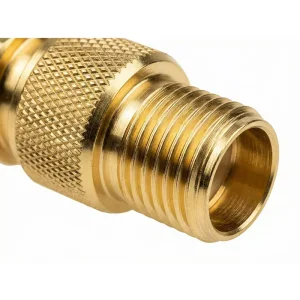
High-Quality Precision Knurled Brass Threaded Connector from China Suppliers - High-Quality Factory Manufacturing for Gas Sealing Manufacturers, Factories
View Product DetailsThe Evolution of Urethane Casting in Next-Gen Product Development
A comprehensive analysis of vacuum casting dynamics, polymer innovations, and the transition from rapid prototyping to low-volume bridge production.
1. Paradigm Shift: Urethane Casting as an Industrial Bridge Strategy
In the contemporary hardware development landscape, time-to-market and capital efficiency are the primary metrics defining commercial success. ODM Urethane Casting (frequently designated as Vacuum Casting or Polyurethane Molding) has evolved from a simple prototyping workaround into a mission-critical bridge manufacturing technology. By combining high-resolution stereolithography (SLA) or 5-axis CNC master patterns with room-temperature vulcanizing (RTV) silicone molds, OEM/ODM hardware engineers can produce production-grade polymer components in batches of 10 to 500 units at a fraction of the cost and lead time associated with hard steel injection tooling.
The strategic value of urethane casting lies in its capability to simulate final injection-molded thermoplastics—such as ABS, Polycarbonate (PC), Polypropylene (PP), and Thermoplastic Polyurethane (TPU)—in terms of mechanical strength, thermal deflection, surface texture, and optical transparency. As global product lifecycles shrink, procurement directors are increasingly leveraging ODM silicone tooling suppliers to validate market demand, perform field testing, and secure early regulatory certifications (FDA, UL, CE) long before committing $50,000 to $200,000 in high-cavity hard tooling.
Zero Tooling Amortization
Eliminate massive upfront steel tooling investments. Silicone molds cost up to 90% less than aluminum or steel injection molds, delivering rapid NPI payback.
Accelerated Lead Times
Go from 3D CAD design to physical, hand-finished polyurethane parts in as few as 5 to 7 business days, shortening iteration cycles significantly.
Complex Polymeric Formulations
Cast rigid, flexible, elastomer (Shore 30A-90A), clear, and flame-retardant (UL94-V0) polyurethane resins with high dimensional stability.
Meeting International Procurement Expectations in 2026+
Analyzing cross-border supply chain requirements, Total Cost of Ownership (TCO), and engineering risk mitigation.
Global Corporate Sourcing & Risk Mitigation
Procurement teams across North America, Europe, and Asia-Pacific face mounting pressure to reduce geopolitical risk, lower inventory carrying costs, and maintain zero-defect quality standards. When sourcing from an ODM Urethane Casting Supplier & Factory, modern enterprise buyers evaluate partners beyond simple piece-price comparisons. Key intent indicators include:
- Design for Manufacturability (DFM) Verification: In-house engineering teams that perform vacuum degassing simulations, shrinkage compensation analysis (typically 0.15% to 0.4%), and wall thickness audits before silicone casting.
- Material Traceability & Environmental Compliance: Full compliance documentation including RoHS 3.0, REACH, UL 94 flame ratings, and ISO 10993 biocompatibility certificates for medical applications.
- Comprehensive Quality Reporting: First Article Inspection (FAI), CMM dimensional verification, coordinate profiling, and color-matching fidelity using spectrophotometers (Pantone/RAL standards).
China Factory 4.0: Supply Chain Resilience & Speed
Leveraging Shenzhen's advanced manufacturing clusters, integrated rapid tooling, and automated quality control.
Integrated Manufacturing Ecosystem
China's Smart Factory 4.0 infrastructure provides an unparalleled competitive edge for global buyers seeking custom ODM casting services. By co-locating high-resolution SLA 3D printing (0.025mm layer resolution), 5-axis CNC high-speed milling, automated silicone mixing/degassing vacuum chambers, and climate-controlled curing ovens, custom factories minimize transition friction between manufacturing phases.
Furthermore, China's resilient supply chain ecosystem allows immediate access to specialized post-processing treatments—including vapor polishing, optical clear coating, electromagnetic interference (EMI) shielding plating, texture matching (VDI 3400 / Mold-Tech), and overmolding insert integration.
Polyurethane Material Selection Matrix
Selecting the optimal polyurethane resin to match your mechanical, thermal, and cosmetic requirements.
| Resin Classification | Simulated Material | Hardness / Flexural | Tensile Strength | HDT (@ 0.45 MPa) | Primary Industrial Applications |
|---|---|---|---|---|---|
| PU High-Impact Rigid | ABS (Heavily Reinforced) | 80 - 85 Shore D | 45 - 55 MPa | 85°C - 95°C | Robotic arms, electronic enclosures, automotive trim components. |
| PU Optical Transparent | Polycarbonate (PC) / PMMA | 85 - 90 Shore D | 60 - 70 MPa | 110°C - 120°C | Medical light pipes, automotive lenses, transparent display covers. |
| PU Flame-Retardant | UL94-V0 Rated ABS/PC | 82 - 86 Shore D | 40 - 50 MPa | 90°C - 105°C | Rack-mount PDU housings, server chassis, high-voltage battery modules. |
| PU High-Temperature | PEEK / Nylon (PA66) | 88 - 92 Shore D | 65 - 78 MPa | 130°C - 150°C | Under-hood automotive brackets, aerospace carriers, thermal manifolds. |
| PU Elastometric Rubber | TPU / Silicone / Rubber | 30A - 90A Shore A | 15 - 30 MPa | N/A | Overmolded grips, gaskets, seals, vibration isolators, flexible boots. |
Sector-Specific ODM Urethane Casting Deployment
How leading industries deploy polyurethane silicone molding to solve complex engineering challenges.
Medical Devices & Surgical Tools
Low-volume production of ergonomic surgical handles, diagnostic equipment housings, and fluidic manifolds requiring anti-microbial coatings and ISO 10993 biological safety compliance.
Automotive & EV Powertrain
Rapid deployment of air ducts, battery enclosure gaskets, interior console controls, and prototype transmission covers subjected to extreme thermal cycling and vibration testing.
Physical AI & Industrial Robotics
Lightweight end-of-arm tooling (EOAT), multi-material compliant grippers, protective robotic joint covers, and sensor mounting brackets designed for dynamic load endurance.
Precision Investment Casting, Stamping & Enclosures
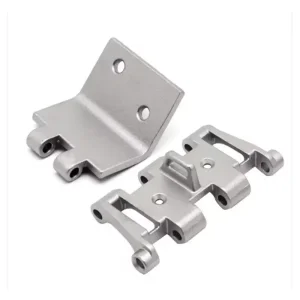
Custom Custom Stainless Steel Investment Casting & Precision Machining Parts from China Suppliers and Factory for Industrial Use Service, Quotes
View Product Details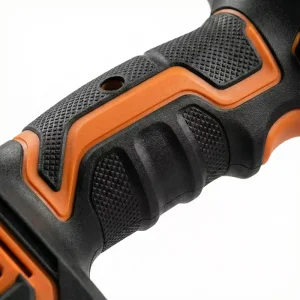
ODM China Suppliers Factory Dual-Material Power Tool Handle with Two-Shot Injection Molding Technology Manufacturers, Products
View Product Details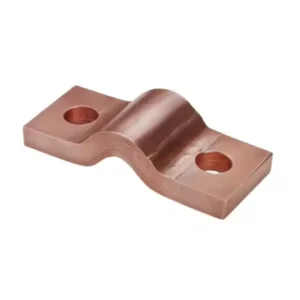
OEM Custom Flexible Laminated Copper Busbars for Battery & Electrical Equipment - China Factory & Suppliers Suppliers, Product
View Product Details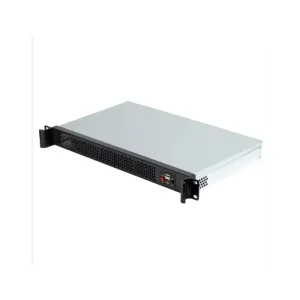
ODM OEM ODM 1U Rackmount Server Chassis (Model 1U25- Custom Mini-ITX Metal Enclosure by China Suppliers & Factory Exporters, Factories
View Product Details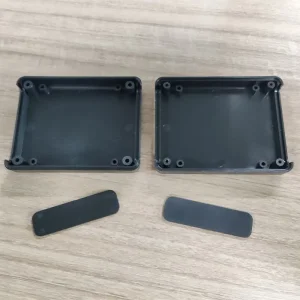
OEM Custom Modular Plastic Enclosures | Removable End Panels for OEM Electronics Products, Exporter
View Product Details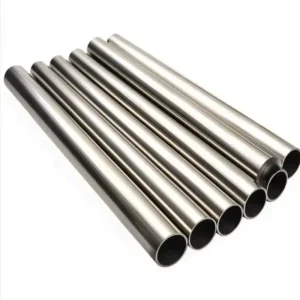
High-Quality Custom Precision Capillary Stainless Steel Tubes (OD 1mm - 8mm) from China Suppliers & Factory Service, Exporter
View Product Details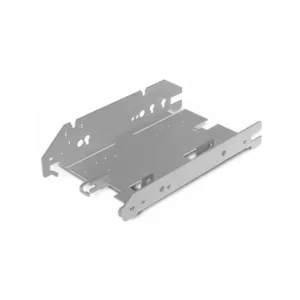
Custom Custom Precision Sheet Metal Brackets & Stamping Parts for Electronic Devices Supplier, Factory
View Product Details
OEM Custom Precision Capillary Stainless Steel Pipe / Tube 1mm - 8mm | China Suppliers & Factory Supplier, Exporter
View Product DetailsFrequently Asked Questions (FAQ)
In-depth technical answers regarding tolerances, material selections, silicone mold lifespans, and ordering workflows.
What dimensional tolerances can be maintained in ODM Urethane Casting?
Standard manufacturing tolerances for polyurethane vacuum casting are generally held to ±0.15 mm per 100 mm (or ±0.005 inches per inch), depending on part geometry, master model accuracy, and resin thermal expansion. For critical alignment points or tight mating features, post-casting CNC machining can be executed to achieve tolerances as tight as ±0.01 mm.
How many polyurethane parts can be produced from a single silicone mold?
A high-grade RTV silicone mold typically yields 15 to 25 quality parts before mold degradation occurs due to chemical attack from the aggressive polyurethane resins. Abrasive or highly rigid resins may reduce mold lifespan to 10–12 castings, whereas soft elastomeric rubbers can extend lifespan up to 30+ shots.
How does Urethane Casting compare against 3D Printing and Hard Injection Molding?
Urethane casting serves as the ideal middle ground. Compared to 3D printing (SLA/FDM/SLS), polyurethane parts offer vastly superior isotropic mechanical strength, smooth injection-grade surface finishes, and true elastomeric options. Compared to injection molding, casting requires zero expensive steel tooling, allowing rapid design iterations with a 75% reduction in initial capital expenditure.
What is the typical lead time from CAD upload to delivered parts?
Master pattern generation via SLA or CNC takes 1 to 2 days. Silicone mold creation, vacuum degassing, and curing require 1 to 2 days. Production casting of 10–50 pieces with post-finishing (sanding, painting, silk-screening) takes an additional 3 to 5 days. Total standard lead time is 5 to 9 calendar days.
Can threaded inserts and hardware components be overmolded into urethane parts?
Yes. Custom brass, stainless steel, or aluminum threaded inserts, location pins, and metallic bushings can be precisely positioned inside the silicone mold cavity before polyurethane injection. This process bonds the insert directly into the part structure, eliminating post-process heat-staking.
How is Intellectual Property (IP) protected when manufacturing in China?
We enforce rigorous IP protection protocols. Prior to receiving CAD data or technical drawings, we execute legally binding Non-Disclosure Agreements (NDAs). Customer design files are encrypted, isolated on secure servers, and accessible strictly by project engineering personnel. Data is never shared with third-party brokers.
Ready to Accelerate Your Hardware Project?
Send your 3D CAD files (STEP, IGES, STL) to receive a comprehensive DFM review, complete material recommendation, and factory-direct quote within 24 hours.
Submit RFQ & CAD Files Now