
Featured Precision Components & Assemblies (Batch 01)
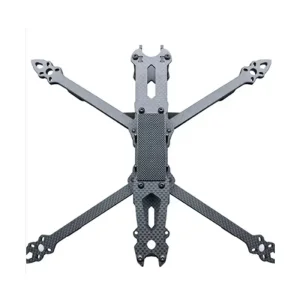
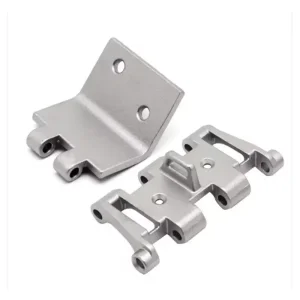
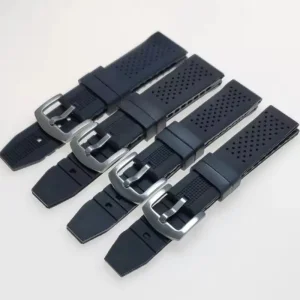
Explore our cross-industry manufacturing capabilities integrating dual-material molding, high-precision CNC machining, and structural metal forming.
1. Executive Summary & The Global Commercial Landscape
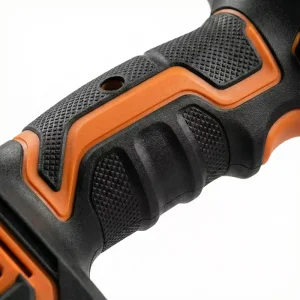
Two-Shot Injection Molding (commonly designated as 2K Molding, Multi-Shot Molding, or Dual-Material Injection) represents the apex of modern polymer conversion technology. By sequentially injecting two chemically distinct resin substrates or color formulations within a single, highly integrated mold cavity, this manufacturing process eliminates downstream secondary assembly, bolsters mechanical bonding integrity, and achieves structural aesthetic enhancements that conventional single-material molding cannot match.
The global market for multi-material injection molding is expanding rapidly. Valued at approximately USD 8.9 Billion in 2023, independent industrial benchmarks project this domain to cross USD 14.2 Billion by 2030, reflecting a Compound Annual Growth Rate (CAGR) exceeding 6.8%. Driving this global shift are stringent automotive weight-reduction mandates, rising adoption of IP67/IP68 ingress-protected wearable devices, and the expanding demand for ergonomic, vibration-damping medical instrumentation.
The ODM Sourcing Paradigm Shift
Enterprise procurement teams are pivoting away from simple OEM contract molders toward complete ODM (Original Design Manufacturer) partnerships. Under an ODM workflow, suppliers supply upfront Design for Manufacturability (DFM), non-linear Moldflow thermal profiling, custom kinematic tooling design, and automated quality auditing under a unified warranty structure. This holistic integration eliminates split-vendor liability and drastically shrinks Time-to-Market (TTM).
TCO Reduction
Eliminating post-molding adhesive bonding, sonic welding, and manual gasket insertion reduces direct assembly labor costs by 35% to 60% across mass production cycles.
Hermetic Sealing
Direct chemical overmolding creates molecular-level interfacial crosslinking, producing zero-clearance environmental seals capable of sustaining hydrostatic pressures up to 5 bar.
Rapid Lead Times
Integrated ODM tooling suites enable single-cycle multi-material production, reducing total unit production cycle times by up to 45% compared to multi-stage overmolding.
2. Engineering Fundamentals of Two-Shot (2K) Injection Molding
Achieving defect-free 2K molded components requires rigorous synchronized control of tool kinematics, dual barrel thermal regulation, rheological flow behavior, and polymer polymer-interlocked bonding dynamics.
Kinematic Tooling Techniques: Rotary Platen vs. Core-Back vs. Transfer
The selection of 2K tooling architecture dictates tool longevity, shot repeatability, and machine tonnage requirements:
| Tooling Kinematic System | Operating Principle | Target Geometry & Volume | Tooling Cost Index | Cycle Time Efficiency |
|---|---|---|---|---|
| Rotary Platen (180° Indexing) | Mold index plate rotates the primary substrate 180° to align with the secondary injection barrel. | High-volume automotive housings, dual-color enclosures (>100k units). | High (1.4x - 1.8x) | Optimal (<25s) |
| Core-Back / Slide Technology | Hydraulic or servo-driven core pins retract after Shot 1 to open cavity volume for Shot 2. | Internal seals, continuous perimeter gaskets, compact tools. | Moderate (1.0x) | Fast (<30s) |
| Robotic Pick-and-Place Transfer | 6-Axis articulation arm transfers primary substrate between discrete molds or cavities. | Low-to-medium volume, complex 3D insert overmolding. | Lowest Initial Tooling | Slower (+15-20s transfer) |
Polymer Compatibility & Interfacial Adhesion Dynamics
Chemical bonding between thermoplastic substrates occurs through interdiffusion of polymer chains across the melt interface. If chemical compatibility is lacking, mechanical interlocking features (dovetails, through-holes, and undercut grooves) must be designed into the primary substrate.
| Substrate 1 (Hard Rigid Phase) | Substrate 2 (Soft Overmold Phase) | Interfacial Bond Strength | Primary Adhesion Mechanism |
|---|---|---|---|
| Polycarbonate (PC) | Thermoset Polyurethane / TPU | Excellent (>8.5 N/mm) | Chemical Polymer Chain Interdiffusion |
| Acrylonitrile Butadiene Styrene (ABS) | Thermoplastic Elastomer (TPE) | Excellent (>7.2 N/mm) | Molecular Solvation & Co-crystallization |
| Polyamide 66 (PA66 - 30% GF) | SEBS / TPE Formulations | Moderate (4.0 - 5.5 N/mm) | Requires Modified Coupling Agents |
| Polypropylene (PP) | TPU (Polyurethane-based) | Poor (<1.5 N/mm) | Strictly Mechanical Interlocking Required |
3. DFM (Design for Manufacturability) Guidelines & Rheology Control
Precision multi-shot molding demands stringent adherence to DFM standards prior to tool steel cutting. Failure to account for differential thermal shrinkage, wall thickness transition ratios, and shear heating leads to internal stresses, warpage, and delamination.
Essential ODM Engineering Rules for 2K Tooling
- Substrate Volumetric Ratio Rule: Ensure Substrate 1 possesses sufficient wall thickness and structural modulus to withstand the injection pressure and melt enthalpy of Substrate 2 without collapsing or deforming. Target a minimum wall thickness ratio of 1.2:1 (Substrate 1 : Substrate 2).
- Thermal Shrinkage Differential Offset: High-shrinkage resins (e.g., POM, PE) overmolded onto low-shrinkage amorphous resins (e.g., PC/ABS) must be compensated using isotropic cavity scaling parameters inside the 3D CAD module to prevent post-molding warpage.
- Gate Location & Flow Length Management: Gate positions for Shot 2 must not impinge directly upon thin-walled sections of Shot 1. Sub-surface edge gates or valve-gate hot runners are mandatory to minimize cosmetic jetting marks and thermal washing of the primary substrate.
- Vent Geometry Optimization: Secondary injection steps often trap air against the solidified boundaries of the first shot. Deep venting channels (0.015 mm – 0.025 mm depth) along the parting line prevent diesel effect combustion burn marks.
4. Localized Application Scenarios Across Global High-Tech Sectors
ODM Two-Shot Molding solutions serve as critical enablers for next-generation hardware across demanding market verticals. Below are real-world engineering deployment profiles:
Automotive & Electric Vehicles
Use Cases: Smart HVAC dampener seals, backlit capacitive touch dashboard buttons, sensor housing environmental seals, and high-voltage battery connector isolators.
Technical Value: Meets ISO 16750 thermal shock durability (-40°C to +125°C) and eliminates micro-vibration squeak and rattle (NVH performance).
Medical Devices & Diagnostics
Use Cases: Biocompatible dual-fluid manifold valves, soft-touch surgical scalpel grips, laparoscopic instrument handles, and sealed insulin pen housings.
Technical Value: ISO 10993 cytotoxicity compliance, USP Class VI medical grade polymer integration, and resistance to repeated autoclave sterilization cycles.
Industrial & Power Tools
Use Cases: Heavy-duty drill housings (30% Glass-Filled PA66 overmolded with 60 SHORE A TPE), impact-resistant battery pack bumpers, and isolation boots.
Technical Value: Withstands 2-meter drop testing onto concrete floors and provides ergonomic fatigue reduction for industrial operators.
Consumer Electronics & Wearables
Use Cases: IP68 waterproof smartwatch bodies, bi-color true wireless stereo (TWS) earbud cases, and acoustic damping speaker enclosures.
Technical Value: High-precision micro-injection tooling allows wall thicknesses down to 0.6 mm while guaranteeing zero moisture penetration.
5. China Supply Chain Resilience & The Shenzhen Industrial Cluster Advantage
Procuring ODM 2K molding components from China's Greater Bay Area (Shenzhen-Dongguan-Guangzhou hub) unlocks distinct structural advantages in tooling speed, cost efficiency, material sourcing, and operational adaptability.
Unrivaled Ecosystem Density
Within a 50-kilometer radius, our operations access world-class masterbatch formulators, specialized mold-base suppliers (HASCO/DME standards), precision EDM electrode makers, and high-spec surface texture houses (Mold-Tech certified).
Advanced Automated Infrastructure
Our facilities house European high-precision CNC machining centers (Roku-Roku, Makino), Fanuc multi-axis robotic loading cells, and KraussMaffei dual-injection molding machines with integrated melt-pressure sensors.
Engineered Supply Chain Redundancy
To guard against global supply bottlenecks, we maintain direct stocking relationships with international resin suppliers (Covestro, SABIC, DuPont, BASF) alongside fully qualified, cost-effective domestic equivalents.
6. Technology Roadmap & Future Outlook (2026–2030)
As smart devices evolve toward smaller footprints and higher functional density, Two-Shot Injection Molding is integrating with complementary manufacturing disciplines:
LDS 2K In-Molded Electronics
Combining 2K molding with Laser Direct Structuring (LDS). Shot 1 uses a dopant-activated polymer, while Shot 2 acts as a standard insulator. Laser tracing enables direct 3D circuit printing on plastic surfaces without PCBs.
AI-Driven Closed-Loop Cavity Control
Real-time piezoelectric in-cavity pressure and temperature sensors connect with AI machine algorithms. The system dynamically adjusts switchover points, pack pressures, and barrel temperatures shot-by-shot, driving yield rates above 99.8%.
Bio-Based & Recycled 2K Polymers
Co-molding post-consumer recycled (PCR) rigid substrates with bio-based TPE overmolding phases. Advanced thermal management guarantees strong interfacial adhesion without degrading recycled resin chains.
7. Quality Assurance, Global Compliance & Risk Mitigation
Quality control for multi-material injection molding requires specialized inspection routines to verify both internal interfacial bond integrity and external dimensional stability.
CMM 3D Laser Scanning Inspection
High-resolution Zeiss Coordinate Measuring Machines (CMM) combined with non-contact blue light 3D laser scanners map multi-shot part surfaces against master CAD models, ensuring tolerance compliance down to ±0.005 mm.
Destructive Interfacial Peel Testing
Per ISO 813 and ASTM D903 standards, sample batches undergo automated 90° and 180° peel strength testing to verify that chemical bond performance meets or exceeds target force specifications prior to volume shipment.
Regulatory Document Traceability
Every delivery batch is accompanied by comprehensive documentation: Raw Material Mill Certificates, RoHS / REACH Compliance Documentation, UL94 Flammability Ratings, and full FAI (First Article Inspection) Reports.
Featured Precision Components & Assemblies (Batch 02)
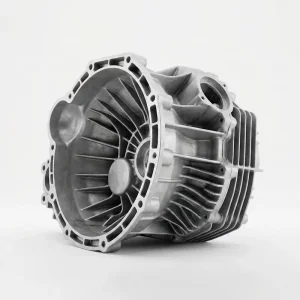
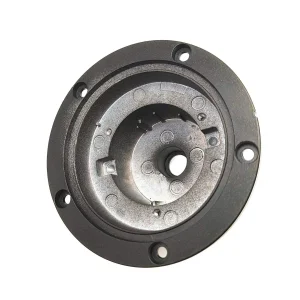
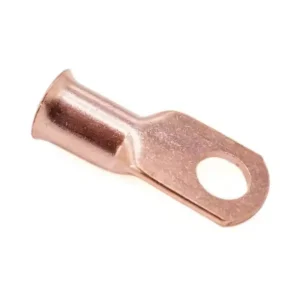
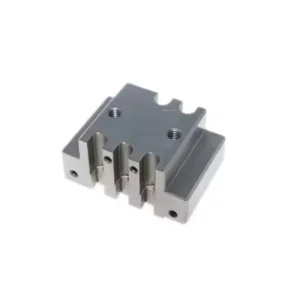
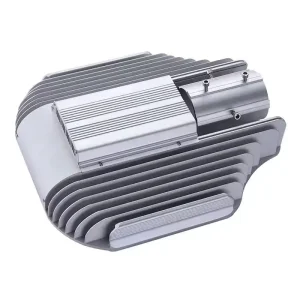
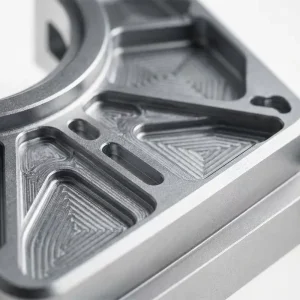
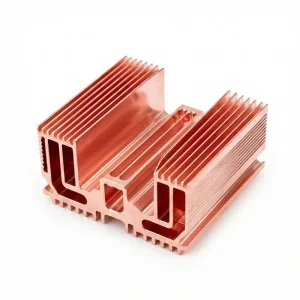
Discover our extended OEM product lineup spanning die-casting, precision CNC turning, stamped battery hardware, and advanced thermal heatsink assemblies.
8. Comprehensive Procurement & Technical FAQ (Q&A)
Technical solutions and commercial details engineered to address common queries from sourcing managers, engineering leads, and quality directors.
What is the structural difference between Two-Shot (2K) Molding and Overmolding?
Two-Shot (2K) Injection Molding takes place inside a specialized single-stage machine fitted with two independent injection units and an indexing or rotary mold plate. The second shot is injected immediately after the first shot while the primary substrate is still warm, yielding chemical-level bond strength within a single continuous cycle.
Traditional Overmolding is a two-step process where Substrate 1 is molded on one machine, allowed to cool, stored or shipped, and manually loaded into a second machine to inject Substrate 2. 2K molding significantly reduces labor, shortens cycle times, eliminates substrate surface contamination, and delivers higher dimensional precision.
How do you ensure strong adhesion between two dissimilar plastic materials?
Adhesion relies on chemical compatibility and mechanical interlocking design. During the DFM stage, our engineers analyze polymer solubility parameters and chemical structure. Compatible combinations (such as PC+TPU or ABS+TPE) bond via molecular interdiffusion.
For chemical-incompatible combinations (such as PP+TPU or PA66+POM), we engineer mechanical keying features into the first substrate—including through-hole anchors, dovetail slots, and micro-grooves—to lock the overmolded material mechanically in place.
What are typical tooling lead times for ODM Two-Shot molds?
Standard lead time for complex high-precision 2K production tooling (incorporating HASCO/DME mold bases and S136 or 1.2344 hardened steel cores/cavities) ranges from 30 to 45 calendar days. For rapid prototype testing, aluminum or P20 steel bridge tooling can deliver T1 sample parts within 18 to 25 days.
What minimum tolerances can Sunmy Hardware hold for 2K molded parts?
Our standard molding tolerances align with ISO 2768-m. On critical functional dimensions, CNC post-machined features, and tool core surfaces, we maintain tolerances down to ±0.010 mm for single-shot features and ±0.015 mm across multi-material boundaries, backed by Zeiss CMM measurement verification.
How does Sunmy Hardware protect proprietary customer CAD designs and IP?
We enforce strict IP protection policies. We execute legally binding Non-Disclosure Agreements (NDAs) before receiving 3D CAD files. All design assets are stored on air-gapped, encrypted servers accessible only to assigned project engineers. No project data is shared with third-party brokers or unvetted contractors.
What quality documentation is included with high-volume shipments?
Every production run includes comprehensive Quality Inspection Packages: Full First Article Inspection (FAI) reports, CMM 3D dimensional scan data, Raw Material Mill Certificates with heat numbers, RoHS/REACH compliance declarations, and Process Control Parameter Logs.
Can Sunmy Hardware handle hybrid metal-to-plastic multi-shot assemblies?
Yes. Our engineering facility integrates insert molding with 2K multi-material injection. We can place CNC turned brass studs, stamped copper busbars, or die-cast aluminum frames into the tool, inject a rigid structural polymer substrate (Shot 1), and immediately follow with an elastomer sealing layer (Shot 2).