Precision Engineed Components & OEM ODM Portfolio
Explore our core engineering exports spanning high-tolerance stamped components, thermal management busbars, medical device enclosures, and structural aerospace castings.
Executive Whitepaper: Metallurgy & Thermodynamics of Permanent Mold Casting
Understanding how chill casting alters dendrite arm spacing (SDAS), eliminates gas entrapment, and delivers superior mechanical strength compared to high-pressure die casting and sand casting.
Dendrite Arm Spacing & Rapid Chill Solidification
Permanent mold casting (also known as gravity die casting) utilizes reusable metallic molds—typically crafted from high-grade alloy steel or gray iron. Unlike sand molds that possess low thermal conductivity, steel molds extract heat rapidly from the molten aluminum or bronze matrix.
This rapid cooling phenomenon significantly reduces the Secondary Dendrite Arm Spacing (SDAS) to under 15–20 microns. A finer grain boundary yields drastically enhanced ultimate tensile strength (UTS), superior fatigue endurance limits, and higher ductility without relying on cost-prohibitive post-processing treatments.
Porosity Suppression & Structural Pressure Tightness
High-Pressure Die Casting (HPDC) injects metal at turbulent, hyper-velocity speeds, trapping air pockets within the casting cavity. Consequently, HPDC components cannot undergo T6 solution heat treatment due to surface blistering.
Conversely, Permanent Mold Casting relies on laminar, gravity-fed or low-pressure bottom-fill gating. Liquid metal ascends steadily, displacement air exits cleanly through engineered vents, and directionally solidifies toward the riser. This yields zero-porosity internal structures capable of withstanding hydraulic fluid pressures exceeding 30 MPa (4,350 PSI).
Global Sourcing Intent: Total Cost of Ownership (TCO) & Process Selection
A data-driven decision matrix for VP of Supply Chain, Head of Procurement, and Lead Engineering Designers evaluating casting methodologies across volume horizons.
When searching for qualified ODM Permanent Mold Casting Exporters, global procurement executives must balance upfront tooling capitalization (CAPEX) against piece-part operational expenditure (OPEX). Permanent mold casting occupies the strategic sweet spot for medium-to-high annual production volumes ranging between 1,000 and 100,000 units per year.
| Casting Attribute / Parameter | Permanent Mold Casting (PMC) | High Pressure Die Casting (HPDC) | Investment Casting (Lost Wax) | Sand Casting |
|---|---|---|---|---|
| Tooling Cost (NRE Investment) | Moderate ($5,000 – $25,000) | Very High ($30,000 – $150,000+) | Moderate ($8,000 – $35,000) | Very Low ($1,500 – $5,000) |
| Dimensional Tolerances | ±0.25 mm for first 25 mm (±0.010") | ±0.10 mm (±0.004") | ±0.13 mm (±0.005") | ±0.80 mm (±0.030") |
| Mechanical Property Integrity | Highest (Finer grain, T6 heat treatable) | Moderate (Porosity risk, non-heat treatable) | High (Good surface, medium cooling) | Lower (Coarse grain structure) |
| Pressure Tightness (Leak-Proof) | Optimal (Ideal for hydraulics/valves) | Poor (High sub-surface void risk) | High (Requires strict process control) | Fair to Poor (Requires impregnation) |
| Economic Break-Even Volume | 1,000 – 50,000 units/year | > 50,000 units/year | 500 – 10,000 units/year | 1 – 1,000 units/year |
| Surface Roughness (Ra) | 2.5 μm – 6.3 μm (100–250 μin) | 1.2 μm – 3.2 μm (50–125 μin) | 1.6 μm – 3.2 μm (63–125 μin) | 12.5 μm – 25 μm (500–1000 μin) |
Strategic Procurement Analysis: Mitigating Tooling Wear & Amortization
Tooling amortization represents a core component of per-unit pricing. Steel dies utilized in permanent mold casting experience significantly less thermal shock and mechanical erosion than HPDC dies, because metal is poured under gravity or gentle low-pressure (0.5 to 1.5 bar) rather than slammed into cavities at 40 meters per second. As a result, a well-maintained H13 tool steel permanent mold regularly exceeds 150,000 to 300,000 pour cycles before requiring major die refurbishing, ensuring stable long-term unit pricing for OEM supply chains.
China Factory 4.0: Modern Supply Chain Resilience & Advanced Automation
How top-tier Chinese ODM foundries leverage automated tilt casting, real-time thermal management, and full downstream integration to guarantee global delivery SLA.
Automated Tilt-Pour Gravity Technology
Modern Chinese foundries employ programmable servo-driven tilt pouring systems. By tilting the mold synchronously as liquid aluminum flows from the ladle, liquid metal turbulence is minimized, completely eliminating oxide inclusions and folding defects during mold filling.
Real-Time Pyrometric & Thermal Control
Die temperature plays a decisive role in solidification dynamics. Embedded thermocouples within multi-zone heating and cooling channels automatically regulate mold wall temperatures to within ±5°C, maintaining optimal thermal equilibrium for consistent shrinkage rates.
Vertical One-Stop Supply Chain Integration
Leading exporters in manufacturing hubs like Shenzhen integrate mold DFM engineering, rapid prototype casting, 5-axis CNC secondary post-machining, electro-anodizing, and CMM quality control under a single accountable quality management system.
Supply Chain Resilience & Geopolitical Risk Mitigation
Global original equipment manufacturers (OEMs) demand agile manufacturing partners capable of accommodating engineering change orders (ECOs) without destabilizing production schedules. Chinese ODM exporters have evolved beyond low-cost labor; today, they leverage **industrial cluster density**—where raw ingot refiners, core makers, heat treatment facilities, precision tooling shops, and surface coaters operate within a 30-mile radius. This geographical synergy collapses lead times for custom tooling from industry averages of 16 weeks down to under 4 weeks, providing unprecedented supply chain elasticity.
Localized Engineering Applications & Industry Use-Cases
How ODM Permanent Mold Castings power critical mission systems in automotive powertrains, aerospace fluid management, renewable energy microgrids, and high-purity medical robotics.
1. Automotive & EV Thermal Management Systems
In electric vehicles, battery pack cold plates, motor housing jackets, and inverter enclosures demand absolute pressure tightness to prevent ethylene glycol coolant leaks into high-voltage environments. Permanent mold cast A356-T6 alloys provide dense wall structures with zero interconnected porosity, delivering superior thermal dissipation conductivity (> 160 W/m·K) while passing 100% helium leak mass spectrometer testing.
- Material Benchmark: A356.0 / AlSi7Mg0.3 with T6 Precipitation Hardening
- Key Benefit: High vibration fatigue resistance under harsh road conditions
2. Aerospace & Defense Structural Components
Lightweight structural brackets, flight control actuator housings, and fuel system elbows require maximum strength-to-weight ratios. Permanent mold gravity die casting eliminates the void defects inherent to sand casting while maintaining full compliance with AMS 4217 specifications, ensuring structural safety margins under high-G aerodynamic loads.
- Material Benchmark: C355.0 (High strength copper-bearing aluminum alloy)
- Key Benefit: Superior tensile yield strength (> 250 MPa) after T6 heat treatment
3. Medical & Diagnostic Device Enclosures
Precision medical devices, surgical robotic arms, and diagnostic imaging equipment require structural housings with exceptional dimensional stability, EMI/RFI shielding capabilities, and smooth surface finishes suitable for antimicrobial powder coatings. ODM exporters supply semi-machined permanent mold castings that reduce CNC hogging time by 70%.
- Material Benchmark: A380 / A360 Aluminum or Specialty Brass Alloys
- Key Benefit: Clean aesthetic cosmetic finish and structural rigidity
4. Renewable Energy & Industrial Fluid Power
Hydraulic manifold blocks, high-pressure pump bodies, and wind turbine pitch gear housings endure cyclic pressure pulses exceeding millions of cycles. The chilled grain structure of permanent mold casting suppresses micro-cracking, dramatically extending the mean time between failures (MTBF) of critical infrastructure pumps.
- Material Benchmark: Ductile Iron (QT450-10) or A356-T6 Aluminum
- Key Benefit: Leak-proof operation under 350 bar continuous pressure
E-E-A-T Certified Quality Control & Metrological Verification
A multi-tiered inspection protocol designed to ensure 100% drawing compliance, material traceability, and metallurgical perfection across every export shipment.
To fulfill stringent E-E-A-T (Experience, Expertise, Authoritativeness, and Trustworthiness) standards required by tier-1 OEM buyers, reputable ODM Permanent Mold Casting Exporters implement rigorous, traceable quality assurance steps at every stage of the casting lifecycle:
1. Spectrographic Melt Analysis
Prior to every pour, optical emission spectrometers (OES) verify the chemical composition of liquid metal, confirming alloy chemistry (Si, Mg, Cu, Fe, Mn) matches ASTM or EN standards before releasing the heat batch.
2. X-Ray Radiography (ASTM E155)
Non-destructive industrial X-ray inspection screens internal structural density for shrink porosity, micro-voids, or slag inclusions in accordance with ASTM E155 reference radiographs class 1 or class 2 specifications.
3. 3D CMM & Laser Scanning
High-precision Coordinate Measuring Machines (CMM) accurately verify GD&T parameters, positional tolerances, true position, datum alignments, and complex contour profiles against 3D STEP models within ±0.005 mm.
Frequently Asked Questions: Technical Engineering & Procurement
Comprehensive answers addressing common questions asked by buyers, manufacturing engineers, and sourcing managers evaluating ODM permanent mold casting capabilities.
What is the fundamental difference between gravity die casting and permanent mold casting?
Technically, the terms are used interchangeably in industrial practice. "Permanent Mold Casting" is the predominant terminology in North America, while "Gravity Die Casting (GDC)" is more commonly used in Europe and Asia. Both describe a process where molten metal is poured into a metallic reusable die under the force of gravity or low pneumatic pressure without high-velocity pressure injection.
Can permanent mold castings be fully heat-treated to T6 condition?
Yes, absolutely. Because permanent mold casting relies on non-turbulent filling, it does not trap ambient air pockets within the metal matrix. As a result, castings can safely undergo solution heat treatment and artificial aging (T6 condition) at temperatures exceeding 500°C without risk of surface blistering or dimensional distortion, drastically boosting yield strength and hardness.
What aluminum alloys are best suited for permanent mold casting?
The most popular aluminum alloys for permanent mold casting are A356 (AlSi7Mg0.3) due to its excellent fluidity, corrosion resistance, and post-heat treatment mechanical strength; A357 for higher strength requirements; C355 for elevated temperature applications; and 319 alloy for general industrial components requiring good machinability.
How does an ODM exporter handle complex internal geometries and undercuts?
For complex internal passages, water jackets, or intricate undercuts that cannot be drawn directly from a steel die, ODM exporters utilize **Semi-Permanent Mold Casting**. In this hybrid process, disposable sand cores or soluble ceramic cores are inserted into the metallic mold cavity prior to pouring, providing maximum design flexibility while preserving the outer metallic chill effect.
What quality documentation accompanies export orders from China?
Standard export quality packages include Material Test Reports (MTR) with optical emission spectrographic data, First Article Inspection (FAI) reports per AS9102 or ISO 9001 standards, 3D CMM dimensional inspection sheets, X-ray radiographic inspection certificates, RoHS/REACH compliance documentation, and pressure test leak rate verification logs.
How are intellectual property (IP) and proprietary CAD designs protected?
Reputable Chinese manufacturing exporters execute formal, legally enforceable Non-Disclosure Agreements (NDAs) prior to receiving 2D/3D CAD data. Client STEP models are securely managed within encrypted Product Data Management (PDM) systems with strict role-based access control, preventing third-party access or unapproved derivative manufacturing.
Featured Hardware Products & Custom Manufacturing Solutions
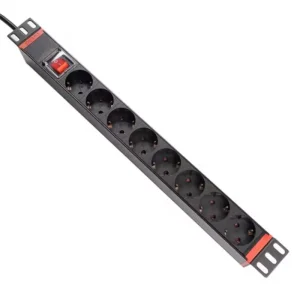
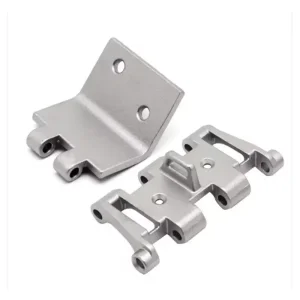
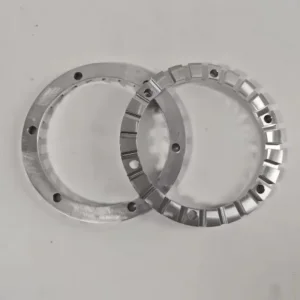
Browse our extended suite of high-precision CNC turned parts, PDU power strips, investment castings, LSR components, and sensor housings.

Accelerate Your Precision Hardware Project
Partner directly with an industry-leading ODM Permanent Mold Casting exporter. Upload your 2D/3D CAD drawings (STEP, IGES, DXF) to receive comprehensive DFM analysis and a competitive factory quote within 24 hours under NDA.
Request Engineering DFM & Quote