
Featured ODM Custom Metal & Plastic Hardware Solutions
Explore our integrated precision manufacturing ecosystem supporting global industrial platforms
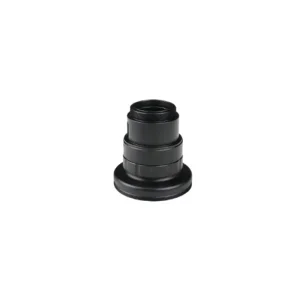
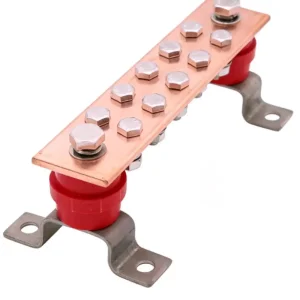
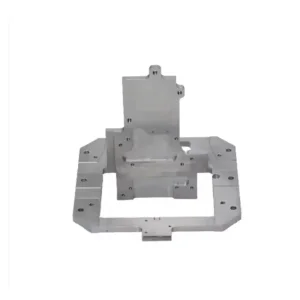
The Paradigm Shift in Engineering Polymers: ODM Nylon Injection Molding
A Technical Evaluation of Polymer Tribology, Thermal Performance, and Advanced ODM Manufacturing Frameworks
Metal-to-Plastic Conversion
Replacing zinc and aluminum die-cast housings with 30-50% glass-fiber reinforced Polyamide (PA66-GF50) reduces assembly mass by up to 60% while retaining structural rigidity above 180°C.
Extended Tribological Life
Internally lubricated nylon formulations (MOS2, PTFE, or Silicone loaded) exhibit self-lubricating properties, reducing wear coefficients down to 0.15 in high-duty dynamic gearboxes.
Automated Cavity Control
Industry 4.0 injection molding systems utilize closed-loop cavity pressure sensing, guaranteeing volumetric consistency within ±0.01mm tolerances across multi-million cycle runs.
Global Commercial & Industrial Context
In the modern global industrial supply chain, Original Design Manufacturers (ODMs) face intense pressure to deliver structural components that balance aggressive weight reduction, high mechanical toughness, and thermal endurance. Polyamides—collectively referred to as Nylon—represent the benchmark engineering thermoplastic for demanding load-bearing applications.
As automotive electrification, industrial robotics, aerospace sub-assemblies, and precision optical platforms evolve, standard off-the-shelf polymer solutions fall short. Precision ODM Nylon Injection Molding bridges this gap by combining advanced resin chemistry (PA6, PA66, PA12, PPA) with state-of-the-art mold design, rheological simulation, and automated processing.
Engineering Grade Nylon (Polyamide) Resin Matrix
Comparative mechanical, thermal, and moisture absorption characteristics for ODM decision-making
| Polymer Variant | Tensile Strength (MPa) | Flexural Modulus (GPa) | HDT @ 1.8 MPa (°C) | Moisture Absorption (%) | Primary Industrial Application |
|---|---|---|---|---|---|
| PA6 (Unfilled) | 75 - 85 | 2.8 - 3.2 | 65 - 75 | 2.8% (23°C, 50% RH) | General industrial housings, snap-fit fasteners |
| PA66-GF30 (30% Glass Fiber) | 175 - 195 | 8.5 - 9.5 | 240 - 250 | 1.8% (23°C, 50% RH) | Automotive cooling fans, motor brackets, power tool housings |
| PA66-GF50 (50% Glass Fiber) | 230 - 250 | 15.0 - 16.5 | 255 - 265 | 1.2% (23°C, 50% RH) | Metal replacement brackets, structural pump impellers |
| PA12 (Low Absorption) | 50 - 60 | 1.4 - 1.8 | 55 - 65 | < 0.2% (23°C, 50% RH) | Precision fluid connectors, pneumatic tubing, optical housings |
| PPA-GF40 (Polyphthalamide) | 210 - 230 | 13.5 - 14.5 | 280 - 295 | 0.8% (23°C, 50% RH) | Under-the-hood EV thermal management components |
Hygroscopic Equilibrium & Dimensional Control
Nylon's dynamic equilibrium with ambient humidity alters impact strength and dimensional stability. Our ODM process integrates pre-molding desiccant drying (down to < 0.05% moisture content) and post-molding controlled moisture conditioning, ensuring part dimensions remain locked within design tolerances upon deployment.
Reinforcement Topology (Glass vs. Carbon Fiber)
Standard glass fibers enhance tensile loading along flow vectors. For extreme flexural rigidity and anti-static electromagnetic interference (EMI) shielding, our ODM center processes short and long carbon fiber (CF) filled nylons, achieving structural modulus values approaching aerospace aluminum grade 6061-T6.
China Industry 4.0: Supply Chain Resilience & Manufacturing Velocity
Combining automated molding cells, in-house tooling hubs, and global export infrastructure
Vertically Integrated Ecosystem
Situated in Guangdong's premier hardware and electronics corridor, our facility integrates high-speed CNC mold milling, Wire EDM, tool steel heat treatment, and custom resin compounding within a 50km radius, eliminating supply chain friction.
Real-Time Moldflow Analytics
Before steel is cut, our CAD/CAM engineers execute rigorous Moldflow® simulations to predict volumetric shrinkage, fiber orientation tensor distributions, weld line strength drops, and potential air traps, guaranteeing right-first-time tooling.
Uncompromised IP Protection
We execute strict Bilateral Non-Disclosure Agreements (NDAs) before handling raw STEP/IGES files. Client geometry data is maintained on air-gapped secure servers with granular user permissions, safeguarding your product innovation.
DFM Optimization Principles for Precision Nylon Tooling
Critical engineering considerations to prevent sink marks, warpage, and flash during high-speed molding cycles
Uniform nominal wall thickness is essential for nylon due to its rapid crystalline freezing rate. Non-uniform walls induce severe internal voiding and differential shrinkage.
- Nominal Wall Target: 1.5mm to 3.2mm for optimized injection pressure.
- Rib Thickness Ratio: Base rib thickness should not exceed 50-60% of the adjacent wall thickness to eliminate cosmetic sink marks.
- Draft Angles: Minimum 1.0° to 1.5° per side; increased to 2.5° for textured surfaces or 30%+ glass-filled grades.
In glass-reinforced nylon, fiber alignment at weld line junctions drops localized tensile strength by up to 45%. Proper gate positioning mitigates structural failure zones.
- Submarine & Valve Gates: Automated shearing gates eliminate manual trimming and minimize runner waste.
- Conformal Cooling: 3D-printed tool inserts with conformal cooling channels maintain uniform mold surface temperatures (±2°C), cutting cycle times by 25%.
- Venting Design: Micro-venting (0.015mm - 0.025mm depth) prevents gas burning during ultra-fast high-pressure injection fill stages.
Cross-Industry ODM Nylon Application Scenarios
Proven operational performance across demanding mission-critical environment deployments
Automotive Under-the-Hood
Engine intake manifolds, cooling system impellers, EV battery cooling module frames, and valve covers manufactured from PA66-GF30 withstand continuous exposure to oils, glycol, and thermal cycling up to 150°C.
Industrial Automation & Gearboxes
High-torque planetary gears, sliding wear blocks, and robotic cable carrier chains molded from self-lubricating PA6-MOS2 provide silent transmission, damp vibration, and eliminate operational greasing needs.
Medical & Optical Equipment
Sterilizable housing covers, surgical tool handles, and optical chassis molded from chemical-resistant PA12 offer biocompatibility, crack resistance under harsh disinfectant wiping, and precise dimensional retention.
Aerospace & UAV Structures
Drone arm connectors, landing gear brackets, and internal avionics brackets using PPA-CF40 reduce component weight compared to magnesium alloys while matching structural load yield limits under high G-force maneuvers.
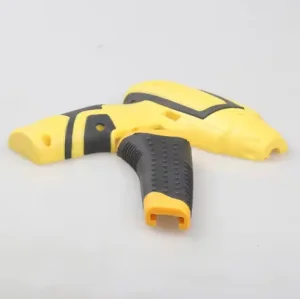
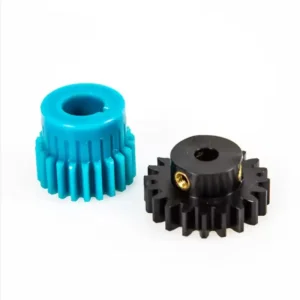
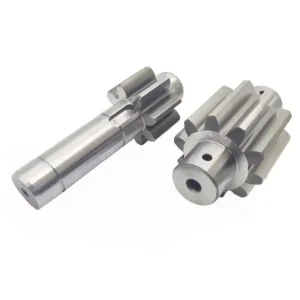
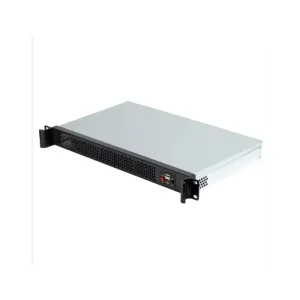
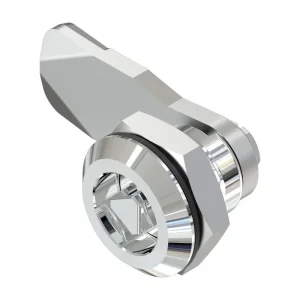
Precision Molded & Machined Components Portfolio
Review our specialized production capabilities across plastic injection, CNC turning, and hybrid metal assembly
Frequently Asked Questions: Technical Engineering & Procurement Guide
In-depth responses on material selection, tooling lifetimes, quality verification, and ODM project workflows
How does your ODM facility manage dimensional shrinkage in high glass-filled Nylon parts (e.g., PA66-GF50)?
Glass fibers introduce anisotropic shrinkage: shrinkage along the flow direction is significantly lower (0.2% - 0.5%) than perpendicular to the flow direction (0.8% - 1.2%). Our tooling engineers utilize 3D Moldflow® simulation to optimize gate location, balancing volumetric packing and predicting warpage patterns prior to CNC mold cutting. Furthermore, we implement post-molding cooling fixtures to maintain zero-deformation geometry during the crystalline alignment phase.
What quality assurance protocols and inspection documents accompany custom ODM nylon shipments?
Every ODM delivery is backed by comprehensive traceability documentation. This includes: Raw Material Mill Test Certificates (chemical composition and resin batch numbers), RoHS / REACH Compliance Statements, First Article Inspection (FAI) reports covering 100% of blueprint dimensions via Zeiss Coordinate Measuring Machines (CMM), and statistical process control (SPC) data for critical-to-quality (CTQ) dimensions indicating a Cpk > 1.67.
Why is post-molding moisture conditioning necessary for structural nylon components?
Polyamides (Nylon 6 and Nylon 66) are naturally hygroscopic. As molded, parts are dry-as-molded (DAM), exhibiting maximum tensile strength but lower elongation at break and higher brittleness. Controlled moisture conditioning accelerates the natural absorption of ambient moisture (up to equilibrium around 2.5% - 3.0%), plastifying the polymer matrix, increasing impact resistance, and preventing localized snapping during automated assembly snap-fitting processes.
What tool steel materials are selected to withstand abrasive glass-fiber reinforced nylon resins?
For un-filled nylons, pre-hardened steels like P20 or NAK80 are suitable for 300,000 to 500,000 cycles. However, glass and carbon fiber fillers act as severe micro-abrasives against tool cavities. For reinforced grades (GF30, GF50, CF30), we utilize hardened tool steels such as H13, S136, or powder metallurgy steel (CPM 9V) vacuum heat-treated to 52-56 HRC. Additional Diamond-Like Carbon (DLC) or titanium nitride (TiN) physical vapor deposition (PVD) coatings are applied to core pins and gates to guarantee a mold life exceeding 1,000,000 cycles.
How do your ODM services optimize Total Cost of Ownership (TCO) compared to domestic Western molding hubs?
Our Guangdong facility lowers total cost of ownership by integrating high-speed toolmaking with low-cost labor overhead, automated multi-cavity hot runner molds, and direct bulk polymer sourcing with top global resin suppliers (BASF, DuPont, Solvay). On average, our clients achieve a 35% to 50% reduction in upfront tooling capital expenditures (CAPEX) and a 20% to 30% reduction in unit part prices (OPEX), while receiving dedicated English-fluent DFM engineering support on a 24-hour turnaround.
What is the standard engineering workflow from drawing submission to mass production?
The standard ODM workflow spans 5 structured milestones: (1) CAD NDA & DFM Review (24 hours); (2) Mold Design Approval & Tool Fabrication (15-25 calendar days); (3) T1 Sample Molding & Initial Inspection (3-5 days); (4) Client Validation, FAI Approval & Moisture Conditioning Optimization; (5) Mass Automated Injection Production with continuous automated vision checks and global DDP/FOB shipping fulfillment.