
Featured Precision Finished Components & Assemblies
Explore high-spec ODM surface treatments, precision-turned components, and multi-process hardware solutions verified by certified laboratory testing.
1. Global Industrial Landscape & Metal Finishing Procurement Trends
Analyzing macro-economic forces, regulatory shifts (PFAS, REACH, RoHS), and supply chain imperatives driving OEM/ODM metal finishing strategies globally.
In modern high-precision manufacturing, metal finishing is no longer merely an aesthetic final layer; it is an critical engineering feature that determines tribological endurance, thermal management efficiency, corrosion longevity, and electromagnetic compatibility (EMC). Global procurement leaders operating in aerospace, medical devices, automotive electrification (EV), and semiconductor capital equipment face a complex ecosystem of international environmental mandates, sub-micron dimensional tolerance requirements, and stringent quality governance.
As original design manufacturers (ODM) assume deeper responsibilities in product life cycle management, selecting the appropriate metal finishing partner requires rigorous evaluation of electro-chemical capabilities, cross-process integration, automated bath monitoring, and certified quality assurance protocols.
Regulatory Compliance & Zero-Discharge
Global environmental mandates such as EU RoHS 3, REACH SVHC, and impending restrictions on hexavalent chromium (Cr6+) and PFAS chemicals are driving a structural transition toward trivalent chromium passivation, electroless nickel-polytetrafluoroethylene (EN-PTFE) composites, and closed-loop zero-liquid-discharge (ZLD) effluent facilities.
Sub-Micron Dimensional Stability
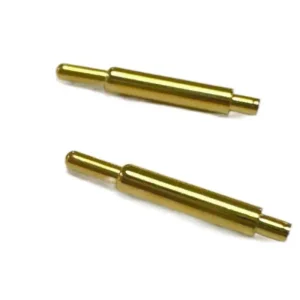
Advanced ODM partners leverage micro-thickness X-ray Fluorescence (XRF) monitoring to ensure plating deposits conform to critical geometric constraints. Whether holding ±0.5µm tolerances on Swiss-turned pogo pins or controlling thermal spray thickness on turbine components, precision coating metrics dictate assembly success.
Integrated Single-Source Supply Chains
Direct integration between CNC machining, precision turning, investment casting, and in-house surface treatment eliminates multi-vendor handling risks. Single-source ODM solutions reduce logistics lead times by up to 35% while providing complete material and process traceability.
2. Comprehensive Metal Finishing Technical Roadmap
A deep dive into advanced surface engineering methodologies, chemical formulations, performance metrics, and industry standard specifications (MIL, ASTM, ISO).
Anodizing & Electro-Chemical Oxidation
Engineered conversion coatings for aluminum, magnesium, and titanium alloys providing dielectric insulation and wear resistance.
- Type II Sulfuric Anodizing: 5–25 µm layer; ideal for optical components, enclosures, and decorative color anodizing.
- Type III Hardcoat Anodizing (MIL-A-8625): 25–50+ µm layer with low temperature bath control; yields Rockwell C 60-70 hardness.
- Chromate Conversion (MIL-DTL-5541): Class 1A & Class 3 electrical conductive film using hexavalent-free Trivalent Chromium Process (TCP).
Noble & Functional Electroplating
Precision electro-deposition for electrical conductivity, low contact resistance, solderability, and harsh environmental protection.
- Gold & Silver Plating (MIL-G-45204): Micron-level gold over nickel sub-layers for pogo pins, high-frequency connectors, and PCB pads.
- Electroless Nickel Plating (ASTM B733): Autocatalytic Mid/High-Phosphorus ENP yielding uniform thickness without edge build-up.
- Hard Chrome & Zinc-Nickel: High corrosion protection withstanding >1,000 hours of neutral salt spray testing (ASTM B117).
PVD, CVD & Vacuum Thin-Film Coatings
Advanced physical and chemical vapor deposition techniques applied in ultra-high vacuum environments for high-wear tooling and aerospace components.
- Diamond-Like Carbon (DLC): Extremely low friction coefficient (<0.1) with Vickers Hardness exceeding 2,000 HV for biomedical devices.
- Titanium Nitride (TiN) & CrN: High-temperature stability and scratch protection for surgical tooling and hydraulic spools.
- Passivation (ASTM A967): Citric and Nitric acid treatment removing free iron to prevent pitting corrosion in medical stainless steels.
3. Technical Performance Comparison Matrix
Direct cross-comparison of key metal finishing processes, evaluating mechanical hardness, layer thickness, corrosion resistance, and industrial suitability.
| Finishing Process | Applicable Alloys | Typical Thickness | Surface Hardness | Salt Spray (ASTM B117) | Primary Industrial Application |
|---|---|---|---|---|---|
| Hardcoat Anodizing (Type III) | Aluminum (6061, 7075, 2024) | 25 – 50 µm | 60 – 70 HRC | 336 – 1,000 Hours | Aerospace & Defense |
| Electroless Nickel (High-P) | Steel, Stainless, Brass, Aluminum | 10 – 30 µm | 48 – 52 HRC (68 HRC heat treated) | 1,000+ Hours | Fluid Power & Hydraulics |
| Gold Plating over Nickel | Copper Alloys, Brass, Beryllium Copper | 0.5 – 3.0 µm | 150 – 200 HV | 96 – 240 Hours | PCB Connectors & Electronics |
| DLC (Diamond-Like Carbon) | Tool Steels, Titanium, Stainless | 1.0 – 4.0 µm | 1,800 – 3,000 HV | 500+ Hours | Medical Implants & Robotics |
| Trivalent Chromate (TCP) | Cast & Machined Aluminum | 0.1 – 0.5 µm | N/A (Chemical Film) | 168 – 336 Hours | Telecommunications & RF |
| Passivation (Citric/Nitric) | 300 & 400 Series Stainless Steel | Molecular Layer | Base Metal Hardness | 24 – 100+ Hours | Biotech & Food Processing |
4. Enterprise Procurement Intent & Industrial Solutions
Aligning metal finishing technologies with specialized requirements across demanding global sectors.
Aerospace & Aviation
Strict adhesion to AS9100 standards. Requiring hard anodizing, cadmium replacement coatings (Zinc-Nickel), and stress relief treatments to prevent hydrogen embrittlement (ASTM F519).
Electronics & Semiconductors
Focus on micro-thin gold plating on pogo pins and spring contacts, low insertion loss, high conductivity, and non-magnetic electroless nickel underplates for RF shielding enclosures.
Medical Devices & Biotech
Biocompatible coatings complying with ISO 10993. Featuring electropolishing, citric passivation, and PVD titanium nitride to withstand repeated autoclave sterilization cycles without degradation.
Automotive & EV Powertrain
High-dielectric powder coatings for aluminum battery housing trays, silver-plated copper busbars, and wear-resistant hard chromium plating for hydraulic pump components.
5. Quality Assurance Protocols & DFM Optimization
How advanced ODM suppliers prevent surface defects, maintain process repeatability, and verify coating integrity.
Design for Manufacturability (DFM) in Surface Finishing
Achieving defect-free surface coatings begins at the CAD engineering phase. Improper part geometry, unvented blind holes, or sharp external radii lead to uneven current density during electroplating or air trapping during chemical immersion. Qualified ODM engineers analyze drawings prior to tooling fabrication to ensure optimal finishing results:
Drainage & Vent Hole Design
Blind tapped holes and enclosed tubular geometries trap process acids, causing bleed-out and post-plating corrosion. DFM guidelines specify drain ports and relief channels for thorough rinsing between processing tanks.
Current Density Uniformity
Sharp external corners suffer from high current density build-up, resulting in burnt edges or excessive plating thickness. Adding generous edge radii (min 0.5mm) ensures uniform electro-deposition across all faces.
Masking & Critical Tolerances
Precision threads, bearing bores, and ground mating surfaces require custom silicone plugs or laser-cut masking films to prevent coating accumulation from altering press-fit dimensions.
Rigorous Analytical Metrology & Inspection Methods
Quality assurance mandates documented verification at every step of production. Modern ODM facilities employ advanced instrumentation to guarantee compliance with customer specifications:
- X-Ray Fluorescence (XRF) Spectrometry: Non-destructive measurement of multi-layer metallic coatings (e.g., Gold over Nickel over Copper) down to nanometer resolution.
- Cross-Hatch Adhesion Testing (ASTM D3359): Lattice pattern tape pull tests assessing coating-to-substrate inter-laminar bond strength.
- Cyclic Corrosion & Salt Spray Chambers (ASTM B117): Accelerated environmental testing monitoring time-to-white-rust and red-rust formation under controlled sodium chloride atomization.
- Coordinate Measuring Machine (CMM) Verification: Dimensional inspection confirming pre-plating and post-plating envelope geometry within ±0.005mm tolerances.
6. Supply Chain Risk Management & Global Compliance
Ensuring operational continuity, regulatory transparency, and seamless global logistics for industrial buyers.
Comprehensive Documentation Packages
Every shipment is accompanied by complete documentation including Mill Test Certificates (MTC), First Article Inspection (FAI) reports compliant with AS9102, RoHS/REACH compliance declarations, and CMM inspection sheets.
Dedicated Engineering Account Managers
Technical support teams fluent in international engineering standards provide rapid 24-hour DFM reviews, real-time batch tracking, and direct collaboration with OEM engineering teams in Europe and North America.
Export Packaging & Anti-Corrosion Protection
Custom packaging utilizing VCI (Vapor Corrosion Inhibitor) bags, vacuum sealing, precision foam inserts, and sea-freight compliant wooden crates prevents oxidation during ocean transit and long-term warehousing.
7. Frequently Asked Questions (Technical & Sourcing Q&A)
Expert answers to common engineering questions regarding metal finishing specifications, tolerances, hydrogen embrittlement, and material compatibility.
How does an ODM supplier account for coating thickness when machining tight-tolerance threads and bearing fits?
Precise dimensioning before finishing is essential. For anodizing (which grows 50% into the material and 50% above the surface) or heavy plating (like electroless nickel), engineers calculate the exact pre-finish machining offset. Pitch diameters of threads are under-cut or over-cut depending on whether internal or external threads are specified, ensuring final dimensions after coating meet standard thread gauge fits (e.g., Class 6H/6g).
What is Hydrogen Embrittlement and how is it relieved in high-strength metal components?
During acid pickling and electroplating, atomic hydrogen can diffuse into high-strength steels (tensile strength >1000 MPa or hardness >31 HRC). Under mechanical load, trapped hydrogen causes sudden brittle fracture. To prevent this, components undergo immediate post-plating bake out (per ASTM F519 or MIL-S-5002) at 190°C to 220°C for 4 to 24 hours prior to activation or testing.
What is the difference between Type II Sulfuric Anodizing and Type III Hardcoat Anodizing?
Type II anodizing is performed at room temperature (~20°C) producing a oxide film thickness between 5 to 25 µm, primarily used for cosmetic coloring and mild corrosion protection. Type III Hardcoat anodizing operates at lower temperatures (0°C to 5°C) with higher current density, creating a dense oxide layer from 25 to over 50 µm with wear resistance comparable to hardened tool steel (Rockwell C 60-70).
Why choose Electroless Nickel Plating (ENP) over traditional Electroplated Nickel?
Unlike electroplating, which relies on electrical current causing heavy build-up on sharp edges and thin deposits in recesses, Electroless Nickel uses an autocatalytic chemical bath. This produces 100% uniform layer thickness across complex geometries, deep cavities, internal bores, and threaded blind holes without requiring custom auxiliary anodes.
How are RoHS 3 and REACH compliance verified for ODM metal finishing orders?
Compliance is verified through X-Ray Fluorescence (XRF) screening and chemical digestion testing certified by accredited third-party laboratories (SGS / TUV). Hexavalent chromium (Cr6+) is completely replaced with Trivalent Chromium Passivation (TCP), and lead/cadmium contents in bath chemistry are continuously analyzed to ensure values remain well below regulatory threshold limits (ppm).
What documentation is supplied with First Article Inspection (FAI) reports?
Standard FAI documentation includes full CMM dimensional layout drawings, raw material chemical and mechanical test certificates (MTC), plating layer thickness XRF reports, salt spray test validation data, and signed RoHS/REACH compliance certificates.
Additional OEM/ODM Precision Manufacturing Solutions
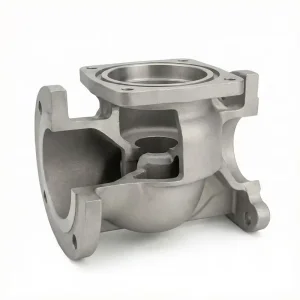
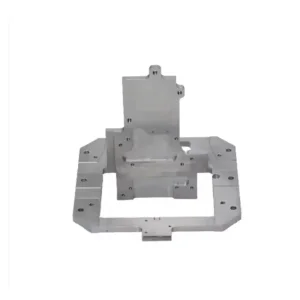
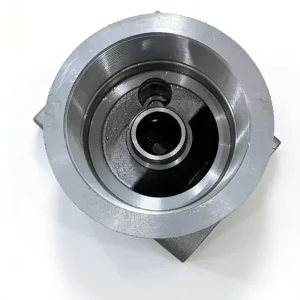
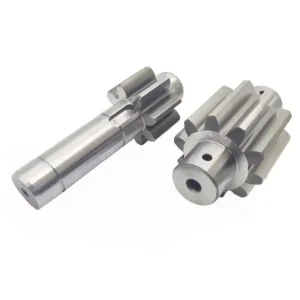
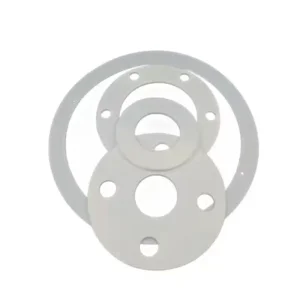
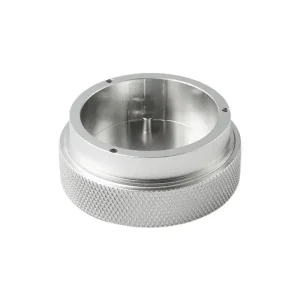
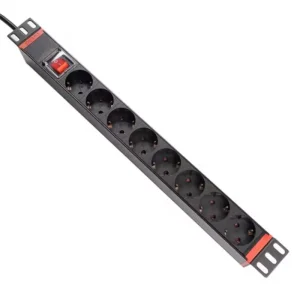
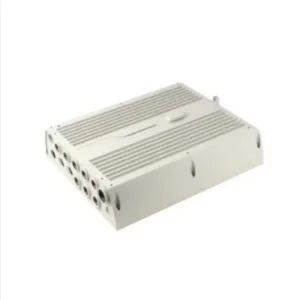
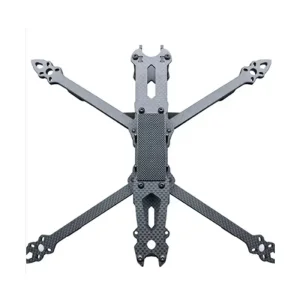
Explore our extended catalog of custom CNC components, cast housings, structural frames, and custom hardware assemblies.
Ready to Accelerate Your ODM Metal Finishing & Hardware Program?
Submit your CAD models (STEP, IGES, DXF) and engineering requirements today. Our engineering team provides comprehensive DFM analysis, coating recommendations, and a formal quote within 24 hours.
Request Engineering Consultation & Quote