Featured Precision OEM/ODM Industrial Components
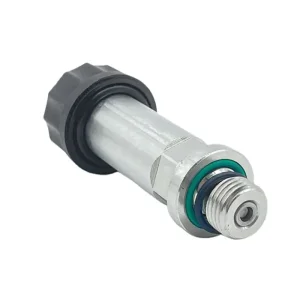
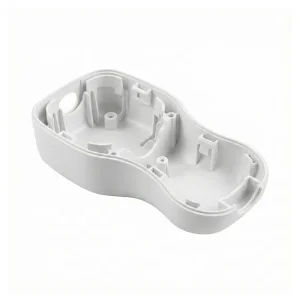
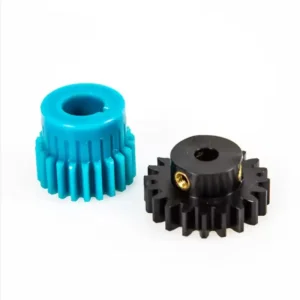
Global Commercial Landscape of ODM Iron Casting Services
Transforming raw metallurgical science into high-integrity OEM components through smart foundry integration, advance nodularization control, and rapid DFM execution.
High Damping Gray Iron (FC200-300)
Engineered with a flake graphite microstructure, Gray Iron offers supreme vibration absorption, thermal conductivity, and superior machinability. Ideal for heavy machine bases, engine blocks, and valve housings demanding extreme dimensional stability under cyclic thermal stresses.
Ductile Iron (FCD450-700 / GGG40-70)
Spherical graphite nodularity (>90%) imparts steel-like tensile strength, high elongation, and exceptional impact resistance. Our ODM foundry precision controls magnesium-cerium treatment to yield structural components capable of handling intense dynamic loads.
Austempered Ductile Iron (ADI)
Through specialized isothermal heat treatment, ADI develops an ausferrite matrix providing double the tensile strength of standard ductile iron at equivalent toughness, offering a lightweight, cost-effective replacement for forged steel components in heavy industrial machinery.
Strategic Value Insight: Modern original design manufacturing (ODM) in iron casting has evolved beyond traditional sand casting. By integrating real-time MAGMASOFT® thermal simulation with high-speed multi-axis CNC machining, advanced foundries reduce tooling lead times by up to 45% while achieving near-zero internal porosity in pressure-tight hydraulic castings.
Comprehensive Metallurgical Selection Guide
Comparing physical properties, microstructural characteristics, and industrial feasibility across key ODM iron casting alloys.
| Material Class | International Grade | Tensile Strength (MPa) | Yield Strength (MPa) | Elongation (%) | Hardness (HBW) | Primary Industrial Application |
|---|---|---|---|---|---|---|
| Gray Cast Iron | EN-GJL-250 / Class 35 | 250 - 350 | 165 - 228 | 0.3 - 0.8% | 180 - 250 | Compressor Frames, Engine Blocks, Pump Housings |
| Gray Cast Iron | EN-GJL-300 / Class 45 | 300 - 400 | 195 - 260 | 0.3 - 0.8% | 210 - 270 | Brake Drums, Machine Tool Beds, Flywheels |
| Ductile Iron | EN-GJS-450-10 / 65-45-12 | 450 - 500 | 310 - 350 | 10 - 18% | 140 - 200 | Hydraulic Valve Bodies, Steering Knuckles, Pipe Fittings |
| Ductile Iron | EN-GJS-600-3 / 80-55-06 | 600 - 650 | 370 - 410 | 3 - 6% | 190 - 270 | Crankshafts, Planetary Gear Carriers, Heavy Brackets |
| ADI (Austempered) | EN-GJS-1050-6 / Grade 1 | 1050 - 1150 | 750 - 850 | 6 - 10% | 320 - 380 | Mining Axles, High-Stress Drive Gears, Track Pads |
| CGI (Compacted Graphite) | ISO 16112 / JV400 | 400 - 450 | 300 - 340 | 1.0 - 2.5% | 200 - 250 | High-Output Diesel Engine Blocks, Exhaust Manifolds |
Graphic Morphologies
Flake (ASTM A247 Type A) vs Spherical (Type I/II). The geometry dictates fracture toughness and thermal fatigue life under harsh operational cycles.
Matrix Control
Pearlite-to-Ferrite ratio tuning via controlled cooling rates and alloy additions (Cu, Cr, Mn, Ni) to achieve exact customer wear specifications.
Chemical Purity
Low Sulfur (<0.02%) and Phosphorous (<0.03%) electric induction furnace melting prevents hot tearing and brittle interdendritic phases.
Precision ODM Production Roadmap & Quality Gateways
An end-to-end framework linking 3D pattern development, advanced mold physics, and full spectral quality verification.
1. DFM & Thermal Simulation
3D CAD validation using MAGMASOFT® to predict cooling gradients, hot spots, shrinkage cavities, and optimize gating/riser placement before tooling cut.
2. Pattern & Core Tooling
High-precision CNC-machined metal patterns (aluminum/steel) and cold-box resin core boxes ensuring dimensional repeatability within ±0.2mm on raw castings.
3. Automated Molding & Pouring
Disamatic green sand flaskless molding or furan resin sand casting combined with automated laser-guided ladle pouring for consistent melt temperature.
4. Precision CNC & Inspection
In-house 4/5-axis CNC machining, shot blasting, 100% ultrasonic defect scanning, microstructural nodularity inspection, and Zeiss CMM dimensional certification.
Design for Manufacturability (DFM) Guidelines
Key engineering practices to eliminate casting defects, reduce scrap rates, and optimize production costs for OEM buyers.
Wall Thickness Uniformity
Abrupt transitions cause localized stress concentrations and hot spots leading to shrinkage voids. Maintain wall ratios within 1:1.5 and utilize gradual tapers (15-degree slopes) when transitioning between thick and thin sections.
Draft Angles & Radii
Provide minimum draft angles of 1.0° to 2.0° on vertical pattern faces to facilitate clean mold release. Fillet radii should be designed as R = 0.5 to 1.0 times the nominal wall thickness to minimize tear risks during cooling.
Core Prints & Cleanout Ports
Complex internal hydraulic galleries require sturdy sand core print supports. Design ample cleanout openings (minimum 25mm diameter) to ensure efficient sand shakeout and chemical core removal post-solidification.
Localized Sector Solutions & Global Field Deployment
Custom OEM iron casting engineering tailored to rigorous international standards and mission-critical application environments.
Heavy Machinery & Agriculture
Supplying North American OEM agricultural equipment builders with high-yield Ductile Iron (ASTM A536 80-55-06) planetary gear carriers, axle housings, and hitch assemblies tested down to -40°C impact resistance thresholds.
Wind Energy & Hydraulics
Manufacturing high-grade, zero-porosity hydraulic control valve blocks and offshore wind turbine rotor hub components adhering strictly to DIN EN 1563 standards and ultrasonic EN 12680-3 Quality Level 1.
Automotive & High-Speed Transit
Delivering lightweight CGI engine blocks, brake discs, and bogie frame castings engineered for next-generation electric commercial fleets and high-speed passenger rail networks across the Asia-Pacific region.
Technology Roadmap: Future of Foundry 4.0
Pioneering sustainable, digitized, and zero-defect metal casting technologies for the decade ahead.
3D Sand Printing (3DSP)
Eliminating hard tooling cost for prototype runs and complex internal cores using silica sand binder-jetting, cutting rapid sample delivery times from months to 7 days.
Green Electric Melting
Transitioning traditional cupola furnaces to medium-frequency electric induction melting powered by renewable energy, reducing scope-1 carbon emissions by up to 60%.
AI X-Ray Defect Vision
Real-time automated X-ray inspection powered by deep-learning vision models to detect subsurface micro-porosity and inclusions before secondary machining.
Frequently Asked Questions (FAQ)
Technical clarity on procurement, engineering capabilities, nodularity testing, and quality control protocols for custom iron casting services.