1 / 5
China 6 mm Embossed Stainless Steel Exhaust Heat Shield Product, Quotes
Product Description
Product Overview & Application Scope
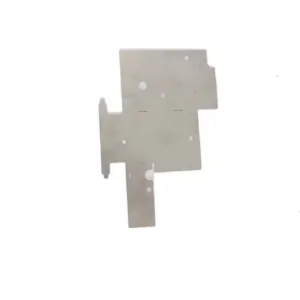
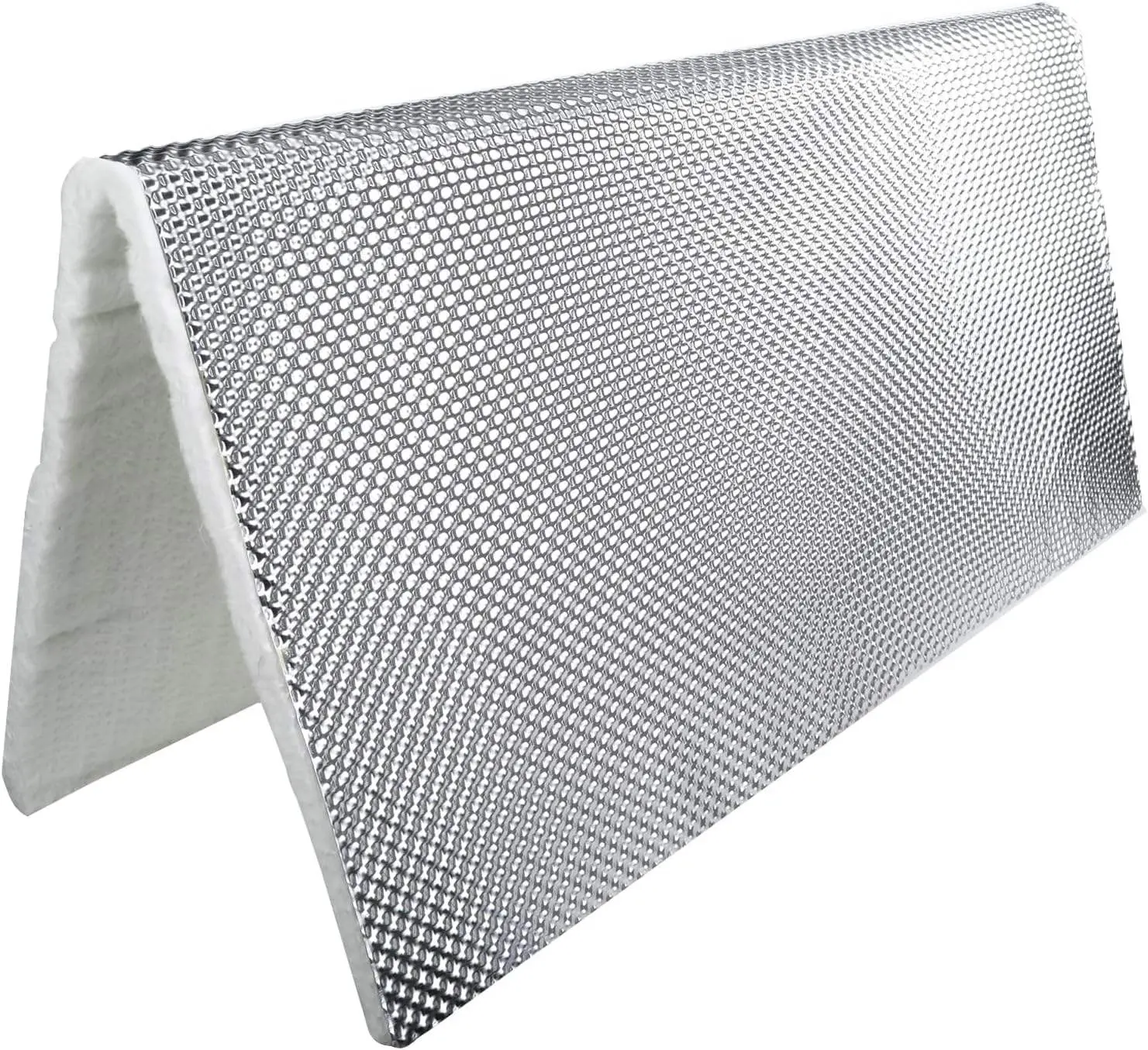
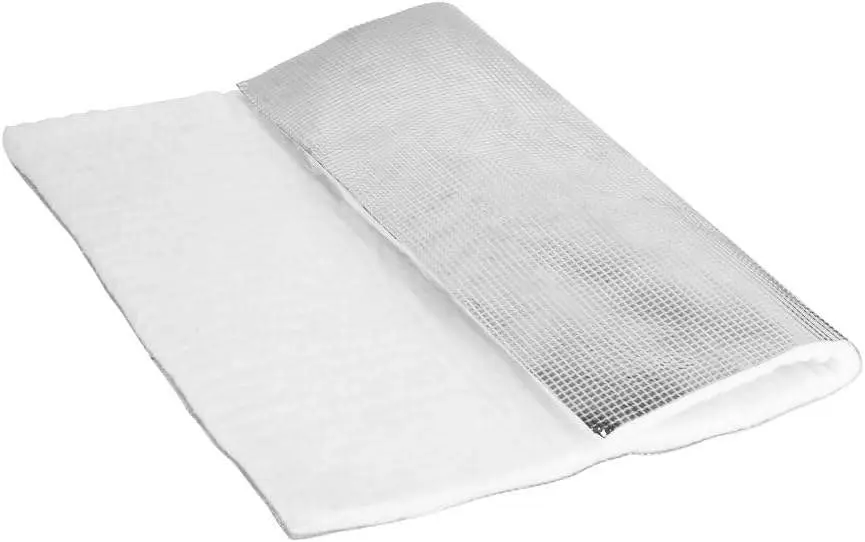
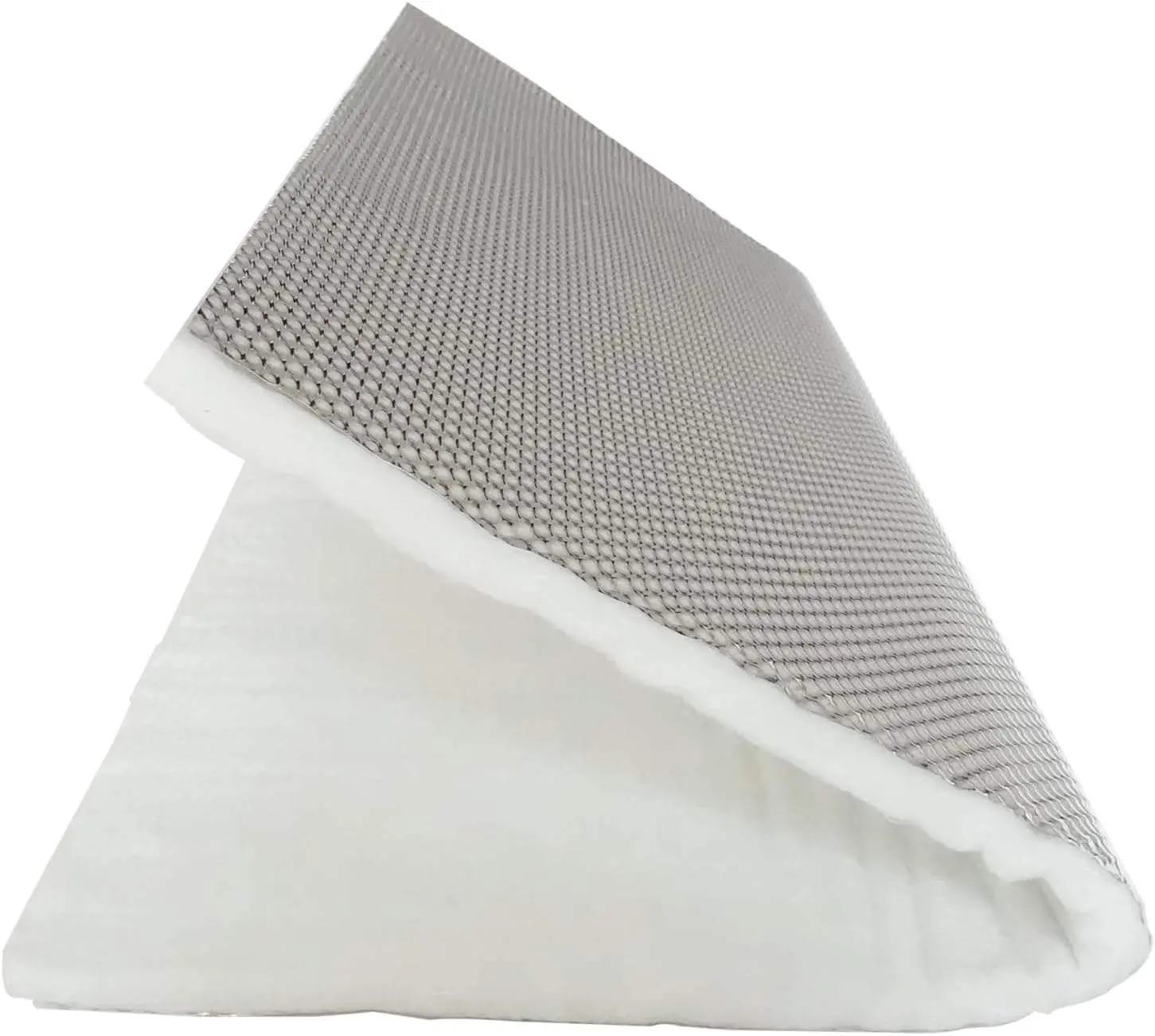
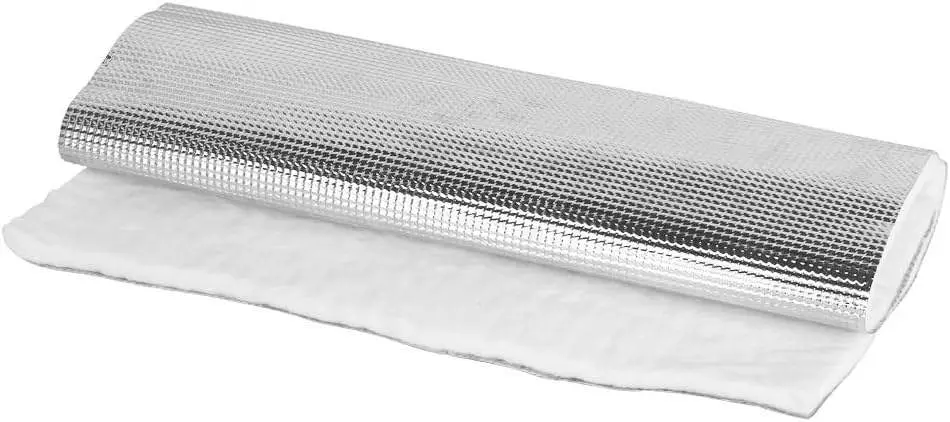
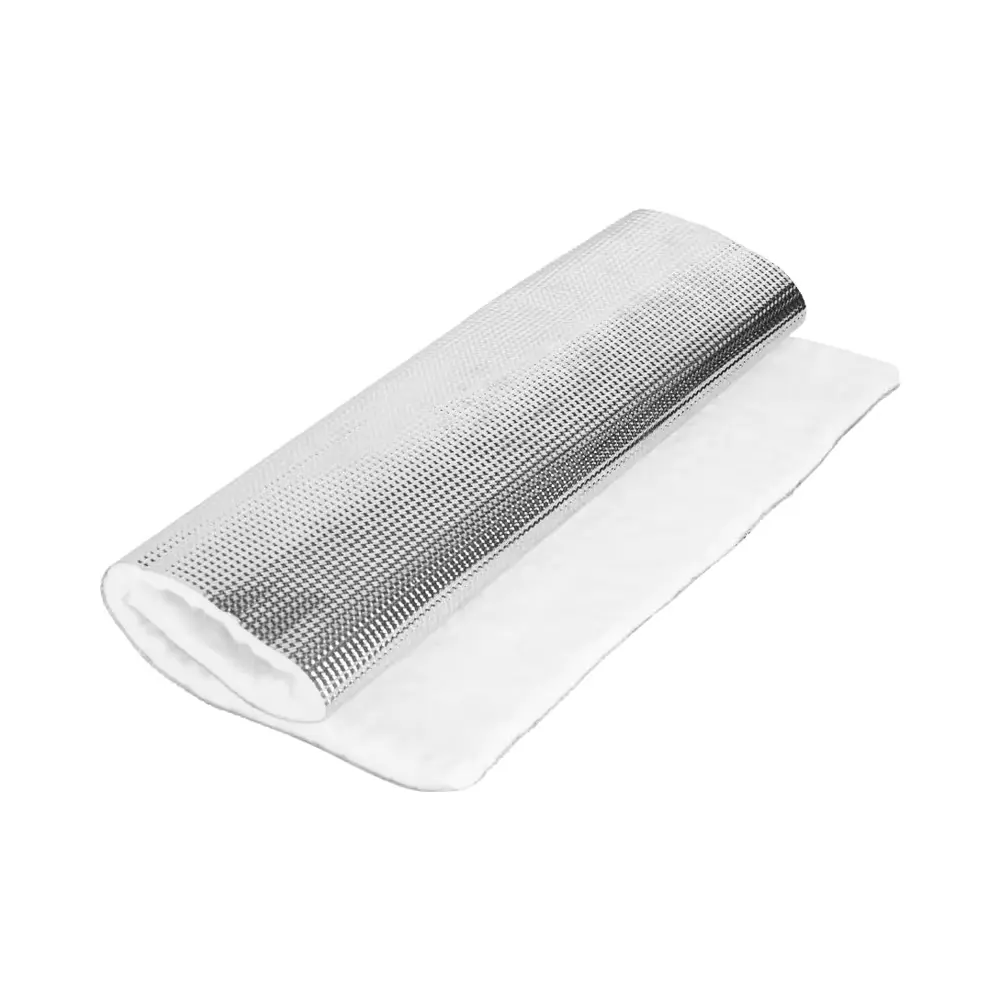
This custom composite heat shield combines an embossed stainless steel facing with a fibrous insulation backing. The nominal 6 mm refers to the total composite thickness, not a 6 mm metal plate. It is intended for project-specific thermal shielding around exhaust piping, downpipes, manifolds, catalytic converters, mufflers and other automotive or industrial heat sources. The reference images show formable sheets with exposed insulation at the cut edges, rather than a finished, fully enclosed stamped shell.
Shenzhen Sunmy Hardware Co., Ltd. supports custom dimensions, cut profiles and forming requirements based on customer drawings or samples. Confirm the facing grade, insulation type and layer construction when ordering. The material stack, mounting clearance and attachment method must be selected for the intended heat exposure. Direct-contact use and continuous or peak temperature limits require approval for the complete composite and installation, rather than the metal facing alone.
Manufacturing Process & Engineering Insights
The manufacturing route is selected around the metal facing, insulation specification, required contours and order quantity. Embossing, blank preparation, composite assembly and forming are reviewed together so that the finished configuration matches the approved drawing and sample:
- Metal Facing & Embossing Specify the stainless steel grade, foil thickness and embossed pattern before material preparation. The reference appearance is a dimpled or waffle-like silver metal surface. Pattern depth, forming direction and bend geometry are checked against an approved sample. Forming trials establish the acceptable shape, surface condition and minimum bend radius for the selected metal-facing and insulation combination.
- Insulation Core & Composite Assembly Confirm the insulation type, thickness, density, binder content and joining method. For a high-silica needle-mat specification, obtain the material data and review compatibility with the facing and installation. Composite preparation must preserve the required thickness and attachment between layers. Include any smoke, emissions or flammability acceptance criteria in the project specification and supporting test plan.
- Blank Cutting, Forming & Edge Finishing Cut profiles and mounting openings are defined by the approved drawing. Select a cutting method suited to the metal facing, insulation and assembled laminate; laser cutting of bare metal and cutting of the complete composite are separate process decisions. Hemming, crimping or edge bands may be evaluated to retain the core. Define the edge construction and acceptance criteria before sampling.
- Mounting Features & DFM Review Review the installation envelope, bend radii, fastener positions and local insulation compression before tooling. Holes, stand-off tabs, brackets or formed contours can be assessed as project-specific options. Sample fit checks confirm clearances and attachment before production release. The order defines whether the deliverable is a flat blank, a formed sheet or a finished assembly with mounting components.
Key Technical Specifications
Reference dimensions are for quotation planning. Confirm material grades, layer thicknesses, tolerances, thermal criteria, supply format and inspection records in the order specification before manufacture.
| Parameter / Attribute | Reference Configuration | OEM / Engineering Review |
|---|---|---|
| Product Category | Automotive / industrial composite thermal barrier | Cut blanks or formed shields to an approved design |
| Outer Facing Material | Embossed AISI 304 stainless steel; grade confirmed with order | 316L, 321, 310S, nickel alloy or aluminum subject to application review |
| Insulation Core Material | High-silica needle mat; exact grade to confirm | Alternative fiber or aerogel cores require material and service review |
| Total Composite Thickness | 6.0 mm nominal; proposed ±0.3 mm tolerance to confirm | Other thicknesses evaluated against clearance and insulation requirements |
| Metal Facing Thickness | 0.12 mm reference; confirm actual foil gauge | Alternative gauges subject to forming and strength requirements |
| Embossing Pattern | Dimpled / waffle-like metal texture | Pattern, ribs or flat facing to an approved drawing or sample |
| Continuous Working Temp. | Rating defined for the approved laminate and installation | Confirm face, core and joining-system temperatures and exposure duration |
| Peak / Radiant Exposure | Peak exposure defined for the application | Define radiant or contact exposure, duration and thermal cycles |
| Thermal Performance | Performance target defined for the installed assembly | Agree test arrangement, measurement points and acceptance criteria |
| Sheet Sizes / Supply Format | Reference sizes: 300 × 300, 500 × 500, 600 × 1000, 1000 × 1000 mm | Custom profiles and roll formats subject to supply confirmation |
| Edge Finishing | Open cut edges shown in the reference sheets | Hemming, crimping or banding after design review |
| Mounting Configuration | Formable sheet; fixings not shown | Contours, holes, tabs or brackets specified per project |
| Surface Finish & Color | Natural silver embossed metal appearance | Additional coatings or finishes require compatibility review |
| Identification & Packaging | Neutral export packaging | Part-number labels, marking or branded packaging by agreement |
| Quality & Documentation | Dimensions, thickness, edges and layer condition per inspection plan | Material records and applicable compliance documents agreed with quotation |
Key Features & Competitive Advantages
Composite Thermal Shielding
Specify the metal facing and insulation as one assembly. Validate the protected-side temperature or heat-transfer target under agreed exposure, clearance and mounting conditions, with defined measurement locations and acceptance criteria.
Formable Sheet Configuration
The reference images show a flexible sheet format that can be evaluated for curved installations. This is distinct from a single-skin rigid stamped cover. Define allowable bending and layer compression through samples, then inspect the facing, core and layer attachment after forming.
Defined Facing & Edge Protection
The metal surface covers the insulation on one face, while exposed cut edges remain a separate design concern. Edge retention, mounting details and application-specific checks can be reviewed together.
Coordinated OEM/ODM Manufacturing
Sunmy can coordinate sheet profiles, forming requirements and related metal mounting components within one project. Provide 2D cutting drawings or 3D installation data so material supply, tooling, sample approval and production can be quoted together.
Technical & Procurement FAQ
Q1
Can Sunmy supply cut blanks or pre-formed heat shields for our exhaust geometry?
We can review flat blanks, cut profiles and pre-formed designs from drawings or samples. Send the exhaust geometry, installation envelope, mounting points and quantity. Forming, tooling and core retention are confirmed during engineering review. Define whether you need a sheet, formed part or complete mounting assembly, then approve the sample before production.
Q2
How should we choose between stainless steel and aluminum facings?
Compare the actual alloy and full layer construction against the installation requirements. Specify radiant or direct-contact exposure, temperature at the shield, exposure duration, clearance and environmental conditions. Review weight, forming needs and material documentation alongside thermal validation. Neither a metal name nor exhaust-gas temperature alone establishes the installed shield rating.
Q3
Which edge-finishing options can help retain the insulation core?
The reference sheets have exposed cut edges. Hemming, crimping or an edge band can be evaluated, with fold allowance and core compression checked during sampling. Qualify any adhesive or seal for the service conditions. Mechanical closure is not a guarantee of fluid-tightness or zero fiber release; agree the required verification.
Q4
What are the minimum order quantity and production lead time?
MOQ and timing depend on confirmed materials, blank size, forming complexity and quantity. Flat sheets, cut profiles and formed parts may need different routes. Request separate schedules for material procurement, tooling, sampling and production. Stock availability and expedited delivery must be confirmed rather than inferred from the reference sizes.
Q5
What quality records and material documentation can be supplied?
Agree material identification, insulation data, dimensional and thickness checks, edge condition and laminate inspection with the quotation. Certificates and compliance declarations must match the supplied configuration and supporting records. Thermal or emissions reports require a defined test scope. Send your drawing, layer requirements, exposure conditions and quantity for a project-specific quotation.
Other Products
Custom Modular Plastic Enclosures...
Custom Die Cast Aluminum Finned H...
Custom Injection Molded Electroni...
Custom Precision Sheet Metal Equi...
Get a Fast, Technical Quote & Free DFM Review
Don't let tolerance stack-up delay your product launch. Submit your project details, and our engineering team will evaluate your design for manufacturability before the first cut.