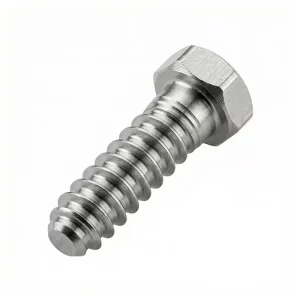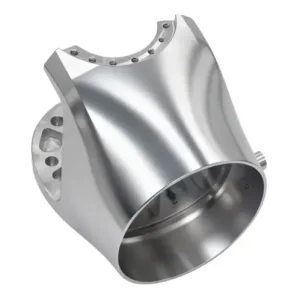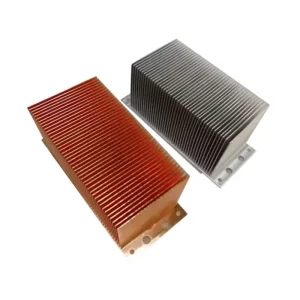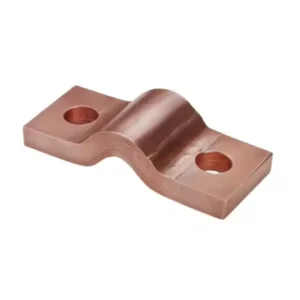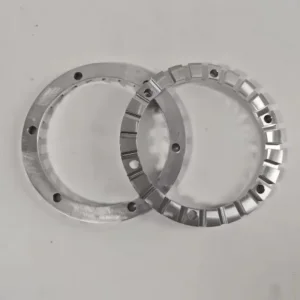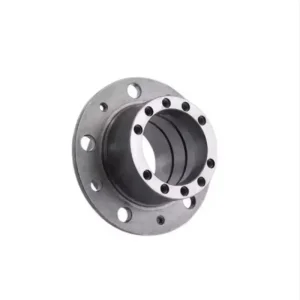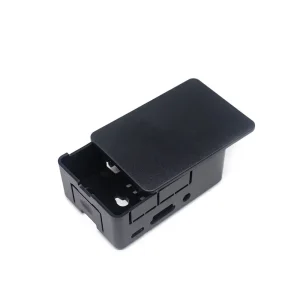
Precision Components & Custom Molding Assemblies
Explore our high-demand OEM/ODM product portfolio built with strict compliance to global ISO/IATF quality standards.
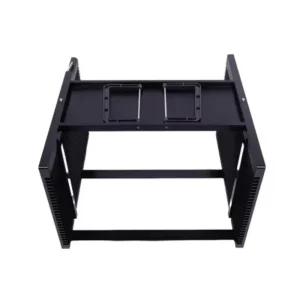
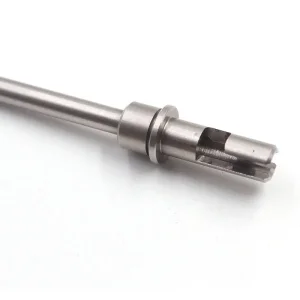
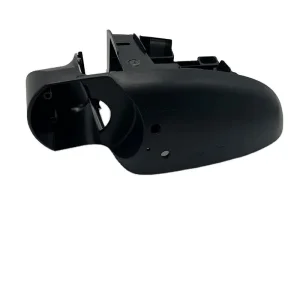
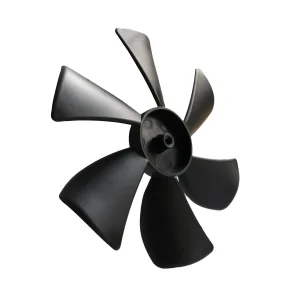
Engineering Foundations of High-Volume ODM Plastic & Metal Molding
In modern industrial manufacturing, moving from low-volume rapid prototyping to multi-million-unit mass production requires a complete paradigm shift in tool design, materials engineering, and thermal dynamics. High-volume molding (typically defined as annual production volumes exceeding 100,000 to tens of millions of units) is not merely a scaling exercise; it demands rigorous optimization of mold rheology, gate design, cycle time management, and automated part handling.
Key Technical Performance Metric: Moldflow Rheology & Thermal Balance
Achieving zero-defect high-volume injection molding hinges on maintaining consistent shear stress and uniform cooling across all tool cavities. Advanced Moldflow simulation allows our DFM (Design for Manufacturability) engineers to predict sink marks, weld lines, and differential shrinkage down to sub-micron accuracy before steel is cut.
High-volume molding relies heavily on selecting the correct SPI (Society of the Plastics Industry) mold classification. For long-term continuous ODM production, SPI Class 101 molds are mandatory. Constructed from hardened tool steels such as H13, S7, or NAK80 (rated for 1,000,000+ cycles), these tools feature guided ejection, hardened slide wear plates, and conformal cooling channels produced via metal 3D printing (DMLS) to achieve rapid, uniform heat extraction.
Why Global OEMs Partner with China High-Volume Molding Hubs
The Greater Bay Area (Shenzhen-Dongguan-Guangzhou) represents the world’s most sophisticated manufacturing ecosystem for high-volume plastic injection molding, metal die casting, and multi-axis CNC post-processing. Partnering directly with a qualified Chinese ODM factory yields significant structural advantages across the complete manufacturing lifecycle.
Full Supply Chain Integration
From raw resin compounding (PBT, PA66-GF30, PEEK, ABS, PC) to custom steel block forging, electro-discharge machining (EDM), and surface finishing, every input is sourced within a 50km radius, cutting lead times by up to 60%.
Advanced Tooling Expertise
China’s master toolmakers leverage high-speed 5-axis CNC machining, wire EDM, and automated hot-runner systems (Synventive, Yudo, Mold-Masters) to construct complex multi-cavity molds with high precision.
Agile Scaling & Automation
Factories are outfitted with robotic arm take-out systems, automated gate-cutters, and vision-inspection units, enabling continuous 24/7 lights-out production with low unit labor costs.
Macro-Industry Molding Solutions & Localized Use Cases
Our high-volume ODM molding capabilities serve mission-critical applications across demanding international commercial sectors. Each industry sector requires bespoke material choices and custom quality validation plans.
Automotive Powertrain & Interior Systems
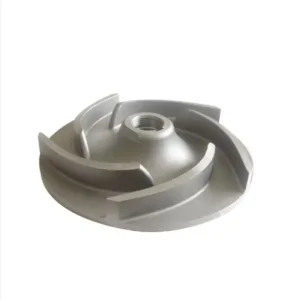
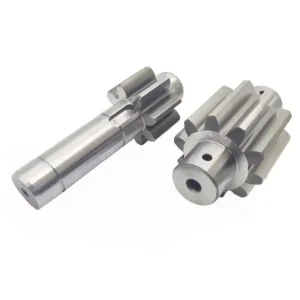
Key Applications: PA66-GF30 engine fan impellers, sensor housings, transmission spur gears, HVAC duct connectors, and under-the-hood structural brackets.
Technical Mandate: Strict adherence to IATF 16949 standards, high thermal deflection temperatures (HDT > 200°C), low creep under vibration, and full PPAP Level 3 documentation.
Telecom, Server Racks & Consumer Electronics
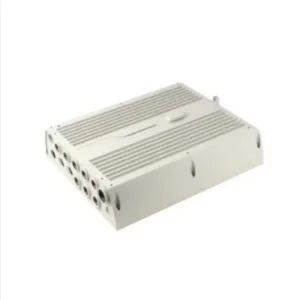
Key Applications: Aluminum die-cast RF filter enclosures, optical transceiver frames, EMI/RFI shielded PCB covers, and thin-wall polycarbonate project boxes.
Technical Mandate: Thin-wall molding down to 0.6mm, micro-tolerances, conductive surface platings, and IP67 weather-tight sealing overmolding.
Medical Devices & Surgical Instrumentation
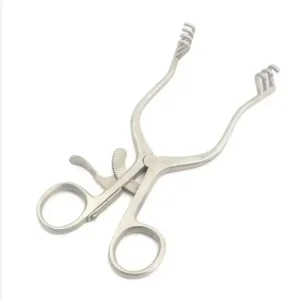
Key Applications: Surgical retractors, fluid manifold housings, disposable diagnostic cassettes, and titanium/stainless steel implantable components.
Technical Mandate: Class 8 Cleanroom injection molding, ISO 13485 compliance, biocompatible USP Class VI resins (PEEK, Polypropylene), and gamma-sterilization compatibility.
Robotics, Industrial Automation & Motion Control
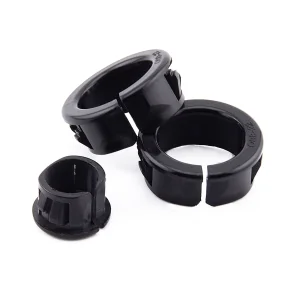
Key Applications: 5-axis CNC machined robot finger joints, timing belt pulleys (HTD 3M/5M), cable snap bushings, and planetary gear carrier plates.
Technical Mandate: Exceptional strength-to-weight ratios, low rotational inertia, zero backlash gear tooth machining, and high wear resistance under continuous friction.
Future Trends: Smart Molding, Green Resins & AI Quality Inspection
The global high-volume molding sector is undergoing a rapid technological evolution. To maintain a competitive edge, leading ODM operations are integrating cutting-edge digital control systems and sustainable practices.
In-Cavity Pressure Sensors & AI
Real-time piezoelectric cavity pressure sensors track packing pressure and viscosity changes per shot. AI algorithms dynamically adjust injection speed to eliminate short shots and flash automatically.
Sustainable & Bio-Based Polymers
Global enterprise buyers are mandating ESG compliance. Factories are transitioning to PCR (Post-Consumer Recycled) resins, bio-polycarbonates, and lightweight microcellular foaming (MuCell®) technologies.
Automated Optical Inspection (AOI)
High-resolution camera arrays inspect 100% of molded parts at line speed for flash, color variance, critical dimensions, and surface scratches, achieving zero-defect automated sorting.
Global Enterprise Sourcing, Risk Mitigation & Quality Audit
For international procurement leaders, selecting an ODM molding supplier involves evaluating Total Cost of Ownership (TCO), Intellectual Property (IP) security, and manufacturing scalability. Below is our standard enterprise engagement model designed for seamless OEM transfer.
Step 1: DFM & Moldflow Gate Optimization
Before committing to tooling cut, our engineering team issues a formal DFM report highlighting draft angles, radii, wall uniformity, gate locations, and parting line placement to eliminate costly tool revisions.
Step 2: Tooling Build & T1 Sample Approval
Molds are CNC machined, wire EDM’d, and bench-polished. Initial T1 sample shots undergo full CMM dimensional layout, FAI (First Article Inspection) reporting, and material property validation.
Step 3: Process Capability (Cpk) Studies
For high-volume production release, key dimensions undergo Cpk statistical analysis (targeting Cpk ≥ 1.67). This guarantees that process variation remains well within customer print limits.
Step 4: Continuous Mass Production & Logistics
Upon PPAP approval, parts run on automated presses with custom packaging (tray sorting, vacuum packing, VCI rust prevention) shipped under FOB, CIF, or DDP terms worldwide.
Frequently Asked Questions (FAQ)
In-depth answers to common questions asked by hardware procurement heads and tooling engineers.
High-Precision Custom Products Catalog
Advanced machining, casting, and molding solutions engineered for high performance under extreme environments.