Precision Engineered Component Portfolio
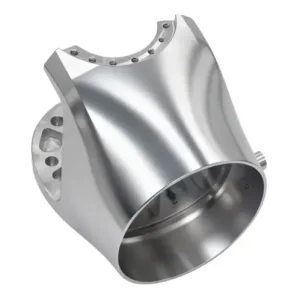
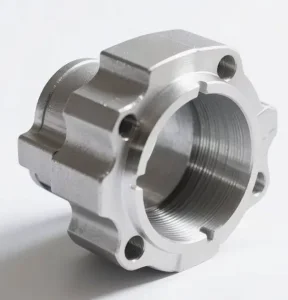
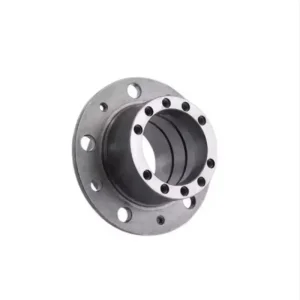
High-Precision ODM Engine Block Casting Architecture
Comprehensive metallurgical expertise, computational thermodynamics, and multi-process casting capabilities for heavy-duty, automotive, and industrial powertrains.
Compacted Graphite Iron (CGI)
Compacted Graphite Iron (CGI) represents the pinnacle of modern diesel and high-output gasoline engine block manufacturing. CGI provides over 75% higher tensile strength and a 45% increase in elastic modulus compared to standard gray iron, allowing for thinner cylinder wall geometries and substantial weight reduction.
- High fatigue resistance under combustion pressures >200 bar
- Optimized thermal conductivity for extreme thermal cycles
- Superior acoustic damping compared to aluminum blocks
Al-Si High-Pressure Die Casting
Utilizing high-integrity A356-T6 and hypereutectic Al-Si alloys, our Low-Pressure Die Casting (LPDC) and High-Pressure Die Casting (HPDC) processes produce engine blocks with exceptional power-to-weight ratios for passenger vehicles and hybrid architectures.
- Integrated cast-in-place iron liners or Plasma Transferred Wire Arc (PTWA) coatings
- Complex water jacket passaging via water-soluble ceramic sand cores
- T6 heat treatment for maximum mechanical durability
3D Core Printing & Sand Casting
For low-to-medium volume heavy machinery, marine propulsion, and rapid prototype development, our Binder Jet 3D Sand Printing (3DSP) coupled with Resin Sand Mold Casting eliminates the need for expensive hard tooling during the design validation phase.
- Tool-less sand mold creation directly from 3D CAD files
- Zero draft angle requirement for highly intricate internal galleries
- Accelerated prototype delivery from months to weeks
Information Gain Engineering Insight: Thermal Gradient Optimization
Engine block life is predominantly limited by thermal fatigue across the inter-cylinder bridge. Our foundry engineering team utilizes MAGMASOFT® phase-transformation and solid-state cooling simulation to control grain structure growth during solidification, mitigating micro-porosity and locked-in residual stress by up to 94%.
Next-Generation Engine Block Casting Trends & Innovations
Addressing decarbonization, alternative fuels, and powertrain hybridization through advanced metallurgical research and digital foundry practices.
Hydrogen & E-Fuel Ready Powertrains
Combustion of zero-carbon hydrogen gas introduces severe embrittlement risks and higher peak pressure spikes (>250 bar). Our R&D division has developed nickel-chromium alloyed CGI variants with specialized surface nitriding techniques to prevent hydrogen-induced micro-cracking inside the crankcase housing.
Range Extender (REEV) Hybrid Blocks
Hybrid electric vehicles require ultra-compact, lightweight 2-cylinder and 3-cylinder engine blocks acting as on-board generators. We specialize in thin-wall HPDC aluminum designs with integrated electric motor mounting flanges, reducing overall package envelope volume by 30%.
Low-Carbon Smart Foundry Metallurgy
In accordance with scope 1 & 2 emissions reduction goals, our manufacturing units transition toward 100% electric induction melting powered by renewable grids, using recycled secondary aluminum ingots that yield an 85% reduced carbon footprint without compromising tensile strength.
| Material Grade | Tensile Strength (MPa) | Yield Strength (MPa) | Thermal Cond. (W/m·K) | Primary Industrial Application |
|---|---|---|---|---|
| Gray Iron HT300 / GG30 | 300 - 350 | 200 - 230 | 46.0 | Standard Passenger Vehicle Engines |
| Compacted Graphite Iron (CGI-450) | 450 - 520 | 320 - 360 | 37.0 | Heavy-Duty Commercial Diesel & Marine |
| Aluminum A356-T6 | 290 - 310 | 220 - 240 | 150.0 | High-Performance Automotive & Hybrid REEV |
| Ductile Iron QT500-7 | 500 - 550 | 320 - 350 | 34.0 | Extreme High-Pressure Engine Crankcases |
Macro-Industry Engine Block Solutions
Custom ODM engine block engineering tailored to stringent operational environments across global commercial and industrial sectors.
Heavy Commercial & Freight
Inline-6 and V8 engine blocks designed for class-8 long-haul trucks, delivering 1.5 million kilometers of B10 life expectancy under continuous load.
High-Performance Motorsport
Ultra-lightweight billet-machined and low-pressure cast aluminum blocks built to withstand cylinder pressures exceeding 11,000 RPM.
Off-Highway & Mining
Large displacement V12 & V16 heavy cast iron blocks built for excavator powerplants, agricultural tractors, and earthmoving machinery.
Stationary Power Gen
Continuous-duty natural gas and diesel generator engine blocks optimized for hospital backup power, data centers, and remote microgrids.
China Industry 4.0: Smart Foundry & Supply Chain Resilience
Combining automated robotic casting cells, digital-twin process monitoring, and turnkey post-machining to secure zero-defect volume supply.
Automated Pouring & Real-Time Pyrometry
Molten metal pouring speed and thermal windows are governed by closed-loop optical pyrometry and multi-axis KUKA pouring robots, eliminating operator variance and air entrapment flaws.
In-House 5-Axis CNC Finish Machining
Unlike raw foundries that outsource finishing, our facility incorporates high-speed 5-axis CNC machining centers (Makino, Heller) for inline bore finishing, deck surfacing, and deep hole drilling under strict environmental temperature control.
Vertical Raw Material Supply Integration
Situated within China's top automotive manufacturing cluster, we hold direct equity in pig iron smelters and aluminum ingot processing plants, shielding international procurement clients from commodity price swings and lead-time shocks.
Global OEM Procurement & Total Cost of Ownership (TCO)
Optimizing procurement lifecycle costs through specialized DFM feedback, extended tooling life, and structured milestone management.
Engineering DFM & Co-Development
Before mold release, our senior casting engineers conduct comprehensive Design for Manufacturability (DFM) analyses, reviewing wall thickness transitions, draft angles, core support printouts, and machining allowances to reduce material scrap.
Tooling Amortization & Asset Ownership
We offer flexible tooling payment structures, including volume-based amortization where mold tooling costs are fully refunded upon reaching agreed production thresholds. All client molds remain dedicated, proprietary assets stored under climate-controlled conditions.
APQP & PPAP Level 3 Documentation
We adhere to strict Advanced Product Quality Planning (APQP) frameworks. Every customer prototype batch is accompanied by complete Production Part Approval Process (PPAP Level 3) packages, including control plans, FMEA, dimensional lay-outs, and gauge R&R studies.
Localization Support & International Quality Compliance
Ensuring complete global regulatory alignment, zero-defect quality gatekeeping, and regional logistics fulfillment for tier-1 OEMs.
Non-Destructive Testing (NDT) & Metrology
Our quality control laboratories feature high-energy Industrial Computed Tomography (CT Scanning), 3D Coordinate Measuring Machines (CMM) with sub-micron accuracy, ultrasonic wall-thickness measuring, and spectroscopic melt chemical verification.
Global Environmental & Chemical Compliance
All cast components comply strictly with European REACH, RoHS, and US EPA directives. Surface coatings, rust-preventative oils, and core binders are 100% free of heavy metals, volatile organic compounds (VOCs), and banned substances.
VMI & Regional Hub Warehousing
To eliminate long maritime shipping buffers, we provide Vendor-Managed Inventory (VMI) services, consignment stocking, and JIT hub delivery across North America, Europe, and Southeast Asia to keep buyer assembly lines operating seamlessly.
Technical & Sourcing Engine Block FAQ
In-depth engineering answers to common technical queries from powertrain designers and global procurement managers.