
Featured Precision Manufacturing Components
Direct factory OEM/ODM engineering solutions tailored for demanding global enterprise programs.
1. Global Enterprise Sourcing Demand for Thin Wall Molding
Thin wall plastic injection molding has emerged as a cornerstone manufacturing discipline for Tier-1 OEMs seeking lightweighting, structural miniaturization, faster cycle speeds, and material efficiency across critical global industries.
Automotive & EV Systems
Driven by strict vehicle mass reduction goals to extend Electric Vehicle (EV) battery range, automotive procurement managers actively replace traditional 2.5mm components with ultra-thin wall components (0.6mm–1.0mm) for battery module covers, interior fascia trim, sensor housings, and wire harness conduits.
Medical & Micro-Fluidics
High-throughput diagnostic test kits, point-of-care cartridges, micro-pipette tips, and surgical instrument housings demand precision thin-wall structures down to 0.35mm wall thickness, manufactured within ISO 13485 cleanrooms using medical-grade polypropylene and cyclic olefin copolymers.
Consumer Electronics
Smartphones, wearables, AR/VR headsets, and mobile computing require high mechanical rigidity within sub-millimeter profiles. Specialized thin wall molding utilizes Liquid Crystal Polymers (LCP) and PC+ABS to achieve flame-retardant, high-impact internal structural frames.
FMCG & Rigid Packaging
Sustainable packaging strategies rely heavily on thin-wall technology to decrease virgin plastic polymer usage by up to 40% while accelerating molding cycle times to under 3.5 seconds via multi-cavity in-mold labeling (IML) automated cells.
2. Technical Roadmap & Rheological Engineering Science
Thin wall injection molding is not merely conventional molding with reduced thickness; it operates in a distinct physical realm governed by high melt flow ratios (L/t), ultra-high injection velocity, rapid polymer crystallization, and extreme cavity pressure dynamics.
The Physics of Sub-Millimeter Flow (L/t Ratio)
The defining engineering parameter of thin wall molding is the Flow Length to Wall Thickness (L/t) Ratio. While standard plastic molding handles L/t ratios between 50:1 and 100:1, high-performance thin wall molding regularly exceeds 200:1 to 350:1.
When molten plastic enters a thin mold cavity (e.g., 0.4mm), the thermal energy dissipates instantaneously into the chilled tool steel. To prevent premature "freeze-off" (hesitation) before the cavity fills completely, injection speeds must reach 300 mm/s to 1000 mm/s, generating immense shear thinning that temporarily lowers resin viscosity.
Advanced Tool Steel & Conformal Cooling
Extreme cavity pressures ranging from 180 to 280 MPa (26,000 to 40,000 psi) demand superior mold building materials. Tooling engineers specify premium Swedish H13, S136, or NAK80 hardened steels (52–56 HRC) alongside Beryllium Copper (BeCu) core inserts to maximize heat extraction.
Implementation of 3D metal sintered Conformal Cooling Channels follows the geometric contour of the part, reducing thermal stress, eliminating sink marks/warpage, and shaving up to 35% off cooling times.
Thin Wall Process Evolution & Technical Roadmap
Generation 1: Hydraulic High-Speed Systems
Accumulator-assisted hydraulic injection molding machines capable of high injection rates but limited by energy consumption and thermal consistency.
Generation 2: All-Electric Servo Precision Molding
Integration of direct-drive servo motors delivering microsecond response times, absolute positional repeatability (±0.01mm), and cleanroom compatibility.
Generation 3: AI-Driven Real-Time Viscosity & Cavity Pressure Control
Current state-of-the-art: In-cavity piezoelectric pressure sensors coupled with closed-loop neural network controllers automatically adjust switchover points to prevent flash and short shots dynamically.
3. Industrial Benchmarking: Thin Wall vs Standard Injection vs Die Casting
Compare mechanical capabilities, dimensional limits, production velocities, and financial profiles across primary manufacturing methodologies to optimize your bill of materials (BOM).
| Engineering Parameter | Thin Wall Injection Molding | Standard Injection Molding | Aluminum Die Casting |
|---|---|---|---|
| Typical Wall Thickness Range | 0.30 mm – 1.00 mm | 1.50 mm – 4.00 mm | 0.90 mm – 3.50 mm |
| Maximum Flow Ratio (L/t) | 200:1 to 350:1+ | 50:1 to 100:1 | 100:1 to 180:1 |
| Injection Pressure | 180 – 300 MPa | 70 – 140 MPa | 40 – 100 MPa (Intensified) |
| Cycle Speed (Small Components) | 2.5 to 6.0 seconds | 18.0 to 45.0 seconds | 25.0 to 60.0 seconds |
| Tolerance Hold Capability | ±0.015 mm to ±0.030 mm | ±0.050 mm to ±0.100 mm | ±0.030 mm to ±0.080 mm |
| Part Weight Savings | 30% – 60% Reduction | Baseline Reference | Heavier Mass / High Strength |
| Tool Steel Requirement | Hardened S136 / H13 (52-56 HRC) | P20 / NAK80 (28-40 HRC) | H13 / Die Steel (44-48 HRC) |
4. RFQ Cost Optimization & Factory Pricing Metrics
Understand the cost drivers when requesting factory quotes for high-precision thin wall molding molds and mass production unit pricing.
Tooling Cost Drivers (CapEx)
- Hot Runner Systems: Valve-gated sequential hot runner systems (Yudo, Synventive, Mold-Masters) prevent gate vestige and pressure drops across thin cavities.
- Cavitation & Balancing: Multi-cavity tools (8, 16, 32 drops) require ultra-precise EDM and CNC milling to guarantee equal filling across all impressions.
- Surface Coatings: DLC (Diamond-Like Carbon) or TiN coatings on core pins to facilitate rapid mold release without heavy ejector pins.
Production Unit Cost Drivers (OpEx)
- Melt Flow Index (MFI): High flow resins (e.g., PP MFI 40–100 g/10min) command a slight premium but significantly reduce rejected parts.
- Machine Tonnage Rate: High-speed all-electric injection presses (Fanuc, Sumitomo, Engel 150T–500T) carry slightly higher hourly rates but yield double the output per hour.
- Automated Packaging & IML: Integrated robotic side-entry automation reduces labor costs to zero at the machine cell.
5. Quality Assurance, Metrology & Compliance Framework
Delivering zero-defect thin wall components demands absolute process discipline, strict international compliance, and advanced micro-metrology verification.
ISO 9001 & IATF 16949
Automotive-grade quality management certified facilities utilizing PPAP Level 3 documentation, FMEA defect analysis, and statistical process control (SPC) tracking Cpk > 1.67.
ISO 13485 Medical Cleanrooms
Class 7 and Class 8 bio-cleanroom injection cells equipped with HEPA filtration, automated robotic parts handling, and bio-compatible resin traceability for medical disposables.
3D CMM & Optical Metrology
High-precision ZEISS Coordinate Measuring Machines (CMM), non-contact laser scanners, and optical comparator systems verify micro-wall thicknesses and critical geometric tolerances down to micron resolution.
RoHS, REACH & FDA Material Traceability
Complete raw material certificate transparency with full resin batch origin documentation, heavy metal testing, and compliance guarantee for global regulatory clearance.
6. Regional Sourcing Ecosystems & Localization Strategy
Navigating the global manufacturing landscape: Why China remains the preeminent hub for precision mold engineering, combined with seamless international logistics and nearshoring support.
The Greater Bay Area Manufacturing Advantage
Concentrated industrial clusters in Shenzhen and Dongguan, China offer unmatched speed and tooling density. From raw steel sourcing and high-speed CNC EDM machining to hot runner assembly, tool sampling (T1 trials) can be achieved in as few as 15 to 21 calendar days.
By partnering directly with verified OEM factories, enterprise procurement managers eliminate broker markups while gaining direct engineer-to-engineer design for manufacturability (DFM) feedback.
Global Logistics & Intellectual Property Protection
Modern international contracts include robust Non-Disclosure Agreements (NDAs) enforced under international commercial law.
Factory logistics teams handle DDP (Delivered Duty Paid), air-freight express prototyping, and ocean freight container logistics directly to customer distribution centers across North America, Europe, and Asia-Pacific smoothly.
Additional Specialized Industrial Solutions
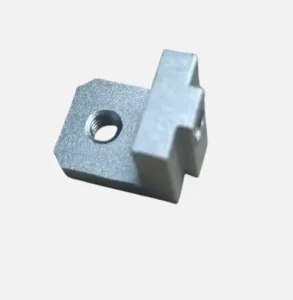
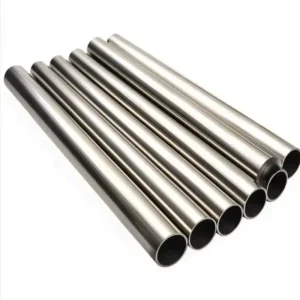
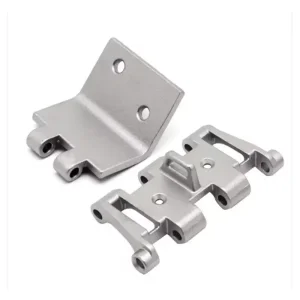
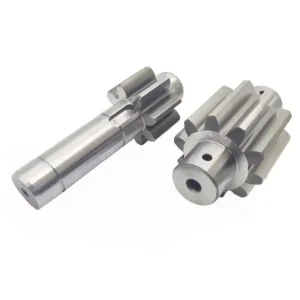
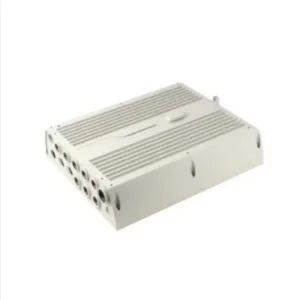
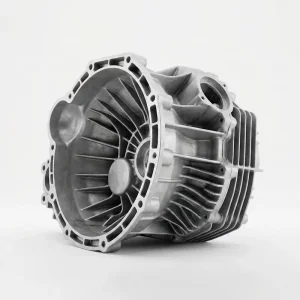
Explore our extended hardware catalog covering CNC machining, investment casting, die casting, and optical molding.

7. Enterprise Frequently Asked Questions (Technical Q&A)
Detailed answers provided by senior tooling engineers regarding specs, lead times, materials, and quotation procedures.