
Featured OEM Precision Hardware Lineup
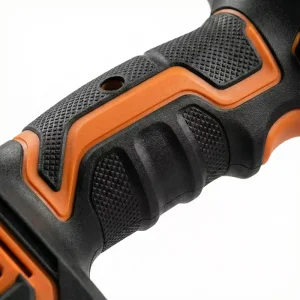
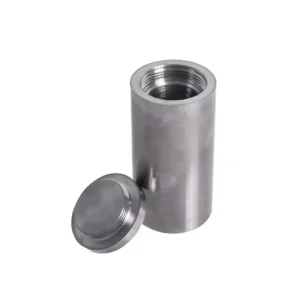
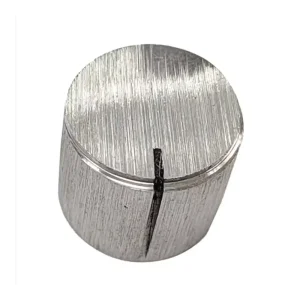
Explore our top-tier precision engineered components manufacturing capabilities spanning compound die stamping, CNC turning, double-injection molding, and investment casting.
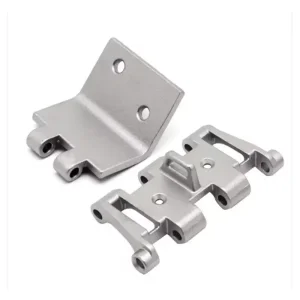
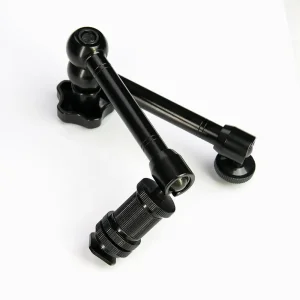
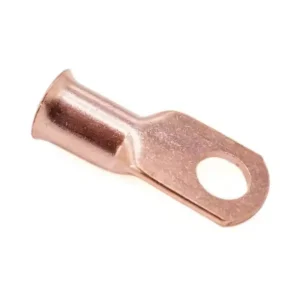
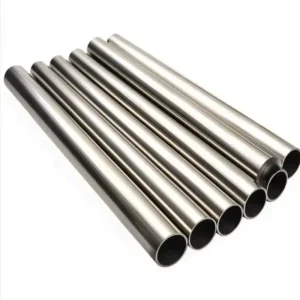

Global Compound Die Stamping Industrial Landscape
Compound die stamping represents the apex of single-stroke geometric accuracy in metal forming. By combining piercing and blanking operations into one unified press stroke, global OEMs achieve unparalleled concentricity, zero pitch-accumulated error, and maximum operational efficiency.
1. The Engineering Paradigm of Compound Die Stamping
In modern high-precision sheet metal fabrication, selecting the correct tooling architecture directly determines component quality, unit economics, and total lead times. Compound Die Stamping stands out as a specialized sheet metal forming process where multiple cutting operations—specifically internal blanking, piercing, notch cutting, and hole punching—are performed simultaneously at a single station during a single press stroke.
Unlike progressive dies, which move a strip of metal sequentially across a series of separate tooling stations, compound dies perform both the inner diameter (ID) punching and outer diameter (OD) cutting at identical coordinates. This eliminates pitch accumulation error caused by strip feeding index variations. For symmetrical components such as washer rings, motor laminations, electrical contacts, and flat structural gaskets, compound stamping remains the definitive gold standard in precision manufacturing.
2. Structural Comparative Matrix: Compound vs. Progressive vs. Transfer Dies
Choosing the optimal tooling strategy requires balancing geometric complexity, production volume, material thickness, and capital investment. Below is a comprehensive engineering comparison detailing the trade-offs between major industrial stamping press methodologies:
| Evaluation Parameter | Compound Die Stamping | Progressive Die Stamping | Transfer Die Stamping |
|---|---|---|---|
| Primary Mechanical Action | Simultaneous piercing & blanking at 1 station | Sequential operations across multi-stations | Individual part transfer between separate presses |
| Concentricity & Positional Accuracy | Ultra-High (±0.005mm - ±0.01mm) | Moderate to High (±0.03mm - ±0.05mm) | Standard (±0.05mm - ±0.1mm) |
| Part Flatness Control | Superior (Uniform clamping force) | Moderate (Prone to strip twisting) | Variable (Depends on transfer grip) |
| Tooling Cost (NRE) | Low to Medium ($3,000 - $15,000) | High ($15,000 - $80,000+) | High to Very High ($30,000 - $150,000+) |
| Material Scrap Rate | Low (Minimal strip carrier scrap) | Higher (Requires side carrier strips) | Medium |
| Ideal Part Geometry | Flat, symmetrical washers, discs, brackets | Complex 3D forms, bends, small terminals | Large enclosures, deep-drawn shells |
3. China’s Factory Efficiency & Supply Chain Advantages in Global Sourcing
For procurement executives and OEM supply chain leaders in North America, Europe, and Australia, sourcing high-quality compound die stamping products from specialized Chinese manufacturing hubs offers dramatic competitive advantages. China’s industrial ecosystem, particularly within the Guangdong-Hong Kong-Macao Greater Bay Area (Shenzhen, Dongguan, Foshan), has evolved beyond mere labor cost arbitrage into an integrated, ultra-responsive engineering powerhouse.
Hyper-Dense Tooling Supply Chains
The geographic concentration of raw material suppliers, high-precision heat treatment facilities (VAC vacuum hardening, cryo-treatment), and carbide tooling insert grinders in China reduces tooling iteration cycles to unprecedented speeds. Where a Western tool shop may require 8 to 12 weeks to deliver a hardened T1 compound die, Chinese manufacturers routinely execute DFM review, wire EDM cutting, CNC mold base milling, assembly, and First Article Inspection (FAI) sample delivery within 14 to 21 business days.
Advanced Tool Steel & Material Traceability
Leading Chinese exporters work closely with international standards, utilizing certified SKD11, DC53, D2, and Tungsten Carbide (WC) tool steels that undergo rigorous ultrasonic flaw detection and Rockwell C hardness testing (HRC 60-62). Paired with raw material spectrographic analysis (XRF), clients receive full material test reports (MTR) compliant with ASTM, DIN, JIS, and ISO 9001 standards upon shipment.
4. Strategic Sourcing Requirements for Global Enterprise Procurement
When international enterprises issue Requests for Quotations (RFQs) for precision compound stamped parts, technical evaluation goes far beyond unit pricing. Procurement directors must inspect supplier capabilities across four key pillars of industrial reliability:
- Design for Manufacturability (DFM) Feedback: Top-tier exporters do not blindly execute CAD drawings; they analyze shear angles, burr height direction, web distance between punched holes, and material yield ratios to optimize strip layout and prevent tool breakage.
- Sub-Micron Quality Metrology: Comprehensive Quality Assurance requires automated Coordinate Measuring Machines (CMM), optical comparator profile projectors, continuous SPC charting, and 100% vision sensor sorting for zero-defect automated assembly lines.
- Surface Finishing Integration: Stamped components frequently require secondary operations such as vibratory deburring, electropolishing, zinc-nickel plating, anodizing, or tin-lead tinning for electrical interconnects. Integrated exporters manage these operations in-house or under audited closed-loop supply networks.
- Intellectual Property & Legal Protections: Professional exporters operate under strict non-disclosure agreements (NDAs), encrypted file storage, and isolated CAD design environments to guarantee proprietary design safety.
5. Deep Industry Application Scenarios & Localized Sourcing Use Cases
Compound die stamping products serve critical structural, electrical, and thermal management roles across demanding high-tech global industries:
6. Technology Roadmap: The Next Decade of Metal Stamping Innovation
As Industry 4.0 transforms heavy manufacturing, compound die stamping is undergoing a technological renaissance. The integration of Servo-Electric Press Technology allows engineers to program variable velocity profiles during the stroke—slowing down right before initial shear to reduce burr formation and die wear, then accelerating during part ejection.
Furthermore, sensorized compound dies equipped with piezoelectric force sensors and acoustic emission monitors can detect micro-cracks or punch misfeeds in real time, stopping the press before die damage occurs. Paired with AI-driven predictive maintenance, global exporters are now delivering Cpk values exceeding 1.67 for high-reliability tier-1 OEM clients worldwide.
Complementary Precision OEM Products & Solutions
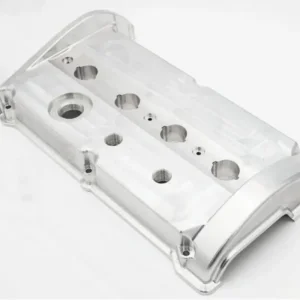
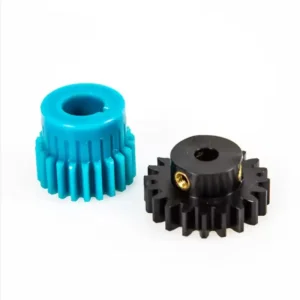
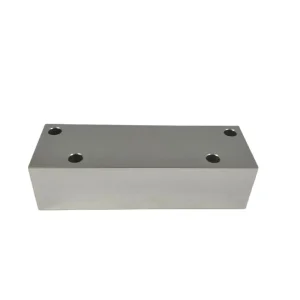
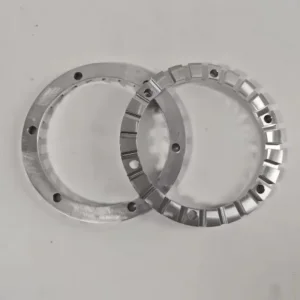
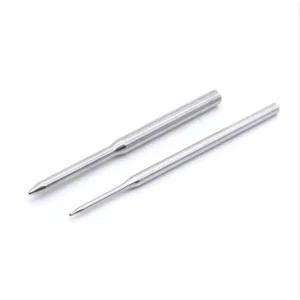
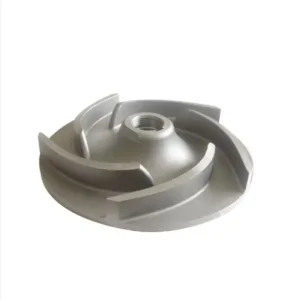
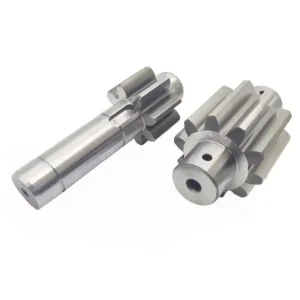
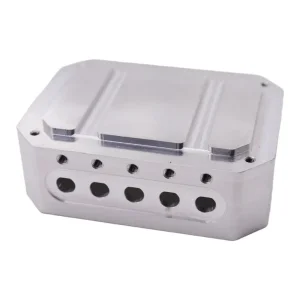
In addition to compound metal stamping, explore our fully integrated high-precision CNC machining, plastic gear molding, and custom hydraulic component export services.
Technical & Procurement FAQ
In-depth engineering answers addressing tooling design, material selections, lead times, quality control reporting, and global logistics for OEM buyers.