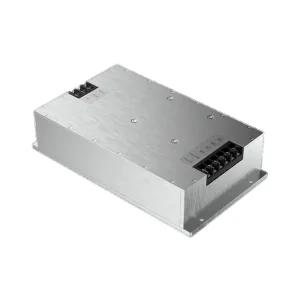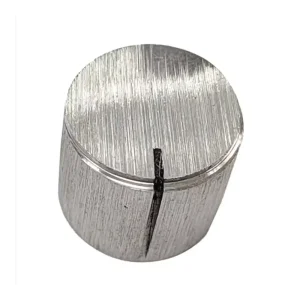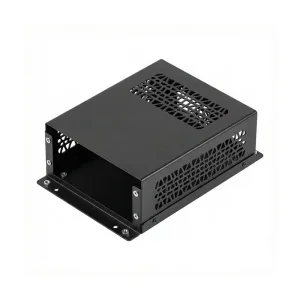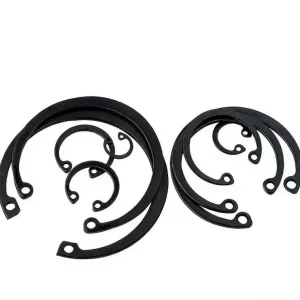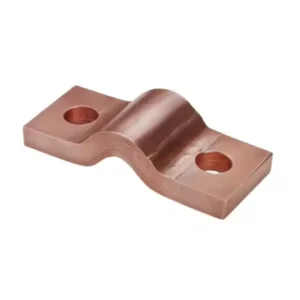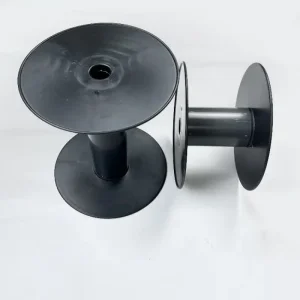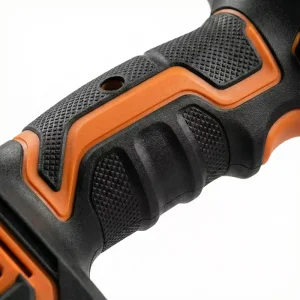
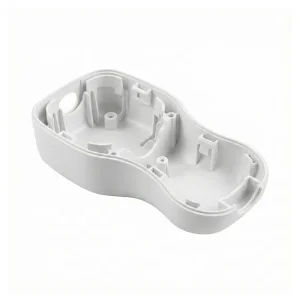
Featured Precision Bending & Hardware Components
State of Precision Sheet Metal Bending: Mechanical Physics & Manufacturing Excellence
Custom sheet metal bending forms the backbone of global industrial hardware manufacturing. As OEMs transition toward higher structural density, tighter mechanical tolerances, and complex multi-axis geometric profiles, the selection of a qualified custom sheet metal bending exporter & factory becomes a mission-critical supply chain decision. Modern sheet metal bending transcends traditional press brake operation; it represents a cyber-physical synthesis of material physics, non-linear deformation modeling, and real-time sensor feedback.
At the microscopic level, air bending, bottoming, and coining require rigorous control over elastic springback, neutral axis shifting, and grain orientation relative to the bend line. When forming high-tensile alloys—such as cold-rolled steel, aluminum 6061-T6, stainless steel 316L, or beryllium copper—improper K-Factor assumptions inevitably result in cumulative angular error, flange mismatch, and structural micro-cracking.
Predictive Springback Compensation
Utilizing dynamic finite element analysis (FEA) and continuous material tensile testing, our factories pre-calculate yield strength variations to dynamically alter press brake depth (Y1-Y2 control) and compensate for alloy-specific springback in real time.
Neutral Axis & K-Factor Calibration
Standardized bending formulas often fail across non-uniform sheet thicknesses. We mathematically isolate the ratio of the neutral axis shift ($K = t / T$) to calculate exact Bend Allowance ($BA$) and Bend Relief geometries prior to physical laser cutting.
Structural Grain Optimization
Bending perpendicular to sheet rolling direction prevents tensile splitting along stress planes. Our automated CAM software nested laser profiles to strictly maintain optimal grain alignment across heavy structural brackets and enclosure panels.
Technical Roadmap & Future Outlook of Industrial Bending
The global precision metal sheet bending sector is undergoing a massive transformation driven by Smart Manufacturing, automated robotic press brake cells, and laser-assisted optical angle measurement. Modern enterprises demand fully integrated digital workflows from STEP file ingest to automated CMM validation.
| Bending Parameter / Capability | Legacy Manual Press Brake | Advanced CNC Servo-Hydraulic | Industry 4.0 Cyber-Physical Cell |
|---|---|---|---|
| Angular Measurement & Control | Manual Protractor / Sample Check | Laser Angle Sensor (Post-bend) | Real-time In-Process Optical Laser Compensation |
| Thickness Variance Handling | Uncompensated (Causes Angle Drift) | Manual Depth Adjustment | Automatic Sheet Thickness Measuring System (T-Sensor) |
| Material Handling & Loading | 2 Operators Manual Operation | Semi-automated Sheet Follower | 6-Axis Robotic Arm with Vacuum/Magnetic Grippers |
| Setup Time per Job Change | 45 - 90 Minutes | 15 - 30 Minutes | < 3 Minutes (Automated Tool Changer - ATC) |
| Tolerance Stability (Cpk ≥ 1.67) | Unstable across shifts | Achievable on select materials | Guaranteed across 100,000+ unit batch runs |
Adaptive AI-Powered Bend Compensation
Emerging press brake architectures embed strain-gauge sensors within the upper beam and lower bed. Machine learning algorithms analyze punch force vs. penetration depth on the first stroke, automatically altering stroke depth to counteract batch-to-batch sheet hardness variance.
Electric Servo-Drive Dominance
Replacing traditional hydraulic fluid systems, direct-drive electric servo press brakes offer up to 40% energy reduction, zero thermal drift in fluid viscosity, and micro-positioning accuracy down to 0.001 mm for intricate medical instrument chassis and telecom housings.
Closed-Loop CAD-to-Part Digital Twins
By connecting SolidWorks/Inventor directly to bending CAM software (e.g., BySoft, Trumpf TruTops), offline programming simulates tool collision risks, backgauge movement, and robotic re-gripping sequences before the first metal sheet enters laser cutting.
Macro Industry Solutions: Mission-Critical Fabrications
Precision bent metal components serve as critical load-bearing structures, EMI/RFI shielding barriers, and thermal management channels across demanding high-tech industries. Custom exporter operations must match specific alloy selection and surface treatments to the physical operating environment.
Aerospace & Defense Enclosures
Fabrication of lightweight Aluminum 7075-T6 structural ribs, avionics racks, and titanium alloy heat shields. Requires stringent process control, full material heat-treat traceability, and AS9100D compliance. Radii are strictly controlled to eliminate stress risers under extreme vibration loads.
Medical Diagnostics & Surgical Housing
Seamless stainless steel 304/316L and aluminum housings for MRI scanners, surgical robotics, and fluid analysis systems. Emphasizing sanitary design: fully welded, ground, and passivated corner seams to eliminate bacterial traps and withstand aggressive chemical sterilization.
Electric Vehicle (EV) Power Distribution & Busbars
Precision multi-bend flexible laminated copper busbars and high-capacity battery pack tray structures. Incorporating dielectric powder coating, overmolding insulation, and tight coining operations to optimize electrical conductivity while fitting compact chassis packaging.
Semiconductor Equipment & High-Vacuum Chambers
Ultra-clean sheet metal components for wafer handling systems and gas delivery cabinets. Utilizing high-precision CNC air bending combined with electropolishing to guarantee surface roughness down to Ra 0.4 μm, preventing outgassing in vacuum operations.
Telecom 5G Infrastructure & Edge Computing Racks
Outdoor IP66/NEMA 4X weather-resistant aluminum enclosures. Feature complex hemmed edges for door stiffness, integrated louver venting for passive thermal convection, and automated robotically applied continuous polyurethane gasket seals.
Renewable Energy Storage (BESS) Enclosures
Heavy-gauge galvanized steel structural framing and modular rack enclosures capable of carrying multi-ton battery modules. Built to withstand seismic loading, extreme ambient temperatures, and 1000-hour salt-spray corrosion tests.
China Factory 4.0: Supply Chain Resilience & Manufacturing Efficiency
Shenzhen and the Pearl River Delta represent the world’s most concentrated industrial ecosystem for custom hardware manufacturing. Partnering directly with a tech-driven China sheet metal factory provides global enterprises with unmatchable agility, rapid prototyping speed, and integrated raw material access.
Hyper-Dense Material & Tooling Ecosystem
Within a 30-minute radius, our facilities access specialized raw material stockists (standard, aerospace, and medical grades), specialized tooling die makers, and advanced surface treatment plants (anodizing, electroplating, zinc-nickel alloys, KTL e-coating).
Automated Fiber Laser + Bending Cell Synergy
By pairing 12kW–30kW ultra-high-speed fiber laser cutting systems directly with automated robotic press brake cells, we eliminate WIP (Work-in-Progress) buffering. Raw sheet metal converts to fully formed complex assemblies in hours rather than weeks.
Unmatched Total Cost of Ownership (TCO)
China's sophisticated industrial cluster reduces non-value-added material handling and setup scrap. Combined with optimized automated labor, global buyers secure 25%–40% net landed cost savings without compromising international quality standards.
Global Enterprise Sourcing Requirements & DFM Integration
Sourcing structural sheet metal components internationally requires systematic risk mitigation, robust Design for Manufacturability (DFM) analysis, and standardized quality validation frameworks. Professional sheet metal bending exporters act as engineering partners, identifying costly design flaws prior to tool release.
Comprehensive 24-Hour DFM Technical Reviews
Every submitted CAD file undergoes algorithmic DFM screening. Key engineering checks include:
- Minimum Flange Height: Ensuring bend height $h \ge 4 \times T$ to prevent slip off lower V-die.
- Hole-to-Bend Distance: Enforcing distance $d \ge 3 \times T + R$ to stop oval hole distortion during stretch.
- Bend Relief Slot Design: Specifying width $w \ge T$ and depth $d \ge R + T$ to eliminate corner tearing.
- Internal Radius Selection: Matching $R_{min}$ to alloy ductility to avoid surface tensile failure.
APQP & PPAP Level 3 Quality Documentation
For high-reliability automotive, industrial, and medical contracts, our factory delivers standard PPAP documentation packages:
- Process Flow Diagram (PFD) & Control Plan: Mapping every cutting, bending, welding, and plating step.
- PFMEA: Identifying failure modes (e.g., angle drift, burr formation) and corrective actions.
- Dimensional Inspection Report (CMM): 100% verification of critical-to-quality (CTQ) dimensions.
- Material & Plating Certificates: Full heat-lot traceability, Spectro analysis, and RoHS/REACH compliance.
Localized Support & International Compliance Assurance
Seamless international trade requires complete alignment with global regulatory frameworks, environmental mandates, and transparent door-to-door (DDP) logistics options. A reliable exporter bridges geographical distance with local account accountability.
ISO 9001 & IATF 16949
Certified quality management systems ensuring continuous process control, traceable calibration, and structured corrective action (8D reporting).
RoHS, REACH & Conflict Minerals
Full compliance with European hazard directives. All surface treatments (tinned copper, trivalent chromate, powder coating) are strictly heavy-metal free.
Export Custom Packaging
Engineered shock-proof packaging utilizing ISPM-15 heat-treated wooden crates, custom VCI anti-corrosion bags, and precision-cut EPE foam inserts.
Global DDP / DAP Logistics
Turnkey international shipping management including customs clearance, duty payment, and local warehouse stocking (VMI / Kanban programs).
Frequently Asked Questions: Sheet Metal Bending & Sourcing
In-depth technical answers from our senior engineering team to assist your procurement and design decisions.