High-Quality Dual-Material Power Tool Handle - China Suppliers & Factory Offering High-Quality Two-Shot Injection Molding Solutions Manufacturer, Exporters
Product Description
Product Overview
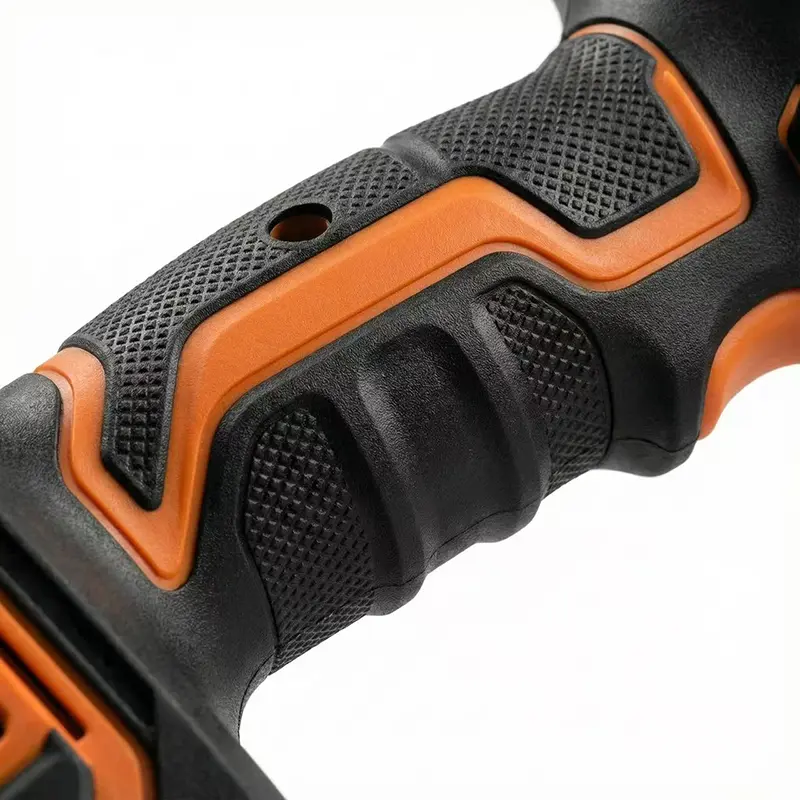
This ergonomic handle demonstrates our advanced capabilities in multi-material injection molding. By combining a rigid substrate with a soft-touch grip, we enhance both the durability and the user experience of the product. This technology is widely used in power tools, consumer electronics, and outdoor equipment.
Manufacturing Process Insight
Overmolding Technique
First, the rigid core (Glass-filled Nylon) is molded to provide structural strength. Then, the part is transferred to a second cavity (or using a 2K machine) where soft TPE (Thermoplastic Elastomer) is injected over it.
Chemical Bonding
We select materials that chemically bond during the molding process, eliminating the need for adhesives and preventing peeling over time.
Complex Tooling
The mold is designed with precise shut-offs to ensure the soft material creates crisp, clean lines without flashing onto the hard plastic.
Key Features & Benefits

Ergonomics
The TPE layer provides vibration dampening and a non-slip grip, improving user comfort.

Aesthetics
Enables dual-color designs that enhance brand identity and shelf appeal.

Durability
The glass-filled nylon core creates a nearly unbreakable internal skeleton.

Cost Efficiency
Two-shot molding eliminates manual assembly of rubber grips, reducing labor costs in mass production.
Technical FAQ
› Q1: What materials work best for overmolding?
A1: Common combinations include ABS+TPE, PC+TPU, or Nylon+TPE. Material compatibility is key for chemical bonding.
› Q2: Is the tooling much more expensive?
A: Double-shot molds are more complex and costly than single-shot molds, but the unit price is lower for high-volume production due to eliminated assembly steps.
› Q3: Can you do insert molding (metal inserts)?
A3: Yes, we can robotically place brass nuts or metal shafts into the mold before injection.
Other Products
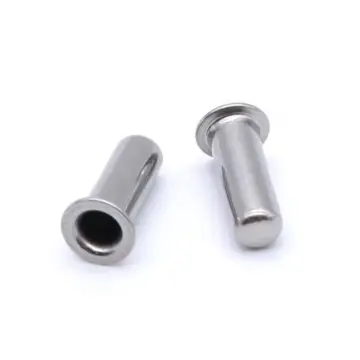
Custom SS316 Deep Drawn Closed-End Flanged Sensor Housing
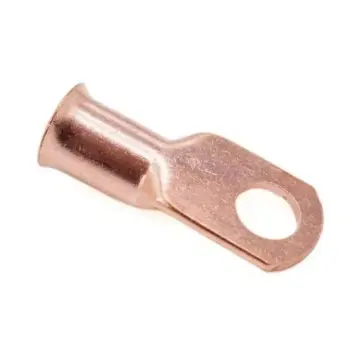
Custom Tinned Copper Lug Ring Crimp Terminal Battery Wire Connector
Custom Laser Cut & Welded Heavy Equipment Control Panel
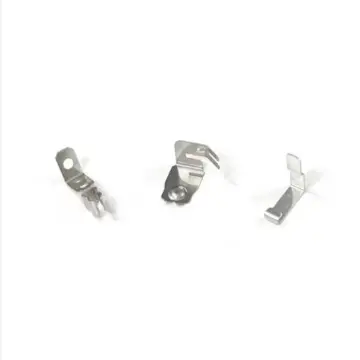
Custom Phosphor Bronze and Steel Stamping Battery Contacts
Get a Fast, Technical Quote & Free DFM Review
Don't let tolerance stack-up delay your product launch. Submit your project details, and our engineering team will evaluate your design for manufacturability before the first cut.
Frequently Asked Questions
Q What is multi-material injection molding and how does it differ from standard injection molding?
Multi-material injection molding (also called two-shot or 2K molding) combines two or more different materials — such as a rigid plastic and a soft elastomer — in a single automated process. Unlike standard injection molding, which uses one material per part, multi-material molding eliminates the need for manual assembly and adhesives, resulting in stronger, cleaner, and more cost-effective parts.
Q What is the minimum order quantity (MOQ) for overmolded handles?
MOQ varies depending on part complexity and tooling requirements. Generally, we recommend starting with a pilot run of 500–1,000 pieces to validate tooling and quality, with full production volumes scaling from there. Contact our team for a project-specific assessment.
Q How long does it take to produce a new overmolding mold?
Tooling lead time for a two-shot overmolding mold typically ranges from 4 to 8 weeks, depending on part geometry and complexity. We provide a detailed DFM (Design for Manufacturability) review before committing to tooling to minimize revisions and delays.
Q Can custom colors and surface textures be applied to overmolded parts?
Yes. Both the rigid substrate and the soft TPE/TPU layer can be produced in custom colors using masterbatch pigments. Surface textures — such as matte, gloss, or stippled grip patterns — can be machined directly into the mold cavity for a consistent, high-quality finish on every part.
Q What industries commonly use overmolded ergonomic handles?
Overmolded handles are widely used across power tools, hand tools, medical devices, consumer electronics, sporting goods, and outdoor equipment. Any application that requires a combination of structural rigidity, soft-touch comfort, vibration dampening, or non-slip grip is an ideal candidate for overmolding.
Q Do you offer prototyping before full-scale production tooling?
Yes. We offer rapid prototyping options — including 3D-printed mockups and soft tooling — so you can validate ergonomics, fit, and aesthetics before investing in production-grade hard tooling. This helps reduce risk and accelerates your product development cycle.