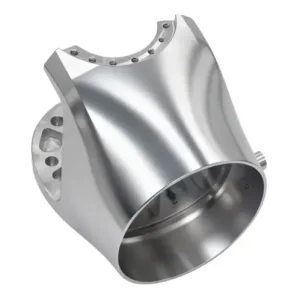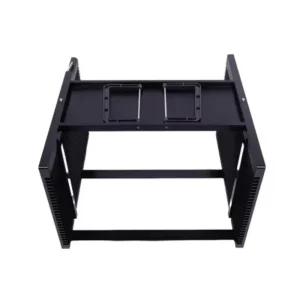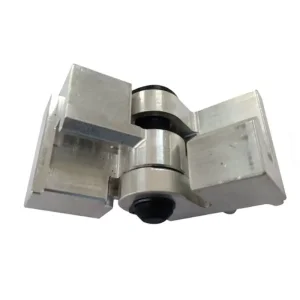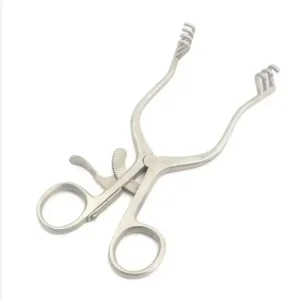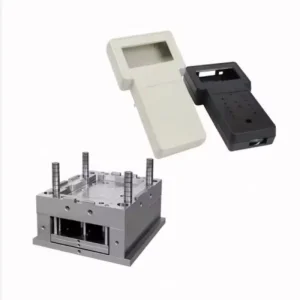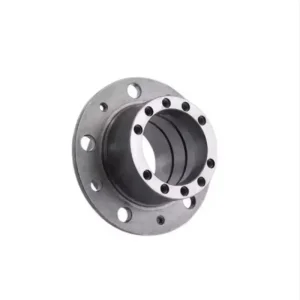
High-Precision Manufactured Components (Part I)
Explore our certified precision-machined, casted, and custom sheet-formed structural hardware manufactured to micron-level specifications.
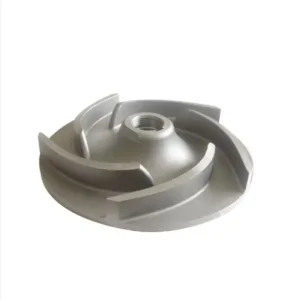
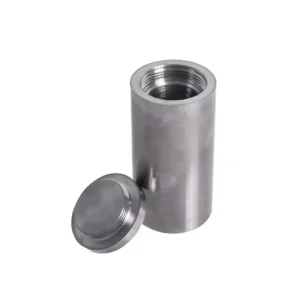
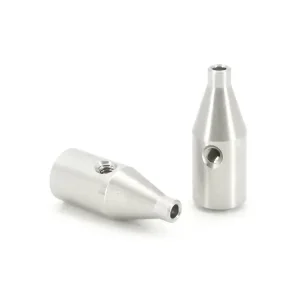
Precision Sheet Metal Fabrication: Engineering Architecture & Tolerancing
In high-reliability industrial applications, custom precision sheet metal work transcends traditional bending and shearing. It represents an integrated system of laser cutting thermodynamics, plastic deformation kinematics, springback prediction, and structural metallurgy.
Fiber Laser Thermal Control
Utilizing ultra-high-power fiber laser sources (up to 30kW) with adaptive beam shaping (ABS) and nitrogen-assist gas cut chemistry. We mitigate Heat-Affected Zones (HAZ), eliminating dross formation and achieving taper-free kerf edges down to ±0.02mm position accuracy across aluminum, stainless steel, and brass alloys.
Kerf Width Control: 0.05mmCNC Press Brake Kinematics
Closed-loop electro-hydraulic servo-driven bending machines equipped with LVD laser angle measurement systems. Real-time springback compensation algorithms recalculate bend allowance ($K$-factor calculation) dynamically during air bending, bottoming, or coining operations, enforcing tight angle tolerances of ±0.25°.
Max Pressing Force: 320 TonsDeep Drawing & Stamping Dies
Custom progressive dies engineered using AutoForm® stamping simulation software. By calculating blank holder force, draw ratios, and material thinning rates, we eliminate wrinkles and tears in complex 3D contoured enclosures, achieving high-speed production up to 120 strokes/minute.
Die Life: >1,000,000 CyclesManufacturing Capability & Tolerance Matrix (ISO 2768-mK Standard)
| Fabrication Process | Standard Material Alloys | Thickness Range | Standard Tolerance | Precision Level (Tightest) |
|---|---|---|---|---|
| Fiber Laser Cutting | Al 6061-T6, SS 304/316L, Carbon Steel, Brass C2600 | 0.5mm – 25.0mm | ±0.10 mm | ±0.03 mm |
| CNC Punching & Nibbling | AL 5052-H32, SECC, SGCC, Copper C1100 | 0.5mm – 4.0mm | ±0.08 mm | ±0.05 mm |
| CNC Press Brake Bending | High-strength structural sheet, Titanium Gr 2 | 0.8mm – 12.0mm | ±0.30 mm / ±0.5° | ±0.10 mm / ±0.15° |
| Progressive Die Stamping | Beryllium Copper, Stainless Steel, Cold Rolled Steel | 0.1mm – 6.0mm | ±0.05 mm | ±0.01mm |
| TIG/MIG & Laser Welding | Structural Steel, Stainless Steel, Aluminum 6000-series | 1.0mm – 10.0mm | ±0.50 mm | ±0.20 mm (Post-Machined) |
Macro Industry Solutions & Turnkey Systems Integration
Our specialized sheet metal manufacturing framework delivers mission-critical structural sub-assemblies tailored to stringent industrial standards and environmental compliance protocols across prime sectors.
Aerospace & Defense Structural Hardware
Ultra-lightweight aluminum (AL 7075-T6, 2024-T3) and titanium sheet metal components manufactured under AS9100D control plans. Features chem-milling, stretch forming, chromate conversion coating (MIL-DTL-5541 Class 1A), and riveted sub-assemblies for avionics rack chassis and UAV airframes.
Automotive & EV Battery Enclosures
IATF 16949-certified fabrication of IP67/IP69K sealed electric vehicle (EV) battery tray structures, busbar shielding covers, and stamped body-in-white (BIW) reinforcements. Integrated friction stir welding (FSW) and continuous laser seam welding yield leak-proof performance.
Semiconductor & Vacuum Equipment
High-purity stainless steel (316L VAR/VIM) gas delivery cabinets, cleanroom-grade ultra-clean vacuum manifold enclosures, and EMI/RFI shielded server racks. Electropolished finishes ($Ra < 0.2\mu\text{m}$) ensure minimal outgassing in ultra-high vacuum (UHV) regimes.
Medical Devices & Diagnostic Housings
ISO 13485 compliant surgical cart chassis, MRI equipment housings, and fluidic analyzer sheet metal panels. Manufactured with antimicrobial powder coatings, passivated stainless surfaces, and smooth flush welds to comply with FDA hygiene guidelines.
Telecommunications & 5G/6G Cloud Hardware
Mass-scale production of outdoor weatherized IP66 telecom enclosures, liquid-cooled cold plates, and server blade chassis. Precision stamped card guides, PEM clinch nut inserts, and conductive silver-plated gaskets maintain electromagnetic compatibility.
Industrial Robotics & Physical AI Enclosures
Rigid, anti-vibration structural arm covers, control cabinet housings, and payload brackets for cobots and autonomous mobile robots (AMR). Engineered with high stiffness-to-weight ratios using high-strength low-alloy (HSLA) steel sheets.
Technology Roadmap & Future Outlook (2025–2030)
The transformation of custom sheet metal manufacturing relies on the convergence of Artificial Intelligence, additive hybrid tooling, autonomous robotics, and closed-loop cyber-physical metrology.
AI Smart Stamping & Predictive Springback
Integration of neural network algorithms directly into press brakes and stamping dies. In-situ optical sensors analyze sheet thickness variations and grain direction batch-by-batch, adjusting die clearance and tonnage dynamically to eliminate non-conforming parts.
Autonomous Robotic Bending Cells
Fully automated bend stations where 6-axis articulated robots handle sheet loading, tool changing, dynamic part supporting, and vision-guided palletizing without human intervention, achieving 24/7 lights-out manufacturing operations.
Additive-Subtractive Hybrid Fabrication
Combining sheet metal laser blanking with 3D Direct Energy Deposition (DED) additive manufacturing. Complex functional bosses, ribs, and cooling channels are printed directly onto formed sheet metal bases, reducing tooling investment by 45%.
Digital Twin Metrology & Automated CMM
Complete virtual factory mirroring where blue-light 3D scanner meshes are instantly compared against original CAD step models. Real-time SPC (Statistical Process Control) charting alerts engineers to tool wear before dimensional drift occurs.
5-Stage Automated Production Roadmap Flow
Automated DFM Parsing
AI CAD parsing evaluates bend radiuses, hole-to-edge proximity, and nesting efficiency instantly.
High-Speed Fiber Blanking
Multi-kW fiber lasers execute cut layouts with dynamic gas pressure regulation.
Robotic Servo Bending
Closed-loop laser angle compensation guarantees uniform flanges without angular variation.
Robotic Laser Joining
Low-distortion automated TIG, MIG, and fiber laser welding deliver aesthetic, ultra-strong joints.
3D Optical Inspection
Full geometric surface scanning verifies 100% GD&T compliance prior to export packing.
China Factory 4.0: Supply Chain Resilience & Cost Optimization
Leveraging Shenzhen’s world-class hardware ecosystem, our advanced sheet metal export facility streamlines raw material procurement, specialized surface finishing, rapid tooling creation, and international logistics under one accountable OEM umbrella.
Vertical Process Integration
Eliminate vendor hand-offs and markups. We control laser cutting, CNC punching, press brake forming, PEM fastener insertion, TIG/MIG/spot welding, powder coating, electroplating, anodizing, and final box-build assembly in integrated cell lines.
Tooling ROI & Cost Amortization
Engineered modular die architecture reduces initial tooling expenditure by 35% to 50% compared to Western manufacturing facilities. High-volume programs benefit from 100% tooling cost rebate policies upon reaching designated production thresholds.
Accelerated NPI & Fast-Track Lead Times
From 3D STEP file upload to physical prototype dispatch in as little as 48 hours. Our dedicated New Product Introduction (NPI) engineering cell operates round-the-clock to validate DFM and expedite pre-production samples before mass tool freeze.
Localization Support, Compliance Assurance & Export Logistics
Mitigating cross-border supply chain risks requires rigorous quality management systems, full material traceability, export compliance, and localized customer support models.
Comprehensive Quality Certifications
Our quality control protocols comply strictly with ISO 9001:2015, IATF 16949:2016 (Automotive), and AS9100D (Aerospace). Every shipment includes complete First Article Inspection (FAI) reports compliant with AS9102, CMM laser scanning dimensional plots, material mill test certificates (MTC per EN 10204 3.1), and RoHS/REACH compliance documentation.
Warehousing & JIT Supply Chain Integration
We support global enterprise buyers with flexible trade terms including DDP (Delivered Duty Paid), DAP, and FOB. To cushion lead time variability, we establish local buffer stock stocking programs and Vendor Managed Inventory (VMI) hubs across North America, Europe, and Southeast Asia to support Just-In-Time (JIT) manufacturing schedules.
Global Sourcing Strategy & Total Cost of Ownership (TCO) Analysis
Strategic procurement executives look beyond piece-part purchase price. Evaluating Total Cost of Ownership demands analyzing design optimization, tool longevity, freight efficiency, quality risk mitigation, and structural material choices.
Design for Manufacturability (DFM) Optimization
Upfront DFM analysis reduces part count by converting multi-piece welded assemblies into single-piece complex bent or stamped sheets. Normalizing bend radii across a part reduces tooling setups and cycle time by up to 28%.
Material Utilization & Scrap Minimization
Automated dynamic CAD nesting software maximizes sheet usage up to 92%. Shared-line cutting (Common Line Cutting) further reduces raw material waste, lowering cost per part while supporting corporate ESG sustainability mandates.
IP Protection & NDA Security Standards
Intellectual property safeguard is paramount. We sign legally binding Non-Disclosure Agreements (NDAs) prior to file transfer. CAD drawings are stored on air-gapped, encrypted servers accessible only by cleared project engineers.
Frequently Asked Sourcing & Engineering Questions
Detailed answers covering manufacturing capabilities, tolerances, surface finishing standards, quality documentations, and logistics.
What dimensional tolerances can your factory hold for custom sheet metal parts?
Which CAD file formats do you accept for DFM review and quotation?
What materials and sheet thicknesses do you regularly process?
How do you handle springback compensation in high-strength materials?
What surface finishing treatments are available in-house or through certified partners?
What quality verification reports accompany export shipments?
What is your typical production lead time for prototypes versus production runs?
How do you protect customer IP during the export manufacturing process?
High-Precision Manufactured Components (Part II)
Explore additional custom components engineered for high-performance applications across robotics, medical, industrial, and semiconductor sectors.