High-Performance Cast & Machined Industrial Components
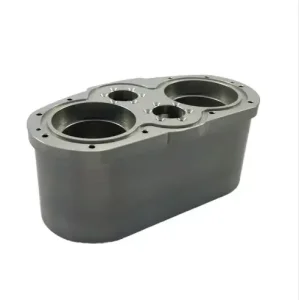
Explore production-grade structural housings, enclosures, flanges, and mechanical assemblies manufactured under rigorous metallurgical process parameters and CMM verification.

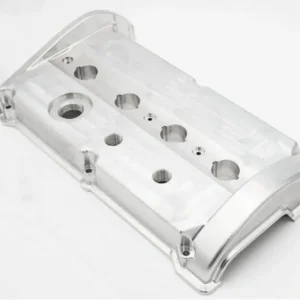
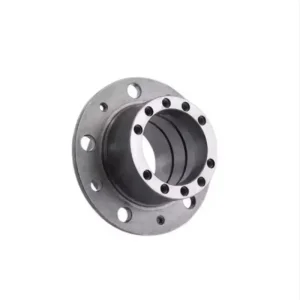
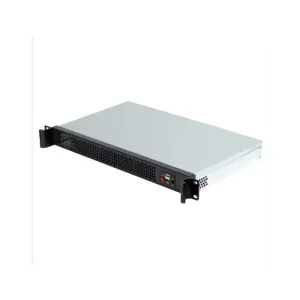
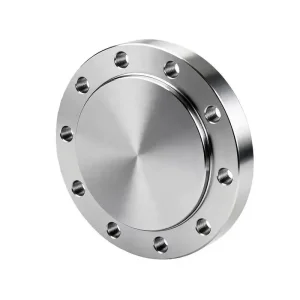
The Squeeze Casting Paradigm: Bridging Foundry Casting and Forging
Squeeze casting—frequently designated as liquid metal extrusion or squeeze forming—represents the technological apex of hybrid solidification processing. By solidifying molten alloys under sustained, massive hydrostatic pressures ranging from 50 to over 150 MPa, China's modern squeeze casting facilities completely alter conventional crystallization kinetics.
Direct Squeeze Casting
In direct squeeze casting, molten alloy is metered directly into an open die cavity before an upper hydraulic punch closes, exerting uniform pressure across the entire liquid mass until complete solidification. The result is exceptional thermal contact heat transfer rates (up to 3000 W/m²·K), refined equiaxed grain morphologies, and zero shrinkage porosity throughout heavy section thicknesses.
Indirect Squeeze Casting
Indirect squeeze casting injects liquid metal via a massive gating channel at extremely low velocities (<0.5 m/s) to ensure purely laminar, non-turbulent cavity fill. Once filled, high intensification pressure is applied via a secondary plunger. This avoids oxide inclusion generation, air entrapment, and premature gate freezing, making it the choice for geometrically intricate, thin-to-thick transitions.
Full T6 Heat Treatability
Unlike standard High-Pressure Die Casting (HPDC) where entrapped turbulent gases blister during high-temperature solution treatment (causing severe surface and structural failure), squeeze-cast aluminum exhibits internal gas porosity below 0.1 cm³/100g. This permits full T4, T5, and T6 precipitation hardening, elevating yield strengths by up to 60% compared to as-cast states.
| Manufacturing Technology | Solidification Pressure | Internal Porosity Level | T6 Heat Treatable? | Grain Size (DAS) | Elongation (%) |
|---|---|---|---|---|---|
| Direct Squeeze Casting | 70 – 150+ MPa | Negligible (<0.05%) | Yes (No Blistering) | 15 – 25 µm | 10% – 16% |
| Indirect Squeeze Casting | 50 – 120 MPa | Near Zero (<0.1%) | Yes (No Blistering) | 20 – 35 µm | 8% – 14% |
| High-Pressure Die Casting (HPDC) | 20 – 40 MPa (Local) | High Gas Porosity (1-3%) | Generally No | 40 – 60 µm | 2% – 5% |
| Gravity Permanent Mold (GDC) | Hydrostatic (<0.5 MPa) | Moderate Shrinkage | Yes (Requires Risers) | 50 – 90 µm | 5% – 9% |
| Closed-Die Forging | Solid-state >200 MPa | Zero (Consolidated) | Yes | Fibrous Formed | 12% – 18% |
Global Sourcing Drivers Across Automotive, Energy & High-Tech Sectors
Tier-1 procurement organizations and global engineering departments are systematically transferring safety-critical components from multi-step forged or fabricated steel weldments to integrated squeeze-cast structural aluminum solutions from China.
Automotive E-Mobility Chassis
Steering knuckles, control arms, subframe crossmembers, and shock towers demand high fracture toughness and cyclic fatigue resistance. Squeeze casting delivers isotropic mechanical properties with elongation values over 12%, passing 100,000 km dynamic wheel-load simulation tests.
EV Battery Modules & Liquid Plates
Lithium battery housings and high-pressure inverter liquid chill-plates require hermetic sealing. Squeeze casting prevents leak paths across heavy cooling boss sections, permitting direct brazing and electron-beam welding without micro-fissuring or coolant weeping.
5G / 6G & Edge Computing RF Cavities
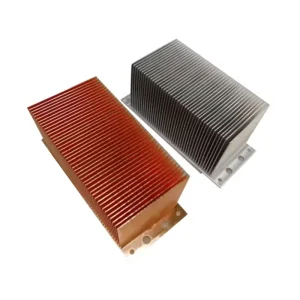
Millimeter-wave cavity filters and thermal interface heatsinks demand zero internal voiding to ensure consistent dielectric resonance and optimal thermal dissipation. Squeeze-cast pure/low-alloy aluminum delivers superior bulk thermal conductivities exceeding 200 W/m·K.
Robotics & Physical AI Actuation
High-torque robotic joint links, harmonic drive enclosures, and exoskeleton shells necessitate light weight combined with high modulus. Squeeze forming allows thin wall sections (down to 2.5 mm) alongside dense mounting bosses without stress concentration points.
Enterprise-Grade Quality Assurance & Metallurgical Validation
Deploying advanced non-destructive inspection (NDT), 3D optical scanning, and optical emission spectroscopy to verify that every squeeze casting adheres to rigorous aerospace and automotive standards.
ASTM E505 & ISO 10049 X-Ray Inspection
Full real-time digital radioscopy (DR) and micro-computed tomography (CT) inspect for shrinkage fissures, oxide inclusions, and segregations. Structural components comply with Level 1 defect-free classifications.
IATF 16949 & PPAP Level 3
Automotive squeeze cast orders are executed strictly under automotive quality management protocols. Full Production Part Approval Process (PPAP) documentation, control plans, Gage R&R, and CPK analyses (>1.67) accompany serial runs.
Microstructural Dendrite Refinement
Metallographic grain polishing and optical spectroscopy verify secondary dendrite arm spacing (SDAS) under 25 µm. Silicon eutectic modification (via Strontium micro-alloying) yields high plastic strain capability.
Turnkey Localization Support: From Rapid Tooling to High-Precision Machining
Sourcing squeeze castings from Chinese manufacturing hubs offers access to an integrated ecosystem. Sunmy Hardware coordinates die design, high-tonnage squeeze forging presses, automated T6 solution aging ovens, and 5-axis CNC post-machining under a unified quality assurance management umbrella.
DFM & AnyCasting Flow Analysis
Thermal-gradient simulation verifies directional solidification toward the squeeze punch, eliminating thermal hotspots and premature gate freeze-off.
Tooling Fabrication (H13 / Dievar)
Precision CNC-machined dies using vacuum-hardened H13 or premium Uddeholm Dievar steel with conformal PVD multi-layer ceramic coatings to mitigate thermal cracking.
Hydraulic Squeeze Pressing
Computer-controlled high-pressure squeeze cycles (500T to 3500T presses) featuring real-time closed-loop injection displacement curves.
Precision CNC Post-Machining
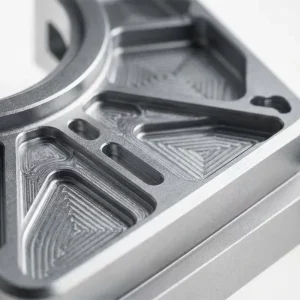
In-house 3, 4, and 5-axis milling centers cut locating datums, high-tolerance bearing bores (±0.005 mm), and fluid ports in single setups.
The Future of Squeeze Forming: Semi-Solid, Hybrid Matrices & AI closed-Loop Systems
Forward-thinking China squeeze casting suppliers are driving technological advancements that bridge metallurgy with physical artificial intelligence, circular alloys, and ultra-large single-piece architecture.
Thixo-Squeeze & Rheocasting
By preparing semi-solid metal slurries featuring spherical, non-dendritic solid particles, rheocasting combined with direct squeeze consolidation enables laminar filling without air entrapment, even across ultra-thick structural bosses.
AI Digital-Twin Cavity Feedback
High-frequency piezoelectric cavity pressure and infrared thermocouple sensor arrays feed real-time data into adaptive neural-network controllers. The machine dynamically regulates squeeze pressure timing to counteract temperature fluctuations.
Low-Carbon Recycled Alloys
Through electromagnetic stirring, vacuum degassing, and high-efficiency ceramic foam filtration, advanced China foundries produce premium squeeze castings using up to 80% secondary recycled green aluminum while preserving >98% virgin tensile strength.
Frequently Asked Questions by Global Engineering Buyers
Clear, direct answers regarding tool economics, alloy selections, lead times, and structural certifications for sourcing squeeze castings from China.
What is the primary mechanical advantage of squeeze casting over HPDC?
Squeeze casting eliminates gas porosity by filling the mold cavity laminarly at low velocity and applying high hydrostatic pressure (50–150 MPa) throughout solidification. This prevents shrinkage cavities, enables complete T6 precipitation heat treatment, and allows welding, delivering forging-grade strength.
Which aluminum alloy grades are best suited for squeeze casting?
Common foundry alloys include A356 (AlSi7Mg0.3), A380, and Al-Si-Cu formulations. Squeeze casting also processes wrought alloys normally deemed uncastable (such as 6061 and 7075 series) because the high pressure suppresses hot tearing during solidification.
How does tooling longevity compare to high-pressure die casting?
Because squeeze casting employs lower liquid fill velocities, mold gates experience substantially reduced thermal erosion and cavitation wear. As a result, premium H13 or Dievar tooling can yield 100,000 to 150,000 shots before requiring major refurbishment.
What is the typical minimum wall thickness attainable?
Direct squeeze casting generally targets wall sections of 3.0 mm to 50+ mm, performing well on heavy, thick-walled parts. Indirect squeeze casting can achieve thinner walls down to 2.0–2.5 mm on localized ribs due to the assist of pressurized gating systems.
Can squeeze cast aluminum components be safely welded and anodized?
Yes. The virtual absence of entrained oxide films and subterranean gas pores means squeeze cast parts can be TIG, MIG, and laser welded without blowhole defects. Clear or color decorative anodizing is achievable when using low-silicon alloys (like 6061 or Al-Mg systems).
What quality certifications should buyers require from China foundries?
Suppliers should hold ISO 9001 and IATF 16949 (for automotive). Verify that they possess in-house CMM, real-time X-ray (ASTM E505 Level 1), optical emission spectrometers (OES), and universal tensile test benches capable of providing traceable EN 10204 3.1 material certificates.
Engineered Assemblies & Specialized Hardware Components
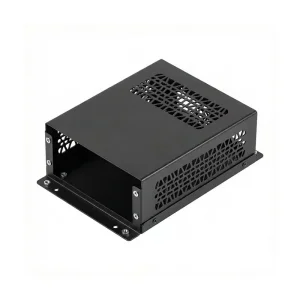
From aerospace brackets to customized electronic shielding and CNC turned assemblies, review our turnkey manufacturing capabilities designed for strict international standards.