Precision OEM Components & Assembly Modules
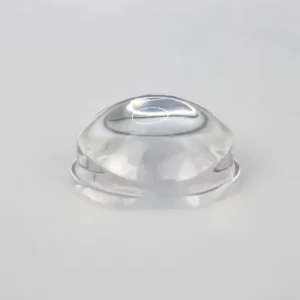
Explore our high-precision manufacturing solutions ranging from implant-grade titanium micro-machining to high-transparency optical medical molding.
The Paradigm Shift in China's Medical Molding Ecosystem
How advanced material science, automated cleanroom infrastructure, and strict regulatory alignments are redefining OEM contract manufacturing for international healthcare brands.
The global medical device market is undergoing a seismic structural evolution driven by aging demographics, the proliferation of point-of-care diagnostics, miniaturized surgical instrumentation, and wearable drug-delivery platforms. At the epicenter of this hardware evolution is the precision polymer engineering industry. In this context, evaluating a China Medical Molding Product & Factory partner is no longer merely an exercise in direct unit-cost reduction; it is a strategic procurement imperative focused on risk mitigation, technological co-development, rapid prototyping scalability, and global compliance agility.
Historically recognized for high-volume commercial plastic processing, China's advanced injection molding infrastructure has systematically transitioned into high-tier medical contract manufacturing. Modern Chinese medical molding facilities integrate ISO 13485:2016 quality management systems, cleanroom environments certified from ISO Class 7 to Class 8 (Fed Std 209E Class 10,000 to 100,000), state-of-the-art electric injection presses (Arburg, Engel, Sumitomo), and fully automated robotic part-handling systems. This technological maturation allows top-tier Chinese factories to routinely execute complex micro-molding tolerances down to ±0.002 mm while processing ultra-high-performance thermoplastics such as PEEK, PPSU, LCP, and Liquid Silicone Rubber (LSR).
Enterprise Sourcing Drivers & Operational Risk Frameworks
Addressing the core criteria of global medical device OEMs: process validation, biostability, intellectual property protection, and supply chain continuity.
Quality System Rigor & IQ/OQ/PQ
Global medical brand directors require absolute verification that every mold cavity operates within strict statistical process controls (Cpk ≥ 1.33 / 1.67). Leading facilities enforce exhaustive qualification protocols:
- Installation Qualification (IQ): Verifying press specifications, calibration, utilities, and cleanroom air handling.
- Operational Qualification (OQ): Defining optimal processing windows through Design of Experiments (DOE).
- Performance Qualification (PQ): Ensuring long-term batch-to-batch stability under full production loads.
Biocompatibility & Resin Integrity
Preventing extractables, leachables, and particulate contamination is essential for diagnostic cartridges, respiratory masks, and surgical implants. Medical-grade resin management includes:
- Strict raw material lot segregation with full USP Class VI and ISO 10993 certification.
- Desiccant drying systems with dew-point monitoring to prevent hydrolytic degradation.
- Regrind-free virgin material enforcement for primary fluid-path and implantable applications.
IP Security & Data Governance
Mitigating intellectual property exposure when outsourcing medical mold design and proprietary part geometry to China is managed via structured operational security protocols:
- Encrypted internal networks with restricted CAD file access and physical port blockages.
- Bilingual non-disclosure agreements (NDAs) enforceable under specialized international IP courts.
- Compartmentalized manufacturing lines preventing cross-project operator access.
Precision Tooling Routines & Multi-Shot Molding Architecture
Engineering robust tooling concepts to solve complex part geometries, thin-wall structures, micro-fluidic channels, and multi-material integrations.
The core of superior medical injection molding lies in the mold design itself. High-cavitation tooling (ranging from 16 to 64 cavities) engineered in leading Chinese facilities utilizes hardened stainless mold steels (such as S136H, ASSAB 8407, and H13 heat-treated to 52-54 HRC) combined with mirror-polish surface treatments (SPI A1/A2 grade). This guarantees long-term tool longevity exceeding 1,000,000 cycles without flash generation or dimensional drift.
Micro-Fluidic & Thin-Wall Molding
Micro-fluidic diagnostic chips require sub-micron channel surface fidelity and defect-free optical clarity. Chinese precision factories deploy electric high-speed injection units capable of injection speeds exceeding 500 mm/s and response times under 10 ms to achieve complete cavity filling without thermal degradation of sensitive polymers.
2K Multi-Material & Overmolding
Combining rigid structural housing resins (e.g., Polycarbonate or ABS) with soft elastomeric sealing interfaces (e.g., TPE or TPU) in a single automated two-shot (2K) rotary mold cycle. This eliminates secondary manual sealing assembly, guarantees hermetic integrity, and dramatically reduces bio-contamination risks.
Rheology & Moldflow Simulation
Before steel cutting begins, full Moldflow FEA thermal and fill simulations are conducted to predict gate blush, air traps, weld lines, and differential volumetric shrinkage. Advanced conformal cooling channels, produced via 3D metal printing (SLM), are integrated into mold cores to cut cycle times by 30% while eliminating sink marks.
Medical Polymer Processing Reference Guide
Comparative physical, chemical, and process performance characteristics of high-tier polymers utilized in China medical molding factories.
| Polymer Family | Key Physical Properties | Sterilization Compatibility | Target Medical Applications | Molding Complexity & Requirement |
|---|---|---|---|---|
| PEEK (Polyetheretherketone) | Tensile strength 100 MPa, high wear resistance, excellent radiolucency. | Autoclave (134°C), Gamma, ETO, E-beam. | Spinal cages, dental abutments, surgical fixators, orthopedic trials. | High melt temp (380-400°C), precise mold heating (160-200°C) required. |
| PPSU (Polyphenylsulfone) | Impact strength > 600 J/m, exceptional hydrolysis resistance. | Repeated Steam Autoclaving (>1,000 cycles). | Surgical instrument handles, endoscope housings, fluid manifolds. | High viscosity resin; strict moisture control (<0.02%) essential. |
| Medical Polycarbonate (PC) | Optical clarity (90% light trans.), high dimensional stability. | EtO, Gamma radiation (color-stable grades). | Dialyzers, IV connectors, blood oxygenator housings, syringes. | Requires cleanroom processing to avoid optical contamination. |
| LSR (Liquid Silicone Rubber) | High thermal stability (-60 to 200°C), low compression set, bio-inert. | Autoclave, Gamma, EtO. | Respiratory masks, peristaltic pump tubing, implantable seals. | Cold-runner system mold design; micro-clearance to prevent flash. |
| Polypropylene (PP - Medical) | High chemical inertness, cost-effective flexural fatigue life. | EtO, Autoclave (limited cycles). | Pipette tips, centrifuge tubes, diagnostic cassette bodies. | High shrinkage rate; core cooling balance critical for part flatness. |
Regulatory Alignment & Seamless Western Market Localization
How leading Chinese medical molding factories bridge regulatory gap challenges for US FDA 510(k), EU MDR 2017/745, and ISO standards.
Navigating global healthcare regulation requires absolute transparency and comprehensive documentation transfer. An experienced China Medical Molding Factory serves not merely as a toll manufacturer, but as an extension of the buyer’s regulatory affairs team. From Device Master Record (DMR) compilation to full Device History Record (DHR) maintenance for every production batch, top-tier factories ensure frictionless audit readiness.
DMR & DHR Documentation
Every mold build and injection run produces a traceable Device History Record containing raw material lot certificates, machine parameter logs, inline CMM dimensional inspection reports, bioburden testing logs, and operator authorization signatures.
Particulate & Bioburden Control
Cleanroom environments are subjected to continuous airborne particle counting, regular microbial agar plate sampling, and positive air-pressure differential monitoring to guarantee compliance with ISO 14644-1 Class 7/8 specifications.
Global Export Packaging
Cleanroom double-bagging using Tyvek/PE sterile barrier pouches, heat-sealed with validated parameters, prevents ingress of contaminants during international air or ocean transport to North American and European assembly hubs.
Technology Roadmap: The Next Decade of Smart Medical Manufacturing
Anticipating industry trends in AI-driven closed-loop molding, bio-resorbable polymers, and micro-additive hybrid tooling.
AI-Powered Closed-Loop Pressure & Temperature Tuning
Integration of in-cavity piezoelectric pressure sensors linked directly to AI machine controllers. Real-time viscosity compensation dynamically adjusts holding pressure profiles on a stroke-by-stroke basis, driving part weight variation down to < 0.05% across 24/7 continuous cycles.
Bio-Resorbable Micro-Implant Processing
Advanced low-shear injection processing of bio-absorbable polymers (PLGA, PLLA) for temporary bone anchors and drug-eluting vascular scaffolds. Precise thermal degradation management preserves molecular weight and predictable in-vivo absorption curves.
Zero-Emission Circular Cleanroom Production
Deployment of fully electric carbon-neutral injection machinery, energy-recovery cleanroom HVAC loops, and closed-loop medical grade scrap recycling for non-contact diagnostic disposable outer housings.
Frequently Asked Questions
Detailed technical responses addressing common evaluation queries from medical device procurement managers and engineering directors.
Comprehensive Hardware & Molding Catalog
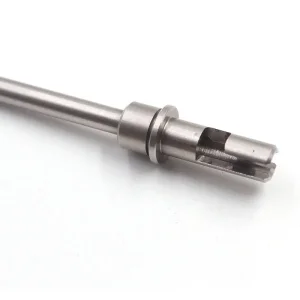
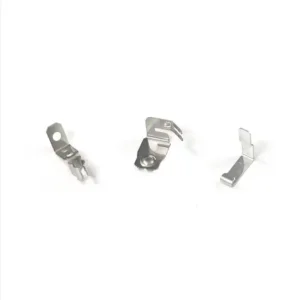
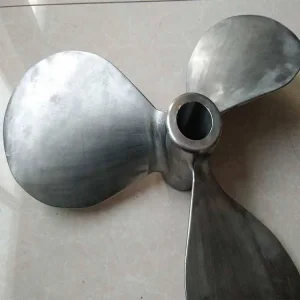
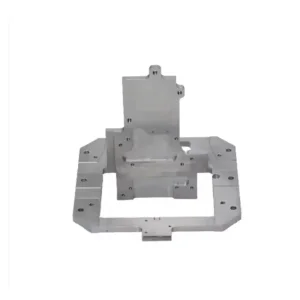
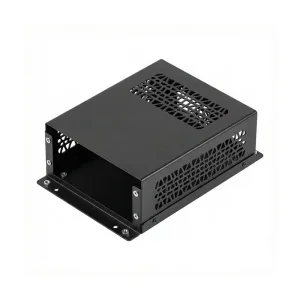
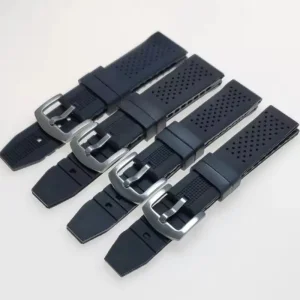
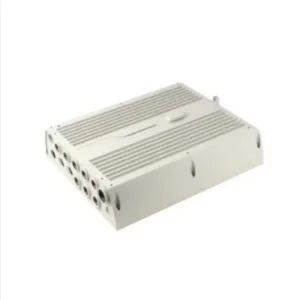
Review our extended portfolio of turned shafts, investment castings, stampings, aerospace brackets, and silicone component solutions.