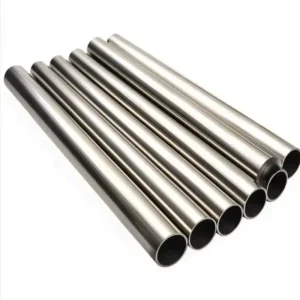
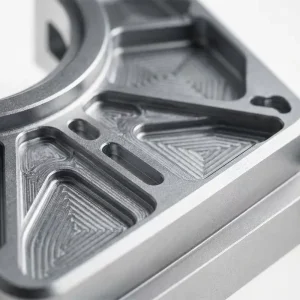
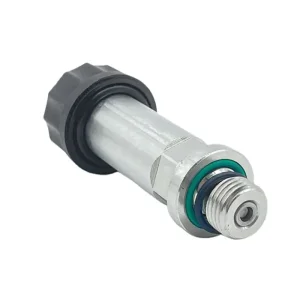
Featured 5-Axis & Precision Machined Products
Explore our custom OEM manufacturing capabilities engineered to ultra-tight GD&T standards for aerospace, medical, automotive, and industrial hydraulic systems.
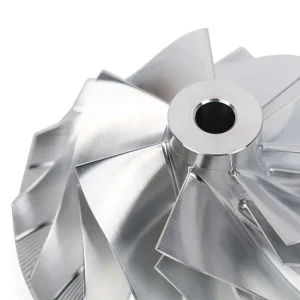
Global Commercial & Industrial Landscape of 5-Axis CNC Machining
In the modern advanced manufacturing ecosystem, 5-axis simultaneous CNC machining represents the pinnacle of subtractive precision manufacturing. As global OEM buyers demand increasingly intricate geometries, lighter-weight structural topologies, and tighter geometric tolerances, the industrial reliance on multi-axis CNC technology has surged. Traditional 3-axis and 4-axis machining setups—which require multiple re-fixtures and reset points—introduce cumulative stack-up errors, prolonged lead times, and elevated labor overhead.
China’s tier-1 precision manufacturing clusters, particularly in Shenzhen, Dongguan, and Suzhou, have undergone a massive paradigm shift. By integrating high-rigidity 5-axis trunnion machining centers (such as Hermle, DMG MORI, and Mazak) with cutting-edge CAM software (Siemens NX, HyperMILL, Mastercam), elite Chinese manufacturers now deliver complex components with single-setup precision. This transition reduces Total Cost of Ownership (TCO) for global buyers by eliminating expensive custom fixtures, minimizing human error, and achieving continuous surface finishes down to Ra 0.4 µm without manual deburring or polishing.
Simultaneous 5-Axis Vectoring
Continuous interpolation across X, Y, Z linear axes and A/C (or B/C) rotational axes enables complex undercut machining, freeform sculptured surfaces, and deep cavity impellers.
Single-Setup Tolerances
Eliminates datum shifting and re-clamping inaccuracies. Achieves position tolerance within ±0.005 mm and true circularity/concentricity down to sub-micron levels.
Optimized Tool Dynamics
By tilting the cutting tool vector relative to the part surface, shorter, stiffer cutting tools can be utilized. This eliminates tool chatter, vastly improves tool life, and maximizes chip load capability.
State-of-the-Art Precision Metrics
Our facility operates synchronized 5-axis CNC machining platforms equipped with real-time laser tool setters, optical touch probes, and thermal growth dynamic compensation algorithms.
Process Architecture Matrix: 3-Axis vs. 4-Axis vs. 5-Axis Simultaneous
Selecting the ideal subtractive manufacturing methodology requires evaluating geometric complexity, surface finish criteria, production runs, and overall fixture dynamics. Below is an authoritative technical matrix compiled by our senior DFM (Design for Manufacturing) engineering team:
| Evaluation Parameter | Standard 3-Axis Milling | Indexed 4-Axis Milling | Simultaneous 5-Axis CNC |
|---|---|---|---|
| Kinematic Degrees of Freedom | X, Y, Z Linear Axes | X, Y, Z + A or B Rotary Axis | X, Y, Z + A/C or B/C Rotary Axes |
| Setup Count for Complex Parts | 3 to 6 Individual Setups | 2 to 4 Individual Setups | 1 Single Setup (Done in One) |
| Tolerancing Capability (GD&T) | ±0.020 mm (Fixture Limited) | ±0.012 mm (Rotary Indexing) | ±0.005 mm (Laser Calibrated) |
| Cutting Tool Aspect Ratio | Long Reach (High Deflection) | Medium Reach | Short / Rigid (Zero Chatter) |
| Ideal Component Geometries | Prismatic plates, flat housings | Cylindrical shafts, helical grooves | Blisks, impellers, bone screws, turbine blades |
| Surface Finish (Sculptured) | Stair-stepped (Ra 1.6–3.2 µm) | Scalloped (Ra 1.2–2.0 µm) | Mirror-Smooth (Ra 0.4–0.8 µm) |
Macro Industry Solutions & Sector Integration
Our 5-axis manufacturing infrastructure provides tailored engineering solutions for high-stakes mission-critical industries globally.
Aerospace & Defense
Machining light-weighted structural ribs, engine impellers, turbine blisks, and avionics chassis from Titanium (Ti-6Al-4V), Inconel 718, and 7075-T6 billet aluminum.
Medical Implants & Bio-Devices
Ultra-precise manufacturing of orthopedic titanium bone screws, joint replacement acetabular cups, micro-capillary surgical needles, and stainless steel endoscopic housings.
Robotics & Physical AI Hardware
Complex robot finger joint links, harmonic drive flexsplines, lightweight universal joint bases, and high-torque reducer gearbox shells for autonomous drones and humanoid robots.
Fluid Power & Hydraulics
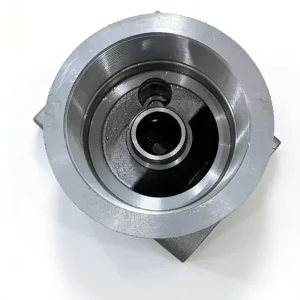
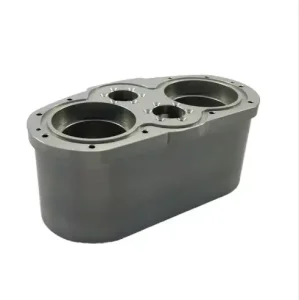
Heavy-equipment excavator hydraulic solenoid valve cores, high-pressure pump housings, and manifold blocks crafted from ductile cast iron and 316L stainless steel.
Thermal Management & EV Electronics
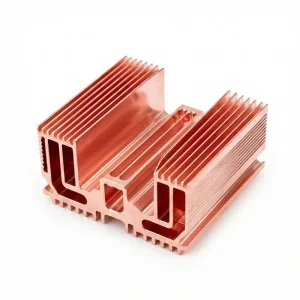
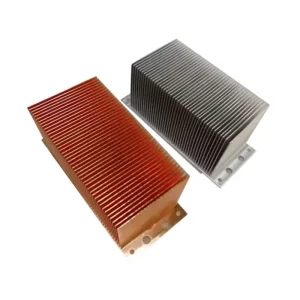
High-efficiency oxygen-free copper heatsinks, micro-channel skived fin cooling plates, and EV battery cold plates demanding high surface area heat dissipation.
High-Precision Connectors & Electronics
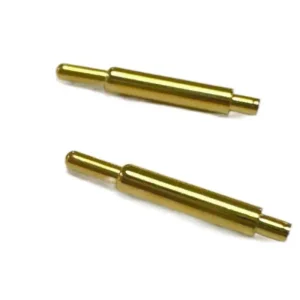
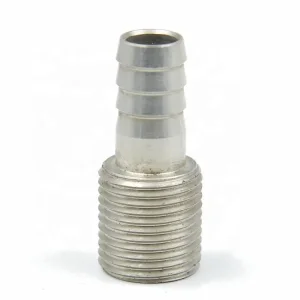
Gold-plated brass spring pogo pins, high-frequency PCB shielding covers, custom hose barb fittings, and heavy equipment control interface panels.
Supply Chain Integrity, E-E-A-T Compliance & Quality Inspection
Google’s Search Quality Rater Guidelines emphasize Experience, Expertise, Authoritativeness, and Trustworthiness (E-E-A-T). In the B2B custom manufacturing domain, Trustworthiness is built upon rigorous, verifiable Quality Assurance (QA) and Quality Control (QC) frameworks. Our Shenzhen factory enforces full digital supply chain traceability for every batch of 5-axis CNC machined parts.
1. Raw Material Spectral Verification & Traceability
Every material billet—whether Aircraft-Grade Aluminum 7075-T651, Titanium Grade 5 (Ti-6Al-4V), Austenitic 316L Stainless Steel, or PEEK—is subjected to incoming inspection using handheld X-Ray Fluorescence (XRF) Spectrometers. Mill Test Certificates (EN 10204 3.1 / 3.2) are issued and stored in our ERP system for complete heat-number traceability.
2. In-Process & Closed-Loop Toolsetter Calibration
During multi-axis machining, thermal expansion of machine spindles and tool wear present significant accuracy risks. Our 5-axis machines utilize Blum Laser Tool Setters and Renishaw 3D Touch Probes. Dynamic Tool Center Point Management (TCPM) continuously recalibrates axis offsets in real-time, preventing thermal drift from compromising geometric features.
3. Post-Production CMM Metrology & FAI Reporting
Final quality inspection is conducted in a temperature-controlled metrology laboratory (20°C ± 0.5°C). Utilizing full-automatic Zeiss Coordinate Measuring Machines (CMM) equipped with scanning probe heads, we generate comprehensive First Article Inspection (FAI) Reports compliant with AS9102 standards. Parameters including True Position, Flatness, Cylindricity, Total Runout, and Surface Finish (Ra) are fully documented prior to dispatch.
Specialized Custom Metal & Plastic Hardware
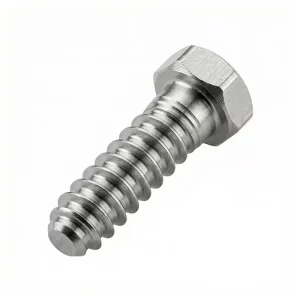
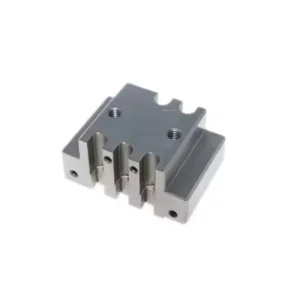
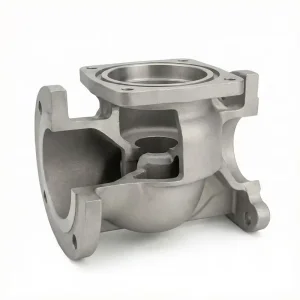
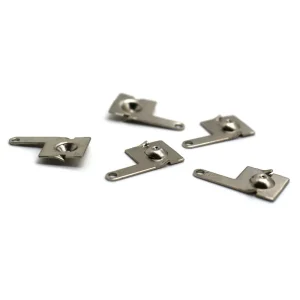
Explore our extended production lineup, featuring turned fittings, medical screws, drone gearbox shells, and stamped terminal contacts.
Technology Roadmap: The Next Era of Multi-Axis Manufacturing
The future of high-precision subtractive manufacturing in China revolves around intelligent automation, digital twins, and hybrid additive-subtractive technologies. As global buyers demand shorter lead times and higher material performance, our facility is integrating key innovations:
AI Adaptive Feed Control
Real-time machine learning algorithms monitor spindle vibration and acoustic emissions, dynamically adjusting feed rates to eliminate chatter and maximize tool life in tough metals like Inconel.
Hybrid Additive-Subtractive
Combining 3D Direct Energy Deposition (DED) metal printing with simultaneous 5-axis finish milling allows for internal cooling channels and complex bimetallic components.
Digital Twin & Virtual Simulation
100% virtual machine simulation prevents expensive collision risks during complex 5-axis toolpath execution, reducing sample iteration cycles by over 50%.
Frequently Asked Questions by B2B Engineering Buyers
Get immediate technical clarity on 5-axis machining, tolerances, DFM, IP security, and export logistics.
How does simultaneous 5-axis machining differ from 3+2 positional machining?
What are the critical Design for Manufacturing (DFM) guidelines for 5-axis milling?
How does your factory ensure raw material authenticity for aerospace and medical parts?
What dimensional tolerances and surface finishes can be reliably maintained?
How is proprietary IP and CAD data protected when sourcing from China?
What is the typical turnaround lead time for 5-axis prototypes and production runs?
Ready to Accelerate Your High-Precision Machining Project?
Send us your STEP/IGES CAD drawings or physical samples. Our senior DFM engineers will evaluate your geometric requirements and provide a detailed 5-axis machining quote and DFM report within 24 hours.