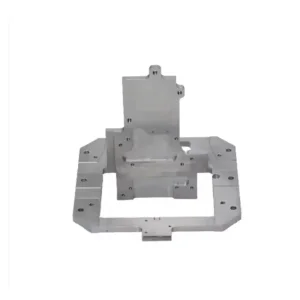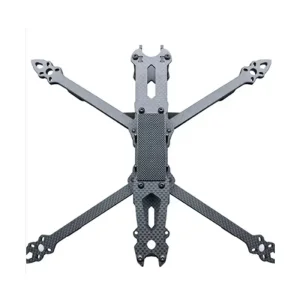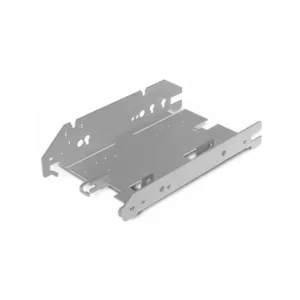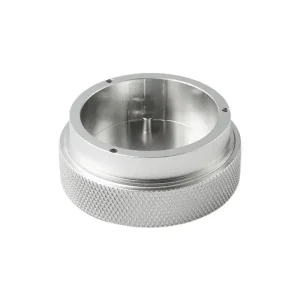
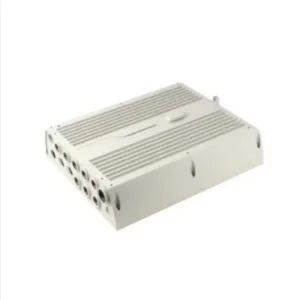
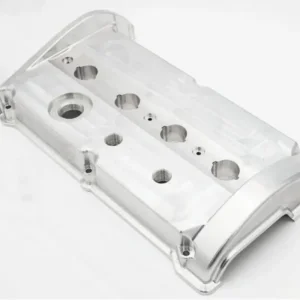
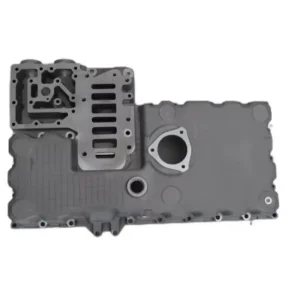
Precision Engineering Showcase: Featured OEM Components
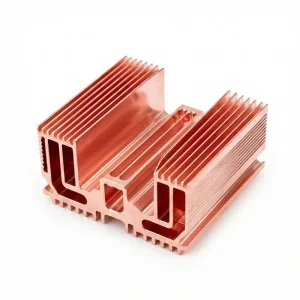
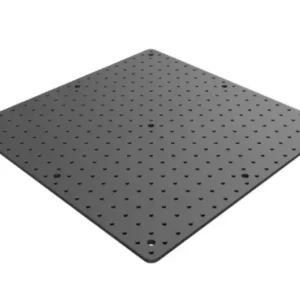
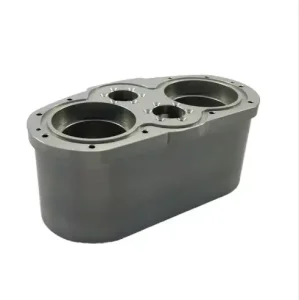
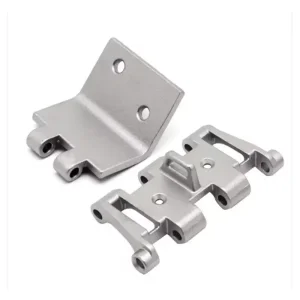
High-precision custom metal manufacturing solutions engineered to exact client specifications, featuring CMM-verified geometric compliance and aerospace-grade tolerances.
Executive Summary & Global Macro Market Dynamics
Understanding the structural shifts, material evolutions, and supply chain demands defining modern tubular precision engineering.
In the contemporary industrial ecosystem, custom tube bending has evolved from a conventional mechanical forming operation into a high-technology discipline at the intersection of metallurgy, computational kinematics, and automated digital manufacturing. Global demand for custom bent tubular assemblies across aerospace, electric vehicles (EV), green energy infrastructure, thermal management, and industrial robotics is experiencing unprecedented acceleration. Sourcing teams and chief engineering officers no longer seek mere fabricators; they require strategic OEM partners capable of managing zero-defect precision, tight centerline radii ($CLR$), and complex multi-plane spatial geometries ($XYZ/YBC$ vectors).
As an industry-leading OEM Tube Bending Manufacturer and Global Exporter based in Shenzhen, China, our enterprise operates with an unwavering commitment to Search Quality Rater Guidelines (E-E-A-T), offering verified expertise, engineering transparency, and maximum Information Gain. Custom tubular components represent critical pathways for high-pressure hydraulics, coolant circulation, structural space frames, and exhaust gas recirculation (EGR). Failure at any bend interface—whether through wall thinning, excessive ovality, micro-cracking, or thermal distortion—risks systemic failure in mission-critical applications.
Technical Blueprint: Metallurgical Dynamics & Deformation Physics
An authoritative analysis of stress distributions, wall thinning physics, springback compensation, and tooling mechanics in cold tube manipulation.
1. The Physics of Rotary Draw Bending & Stress Distribution
During the rotary draw bending process, a tube experiences extreme differential stress states across its cross-section. The outer wall (extrados) undergoes tensile elongation, leading to wall thinning, while the inner wall (intrados) undergoes compressive stress, inducing wall thickening and potential wrinkling if unsupported. The central axis—the neutral axis—shifts inward toward the intrados as deformation progresses into the plastic region.
To quantify wall thinning ($T_t$), OEM design engineers utilize empirical modeling governed by the relationship between Centerline Radius ($CLR$), Nominal Outer Diameter ($OD$), and original wall thickness ($T_o$):
For high-pressure hydraulic lines or flight-critical aerospace ducting, maintaining wall thinning within strict thresholds (typically $\le 12.5\%$ to $15\%$) is essential to prevent burst failures under cyclic impulse pressures.
2. Ovality Control and Mandrel Selection Kinematics
Cross-sectional ovality (flattening) degrades internal fluid dynamics by increasing pressure drops and turbulent flow regimes. Ovality ($O$) is defined mathematically as:
To eliminate ovality in tight-radius bends ($CLR < 2D$), multi-ball flexible mandrels combined with wiper dies are deployed. The mandrel supports the internal diameter ($ID$) past the tangent point, preventing wall collapse, while the wiper die eliminates compressive wave formation (wrinkling) on the intrados.
| Tube Bending Method | Typical CLR Range | Wall Thinning (% Max) | Ovality Ratio (%) | Ideal Industrial Application |
|---|---|---|---|---|
| CNC Rotary Draw Bending | 1.0D to 3.0D | 10% - 15% | < 3% (With Mandrel) | Aerospace Hydraulics, EV Chassis, Automotive Exhaust |
| 3-Roll CNC Push Bending | > 5.0D to Variable | 5% - 8% | < 2% | Architectural Trusses, Large Radius Structural Tubes |
| Freeform Vector Bending | Variable / Multi-Radius | 8% - 12% | < 4% | Complex Serpentines, Medical Device Instrumentation |
| Hydroforming (Internal Pressure) | Complex 3D Profiles | 12% - 18% | N/A (Conforms to Mold) | EV Engine Cradles, Structural Monocoque Pillars |
Springback Algorithm & Correction
Cold deformation stores elastic strain energy. Upon unclamping, tubes exhibit springback along radial and longitudinal axes. Our multi-axis CNC bending heads utilize laser sensor feedback to measure springback in real time and automatically apply angular overbend compensation.
Multi-Stack Tooling Geometries
Advanced CNC machines accommodate up to 6 stacked die sets simultaneously. This permits seamless transitions between different CLRs, compound bends without straight clamping segments, and combined rotary draw and roll bending on a single tube cycle.
Metallurgical Integrity Maintenance
Whether processing austenitic stainless steels (316L/304L), titanium alloys (Grades 2 & 5), or aircraft-grade aluminum (6061-T6, 7075-T6), strict thermal and chemical controls prevent grain growth, galling, and stress-corrosion cracking.
Strategic OEM Sourcing, DFM Optimization & TCO Reduction
Eliminating supply chain bottlenecks through integrated DFM reviews, vendor-managed inventory (VMI), and risk-mitigated manufacturing pathways.
Global enterprise procurement executives operate in an era dominated by supply chain volatility, strict ESG requirements, and compressed product launch windows. When sourcing OEM tube bending products from China, procurement teams must balance unit costs against Total Cost of Ownership (TCO), quality risks, and freight logistics.
Our operational architecture directly addresses these friction points through structured engineering interventions:
Design for Manufacturability (DFM)
Prior to tool generation, our engineering team conducts comprehensive DFM reviews on client STEP/IGES CAD models. We evaluate bend radii uniformity (standardizing CLR to reduce tool changes), tangent length sufficiency, and weld seam orientation to lower manufacturing complexity by up to 25%.
IP Protection & Cyber-Security
We enforce rigorous data protection protocols under legally binding Non-Disclosure Agreements (NDAs). Client 3D models and proprietary manufacturing files reside within isolated internal networks, ensuring complete intellectual property confidentiality throughout the production lifecycle.
Global Logistics & VMI Frameworks
Operating as a fully licensed global exporter, we support DDP, CIF, and FOB terms. For long-term contract manufacturing agreements, we provide Vendor-Managed Inventory (VMI) buffer stocks at strategic regional hubs in Europe and North America to absorb demand spikes.
Macro Sector Integration & Cross-Industry Solutions
Tailored tubular engineering designed to meet rigorous standards across demanding industrial environments.
Aerospace & Defense
High-pressure Titanium Grade 5 and Stainless 21-6-9 hydraulic lines. 100% X-ray inspection on orbital welds, argon-purged internal environments, and AS9100D compliance ensuring zero defect propagation under flight conditions.
Automotive & Electric Vehicles (EV)
Lightweight 6000-series aluminum coolant manifolds for battery thermal management system (BTMS) packs. Multi-branch hydroformed tubings integrated with high-speed automated robotic TIG/laser welding.
Medical & Bio-Pharmaceutical
Seamless 316L electropolished stainless steel tubing featuring internal surface finish roughness down to $Ra < 0.25\mu m$. Cleanroom processing and passivation ensuring non-reactive fluid transport.
Energy & HVAC Thermal Systems
Helical, serpentine, and double-walled copper-nickel and stainless heat exchanger coils. Hydrostatic leak testing up to 400 bar to guarantee hermetic isolation under phase-change pressure cycles.
Industrial Robotics & Automation
Internal cable-routing tubular links and articulated robot arms formed from high-tensile alloy steels, balancing high structural stiffness with minimized rotational inertia.
Heavy Off-Highway Machinery
Thick-walled carbon steel fluid power lines engineered to withstand continuous hydraulic pressure spikes, severe shock loads, and harsh ambient operating environments.
Quality Assurance, Metrology & Compliance Framework
Documented validation workflows guaranteeing zero-defect compliance through advanced non-contact optical inspection and material certifiability.
Quality verification at our facility extends far beyond post-production dimensional checks. We operate a multi-tier Quality Assurance System certified under ISO 9001:2015 and IATF 16949 automotive quality management standards.
1. Non-Contact Optical Laser Tube Inspection
Using state-of-the-art non-contact optical non-destructive laser measuring arms (such as FARO/Hexagon systems), bent tubes are scanned within seconds against native 3D CAD models. The system instantly generates a full vector map ($X, Y, Z$ and $Y, B, C$ coordinates), providing dynamic color-coded deviation heatmaps for bend angles, rotation angles, and cut lengths.
2. Material Traceability & Destructive/Non-Destructive Testing (NDT)
Every raw material batch undergoes Positive Material Identification (PMI) via XRF spectrographic analysis upon arrival. All shipments are dispatched with full EN 10204 3.1 Mill Test Certificates detailing exact heat numbers, mechanical tensile strengths, yield limits, and elongation ratios. NDT testing options include:
- Hydrostatic Leak Testing: Proof pressure testing up to 60 MPa.
- Helium Mass Spectrometry: Ultra-fine leak detection down to $1 \times 10^{-9} \text{ mbar}\cdot\text{L/s}$ for HVAC and vacuum applications.
- Pneumatic Underwater Decay Testing: Standard leak check for cooling circuits.
- Microstructural Metallographic Examination: Grain boundary analysis post-annealing.
Technology Roadmap: The Future of Tubular Fabrication (2025–2035)
Pioneering smart manufacturing technologies, AI-driven deformation modeling, and zero-carbon metallurgical processing.
AI In-Line Adaptive Bending
Integration of real-time machine learning models that adjust clamping pressure and rotational speed dynamically during the bend, neutralizing raw material lot-to-lot hardness variations.
Hybrid 3D Printed Tooling
Deployment of additively manufactured die sets featuring internal conformal cooling channels, drastically reducing friction wear and eliminating lubricant contamination on sensitive alloys.
Integrated Laser-Bending Fusion
Combines 3D fiber laser profiling directly onto the CNC bending head, allowing hole piercing and slotting prior to bending with automated optical compensation for post-bend distortion.
Zero-Carbon Tubular Manufacturing
Full transition to 100% green hydrogen-annealed tubing and closed-loop bio-lubricant recovery systems, aligning OEM supply chains with global net-zero carbon mandates.
Engineering FAQ: B2B Sourcing & Technical Guidance
Direct answers from our principal manufacturing engineers to common procurement, design, and manufacturing questions.
Complete Precision Engineering Product Portfolio
Explore our full line of custom CNC machined, cast, stamped, and tubular components manufactured for global OEM exporters.