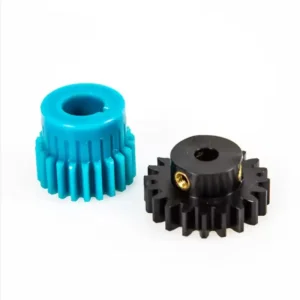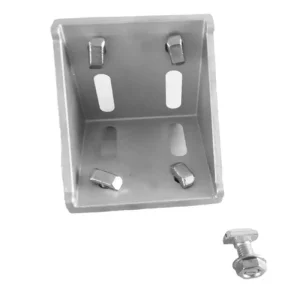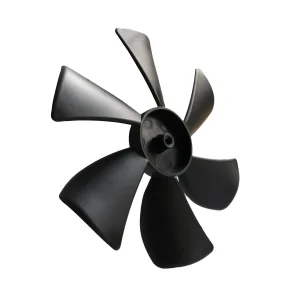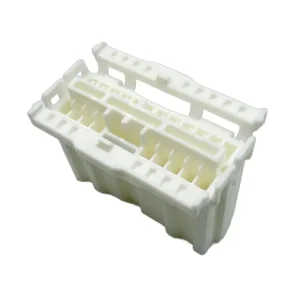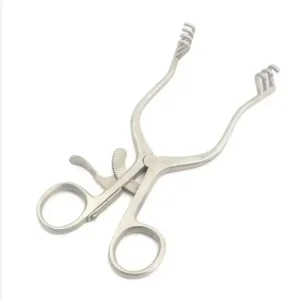
Featured Precision Assemblies & OEM Machined Products
Explore our high-precision custom engineered metal and structural polymer solutions delivered directly to Tier-1 global industrial systems.
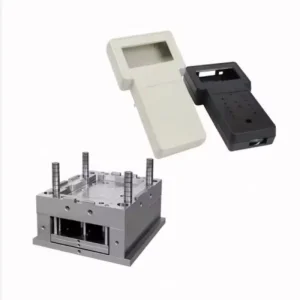
The Evolution of Industrial Titanium Machining: Trends & Global Ecosystem
A comprehensive whitepaper analysis on alloy science, sub-micron precision manufacturing, and macroeconomic sourcing realignments.
Titanium machining has transitioned from a specialized niche reserved for state-funded aerospace initiatives into a mainstream requirement across advanced technological sectors. Modern industry demands components that exhibit extraordinary strength, corrosion immunity in aggressive media, biocompatibility, and structural integrity under extreme temperature cycles. As commercial satellite constellations expand, deep-sea exploration accelerates, and next-generation surgical robotics reach millimeter scales, high-precision **OEM Titanium Machining Services** have become critical supply chain foundations.
Global Procurement Demands & Supply Chain Shift
Enterprise procurement teams across North America, Europe, and Asia-Pacific are actively reshaping their OEM contracting models. Historically dependent on localized job shops with limited capacity, global OEMs are moving toward fully integrated, digitalized manufacturing vendors in China capable of executing **end-to-end production cycles**: raw material spectral verification, 5-axis simultaneous CNC milling, Swiss-type mill-turning, vacuum heat treatment, Type II/III anodizing, and Class 10,000 cleanroom assembly.
The primary driver for this shift is not merely unit cost reduction, but the mitigation of supply chain volatility through **China Industry 4.0 Ecosystems**. Modern automated machine shops integrate high-density flexible manufacturing systems (FMS), automated robotic part loaders, and real-time tool wear monitoring sensors, resulting in drastic reductions in lead times and unprecedented lot-to-lot consistency.
Aerospace Flight Systems
Structural engine brackets, turbine blade root connectors, landing gear hydraulic housings, and satellite payload brackets crafted from Grade 5 and Ti-5553 alloys featuring weight-optimized topological geometries.
Biomedical & Surgical
ISO 13485-certified titanium implants, bone screws, spinal fixation plates, dental abutments, and robotic surgical tool arms machined from ASTM F136 Ti-6Al-4V ELI with passivated, osseointegrative surface finishes.
Semiconductor & Chemical
High-purity Grade 2 chemical reactor shafts, wafer handling robot end-effectors, and hyper-corrosive gas diffusion manifolds designed for ZERO outgassing and extreme fluid purity.
Titanium Material Selection Matrix & Engineering Properties
Select the optimal titanium grade tailored to your stress profiles, thermal limits, and environmental exposure requirements.
| Titanium Grade | UNS / Standard | Tensile Strength (MPa) | Yield Strength (MPa) | Machinability Index | Primary Industrial Applications |
|---|---|---|---|---|---|
| Grade 1 (CP) | UNS R50250 | 240 min | 170 - 310 | 45% (High) | Chemical processing, marine heat exchangers, deep-draw housings. |
| Grade 2 (CP) | UNS R50400 | 345 min | 275 - 450 | 40% (Moderate) | Desalination valves, architectural structures, semiconductor fluid piping. |
| Grade 5 (Ti-6Al-4V) | UNS R56400 | 895 min | 828 min | 22% (Difficult) | Aerospace airframes, automotive connecting rods, defense components. |
| Grade 7 (Ti-0.15Pd) | UNS R52400 | 345 min | 275 min | 40% (Moderate) | Aggressive chloride and reducing acid processing equipment. |
| Grade 9 (Ti-3Al-2.5V) | UNS R56320 | 620 min | 483 min | 30% (Medium) | High-performance hydraulic lines, sports hardware, aerospace tubing. |
| Grade 23 (Ti-6Al-4V ELI) | UNS R56401 | 860 min | 795 min | 20% (Challenging) | Surgical orthopedics, cranial implants, trauma screws, cardiac housings. |
China Industry 4.0: Modern Manufacturing Efficiency & Supply Chain Resilience
In response to volatile international trade dynamics and demands for ultra-short lead times, OEM contract manufacturing facilities in Shenzhen, Dongguan, and the broader Greater Bay Area have transformed into **hyper-automated Industry 4.0 smart factories**. Incorporating real-time IoT equipment diagnostics, high-speed multi-axis CNC turn-mill centers, and automated coordinate measuring machine (CMM) cell loops, these operations provide immense competitive edges to international buyers.
Dual-Spindle 5-Axis Milling
Eliminating multiple fixture setups reduces cumulative positioning errors (geometric stack-ups). Parts are machined complete in single-clamp cycles, maintaining strict true-position tolerances down to 0.005 mm.
Zero-Defect Quality Control
100% full-dimension CMM laser scanning, Zeiss optical inspection, material Positive Material Identification (PMI) via XRF analyzer, and certified First Article Inspection (FAI) reports per AS9102 standard.
Vertical Raw Material Supply
Direct supply partnerships with domestic titanium ingot refiners ensure instant access to certified aircraft-grade titanium plate, bar stock, and forged billets with fully traceable heat numbers and mill test reports (MTRs).
Advanced Tooling Dynamics & Thermal Management in Titanium CNC Machining
Understanding the physics of metal removal: how cutting mechanics, chatter suppression, and cooling science drive sub-micron precision.
Machining titanium requires drastically different machining methodologies compared to aluminum or structural steels. Due to titanium’s low modulus of elasticity (~114 GPa for Grade 5, roughly half that of steel), workpiece deflection under cutting loads presents a continuous risk of chatter, dimensional drift, and tool destruction. Furthermore, because heat cannot rapidly dissipate through the titanium chip itself, over 80% of generated thermal energy concentrates directly at the tool's cutting edge.
Critical Manufacturing Control Standards:
- Trochoidal Milling & Dynamic Tool Paths: Utilizing continuous radial engagement angles below 15 degrees enables elevated cutting velocities (VC up to 120 m/min in Grade 5) while preventing thermal spikes at the carbide tip.
- High-Pressure Coolant Integration (HPC): Coaxial coolant delivery through the spindle direct to the cutting zone at pressures ranging from 70 bar to 150 bar shatters the vapor barrier, flushes micro-chips instantly, and mitigates built-up edge (BUE) formation.
- Vibration Dampening Tool Holders: Heavy metal (tungsten-based) shanks and hydraulically clamped shrink-fit tooling systems minimize vibration harmonics, ensuring sub-micron surface finishes (Ra < 0.4 µm / N5).
- Post-Machining Surface Treatments: Vacuum stress relief annealing, micro-bead blasting, electropolishing, AMS 2488 Type II anodizing, and DLC (Diamond-Like Carbon) coatings to eliminate galling tendencies in sliding applications.
Frequently Asked Questions (FAQ) & Sourcing Insights
Direct responses to critical procurement, engineering, and quality verification queries regarding our OEM Titanium Machining Services.
What tolerances can your OEM titanium CNC machining service hold reliably?
Our state-of-the-art 5-axis CNC machining centers and Swiss turned-part lines reliably achieve standard tolerances of ±0.005 mm (5 microns). For critical micro-features, such as medical implant seats, optical housing bores, and aerospace valve spools, we can maintain tolerances down to ±0.002 mm under temperature-controlled workshop conditions (20°C ± 0.5°C) verified via automated CMM.
How do you handle material verification and prevent counterfeit titanium grades?
Every raw material batch entering our facility undergoes strict Receiving Quality Control (IQC). We utilize handheld XRF Optical Emission Spectroscopy (OES) for instant chemical composition analysis (positive material identification). Furthermore, all titanium raw stock is sourced exclusively from tier-1 certified mills accompanied by original EN 10204 3.1 Material Test Certificates detailing mechanical tensile, yield, and chemical heat numbers.
Why is titanium more expensive to machine than stainless steel or aluminum?
Titanium’s higher machining costs stem from three primary physical factors: (1) Low thermal conductivity concentrates intense heat at the tool cutting edge, accelerating tool wear; (2) Chemical reactivity causes titanium to weld to cutting tool flutes at high temperatures; and (3) Lower elasticity requires slower cutting speeds (SFM), increased tool path complexity, higher quality carbide cutter consumption, and specialized high-pressure coolant infrastructure.
What secondary surface finishing processes do you provide for titanium components?
We provide a comprehensive range of in-house and partner-audited surface treatments tailored specifically for titanium alloys. These include Anodizing Type II (engineering wear resistance/anti-galling), Anodizing Type III (color coding for surgical kits), Micro-Bead Blasting, Electropolishing (for ultra-smooth biopharmaceutical surface requirements), Passivation (ASTM F86), Physical Vapor Deposition (PVD), and DLC (Diamond-Like Carbon) coating.
Can you assist with Design for Manufacturability (DFM) to optimize titanium component cost?
Yes. Our senior engineering team conducts complete DFM evaluations on every 2D/3D CAD submission prior to quoting. We analyze wall thickness, deep hole aspect ratios, internal corner radii (recommending tool-friendly radii to prevent cutter chatter), thread depths, and raw block yield ratio to reduce unnecessary metal removal, helping global OEMs cut machining costs by up to 30% without compromising mechanical performance.
What is the typical lead time for prototype vs. mass production OEM titanium runs?
Rapid prototyping runs (1 to 10 parts) can be dispatched within 5 to 7 business days, utilizing rapid-setup multi-axis CNC cells. Full production runs (1,000+ units) typically range from 2 to 4 weeks depending on heat treatment, surface finishing, and quality documentation specs (such as FAI reports or PPAP Level 3 compliance).
Comprehensive OEM Manufacturing & Custom Hardware Portfolio
Discover our extended manufacturing capabilities including precision injection molding, turned shafts, sheet metal fabrication, and optic housings.