
Featured Custom Machined & Surface Treated Assemblies
Explore our factory-direct OEM/ODM capabilities across micro-tubing, precision stampings, optical enclosures, power modules, and specialized industrial hardware.

Global Sourcing Demands in OEM Surface Modification
How tier-1 manufacturing networks mitigate micro-cracking, galvanic corrosion, and outgassing failures through controlled surface transformation protocols.
Tribological Durability & Wear Resistance
High-stress OEM assemblies (such as planetary gears, internal combustion splines, and linear robotics bearings) face continuous mechanical friction. Modern surface treatment engineered by tier-1 manufacturers drastically lowers friction coefficients ($\mu < 0.1$) through PVD physical vapor deposition, Diamond-Like Carbon (DLC), and hard-coat anodizing, preventing premature micro-fretting and adhesion failure.
Extending Salt Spray Corrosion Immunity
Global supply chains require components exposed to marine, automotive road-salt, and aggressive chemical environments to pass standard ASTM B117 salt spray tests exceeding 720 to 1,500 hours without red rust initiation. Electroless Nickel Plating (ENP) and multi-layer Zinc-Nickel (Zn-Ni) electroplating deliver sacrificial barrier shielding across complex internal cavities.
Dielectric Insulation & Thermal Emissivity
Next-generation electric vehicle (EV) battery enclosures and RF telecom housings require dual-functional surfaces: high thermal conductivity for heat dissipation paired with localized dielectric breakdown voltage strength (>1000V). Micro-Arc Oxidation (MAO) and thick-film hard anodizing yield ceramic oxide layers that optimize thermal management while ensuring electrical isolation.
Industrial Surface Finishing Technical Selection Matrix
Comparative analysis of substrate suitability, dimensional change, micro-hardness, and environmental resistance parameters for OEM procurement managers.
| Surface Process | Compatible Substrates | Layer Thickness ($\mu m$) | Micro Hardness (HV) | Key OEM Application Advantage |
|---|---|---|---|---|
| Type III Hardcoat Anodizing | Aluminum Alloys (6061, 7075, 5052) | 25 - 50 $\mu m$ | 400 - 500 HV | Creates ceramic-like $\mathrm{Al_2O_3}$ outer layer for exceptional abrasion immunity and dielectric strength. |
| Electroless Nickel Plating (ENP) | Steels, Copper, Aluminum, Tool Steel | 5 - 75 $\mu m$ | 500 - 1000 HV (Heat treated) | Uniform deposit thickness over intricate internal threads and un-machined interior cavities without edge buildup. |
| Physical Vapor Deposition (PVD - TiN/DLC) | Titanium, Stainless Steel, Carbide | 1 - 5 $\mu m$ | 1500 - 3000 HV | Ultra-thin, biocompatible, hydrophobic coating with extremely low coefficient of friction for surgical and aerospace components. |
| Plasma Electrolytic Oxidation (PEO/MAO) | Light Alloys (Al, Mg, Ti) | 10 - 150 $\mu m$ | 800 - 1600 HV | In-situ crystalline ceramic growth providing thermal barrier protection and extreme erosion resistance under hot plasma exposure. |
| Zinc-Nickel Electroplating (Zn-Ni) | Carbon Steels, High-Tensile Fasteners | 8 - 15 $\mu m$ | 250 - 400 HV | Superior replacement for cadmium plating, providing 1000h+ corrosion resistance with minimal hydrogen embrittlement risk. |
Technical Deep Dive: Preventing Hydrogen Embrittlement in High-Tensile OEM Fasteners
A critical engineering failure mode in electroplated high-strength steel hardware (>1000 MPa tensile strength, such as 10.9 and 12.9 class bolts or spring clips) is Hydrogen Embrittlement (HE). During conventional acid pickling and electro-deposition baths, atomic hydrogen penetrates the interstitial crystal lattice of the steel matrix under applied pressure, leading to catastrophic brittle fracture during service.
Leading OEM Surface Treatment Factories mitigate HE by executing strict post-plating thermal baking cycles in accordance with ASTM B849 and ASTM B850. Components undergo immediate de-embrittlement baking at $190^\circ\mathrm{C} - 220^\circ\mathrm{C}$ for 4 to 24 hours within a maximum 4-hour time window post-electroplating, degassing trap hydrogen before final passivating conversion films are deposited.
Technological Innovations in Eco-Friendly Surface Finishing
How advanced automated plating lines, closed-loop zero-liquid discharge systems, and nanostructured surface modifications redefine contract manufacturing.
Hexavalent Chromium ($\mathrm{Cr^{6+}}$) Elimination
Compliance mandates (RoHS 3 and REACH Annex XIV) have driven the complete phase-out of toxic chromate conversion processes. Modern OEM finishing operations deploy trivalent chromium ($\mathrm{Cr^{3+}}$) passivation chemistries (e.g., TCP formulations) and titanium/zirconium silane pre-treatments, delivering identical corrosion performance without hazardous heavy metals.
AI-Automated Closed-Loop Chemical Dosing
To maintain tight bath concentration windows ($\pm 0.5\mathrm{g/L}$) and stable pH across high-volume production, automated electroplating plants integrate continuous online X-Ray Fluorescence (XRF) monitoring and titrators. Real-time telemetry prevents batch-to-batch color delta $E > 1.0$ shifts in decorative anodizing and ensures uniform film density.
Nanostructured hydrophobic & Oleophobic Coatings
Sol-Gel fluoropolymer nano-coatings applied via automated spray or dip-spin lines produce ultra-thin (<100 nm) hydrophobic surfaces with water contact angles exceeding $110^\circ$. Ideal for consumer optical housings, touch panels, and outdoor medical sensors exposed to rain, oils, and particulate contaminants.
Global OEM Application Solutions & Industrial Standards
Tailored surface conditioning protocols matching strict functional specifications across key international growth industries.
1. Automotive & EV Powertrain
Electric mobility components require lightweight die-cast aluminum enclosures coated with corrosion-resistant e-coating (Electrophoretic Deposition) or powder coats that withstand thermal cycling from $-40^\circ\mathrm{C}$ to $+150^\circ\mathrm{C}$. Battery busbars utilize localized tin or silver electroplating over copper to ensure minimal electrical contact resistance and prevent galvanic oxidation.
- Key Spec: GMW3044, VW TL 244, ASTM B117 > 1000 hrs
- Core Parts: Battery trays, motor end-bells, inverter heat sinks
2. Aerospace & Defense Flight Systems
Critical structural titanium and aluminum components operate under extreme dynamic loads and corrosive high-altitude condensation environments. OEM finishing labs deploy Nadcap-accredited Chromic Acid Anodizing (CAA) or Boric-Sulfuric Acid Anodizing (BSAA) to provide excellent paint bonding primers without degrading fatigue strength limit curves.
- Key Spec: MIL-A-8625 Type I/II/III, AMS 2460, AS9100
- Core Parts: Hydraulic manifold valves, landing gear struts, avionics racks
3. Medical Instruments & Bio-Implants
Surgical tools, orthopedic screws, and dental titanium abutments require 100% biocompatible, non-cytotoxic surface layers. Nitric or citric acid passivation per ASTM F86 removes free iron from stainless steel surfaces, while specialized color anodizing of titanium (Type II/III) allows color-coded sizing identification without organic dyes.
- Key Spec: ISO 10993, ASTM F86, ASTM F136, FDA compliance
- Core Parts: Endoscopic housings, dental connectors, surgical drills
4. Telecom & Precision Optics
5G communication outdoor units demand precision die-cast aluminum housings featuring high thermal dissipation combined with conductive chromate conversion for EMI/RFI shielding. Precision optical frames undergo black anodizing or matte black PVD to eliminate internal light reflection and stray beam scatter.
- Key Spec: MIL-DTL-5541 Type II Class 3, RoHS 3 compliant
- Core Parts: RF filter cavities, optical lens tubes, server chassis
Quality Assurance Metrology & Regulatory Compliance
Ensuring batch-to-batch repeatability and zero-defect delivery through advanced inspection equipment and international testing protocols.
Non-Destructive Film Thickness Inspection
Plating and anodizing film thickness is verified using non-destructive Eddy Current Gauges (ISO 2360) for non-conductive coatings on non-magnetic base metals, and Magnetic Induction Instruments (ISO 2178) for magnetic base materials. Micro-sectioning and X-Ray Fluorescence (XRF) are utilized for multi-layer electroplated coatings (e.g., Cu/Ni/Cr).
Adhesion & Hardness Verification
Coating bond strength is validated through Cross-Hatch Tape Adhesion Testing (ASTM D3359 Method B) with lattice cut pattern evaluations (5B rating required). Hardness profiling of hardcoat anodizing or DLC layers is confirmed using Micro-Vickers Hardness Testers (ISO 6507) under calibrated nano-indentation loads.
Traceable Export Documentation
Every production lot is shipped with full quality documentation packages: Certificate of Conformance (CoC), Raw Material Mill Certificates, Salt Spray Test Reports, FAI (First Article Inspection reports per AS9102), and complete RoHS/REACH SVHC heavy metal declaration sheets.
Expanded Catalog of OEM Parts & Custom Tooling
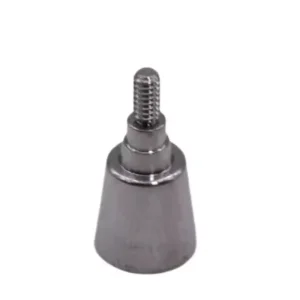
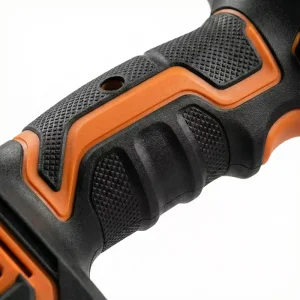
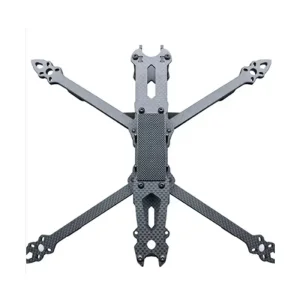
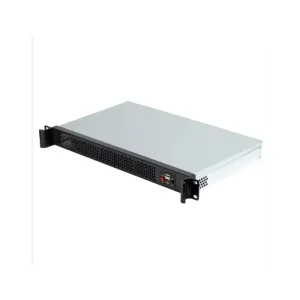
Browse additional high-precision metal, plastic, carbon fiber, and multi-shot molded products engineered for global export.
Frequently Asked Questions by Procurement & Materials Engineers
In-depth technical answers addressing surface coating selection, dimensional allowances, testing standards, and global supply chain logistics.
How do engineers account for coating thickness build-up in tight-tolerance CNC drawings?
In high-precision manufacturing, surface treatment thickness directly impacts finished dimensions. For example, Type III Hardcoat Anodizing (MIL-A-8625) typically adds $50\mu m$ ($0.002"$) total thickness, where $50\%$ of the oxide layer penetrates into the substrate metal and $50\%$ builds up on the exterior surface. Therefore, a cylindrical shaft outer diameter will increase by $25\mu m$ ($0.001"$) per side.
Our DFM (Design for Manufacturability) engineering team works with client CAD files to adjust pre-plated/pre-anodized machining dimensions. Critical bearing seats, internal threads, and dowel pin holes are either masked using custom silicone plugs or under-machined prior to surface finishing to ensure final target tolerances ($\pm 0.005\mathrm{mm}$) are perfectly met after processing.
What is the difference between Chromic Acid, Sulfuric Acid, and Hardcoat Anodizing for aluminum?
Aluminum anodizing processes differ significantly in electrolyte bath chemistry, voltage parameters, oxide structure, and performance characteristics:
- Type I (Chromic Acid Anodizing - CAA): Yields the thinnest film ($0.5\mu m - 5\mu m$). It offers minimum fatigue strength reduction, making it ideal for critical aerospace structural parts. However, environmental regulations are transitioning Type I to tartaric-sulfuric acid (TSA) alternatives.
- Type II (Sulfuric Acid Anodizing): Standard decorative and protective coating ($5\mu m - 25\mu m$). Readily accepts organic and inorganic dyes for bright metallic colors. Excellent everyday corrosion protection.
- Type III (Hardcoat Anodizing): Conducted at low bath temperatures ($0^\circ\mathrm{C} - 5^\circ\mathrm{C}$) and high current density. Produces thick, dense oxide layers ($25\mu m - 50\mu m+$) with hardness up to $500\mathrm{HV}$, superior wear resistance, and high dielectric voltage insulation.
Which surface finishing process is best suited for medical-grade stainless steel devices?
For surgical tools, endoscopic assemblies, and medical implants manufactured from 316L, 17-4PH, or Custom 465 stainless steel, the gold standard is Citric or Nitric Acid Passivation (ASTM A967 / ASTM F86) followed by optional Electropolishing (ASTM B912).
Passivation dissolves free iron contamination left on the surface by CNC cutting tools, enriching the passive chromium-oxide ($\mathrm{Cr_2O_3}$) film. Electropolishing further reduces microscopic surface roughness ($R_a < 0.1\mu m$), eliminating micro-cracks where bacteria can accumulate, yielding an ultra-smooth, cleanroom-ready surface capable of surviving repeated autoclave sterilization cycles.
Why choose Electroless Nickel Plating (ENP) over Electroplated Hard Chrome?
While Hard Chrome provides high surface hardness ($800 - 1000\mathrm{HV}$), it suffers from the "dog-boning" effect—excessive thickness buildup on outer corners and light coverage inside deep blind holes due to uneven current density. Hard chrome also involves hexavalent chromium compliance hazards.
Electroless Nickel Plating (ENP) operates via autocatalytic chemical reduction without electrical current. It deposits a 100% uniform nickel-phosphorus layer across complex geometries, internal threads, and deep channels with zero thickness variation. High-phosphorus ENP ($10-14\%\mathrm{P}$) provides outstanding chemical corrosion resistance in acidic environment and can reach $1000\mathrm{HV}$ hardness post heat-treatment.
How do you protect customer intellectual property (IP) and proprietary 3D CAD files?
We execute strict IP protection protocols. Prior to receiving any customer drawings, STEP, or IGES files, we sign legally binding Non-Disclosure Agreements (NDAs). Engineering data is stored on encrypted local servers with restricted access controls. Product designs are processed directly inside our owned manufacturing facilities, ensuring client IP is never transferred to unvetted third-party brokers or external commercial entities.
What testing documentation is provided with international shipments?
Every export shipment from our facility includes comprehensive Quality Control (QC) documentation, including:
- Raw Material Inspection Certificates (EN 10204 3.1 Traceability)
- First Article Inspection (FAI) Report per AS9102 format
- CMM Dimensional Inspection & Surface Roughness ($R_a$) Profiles
- Coating Thickness Measurement Data (Eddy Current / XRF)
- Salt Spray Corrosion Test Results (ASTM B117) & RoHS 3 / REACH Compliance Statements