Precision Hardware & Custom Molded Catalog (Part I)
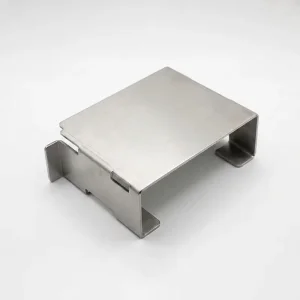
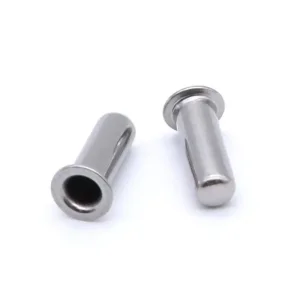
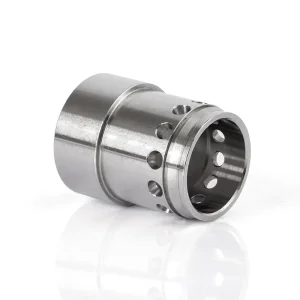
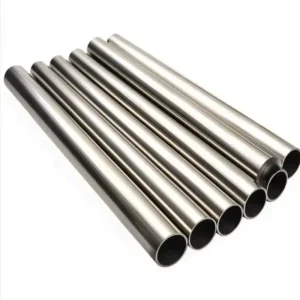
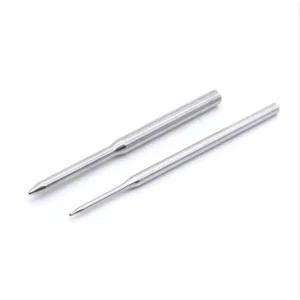
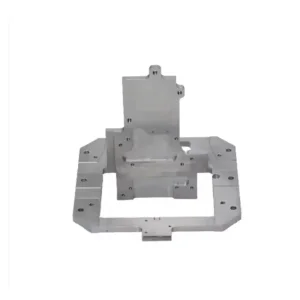
Direct factory manufacturing featuring integrated CNC machining, multi-material injection molding, and custom stainless steel fabrications.

1. Macro-Industry Solutions & Strategic OEM Manufacturing Architecture
In the modern industrial manufacturing landscape, the gap between initial rapid prototyping and full-scale mass production represents a notorious financial and operational hurdle—often referred to by hardware engineers as the "valley of death." Traditional steel tooling (such as hardened H13 or S50C molds) requires immense capital expenditure ($20,000 to $100,000+) and extended development cycles of 8 to 16 weeks. For Original Equipment Manufacturers (OEMs) and Original Design Manufacturers (ODMs) launching niche products, market-testing pilot batches, or manufacturing specialized industrial devices, committing to high-volume tooling before market validation presents unsustainable operational risk.
Low Volume Molding (LVM) has emerged as the definitive strategic solution for global hardware enterprises. By leveraging hybrid manufacturing workflows—combining aluminum rapid tooling (7075-T6 aluminum), soft steel cavity inserts (P20 or NAK80), CNC post-machining, and high-precision insert overmolding—leading exporters and factory specialists bridge the gap between concept design and commercial distribution.
Capital Expenditure Efficiency
Drastically reduce upfront tooling costs by 40% to 70% using semi-custom mold bases and modular cavity inserts. Allocate preserved capital toward product marketing, compliance certification, and firmware optimization.
Accelerated Time-to-Market
Compress development schedules from months to days. Rapid aluminum tooling allows functional end-use polymer parts to be sampled and shipped via air express within 10 to 18 working days from CAD finalization.
Design Flexibility & DFM Iteration
Modify mold geometries effortlessly during pilot runs. Modifying an aluminum cavity or interchangeable slide insert is orders of magnitude faster and cheaper than altering hardened production steel tools.
2. Global Commercial Landscape & Industrial Ecosystems
Analyzing supply chain resilience, regional manufacturing hubs, and the rise of decentralized, agile polymer production networks.
The global demand for low volume molding is experiencing unprecedented expansion, projected by industrial analysts to grow at a Compound Annual Growth Rate (CAGR) exceeding 8.4% through 2030. Key macro-environmental drivers include the shortening of product lifecycles in consumer electronics, the explosion of personalized medical device manufacturing, and the rapid evolution of electric vehicle (EV) sub-assemblies requiring custom-molded enclosures.
| Manufacturing Vector | Traditional Injection Molding | Low Volume Molding (OEM Factory) | Industrial 3D Printing (SLS/MJF) |
|---|---|---|---|
| Economic Production Range | 10,000 to 1,000,000+ units | 100 to 10,000 units | 1 to 200 units |
| Tooling Cost & Amortization | High ($15k–$100k+) | Low to Moderate ($2.5k–$12k) | Zero Tooling Cost |
| Material Options & Resins | Full range of production thermoplastics | Full range including filled/engineering resins | Limited polymer powder selection |
| Mechanical Isotropy | 100% Isotropic mechanical properties | 100% Isotropic mechanical properties | Anisotropic / Interlayer vulnerabilities |
| Surface Finish & Cosmetics | SPI-A1 Mirror, Mold-Tech Textures | SPI-B1 to Mold-Tech Standard Textures | Grainy, porous surface finish |
China—and specifically the Greater Bay Area hardware ecosystem centered around Shenzhen and Dongguan—remains the premier global destination for low volume molding exports. The concentration of mold design engineers, high-speed CNC milling centers, Wire EDM equipment, specialized surface treatment chemistry, and raw resin distribution networks allows Chinese OEM exporters to deliver end-to-end tooling and molding services with unrivaled cost-to-quality ratios.
3. Precision Process Engineering & DFM Frameworks
Rigorous DFM analysis, Moldflow simulations, advanced polymer selection, and strict tolerance control mechanisms.
Rapid Tooling Metallurgy: Aluminum vs. Pre-Hardened Steel
Selecting the optimal mold cavity material dictates both thermal cycle times and tool longevity. For prototypes and bridge production (100–3,000 units), QC-10 or 7075-T6 Aerospace Grade Aluminum is selected for its superior thermal conductivity (5 times higher than steel), reducing cooling cycle times by up to 40%. For extended low-volume runs (3,000–25,000 units), P20 (29-33 HRC) or NAK80 steel cavities provide extreme resistance to abrasive glass-filled resins while maintaining tight parting line control.
Advanced Multi-Material Overmolding & Insert Molding
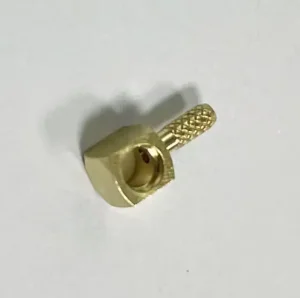
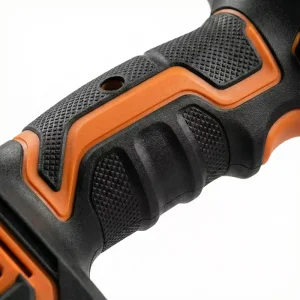
Modern low volume molding expands beyond single-resin injection. High-precision Insert Molding places CNC machined brass knurled pins, threaded stainless steel bushings, or flex PCBs directly inside the mold cavity prior to injection, ensuring structural pull-out torque. Double Color / Dual-Material Overmolding (e.g., rigid ABS core overmolded with soft TPE/TPU) provides ergonomic grip surfaces, IP67 waterproof sealing gaskets, and vibration dampening for power tools and medical housings.
Design for Manufacturability (DFM) Standard Operating Procedures
Every CAD drawing submitted to our engineering office undergoes a rigorous 7-point DFM inspection utilizing computer-aided Moldflow® fill simulations:
- Nominal Wall Thickness Optimization: Enforcing uniform wall sections (typically 1.5mm to 3.0mm) to prevent internal voids, sink marks, and differential shrinkage warpage.
- Draft Angle Allocation: Implementing a minimum of 0.5° to 1.5° draft per side on deep cavity vertical walls, with 3° to 5° allocated for textured surfaces (Mold-Tech specifications).
- Gate Location & Shear Rate Analysis: Positioning edge gates, submarine gates, or direct sprue gates in non-cosmetic areas to minimize knit lines (weld lines) and residual internal stress.
- Ejection Pin Layout & Balance: Distributing force evenly across hidden mechanical ribs to avoid ejection pin punch-through or localized part distortion.
4. Industry-Specific Applications & Deployment Scenarios
How global technology companies deploy low volume precision molding across critical industrial domains.
Medical Devices & Diagnostics
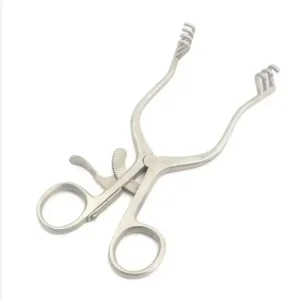
Handheld diagnostic housings, surgical retractor grips, micro-fluidic manifold blocks, and sterilizable enclosure assemblies molded using biocompatible, USP Class VI compliant resins like PEEK, Polycarbonate, and Radel®.
Automotive OEM & EV Modules
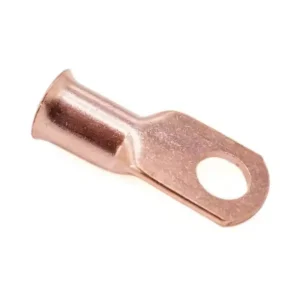
Low volume production runs for specialized sports car interiors, custom EV battery module connectors, sensor junction boxes, and busbar insulation covers requiring flame-retardant (UL94-V0) polyamide polymers.
Robotics & Industrial Automation
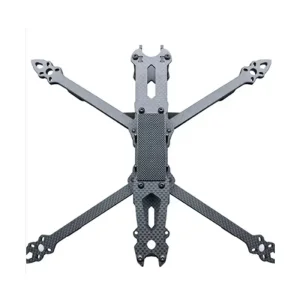
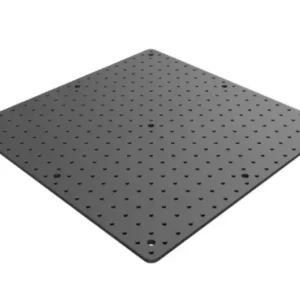
Structural end-effector gripper fingers, lightweight drone airframe housings, optical breadboard mounts, and ruggedized power tool handles built to withstand high drop impacts and continuous cyclic vibration.
5. Global Compliance, Quality Control & Localized Support
Mitigating cross-border risks through international quality certifications, traceable documentation, and direct engineering support.
Strict ISO Quality Assurance Infrastructure
Our manufacturing facility strictly adheres to ISO 9001:2015 for general industrial hardware and ISO 13485 for medical device manufacturing. Every mold trial and low-volume production batch is accompanied by comprehensive quality documentation: First Article Inspection (FAI) reports, raw resin Material Test Reports (MTRs), RoHS / REACH compliance certifications, and 3D CMM dimensional verification scans holding tolerances down to ±0.005mm on critical CNC machined features.
IP Protection & Global Door-to-Door Logistics
We enforce rigorous Intellectual Property (IP) protection protocols. Non-Disclosure Agreements (NDAs) are executed prior to analyzing any CAD files, and digital engineering data is stored on secure, encrypted local servers without third-party broker exposure. Furthermore, our dedicated export team coordinates seamless DDP (Delivered Duty Paid), air freight, and ocean freight logistics to North America, Europe, Australia, and East Asia.
6. Technology Roadmap & Future Outlook (2025–2030)
Next-generation innovations reshaping rapid tooling, smart polymer processing, and automated quality verification.
AI-Driven Moldflow Automation
Integrating artificial intelligence algorithms directly into CAD/CAM software to instantly generate optimized cooling lines, gate placements, and draft angles within seconds of file upload.
Conformal Cooling Additive Tools
Utilizing 3D metal printing (Direct Metal Laser Sintering - DMLS) to produce mold inserts with internal conformal cooling channels that follow complex cavity contours, cutting cycle times by 30%.
Sustainable & Bio-Polymers
Expanding processing capabilities for bio-based resins (PLA, PHA) and post-consumer recycled (PCR) plastics to assist engineering partners in achieving net-zero carbon targets.
In-Line IoT Defect Detection
Deploying vision AI and cavity pressure sensors inside injection presses to monitor melt temperature, injection speed, and dimensional drift in real-time for zero-defect output.
7. Frequently Asked Questions (FAQ)
Expert insights regarding low-volume molding, rapid tooling engineering, unit economics, and production lead times.
Precision Hardware & Custom Molded Catalog (Part II)
Explore our complete export range including high-precision capillary tubes, surgical instruments, sensor housings, and structural brackets.