
Featured Precision Components (Batch 01)
Direct factory production portfolio spanning micro-stamping, CNC multi-axis turning, and specialized casting assemblies.
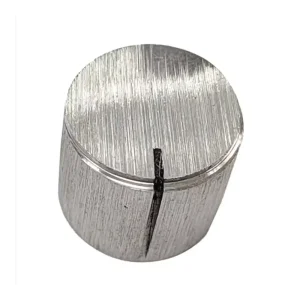
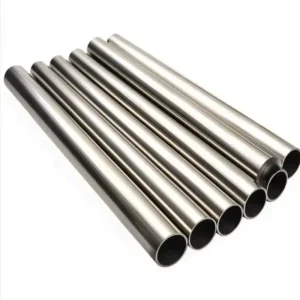
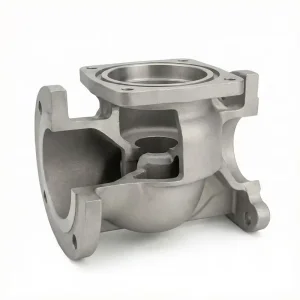
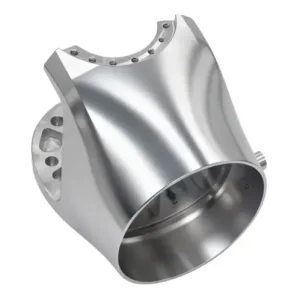
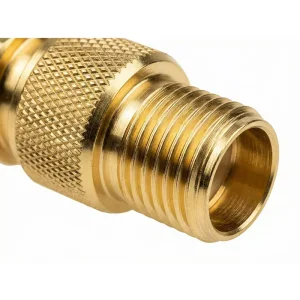
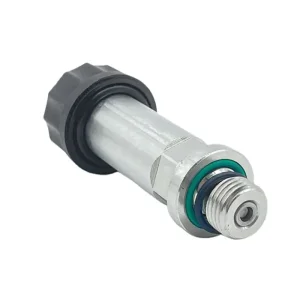
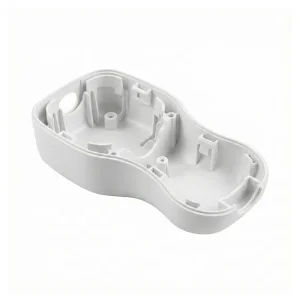
The Engineering Mechanics of ODM Progressive Die Stamping
Progressive die stamping represents the apex of cold metal-forming efficiency. By feeding a continuous metal coil through a series of synchronized stations, complex geometries with dimensional tolerances down to ±0.005 mm are produced at stroke speeds exceeding 1,200 SPM (strokes per minute).
Strip Layout & Kinematics Optimization
The structural integrity of progressive stamping relies on advanced strip layout engineering. Utilizing FEA software such as AutoForm and PAM-STAMP, our engineers calculate grain orientation, shear-to-break ratios, and pitch progression to achieve over 88% material yield while completely eliminating web distortion during high-tonnage indexing.
Sub-Micron Tool Steel Selection
Tool longevity directly influences piece-part amortization. We utilize premium powder metallurgy steels (e.g., ASP-2023, CPM-10V) and solid tungsten carbide inserts (CD-650) with PVD Titanium Aluminum Nitride (TiAlN) coatings. This ensures die block wear remains under 2 microns per 1,000,000 press cycles.
In-Die Optical Sensing & Closed-Loop QC
To eliminate catastrophic die crashes and off-spec parts, our progressive tooling integrates piezoelectric tonnage monitors, optical fiber pilot sensors, and laser strip-height detectors. Any mis-feed or slug pulling auto-stops the press in under 8 milliseconds.
Engineering Parameter Matrix: Progressive Stamping Alloys
| Material Grade | Tensile Strength (MPa) | Thickness Range (mm) | Shear Clearance (%) | Primary Industrial Application |
|---|---|---|---|---|
| C11000 ETP Copper | 220 - 380 | 0.08 - 4.00 | 5% - 8% | EV Battery Busbars & Power Connectors |
| SUS304 / 316L Stainless Steel | 520 - 750 | 0.05 - 3.20 | 9% - 12% | Medical Device Frames & Shielding Cans |
| C7025 Beryllium Copper | 650 - 900 | 0.03 - 1.50 | 6% - 9% | High-Reliability Micro Spring Terminals |
| AL5052-H32 / AL6061-T6 | 210 - 310 | 0.20 - 5.00 | 7% - 10% | Aerospace & Automotive Structural Brackets |
| SPCC / SECC Cold Rolled Steel | 270 - 410 | 0.15 - 6.00 | 8% - 11% | Consumer Electronics Chassis & POS Housings |
Localized Application Scenarios & Engineering Adaptations
Progressive die stamping products are engineered to satisfy stringent regional compliance standards across North America, Europe, and East Asia.
Automotive Electrification (EV Busbars & Terminals)
North American and European OEMs require high-voltage battery interconnection busbars capable of handling continuous 800V loads without thermal degradation. Our progressive dies incorporate in-die coining and ultrasonic welding prep zones, ensuring sub-milliohm contact resistance across 100,000+ EV battery packs.
- Compliance: US CAR-25, LV214 Tier-1 Automotive Standards
- In-Die Operations: Continuous silver/tin reel-to-reel plating verification
Semiconductor & EMI/RFI Micro Shielding Frames
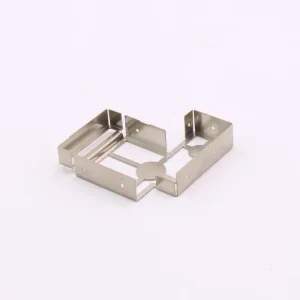
Hyperscale data centers and 5G telecommunication hardware require hyper-thin RF shielding enclosures. Our micro-progressive stamping lines produce ultra-precise nickel-silver shielding cans with planarity maintained within 0.03 mm to prevent solder bridging during high-speed SMT placement.
- Tolerance Control: Pitch accuracy held within ±0.003 mm
- Surface Integrity: Zero burr (burr height < 0.005 mm) cleanroom washing
Bio-Compatible Medical Instrumentation
Surgical instruments and diagnostic devices demand non-corrosive, bio-compatible alloys. We process medical-grade 316LVM stainless steel and Titanium Grade 2 through progressive dies equipped with synthetic bio-lubricants, eliminating carbon contamination prior to passivation.
- Certification: ISO 13485 cleanroom manufacturing alignment
- Traceability: Full heat-lot raw material origin verification
Industrial Automation & High-Cycle Robotics
High-speed cobot joints and pneumatic valve cores demand wear-resistant structural brackets. Our ODM progressive tooling combines deep drawing, punching, and tapping in a single continuous stroke, reducing multi-component assemblies into single-piece stamped structural components.
- Fatigue Strength: Cycle life exceeding 10,000,000 dynamic flexes
- Cost Optimization: 45% unit cost reduction over CNC machining
Progressive Die Stamping Technology Roadmap (2026–2030)
Integrating artificial intelligence, servo-electric drive dynamics, and cyber-physical monitoring into mass-production metal forming.
Servo Press Kinematics
Transitioning from traditional mechanical flywheel presses to CNC Servo Presses. Enables custom stroke profile programming, velocity reduction at impact point, and reduced tool wear during complex deep drawing.
AI Vision Burr Inspection
Inline high-resolution machine vision cameras with deep-learning models inspect 100% of stamped strips at full line speeds, auto-flagging burrs exceeding 0.01 mm without reducing press output.
In-Die Fastener Insertion
Integrating automatic nut and stud feeding mechanisms inside progressive dies. Eliminates secondary clinching processes, dramatically shortening total manufacturing lead times.
Autonomous Self-Healing Dies
Piezoelectric micro-actuators embedded within die blocks compensate for dynamic thermal expansion in real time, locking in target dimensions across 24/7 continuous manufacturing runs.
Shenzhen Supply Chain Density & Turnkey Efficiency
Sourcing progressive die stamping products from Shenzhen offers unmatched ecosystem density. Within a 30-kilometer radius of our manufacturing center, every element of the tooling lifecycle is tightly integrated.
This ultra-dense supply cluster allows us to complete complex tool design, wire-EDM die cutting, heat treatment, and initial sample runoff in as few as 12 to 18 business days—compared to 6 to 10 weeks in traditional Western manufacturing hubs.
Progressive Die vs. Alternative Manufacturing Matrix
Comparative economic and technical evaluation for high-volume hardware procurement.
Uncompromising Quality Audits & Compliance Documentation
Every shipment undergoes standardized inspection protocols to ensure zero-defect landing at customer warehouses across Europe, North America, and Asia-Pacific.
Full Traceable FAI & CMM Inspection
First Article Inspection (FAI) reports per AS9102 standards, complete with CMM coordinate data, optical comparator profile scans, and raw material chemical composition analysis mill certificates are attached to every batch.
RoHS, REACH & Conflict Minerals (CMRT)
Full compliance with EU Directive 2011/65/EU (RoHS 2.0) and REACH EC 1907/2006. We supply verified CMRT (Conflict Minerals Reporting Template) documentation ensuring ethically sourced gold, tin, copper, and tantalum.
VCI Packaging & Global Logistics Support
To prevent oxidation during oceanic transit, stamped metal components are packaged in Volatile Corrosion Inhibitor (VCI) vacuum bags, tape-and-reel (EIA-481 compliant) for automated SMT pick-and-place, or custom thermoformed trays.
Frequently Asked Questions by Industrial Sourcing Teams
In-depth technical answers addressing manufacturability, tooling ROI, and operational logistics.
What is the break-even volume between progressive die stamping and CNC machining?
The economic break-even point typically occurs between 10,000 and 30,000 units, depending on part geometry and material thickness. While progressive die tooling requires an upfront Non-Recurring Engineering (NRE) investment (typically $3,000 to $25,000), the per-piece production cost is often 80% to 95% lower than CNC machining due to sub-second cycle times and zero chip-waste material yield. For high-volume projects (>100k units), progressive stamping yields the lowest total cost of ownership (TCO).
How do you ensure pitch consistency and prevent strip distortion during high-speed stamping?
Pitch consistency is maintained through a combination of precision pilot pins, micro-adjustable stock lifters, and CNC servo roll feeders accurate to ±0.002 mm. We design balanced web carrier strips using finite element analysis (FEA) to distribute stamping forces evenly across all die stations, preventing twist, camber, or bow in the final strip progression.
What tool steel grades do you select for stamping high-tensile stainless steel or abrasive copper alloys?
For high-tensile stainless steel (>600 MPa), we specify powder metallurgy tool steels such as ASP-2023, CPM-M4, or SKH-51 hardened to 62-64 HRC, combined with TiAlN or PVD DLC coatings to eliminate galling. For ultra-high-volume micro-stamping of abrasive beryllium copper, we utilize solid sub-micron grain tungsten carbide (e.g., CD-650 or KD-20) for all cutting punches and die button inserts, delivering tool life exceeding 5 million strokes between regrinds.
How does Sunmy Hardware protect customer IP and proprietary CAD designs?
We execute legally binding Non-Disclosure Agreements (NDAs) prior to receiving any 2D/3D CAD files. All customer drawings are stored on air-gapped, encrypted servers accessible only by assigned project engineers. Because we operate as a direct factory manufacturer rather than a trading broker, your intellectual property remains strictly contained within our audited facility throughout the tooling design, prototyping, and production phases.
Can in-die tapping or fastener insertion be integrated into progressive stamping dies?
Yes. Our progressive dies frequently incorporate high-speed mechanical or servo-driven in-die tapping units (producing M1.2 to M8 threads) as well as automated insertion systems for PEM nuts, studs, and standoffs. Performing these operations inside the stamping press eliminates costly offline secondary processes, guaranteeing 100% thread presence via integrated optical sensors.
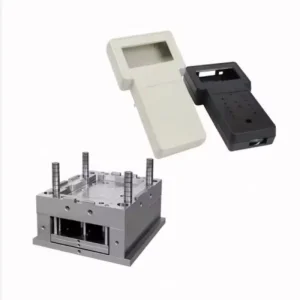
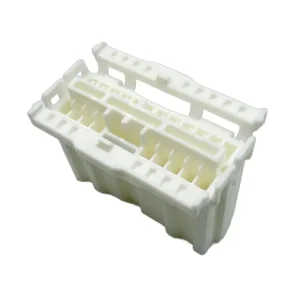
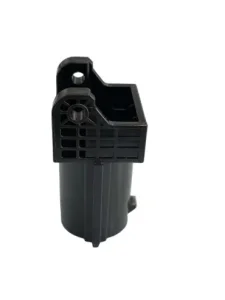
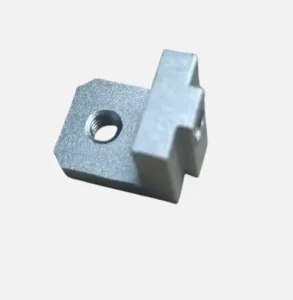
Featured Precision Components (Batch 02)
Extended OEM catalog spanning EMI shielding frames, specialized turned connectors, and automotive sensor housings.
Ready to Optimize Your Stamping Tooling & Unit Costs?
Send us your 2D/3D CAD drawings (STEP, IGES, DXF) today. Our senior engineering team will evaluate your strip layout, tolerance stacks, and provide DFM feedback within 24 business hours.