
Executive Procurement Briefing: ODM Plastic Housings Sourcing Strategy
In the modern global electronics and hardware manufacturing ecosystem, evaluating ODM Plastic Housings Suppliers & Quotes extends far beyond simply comparing unit prices. Structural engineering executives, supply chain directors, and product designers require a holistic framework that integrates material chemistry, tooling metallurgy, Design for Manufacturability (DFM), and risk-mitigated global logistics.
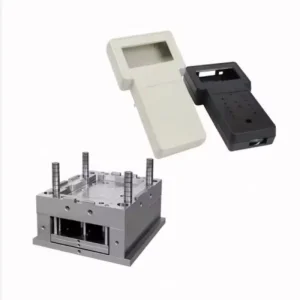
Original Design Manufacturers (ODM) providing polymer housing solutions must balance aesthetic elegance, structural integrity, thermal dissipation, and electro-magnetic compatibility (EMC). This technical whitepaper delves into the engineering parameters that govern high-precision plastic injection molding, providing global enterprise procurement teams with actionable intelligence to evaluate tooling estimates, mitigate quality failures, and optimize Total Cost of Ownership (TCO).
Information Gain Insight: Selecting the incorrect engineering polymer grade or miscalculating volumetric shrinkage can lead to catastrophic field failures such as Environmental Stress Cracking (ESC), sink marks, or warp-induced seal leaks in IP67/IP68 enclosures. Always require a comprehensive Moldflow® thermal and filling analysis prior to tooling steel cutting.
Engineering Architecture: Advanced DFM & Material Selection Matrix
Achieving defect-free ODM plastic enclosures requires an in-depth alignment between product design and polymer physics. The table below outlines the core material choices, mechanical performance indices, and ideal industrial application profiles for precision plastic housing manufacturing.
| Resin Grade | Tensile Strength (MPa) | Heat Deflection Temp (HDT @ 1.8 MPa) | Mold Shrinkage Rate (%) | Target Industrial Application |
|---|---|---|---|---|
| ABS (High Impact) | 40 - 50 | 85°C - 95°C | 0.4% - 0.7% | POS Terminals, Consumer Handhelds, Smart Meters |
| PC/ABS Alloy | 55 - 65 | 110°C - 125°C | 0.5% - 0.7% | Automotive Interior Trims, Medical Display Shells |
| Polycarbonate (Optical Grade) | 60 - 75 | 130°C - 140°C | 0.5% - 0.7% | Light Guides, Clear Lenses, High-Impact Shields |
| PA66 + 30% Glass Fiber | 130 - 175 | 200°C - 220°C | 0.3% - 0.8% (Anisotropic) | Under-hood Automotive Brackets, Structural Robotics |
| PEEK (Polyetheretherketone) | 95 - 110 | 160°C - 300°C | 1.0% - 1.3% | Surgical Instruments, Aerospace Avionics Housings |
Optimized Draft Angles & Wall Ratios
Maintaining nominal wall thickness (ideally between 1.5mm and 3.0mm) prevents localized shrinkage and differential cooling warpage. Internal structural ribs should strictly adhere to 50%–60% of nominal wall thickness to suppress sink marks on Class-A cosmetic surfaces.
Tooling Metallurgy & Life Expectancy
Tooling steel selection governs production scalability. We utilize pre-hardened NAK80 steel for high-polish cosmetic enclosures, stainless S136 for corrosive medical resins, and hardened H13 (52-54 HRC) steel for high-volume automotive runs exceeding 1,000,000 shots.
EMI/RFI Shielding Integration
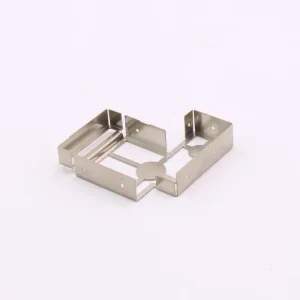
For sensitive IoT and telecommunication housings, plastic shells are enhanced with selective conductive coatings (Vacuum Metallization, Conductive Nickel/Copper Paint) or integrated metal shielding clips to achieve >60dB attenuation from 30MHz to 10GHz.
China Factory 4.0: Supply Chain Resilience & Efficiency Advantages
The modern Chinese precision manufacturing landscape has evolved from simple labor-intensive assembly to fully automated Industry 4.0 smart factories. By deploying high-speed electric injection molding machinery, robotic automation, and real-time Manufacturing Execution Systems (MES), enterprise buyers gain unparalleled speed, precision, and cost control.
- Automated Central Material Feeding Systems: Ensures exact desiccant drying and zero moisture contamination for hygroscopic polymers like Nylon and Polycarbonate.
- Multi-Axis Servo Robotic Extraction: Guarantees consistent cycle times, eliminates part dropping damage, and enables in-mold labeling (IML) and insert molding.
- Closed-Loop Hydraulic & All-Electric Injection Presses: Pressures up to 2,500 bar with real-time pressure transducers deliver repeatable part weight tolerances within ±0.1%.
- Direct Factory Transparent Cost Breakdown: Unbundled quotation models separating raw resin mass, cycle times, tooling amortisation, and secondary finishing costs.
Rapid Prototyping to Mass Production
Bridge the gap between initial concept and mass tooling using SLA/SLS 3D printing, silicone vacuum casting, and rapid aluminum (7075-T6) tooling delivered within 10 business days.
Integrated Secondary Operations
One-stop post-processing including CNC post-machining, ultrasonic plastic welding, pad printing, laser engraving, UV hard-coating, and multi-component assembly under ISO-certified environments.
Substantial Landed Cost Optimization
Leverage ShenZhen and Pearl River Delta supply chain density to secure raw materials, custom inserts, and specialized packaging at optimized costs, reducing total landed unit costs by up to 40%.
Macro Industry Solutions: Tailored Engineering Applications
Precision ODM plastic housings are engineered to withstand demanding operational environments across diverse sectors. Here is how specialized polymer technology solves key industry bottlenecks:
Medical & Life Sciences
Manufactured under ISO 13485 standards in Class 100,000 cleanrooms using USP Class VI medical-grade polymers (PEI, PEEK, PSU). Housings feature chemical resistance to aggressive disinfectants (Isopropanol, Bleach, Hydrogen Peroxide) and withstand repeated autoclave sterilization cycles.
Automotive & EV Power Electronics
Engineered for high thermal vibration resistance and high voltage electrical insulation. Utilizing flame-retardant UL94 V-0 glass-filled PBT and PA66, our enclosures safeguard battery management systems (BMS), motor controllers, and sensor pods against fluid splash and thermal runaway.
Industrial IoT & Outdoor Telecom
Designed for severe ambient conditions, incorporating continuous silicone gaskets, liquid-injected TPE overmolding, and UV-stabilized resins meeting UL 746C f1 ratings. Enclosures guarantee IP67/IP68 ingress protection against dust, submersion, and chemical exposure.
Technology Roadmap & Future Outlook (2025–2030)
The plastic housing landscape is undergoing rapid innovation driven by sustainability mandates, miniaturization trends, and smart component integration. Procurement managers should align with ODM suppliers actively implementing the following advanced manufacturing roadmaps:
1. Bio-Based & PCR Polymers
Integration of Post-Consumer Recycled (PCR) resins and bio-derived polyamides (PA410, PA11) allows brands to achieve carbon-neutral manufacturing benchmarks without compromising structural yield strength or impact resistance.
2. In-Mold Electronics (IME) & LDS
Combining In-Mold Decoration (IMD) with printed conductive traces and 3D Laser Direct Structuring (LDS) converts passive plastic housings into active 3D circuit boards, eliminating internal wiring harnesses and reducing overall assembly weight.
3. Micro-Injection Molding
For wearable optics and micro-medical sensors, micro-injection processing achieves shot weights under 0.1 grams with micron-level feature resolution and optical surface finishes matching SPI A-1 polish standards.
Quality Assurance, Compliance & Global Enterprise Support
Navigating global compliance requires absolute transparency in raw material supply chains and rigorous quality assurance protocols. Every production lot delivered is validated through comprehensive metrology and documentation packages.
Rigorous In-House Quality Assurance Framework
Our quality control laboratory is equipped with Zeiss Coordinate Measuring Machines (CMM), Keyence Optical Profilometers, Melt Flow Index (MFI) testers, Spectrophotometers for color matching (ΔE < 0.5), and automated X-ray inspection (AXI) for internal void detection. First Article Inspection (FAI) reports and CPK/PPK process capability documentation are standard deliverables with every mold qualification phase.
Frequently Asked Questions (FAQ) & RFQ Buyers Guide