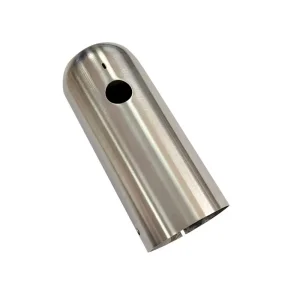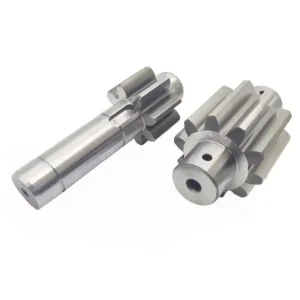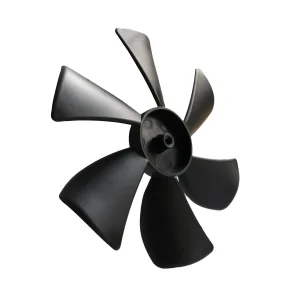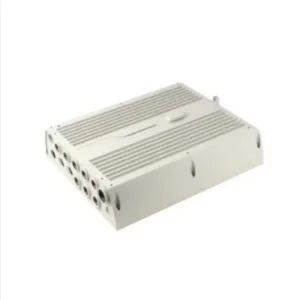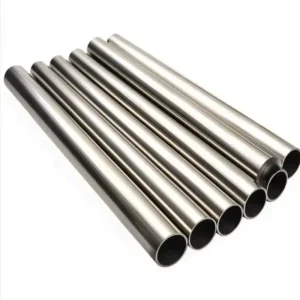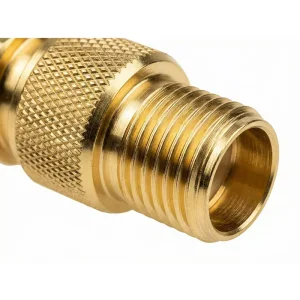
Featured Precision Components & Housings (Batch A)
High-precision turned, molded, and die-cast sub-assemblies for advanced engineering applications.
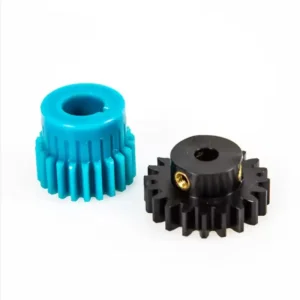
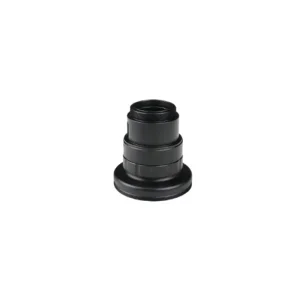
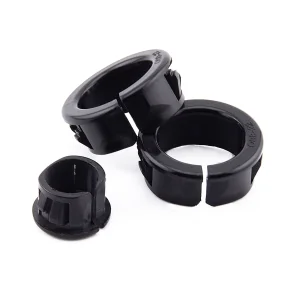
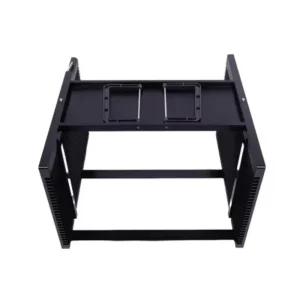
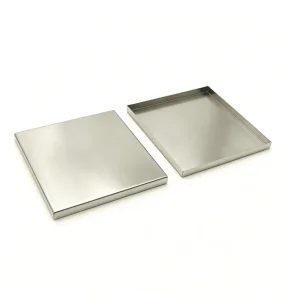
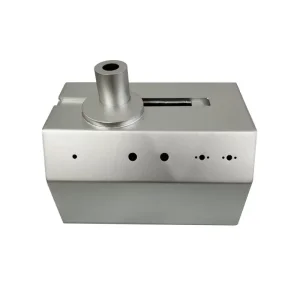
Executive Summary: The Evolution of Custom ODM Die Cast Housings
Analyzing thermal dissipation vectors, structural integrity, electromagnetic compatibility (EMC), and modern manufacturing scalability for global procurement directors.
In modern industrial engineering, the role of an ODM Die Cast Housing has transitioned from a basic mechanical protective shell to an essential structural component. Modern electronic architectures, ranging from 5G massive MIMO remote radio units (RRU) to electric vehicle (EV) inverter cases and medical diagnostic devices, generate unprecedented power densities. Consequently, housing design must integrate structural load-bearing capabilities, high thermal conductivity, electromagnetic interference (EMI) attenuation, and environmental sealing against moisture and corrosive atmospheres (IP67/IP68).
Original Design Manufacturers (ODM) and tier-1 exporters face complex engineering challenges. Modern procurement teams evaluate manufacturers not just on raw casting costs, but on comprehensive Total Cost of Ownership (TCO), Design for Manufacturability (DFM) feedback speed, material purity certifications, post-machining tolerances, and supply chain transparency. High-Pressure Die Casting (HPDC) utilizing aluminum alloys (e.g., ADC12, A380, AlSi10Mg) and zinc alloys (Zamak series) provides the optimal production route for complex, thin-walled, lightweight, and high-volume geometries.
Core Technical Insight: Information Gain in Die Casting Engineering
Transitioning from traditional gravity casting to high-pressure vacuum-assisted die casting reduces internal micro-porosity by up to 85%, significantly enhancing tensile strength and fluid pressure tightness under dynamic load conditions.
Global Procurement Requirements & Material Selection Matrix
Systematic comparison of die casting alloys to streamline OEM technical specification workflows.
Global procurement specialists searching for qualified die-casting exporters generally balance structural stiffness, weight restrictions, thermal conductivity, and finishing options. Selecting the appropriate alloy matrix early during DFM alignment prevents tooling modifications later. Below is an engineering comparison matrix for mainstream ODM die casting alloys utilized in high-reliability applications:
| Alloy Grade | Composition Standard | Tensile Strength (MPa) | Thermal Cond. (W/m·K) | Primary Industrial Applications |
|---|---|---|---|---|
| ADC12 (JIS H5302) | Al-Si-Cu System | 310 MPa | 96 W/m·K | General electronics enclosures, motor end bells, pump bodies. Excellent castability and fluidity. |
| A380 (ASTM B85) | Al-Si-Cu System | 320 MPa | 109 W/m·K | Automotive transmission covers, power tool housings, bracket assemblies. Optimal balance of mechanical strength. |
| AlSi10Mg(Fe) | Al-Si-Mg System | 340 MPa | 110–130 W/m·K | 5G Telecom RRU heat-sinks, automotive structural frames requiring elongation and impact resistance. |
| AlSi9Cu3 | EN AC-46000 | 280–350 MPa | 110 W/m·K | European automotive standards, heavy-duty industrial control units with high thermal loads. |
| Zamak 3 (Zinc Alloy) | Zn-4% Al System | 283 MPa | 113 W/m·K | Ultra-compact optical barrels, high-precision connectors, complex miniature housings requiring thin walls (<0.8mm). |
Sector-Specific ODM Engineering Solutions
Custom design paradigms optimized for extreme operational environments.
5G & Telecom Infrastructure
Features integrated micro-fin arrays directly cast with draft angles as tight as 1.5 degrees. Provides thermal management for active antenna units (AAU) handling thermal dissipation up to 800W while maintaining IP67 sealing across operational ambient ranges (-40°C to +85°C).
Automotive Power Electronics
Engineered for EV inverter units and battery management enclosures. Utilizes high-vacuum HPDC processes to satisfy stringent zero-porosity standards, enabling reliable helium leak detection and high-pressure fluid passage seal integrity.
Medical Diagnostics & Robotics
Medical-grade aluminum casting combined with multi-axis CNC milling. Implements passivated surface treatments resistant to harsh chemical sterilizers, maintaining tight tolerances down to ±0.005mm for sensitive optical laser paths.
Advanced ODM Manufacturing & Quality Control Workflow
End-to-end process control from preliminary DFM simulation to final automated inspection.
MoldFlow Analysis
Simulating molten metal velocity, cooling gradients, and potential gas entrapment to optimize gating runner layout before cutting tool steel (H13/SKD61).
Vacuum-Assisted HPDC
Evacuating mold cavity pressure down to <50 mbar prior to injection shot, suppressing gas porosity and ensuring high mechanical density.
5-Axis CNC Post-Machining
Precision CNC trimming, face milling, thread tapping, and bearing seat boring in a single setup to maintain tight geometric tolerances.
Surface Conversion
Applying automated chromate conversion coatings, powder painting, e-coating, or hard anodizing to pass 1,000+ hour salt spray testing (ASTM B117).
Quality Assurance Framework & International Compliance
Rigorous verification protocols protecting global supply chains against latent field defects.
Qualified exporters operate under comprehensive Quality Management Systems (QMS) certified to ISO 9001:2015 and IATF 16949 automotive standards. Quality control begins with raw material verification via Optical Emission Spectroscopy (OES) to guarantee chemical composition compliance prior to melt ingots being introduced into furnace chambers.
Dimensional Inspection & Metrology
Our quality control laboratories utilize automated Coordinate Measuring Machines (CMM) with touch-trigger probes and 3D laser scanners. Critical datum features, true position tolerances, and planar flatness are verified against 2D blueprint specifications. First Article Inspection (FAI) reports generated according to AS9102 guidelines accompany pre-production pilot shipments.
Environmental & Regulatory Compliance
All finished ODM die-cast housings comply with European Union RoHS Directive 2011/65/EU and REACH Regulations (EC 1907/2006). Finishes are systematically screened for heavy metals (Lead, Cadmium, Hexavalent Chromium, Mercury). Chemical conversion processes utilize trivalent chromium formulations to ensure eco-friendly, compliant global export.
Technology Roadmap: Next-Generation Die Casting Technologies
Emerging manufacturing methodologies transforming high-volume aluminum housing production.
As industrial automation, autonomous driving, and renewable energy storage scale globally, die casting technology is undergoing several key engineering shifts:
- Structural Giga-Casting Integration: Consolidating dozens of stamped sheet-metal assemblies into a single large-scale die-cast housing module, eliminating hundreds of robotic welding points and reducing structural mass by up to 30%.
- Low-Carbon Recycled Alloys: Integrating certified secondary aluminum alloys processed with low embodied energy, enabling OEM buyers to hit Scope 3 sustainability targets without sacrificing tensile performance.
- AI-Driven Thermal Control Systems: Thermal cameras dynamically monitoring die surface temperatures to adjust localized cooling line fluid rates in real time, extending mold longevity and eliminating thermal fatigue micro-cracking.
- Semi-Solid Rheocasting (SSR): Processing metal alloys in a semi-solid thixotropic slurry state, resulting in dense, heat-treatable (T6) castings with zero gas entrapment for structural aerospace brackets.
Frequently Asked Questions: Technical & Sourcing Guidance
Engineered responses to critical manufacturing inquiries submitted by procurement officers and design engineers.
Featured Precision Components & Housings (Batch B)
Expanded technical catalog of specialized hardware sub-components and customized assemblies.