Precision OEM / ODM Cast & Machined Components
Explore our certified manufacturing capabilities spanning stainless steel investment casting, aluminum die-casting, micro turned pins, and stamped contact assemblies.
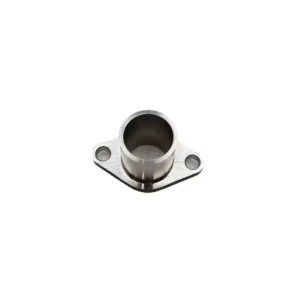
Custom Premium Stainless Steel Casting for Water Valves & Impellers
View Component Details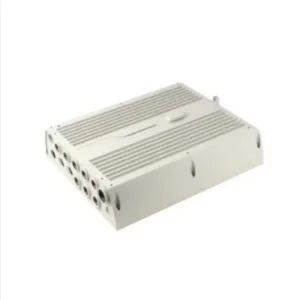
Aluminum Die-Casting Enclosure for Communication Electronics
View Component Details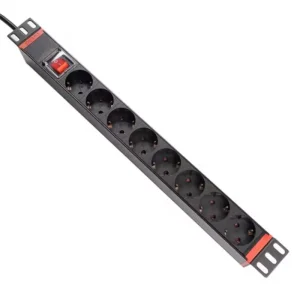
OEM Custom 8-Way 16A Rack-Mount PDU Sheet Metal Enclosure
View Component Details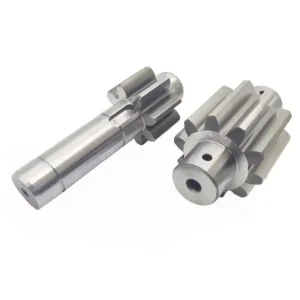
Custom CNC Machined Automotive Transmission Spur Gears & Shafts
View Component Details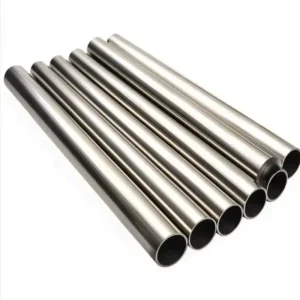
Precision Capillary Stainless Steel Tubing (1mm - 8mm)
View Component Details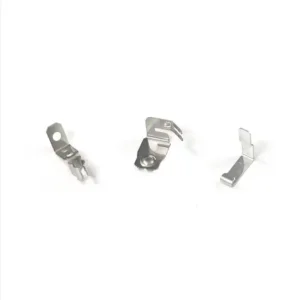
Phosphor Bronze & Steel Stamping Battery Contacts for Coin Cells
View Component Details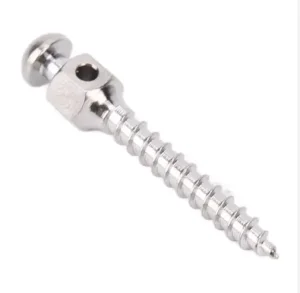
Precision Titanium Micro Implant Screws for Medical & Orthodontics
View Component Details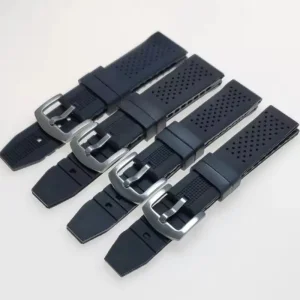
Universal Breathable Silicone Watch Strap (18mm - 24mm)
View Component DetailsModern ODM Casting Architecture: Bridging Design Intent and Mass Manufacturability
In modern industrial manufacturing, Original Design Manufacturing (ODM) casting services serve as the cornerstone for producing near-net-shape metal components with complex geometries, internal fluid passages, and demanding structural integrity. From automotive transmission housings to high-pressure water valve bodies and thermal enclosures for telecommunications, selecting the optimal casting process directly affects part performance, weight optimization, tooling amortization, and long-term supply chain predictability.
At Shenzhen Sunmy Hardware Co., Ltd., our engineering methodology integrates high-precision metallurgical science with advanced Design for Manufacturability (DFM) feedback. By harmonizing traditional casting methods—such as lost-wax investment casting, vacuum high-pressure die casting (HPDC), and sand casting—with 5-axis CNC post-machining, we transform initial CAD concepts into production-ready OEM parts holding linear tolerances down to ±0.005 mm on critical features.
Investment Casting (Lost-Wax)
Ideal for stainless steel, carbon steel, and titanium alloys requiring smooth surface finishes (Ra 3.2 µm) and complex internal cavities without draft angles.
Tolerances: ISO 8062 CT4–CT6High-Pressure Die Casting (HPDC)
Engineered for high-volume aluminum (A380, ADC12) and zinc components. Delivers thin wall thickness (down to 1.2 mm) with short cycle times.
Volume: 5,000 to 1,000,000+ unitsSand & Gravity Casting
Optimal for heavy industrial iron castings, large motor housings, and wheel hubs where tooling economy and mechanical damping are required.
Material: Ductile Iron / Gray IronMetrics Defining Sunmy's Production Reliability
Combining decade-long international export experience with real-time CMM measurement protocols.
Localized Application Scenarios for ODM Casting Components
Different industrial environments impose distinct physical, thermal, and chemical demands on cast parts. Below is an engineering overview of key vertical applications.
Automotive & EV Powertrains
Next-generation Electric Vehicles require lightweighting to maximize battery range without compromising structural crash safety. ODM aluminum die-cast housings (A356/ADC12) serve critical functions in inverter cases, motor end bells, transmission gear covers, and suspension arms.
- Vacuum HPDC prevents gas porosity during heat treatment.
- Post-machining guarantees tight bearing bore concentricity (<10 µm).
5G Telecom & Outdoor Electronics
Outdoor remote radio units (RRUs) and power supply enclosures are continuously exposed to rain, UV, and thermal cycling. Die-cast aluminum housings feature integrated high-density cooling fins and molded gasket grooves for IP67/IP68 ingress protection.
- Chromate conversion and powder coating withstand 1,000+ hours salt spray.
- RF shielding EMI covers stamped or cast to custom PCB layouts.
Fluid Handling, Valves & Impellers
Municipal water distribution, chemical processing, and marine propulsion demand chemical corrosion resistance. Lost-wax investment cast SS316/SS304 pump housings and impellers deliver hydraulic efficiency without pitting corrosion.
- Hydrostatic pressure testing up to 40 bar verified per batch.
- Dynamic balance testing prevents vibration at high RPMs.
Technical Matrix: ODM Casting Process Selection
Compare mechanical tolerances, minimum wall thickness, surface roughness, and economic thresholds across major casting routes.
| Casting Parameter | Investment Casting (Lost-Wax) | High-Pressure Die Casting | Sand Casting | CNC Billet Machining |
|---|---|---|---|---|
| Primary Material Compatibility | Stainless Steel (304/316), Alloy Steel, Titanium | Aluminum Alloys (A380, ADC12), Zinc (Zamak) | Ductile Iron, Gray Iron, Bronze, Aluminum | Aluminum, Brass, Steel, Titanium, Plastics |
| Dimensional Tolerance | ISO 8062 CT4–CT6 (±0.15 mm) | ISO 8062 CT4–CT5 (±0.10 mm) | ISO 8062 CT8–CT10 (±0.80 mm) | ±0.005 mm to ±0.01 mm |
| Surface Finish (Ra) | 3.2 µm to 6.3 µm | 1.6 µm to 3.2 µm | 12.5 µm to 25 µm | 0.8 µm to 1.6 µm |
| Min. Wall Thickness | 1.5 mm | 1.2 mm | 4.0 mm | 0.5 mm |
| Tooling Cost & Lead Time | Moderate ($1,500 – $4,000 / 15-20 Days) | High ($5,000 – $25,000 / 25-35 Days) | Low ($500 – $1,500 / 7-12 Days) | Zero Tooling (Immediate Setup) |
| Best Volume Application | 100 – 10,000 pcs / year | 5,000 – 1,000,000+ pcs / year | 10 – 2,000 pcs / year | 1 – 500 pcs (Prototypes) |
Technology Roadmap & Future Outlook of ODM Metallurgy
The global foundry industry is undergoing a digital and environmental transformation. The convergence of computational fluid dynamics (CFD), artificial intelligence, additive manufacturing, and decarbonized metallurgical processes is redefining what ODM casting partners can deliver to technology-driven OEMs.
1. AI Simulation & Moldflow Modeling
Prior to cutting steel for dies, Sunmy engineers employ thermal and fluid solidification modeling (such as MAGMASOFT / ProCAST). This predictive analysis identifies air entrapment, cold shuts, and shrinkage porosity zones in advance, reducing tooling iteration rounds by 60%.
2. 3D Sand & Resin Printing for Rapid Prototyping
By combining binder-jetting 3D sand printing directly with casting foundries, low-volume sand-cast functional prototypes can be produced within 5 business days without requiring hard patterns. This accelerates design verification for heavy machinery hubs and pump prototypes.
3. Low-Carbon Green Metallurgy & Recycled Alloys
Meeting European CBAM (Carbon Border Adjustment Mechanism) standards, our foundry partners utilize electric induction melting powered by clean energy grids and incorporate up to 80% secondary recycled aluminum (e.g., eco-friendly A380 ingot formulations), lowering embodied carbon emissions.
China Supply Chain Efficiency & Eco-System Integration
Situated in Shenzhen and the Greater Bay Area manufacturing hub, Sunmy Hardware leverages a completely integrated supply chain ecosystem.
Hyper-Localized Supply Chain
Raw material ingot supply, precision die building, heat treatment, surface plating (anodizing, electropolishing), and custom packaging facilities are located within a 30-kilometer radius. This geographic proximity drastically cuts freight lead times during initial sample iterations.
In-House Dimensional Control
While initial casting pour is done in specialized audited foundry shops, 100% of critical feature machining, CMM inspection, air tightness pressure testing, and final quality packaging take place inside Sunmy's owned Shenzhen facility under strict ISO supervision.
Total Cost of Ownership (TCO) Optimization
By offering rapid DFM cost reduction proposals—such as optimizing wall thickness ratios to conserve alloy weight and designing dual-cavity tooling—we routinely lower landed part unit cost by 15% to 30% compared to Western regional suppliers.
E-E-A-T Quality Verification & Global Compliance Framework
To eliminate procurement risks for international buyers, Sunmy Hardware adheres to rigorous quality control standards throughout the casting life cycle. Every raw material batch is verified prior to production, and full inspection documentation is archived for complete traceability.
Optical Emission Spectrometry
Chemical composition analysis verifies alloy elemental percentages (e.g., Chromium/Nickel ratios in SS316 or Silicon contents in ADC12) with mill cert documentation supplied per batch.
Radiographic X-Ray Porosity Inspection
Non-destructive testing (NDT) identifies internal gas pockets, shrink voids, or inclusions before high-stress structural parts are released for assembly.
CMM & 3D Laser Scanning
Bridge-style Zeiss CMM units verify geometric dimensioning & tolerancing (GD&T), position accuracy, and profile surface tolerances against native CAD files.
RoHS & REACH Environmental Audits
All raw metal alloys, surface coatings, and sealing inserts comply with hazardous substance restrictions for seamless entry into North American and EU markets.
Precision Turned, Molded & Cast Solutions
Discover specialized OEM/ODM hardware parts manufactured to tight tolerances for industrial, automotive, and medical industries.
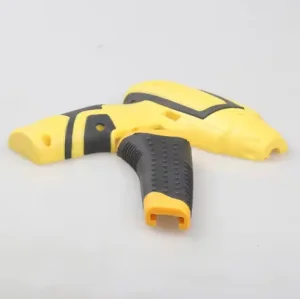
TPE & ABS Double-Color Injection Molding & Overmolding
View Component Details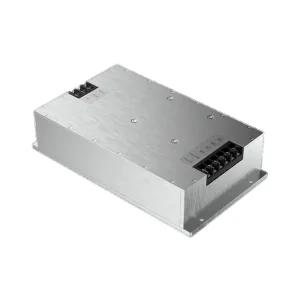
Custom Machined Aluminum Power Supply Enclosures
View Component Details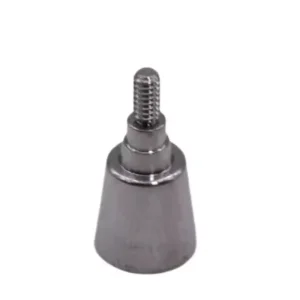
CNC Turned Titanium Abutment Implant Driver & Connector
View Component Details
Custom CNC Machined Precision Spur Gear & Gear Shaft
View Component Details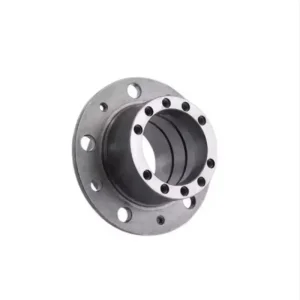
ODM Custom OEM Iron & Steel Sand Casting Wheel Hub
View Component Details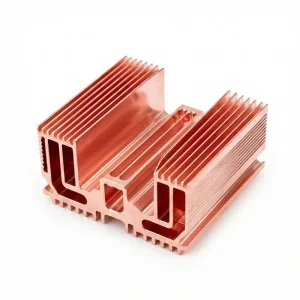
Custom High-Performance Pure Copper Heatsink Assemblies
View Component Details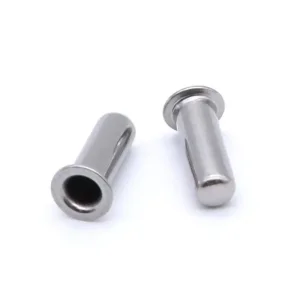
Deep-Drawn Closed-End Flanged SS316 Sensor Housings
View Component Details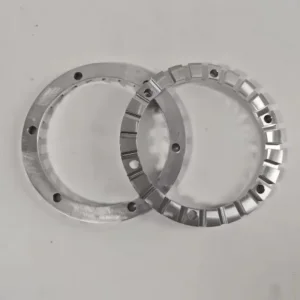
CNC Anodized Sealing Rings for Semiconductor & Optics
View Component DetailsFrequently Asked Questions on ODM Casting Services
Direct technical answers to help engineering and sourcing teams evaluate lead times, tolerances, IP protection, and process selection.
What is the primary difference between OEM and ODM casting services?
OEM (Original Equipment Manufacturing) casting strictly follows customer-provided print drawings, tolerances, and material specifications. ODM (Original Design Manufacturing) goes a step further by offering engineering design support, DFM moldflow analysis, alloy optimization, and performance prototyping based on the buyer's functional requirements. Sunmy Hardware provides full ODM support—helping you refine CAD geometry for optimal mold release, reduced scrap rate, and improved thermal/mechanical strength before tooling commitment.
How do you ensure zero porosity in critical pressure-containing cast parts?
Porosity control requires a multi-tiered approach: 1) Advanced moldflow simulation to position gates and overflows optimally; 2) Utilizing Vacuum High-Pressure Die Casting (HPDC) or lost-wax investment casting to evacuate air during injection; 3) Post-cast vacuum impregnation with liquid resin sealing for hydraulic parts; and 4) Radiographic X-ray inspection coupled with 100% hydrostatic or helium leak testing before shipment.
What linear tolerances can be achieved on cast hardware components?
As-cast dimensional tolerances follow standard international guidelines such as ISO 8062 CT4–CT6 for investment casting (approx. ±0.15 mm per 25 mm) and CT4–CT5 for aluminum die casting. For high-precision features—such as bearing bores, gasket O-ring grooves, or threaded mating holes—we perform post-casting CNC 3-axis/5-axis milling and turning to achieve tight tolerances down to ±0.005 mm with guaranteed true position accuracy.
How are intellectual property (IP) and proprietary CAD files protected?
Sunmy Hardware enforces a strict IP protection framework. We execute legally binding non-disclosure agreements (NDAs) prior to receiving any 2D/3D CAD files. All client files are stored on secure, encrypted internal servers accessible only to assigned project engineers. Your parts are manufactured directly in-house or by audited tier-1 partners, eliminating middle-man trading handoffs.
Which quality documentation accompanies international orders?
Every shipment is accompanied by a standardized quality dossier, including: 1) Material Test Reports (MTR) / Spectrometry chemical mill certs; 2) First Article Inspection (FAI) reports per AS9102/ISO standards; 3) CMM dimensional measurement data sheets; 4) Salt spray corrosion test reports (for surface finishes); and 5) RoHS / REACH compliance statements.
What are the typical tooling costs and production lead times?
Tooling lead times vary by process: Rapid CNC prototypes take 3–7 business days; investment casting tooling takes 15–20 calendar days; and complex aluminum die-casting molds take 25–35 calendar days. Tooling costs for investment casting start around $1,500, while multi-cavity HPDC dies range from $5,000 to $25,000 depending on part envelope size and cavity count.
Ready to Scale Your ODM Casting Production?
Submit your CAD drawings (STEP, IGES, SolidWorks) or physical sample specifications today. Our engineering team provides complete DFM feasibility reports and quotation within 24 hours.
Request Engineering DFM & Quote