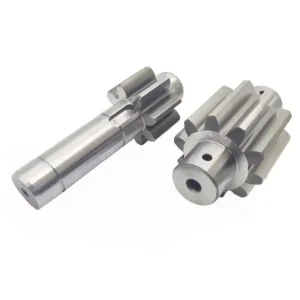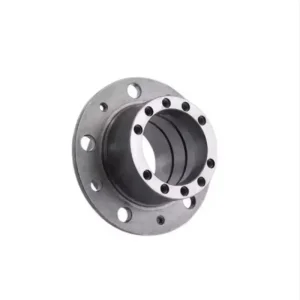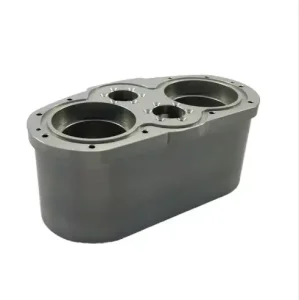
Precision Automotive & Industrial Assemblies (Batch 1)
Verified structural polymer and precision-machined solutions designed for high-stress industrial applications.

Global Automotive Plastics Landscape & Macro Solutions
Navigating the Paradigm Shift from Metal Castings to High-Performance Engineering Polymers in EV and ICE Platforms.
Electrification & Range Optimization
The global automotive industry's aggressive pivot toward New Energy Vehicles (NEVs) has transformed structural plastic components from luxury options into operational necessities. Mass reduction directly correlates with extended battery range: reducing vehicle tare weight by 100 kg increases electric vehicle driving range by approximately 6% to 8%.
Original Design Manufacturers (ODMs) must engineer polymer solutions that replace heavy zinc and aluminum alloys in interior modules, powertrain housings, battery enclosures, and under-the-hood fluid delivery architectures without sacrificing mechanical stiffness or impact resistance.
Thermal & Acoustic (NVH) Attenuation
Modern internal combustion engines and high-voltage battery thermal management loops generate complex vibration frequencies and extreme temperature differentials ranging from -40°C to +150°C. OEM buyers require specialized plastic part solutions capable of suppressing Noise, Vibration, and Harshness (NVH).
By leveraging custom-formulated polyamides (PA66-GF30) and elastomeric overmolding, ODM suppliers yield up to 15 dB acoustic attenuation compared to legacy stamped steel components, boosting cabin comfort and electronic protection.
Industrial Reality: Balancing Nearshoring with High-Tier Sourcing
Procurement teams across North America and Europe face compounding supply chain vulnerabilities, including raw material volatility and geopolitical friction. Partnering with seasoned Chinese ODM plastic part manufacturers provides Tier 1 automotive buyers with a balanced model: low-cost tool development coupled with micron-level CNC machining precision and advanced injection molding capabilities.
Polymer Selection & Technical Procurement Demands
A rigorous analytical breakdown of automotive plastics engineered for load-bearing, flame-retardant, and optical-grade applications.
| Polymer Grade | Key Mechanical Properties | Target Automotive Subsystems | ODM Engineering Advantage |
|---|---|---|---|
| PA66-GF30 / GF50 (Polyamide 30-50% Glass Reinforced) |
Tensile Strength: 175-230 MPa HDT @ 1.8MPa: 250°C |
Engine covers, intake manifolds, structural cross-members, rocker panels. | Replaces die-cast aluminum; cuts component weight by 40% while preserving yield strength under vibration. |
| PP-TD20 / TD40 (Polypropylene Talc Filled) |
Flexural Modulus: 2,800 MPa Low Thermal Expansion (CTE) |
Dashboard carriers, door trim panels, HVAC ducting, bumper fascias. | Optimized shrinkage control, high creep resistance, cost-effective high-volume injection molding. |
| PBT-GF20 / PET (Polybutylene Terephthalate) |
Dielectric Strength: 25 kV/mm UL94 V-0 Flame Retardant |
High-voltage EV connectors, ECU enclosures, fuse blocks, sensor housings. | Exceptional dimensional stability in humid environments; prevents high-voltage electrical tracking. |
| PC/ABS Alloy & Optical PC (Polycarbonate Hybrid) |
Impact Strength: >50 kJ/m² Optical Transmittance: >89% |
LiDAR sensor covers, headlamp light guides, smart pillar trims, HUD lenses. | UV-stabilized, high-transparency mold finishing with hard-coating options for scratch resistance. |
| PEEK / PPA (Polyether Ether Ketone) |
Continuous Service Temp: >260°C Chemical & Oil Inertness |
Transmission thrust washers, electronic power steering gears, valve seats. | Replaces bronze bearings; operates in dry-running or aggressive hot oil environments with zero galling. |
Zero-Defect Quality (PPM < 10)
Global automotive procurement teams demand ultra-low defective parts per million (PPM) metrics. Automated cavity pressure sensors and vision-guided robotic pickers ensure every molded part adheres strictly to geometrical tolerances.
Tooling Longevity & SPI Class 101
Tooling designs feature hardened H13, S136, or NAK80 steel cores rated for over 1,000,000 cycles. Custom cooling channels (conformal cooling) minimize cycle times by up to 30% while eliminating differential warpage.
Full Compliance & IMDS Logging
Complete traceability through mandatory International Material Data System (IMDS) uploads, ensuring global compliance with REACH, RoHS, SVHC, and Conflict Minerals regulations.
End-to-End Automotive ODM Technical Roadmap
From CAD Conceptualization and Moldflow Hydrodynamics to Automated Mass Production and CMM Metrology.
DFM & Moldflow Analysis
Engineers evaluate draft angles, gate placements, weld lines, and sink marks using advanced FEA and Moldflow software. Dimensional stability is verified before cutting steel.
Precision Tooling Fabrication
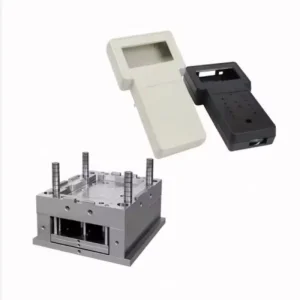
Utilizing 5-axis CNC machining, high-speed EDM wire erosion, and mirror-finish polishing to build SPI Class 101 multi-cavity injection molds with ±0.005mm core alignment.
Injection Molding & Overmolding
High-tonnage electric injection molding machines execute precise 2K (two-shot) molding, insert molding (brass thread bushings), and micro-cellular foaming (MuCell).
Validation & PPAP Level III
100% CMM dimensional reporting, First Article Inspection (FAI), tensile coupon testing, and full Production Part Approval Process (PPAP) documentation for OEM sign-off.
Engineering Benchmarks & Sourcing Metrics
Data-driven performance metrics establishing unmatched manufacturing capability for global Tier 1 & Tier 2 buyers.
Localized Engineering Support & Compliance Assurance
Eliminating cross-border technical barriers through localized project management, intellectual property protection, and supply chain transparency.
Ironclad IP & NDA Safeguards
Every drawing, 3D STEP file, and proprietary mold geometry is protected under legally binding bilateral Non-Disclosure Agreements (NDAs). Factory networks utilize secure, isolated servers to prevent unauthorized data transfer.
Vendor-Managed Inventory (VMI)
We support safety buffer stocking, Kanban delivery cycles, and localized warehousing arrangements across European and North American hubs to guarantee frictionless line-side feeding for fast-paced assembly lines.
24/7 Dedicated Engineering Support
Direct access to Senior Polymer Engineers and Mold Designers who conduct DFM feasibility studies within 24 hours of RFQ receipt, providing clear feedback on tooling economics and material selection.
Engineering & Procurement Insights (FAQ)
Expert solutions to common technical queries encountered during automotive plastic component sourcing.
High-performance engineered polymers (such as PA66-GF50 or PPA-GF40) offer comparable yield strengths to die-cast aluminum while reducing component weight by 35% to 50%. Furthermore, injection molding enables complex internal fluid channels and multi-part integration into a single shot, dramatically lowering secondary CNC machining cost and assembly labor.
A standard PPAP Level III submission package includes Design FMEA (DFMEA), Process FMEA (PFMEA), Process Flow Diagrams, Full Dimensional Layout Inspection Reports (CMM), Material Test Certificates (chemical composition and mechanical load testing), Measurement Systems Analysis (MSA / Gage R&R), Process Capability Studies (Cpk > 1.67), and IMDS material entry confirmation.
Our engineering team utilizes Moldflow thermal and volumetric shrinkage simulations during the DFM phase. We apply optimized wall thickness transitions (rib-to-wall ratio of 0.5:1 to 0.6:1), utilize micro-cellular gas-assisted injection (MuCell) where appropriate, and adjust packing pressure profiles to prevent localized sink marks and optical distortion.
Yes. We offer both insert molding (where metal inserts are loaded manually or via 6-axis automation into the mold before injection) and post-mold ultrasonic/heat-staking insertion. Insert molding provides superior pull-out and torque-out performance for load-bearing structural joints.
Rapid aluminum tooling or soft-steel prototype molds can produce physical parts in 10 to 15 business days. Full production SPI Class 101 hardened steel molds (multi-cavity hot runner systems) are typically completed, sampled, and measured via CMM within 35 to 45 calendar days, followed by immediate T1 sample air-freight shipment.
Color matching is verified under standard D65 illuminants using spectrophotometers with delta E (ΔE) tolerances held strictly below 0.8. Surface finishes conform to SPI (A1 optical polish to D3 textured finish) or Mold-Tech / VDI 3400 EDM textures for OEM-compliant interior tactile aesthetics.
Precision Automotive & Industrial Assemblies (Batch 2)
Custom mechanical gear systems, casting components, and electro-mechanical housings.