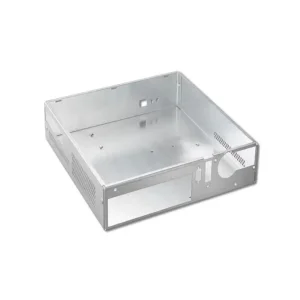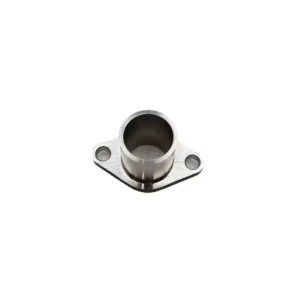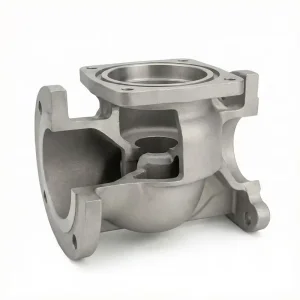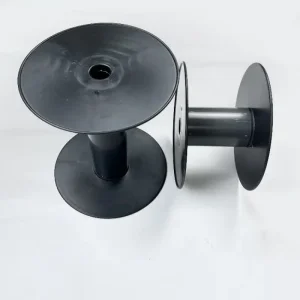
Precision Thin-Wall Castings & Custom Components
Explore our latest precision-engineered thin-wall castings, communication enclosures, connectors, and CNC components engineered for global OEM standards.

1. Global Commercial & Industrial Status of Thin Wall Casting
An in-depth analysis of how ultra-thin metal wall technologies are reshaping lightweight design in automotive, aerospace, telecom, and robotics manufacturing worldwide.
In modern industrial engineering, the demand for structural lightweighting without compromising mechanical strength has elevated thin wall casting from a specialized foundry process to a cornerstone of modern manufacturing. Thin-wall metal casting generally refers to components where the wall thickness is reduced to less than 2.0 mm (and frequently down to 0.8 mm–1.2 mm for aluminum and magnesium alloys), maintaining high flow length to thickness ratios (L/t > 100:1).
The global push toward carbon neutrality, combined with the rapid electrification of transport (EVs) and high-density computing infrastructure (5G/6G communication hubs and AI servers), has accelerated the procurement of high-precision thin-wall castings. Engineering teams worldwide are replacing multi-piece assembled sheet metal fabrications with single-piece, complex thin-wall cast housings, achieving weight reductions of 30% to 50% while dramatically lowering assembly labor and structural resonance issues.
Automotive & EV Powertrains
Thin-wall aluminum and magnesium die castings are critical for EV battery pack trays, inverter enclosures, motor end bells, and structural pillars. Minimizing mass directly translates to extended battery range and enhanced vehicle agility.
5G Telecom & AI Compute
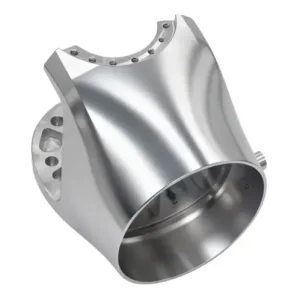
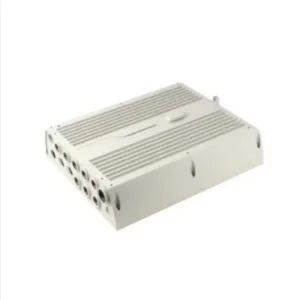
Base stations and server racks require complex heat dissipation fins integrated directly into thin-wall enclosures. Castings provide maximum surface area contact for thermal management while offering IP67 weather sealability.
Robotics & Drone Frames
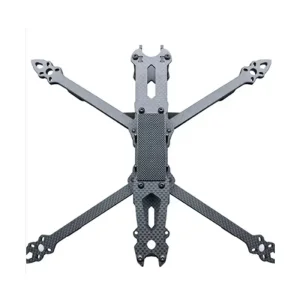
For humanoid robotics joints and industrial drone frames, thin-wall investment casting and high-pressure die casting yield high strength-to-weight ratios capable of withstanding torsional loads under rapid dynamic movement.
2. DFM Parameters & Material Selection Matrix
Achieving defect-free thin-wall components requires precise melt thermal control, vacuum assistance, and custom alloy selection to combat cold shuts and micro-porosity.
Combating Liquid Front Solidification
As molten metal flows through a 1.0mm cavity, rapid chilling against tool steel walls risks premature freezing (cold shuts). Advanced factories utilize multi-zone oil heating, vacuum venting (<50 mbar), and high injection velocities (>40 m/s).
Stress Reduction & Ribbon Ribbing
Rather than increasing uniform wall thickness, engineers design structural rib patterns (T-shaped or honeycomb) with draft angles between 1.5° and 3.0° to maintain structural stiffness while keeping nominal wall thickness ultra-thin.
Porosity Control & X-Ray Verification
Thin wall castings must adhere to strict internal soundness guidelines. Utilizing squeeze casting or vacuum-assisted high pressure die casting (HPDC) ensures gas porosity levels meet ASTM E505 Level 1 specs.
Common Thin-Wall Casting Alloy Specifications
| Alloy Grade | Process Compatibility | Min. Wall Thickness | Tensile Strength (MPa) | Yield Strength (MPa) | Primary Application |
|---|---|---|---|---|---|
| ADC12 / A383 | High Pressure Die Casting | 0.9 mm | 310 MPa | 150 MPa | Telecom Housings, General Hardware |
| AlSi10Mg | Investment / Vacuum HPDC | 1.0 mm | 340 MPa | 230 MPa | EV Inverters, Structural Brackets |
| AZ91D Magnesium | Hot Chamber Die Casting | 0.75 mm | 230 MPa | 160 MPa | Ultra-light Drone & Robot Chassis |
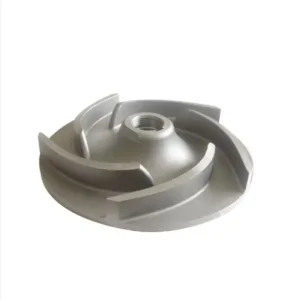
| 316L Stainless Steel | Investment Casting (Silica Sol) | 1.2 mm | 515 MPa | 205 MPa | Fluid Valves, Corrosion Impellers |
3. China Factory Efficiency & Supply Chain Advantages
Discover how integrated manufacturing hubs in Shenzhen and Guangdong deliver speed, scalability, and unmatched tooling efficiency for global procurement teams.
When sourcing custom high-quality thin wall casting products, global OEMs encounter critical challenges regarding tooling cost, cycle times, and structural precision. Chinese manufacturing ecosystems—specifically concentrated around the Greater Bay Area (Shenzhen, Dongguan, Foshan)—offer distinct operational capabilities that dramatically reduce total cost of ownership (TCO).
Rapid Mold Tooling Cycles
Leveraging high-speed 5-axis CNC mold tooling and in-house CAD/CAM simulation, Chinese factories can deliver T1 sample castings in as few as 15 to 25 days—roughly 50% faster than traditional Western lead times.
Turnkey Single-Factory Supply Chain
From initial DFM design feedback, tooling design, and raw metal casting to precision CNC secondary machining, surface treatment (anodizing, powder coating, E-coating), and CMM quality inspection—all operations are executed within one unified system.
Cost Optimization & Material Efficiency
By pairing high-pressure automated robotic casting units with tight material recycling practices, factories minimize scrap rates for expensive aluminum and magnesium alloys, passing direct unit-cost savings to buyers.
4. Global Procurement & Supplier Audit Checklist
A rigorous framework for procurement managers evaluating thin-wall casting suppliers, ensuring strict IP protection, traceability, and zero-defect deliveries.
Sourcing structural thin-wall cast components requires sophisticated quality assurance workflows. Because thin walls are sensitive to thermal stress, core shifts, and microscopic gas entrapment, procurement officers must look beyond simple price-per-piece quotes and rigorously audit potential manufacturing partners.
1. Quality Systems
Verify ISO 9001:2015 and IATF 16949 (for automotive) certifications. Ensure full batch traceability from ingot heat numbers to finished parts.
2. Inspection Setup
Demand in-house Coordinate Measuring Machine (CMM) testing, optical 3D scanning for wall thickness mapping, and spectrometer chemical analysis.
3. IP & NDA Protocol
Protect your proprietary CAD drawings with enforceable bilateral NDAs signed prior to file transfer, keeping project files direct with the manufacturer.
4. FAI Documentation
Require complete First Article Inspection (FAI) reports, including dimensional layout inspection, salt-spray plating tests, and pressure leak test results.
5. Industry Trends & Next-Gen Innovations
The convergence of AI generative topology design, Gigacasting, and sustainable recycled alloys is shaping the next decade of metal casting.
The thin-wall casting domain is undergoing rapid technological evolution. Designers are no longer restricted by traditional casting geometry constraints; instead, software and metallurgy are merging to unlock structural shapes previously deemed uncastable.
Generative Topology & AI Moldflow Simulation
Engineers are utilizing AI-driven generative design to create biomimetic internal webbing within thin wall structures. By concentrating material strictly along finite element analysis (FEA) stress lines, overall component mass is cut by an additional 15–20% while maintaining equivalent load-bearing capability. Real-time sensor networks inside die molds monitor temperature and pressure at microsecond intervals to dynamically adjust piston injection velocity.
Gigacasting / Megacasting Integration
Pioneered in automotive EV chassis manufacturing, the trend toward consolidating dozens of stamped sheet metal parts into single, massive thin-wall castings (Gigacasting) is spreading into industrial equipment and HVAC infrastructure. Press forces exceeding 6,000 to 12,000 tons now cast multi-cavity, ultra-thin subframes with high dimensional repeatability.
Green Metallurgy & Low-Carbon Alloys
Sustainability mandates are pushing foundries toward 100% recycled secondary aluminum alloys that require 95% less energy than primary smelting, coupled with non-toxic ceramic cores for investment casting that leave zero hazardous effluent.
6. Thin Wall Casting FAQ & Technical Q&A
Expert answers to critical engineering, manufacturing, and sourcing questions encountered by buyers worldwide.
What is considered a "thin wall" in metal casting?
How do you prevent defect occurrences like cold shuts and misruns in thin-wall cast components?
What casting process is best for high-volume thin wall aluminum parts vs low-volume prototypes?
Can thin-wall castings be heat-treated (e.g., T6) without blistering?
What secondary CNC machining tolerances can be achieved on thin-wall cast housings?
How does Sunmy Hardware ensure drawing confidentiality and IP protection?
What quality inspection reports accompany shipments?
Precision Castings, Plastic Molded & Machined Products
Review additional examples of custom engineered enclosures, valve bodies, turned components, and drone frame hardware engineered for global clients.