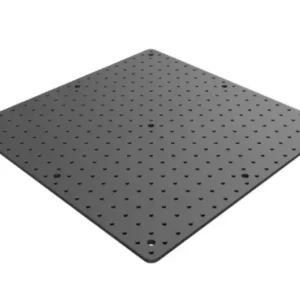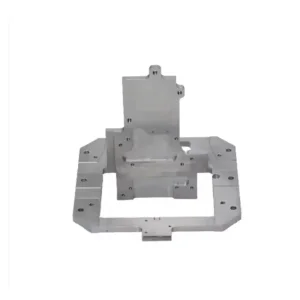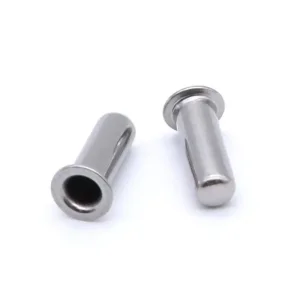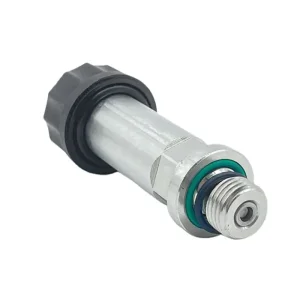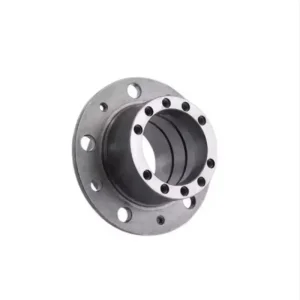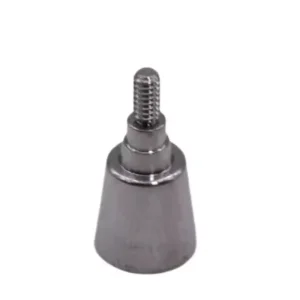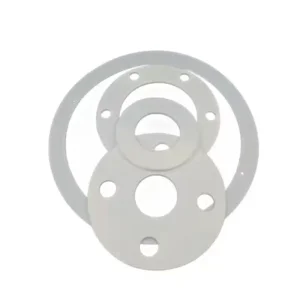
Precision Metal Components & Custom Castings Showcase
Engineered hardware solutions manufactured to exact CAD specifications with ISO-certified quality assurance and full CMM inspection validation.
Global Sand Casting Market & Industrial Architecture
An authoritative analysis of foundry dynamics, material trade-offs, and supply chain strategies in modern OEM manufacturing.
Global Commercial Volume & Demand
Sand casting remains the backbone of heavy manufacturing, accounting for over 65% of all metal casting tonnage produced globally. Driven by massive infrastructure projects, mining expansion, and energy transition equipment, sand casting factories provide scalable structural integrity for components ranging from 1 kg up to 50 tons.
- Key markets: Heavy equipment, mining machinery, marine propulsion, and municipal valve systems.
- High adaptability for ferrous and non-ferrous alloys (Ductile Iron, Gray Iron, Carbon Steel, Aluminum).
Reshoring & Hybrid Supply Chains
Global procurement directors are transitioning toward hybrid sourcing models. Modern OEMs partner with top-tier China sand casting foundries that maintain international quality management credentials (ISO 9001:2015, IATF 16949) to achieve significant cost efficiency while mitigating supply disruptions.
- Up to 35-45% cost savings compared to North American and European domestic foundries.
- Turnkey capability: Pattern tooling, raw casting, heat treatment, precision CNC post-machining, and plating.
Digital Transformation in Foundries
The transition from traditional green sand molding to computerized resin-bonded sand systems and Additive Manufacturing (3D Sand Printing) has eliminated lead-time bottlenecks. Foundries can now produce prototype castings in days without expensive metal pattern tooling.
- Elimination of draft angles for ultra-complex internal geometries using 3D printed sand cores.
- CMM verification and ultrasonic testing embedded directly into automated line workflows.
Sand Casting vs. Alternative Forming Technologies
Comprehensive technical trade-off matrix to assist design engineers in process selection based on wall thickness, volume, unit cost, and lead times.
| Parameter / Feature | Resin / Green Sand Casting | Investment Casting (Lost Wax) | High-Pressure Die Casting | Forging & CNC Billet |
|---|---|---|---|---|
| Weight Range | 0.5 kg to 50,000 kg+ | 0.05 kg to 100 kg | 0.1 kg to 30 kg | 0.1 kg to 5,000 kg |
| Dimensional Accuracy | ISO 8062 CT8 - CT11 | ISO 8062 CT4 - CT6 | ISO 8062 CT4 - CT6 | DIN 7526 / ISO 2768-m |
| Tooling / Pattern Cost | Low to Moderate ($500 - $4,000) | Moderate ($2,500 - $12,000) | High ($15,000 - $80,000+) | Very High ($20,000 - $100,000) |
| Geometric Complexity | Very High (With 3D Sand Cores) | Extremely High | Moderate (Draft restricted) | Low to Moderate |
| Material Versatility | Ductile Iron, Gray Iron, Steels, Al | Stainless Steel, Superalloys, Steels | Aluminum, Zinc, Magnesium Alloys | Steels, Titanium, Aluminum Alloys |
| Prototype Lead Time | 3 to 7 Days (via 3D Sand Print) | 3 to 5 Weeks | 8 to 14 Weeks | 1 to 3 Weeks |
Material Engineering & Casting Quality Protocols
Controlling chemical composition, grain refinement, thermal behavior, and non-destructive examination for zero-defect supply.
Ferrous Alloys: Gray & Ductile Iron Specifications
Sand casting offers unparalleled performance in dampening mechanical vibration and enduring high compressive stress. Our qualified foundries specialize in tight matrix control through spectroscopic verification prior to every pour.
- Ductile Iron (Nodular Iron): ASTM A536 grades (60-40-18, 65-45-12, 80-55-06, 100-70-03). Superior tensile strength and elongation replacing forged steel parts in axle housings and steering knuckles.
- Gray Cast Iron: ASTM A48 Class 20/30/35/40. Outstanding wear resistance and thermal conductivity for engine blocks, brake rotors, and machine tool bases.
- Cast Steel & Stainless: ASTM A216 WCB/WCC for high-pressure valves; ASTM A351 CF8M (316) for marine and chemical pump bodies.
Non-Ferrous Alloys & Heat Treatment Solutions
Lightweight structural applications utilize sand-cast aluminum alloys optimized through specific heat treatment regimes (T5, T6) to achieve structural yields equivalent to forged components.
- Aluminum Sand Alloys: A356, A357, C355, and Al-Si-Mg matrices. Ideal for structural housings, heat exchangers, and aerospace ground equipment.
- Thermal Operations: In-house stress relieving, solution annealing, aging, and normalizing to eliminate internal residual casting stress.
- Surface Treatments: Shot blasting (SA 2.5), zinc phosphating, epoxy powder coating, and high-durability anodizing.
Technology Roadmap & Next-Gen Foundry Innovations
How cutting-edge simulation software, additive sand printing, and artificial intelligence are revolutionizing sand casting accuracy.
Phase 1: Computer Simulation & Virtual Gating Design (MAGMASoft / ProCAST)
Before pattern cutting or molten metal pouring, 3D casting simulations analyze solidification fronts, thermal gradient shifts, and fluid velocities. This virtual modeling eliminates shrinkage cavities, cold shuts, and sand inclusion defects prior to physical production.
Phase 2: Additive Manufacturing Integration (3D Sand Printing / Binder Jetting)
Utilizing high-speed binder jetting system technology, furan resin is selectively sprayed onto silica sand beds to print complex cores directly from CAD models. This reduces new product development cycles from months to less than 5 days while enabling internal cooling channels previously impossible to mold.
Phase 3: Automated Quality NDT & Computed Tomography (CT) Inspection
Modern quality assurance deploys industrial X-ray CT scanning, 3D laser scanner CMM verification, and ultrasonic testing to audit 100% of internal density profiles. Sub-surface porosity is caught instantly, delivering zero-defect guarantees for critical safety applications.
Phase 4: Green Foundry & Circular Sand Reclamation Systems
Industrial environmental sustainability initiatives have led to thermal sand reclamation loops capable of recycling >95% of used silica sand. Low-VOC organic binders and electric induction melting furnaces drastically cut carbon intensity per ton of finished casting.
Comprehensive Sector-Specific Engineering Applications
Targeted manufacturing solutions engineered to exceed the rigorous environmental and mechanical standards of global OEM industries.
Heavy Mining & Earthmoving
Heavy-duty structural wheel hubs, planetary gear carriers, track shoes, and suspension brackets designed to endure high shock loads and cyclic fatigue in extreme temperatures.
Energy & Fluid Dynamics
High-pressure pump volutes, multi-stage turbine casings, and large pipeline valve housings cast in corrosion-resistant stainless steel and ductile iron rated up to ANSI Class 900.
Commercial Automotive & Transit
Engine crankcases, flywheel housings, commercial vehicle axle housings, and steering gearboxes manufactured to strict IATF 16949 automotive standards with low porosity guarantees.
Industrial Automation & Robotics
Heavy machine bases, robot pedestal castings, and high-rigidity gear housing covers requiring precise vibration damping and ultra-flat precision post-machined mounting pads.
Frequently Asked Engineering & Procurement Questions
Detailed insights from our metallurgists and manufacturing engineers on custom sand casting design, tolerances, and quality control.
What dimensional tolerances can be reliably achieved with sand casting?
As-cast dimensional tolerances typically adhere to ISO 8062 Grade CT8 to CT11 depending on part size and whether wood, aluminum, or resin patterns are utilized. For critical mating surfaces, bearing fits, and threaded holes, post-casting CNC machining is performed to achieve tight tolerances down to ±0.005 mm (±0.0002 in). All dimensions are verified using optical CMM and 3D coordinate measuring equipment.
How do sand casting manufacturers prevent shrinkage porosity and gas inclusions?
Porosity mitigation begins at the design stage using thermal solidification software (MAGMASoft/ProCAST) to position risers and chill blocks effectively. Metallurgically, we perform ladle degassing, vacuum pouring where required, and precise control of sand permeability and moisture content. Every high-integrity batch undergoes non-destructive ultrasonic and X-ray radiography inspection to guarantee internal density.
When should I choose Sand Casting over Investment Casting (Lost Wax)?
Choose Sand Casting when part weights exceed 15-20 kg, when part size is massive, when production volumes require minimal initial tooling investment, or when prototype delivery is urgent (utilizing 3D sand binder jetting). Choose Investment Casting for small, intricate parts (<15 kg) requiring thin wall sections (<2.5 mm) and superior as-cast surface roughness (Ra 3.2 µm) without extensive CNC post-machining.
What standard quality documentation is provided with OEM shipments?
Each production run includes comprehensive compliance documentation: 3.1 Chemical & Mechanical Mill Test Reports (MTR), EN 10204 compliance, First Article Inspection (FAI) reports per AS9102 / PPAP Level 3, CMM Dimensional Inspection Data, Heat Treatment Graph Records, and NDT/X-Ray defect examination certifications upon request.
What are the standard lead times for custom tooling patterns and first-article samples?
For standard aluminum pattern tooling, pattern manufacture and initial sample casting take approximately 2 to 4 weeks. However, using our direct 3D Sand Printing (Additive Manufacturing) workflow, physical metal samples can be produced and CNC machined in as little as 5 to 7 working days directly from your 3D STEP or IGES files without pattern tooling cost.
High-Precision Turned, Molded & Cast Engineering Assemblies
Explore our full-scope contract manufacturing portfolio engineered for global OEM applications.