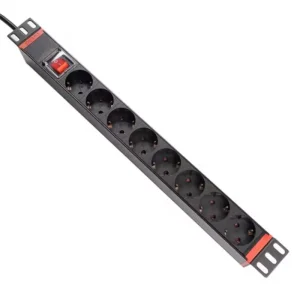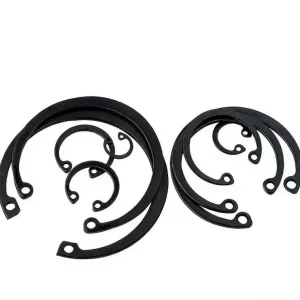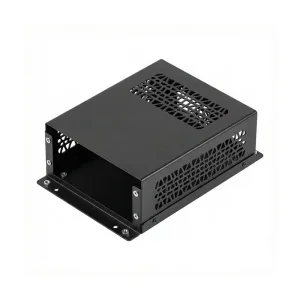
Precision Metal & Plastic Components Catalog
Explore our core export products engineered for critical thermal, structural, and electronic enclosure applications.
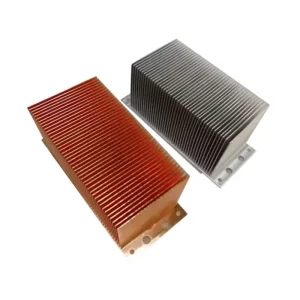


State of Precision Plastic Enclosure Molding Engineering
A Comprehensive Technical Reference for OEM Procurement Directors, Product Architects, and Mechanical Design Engineers.
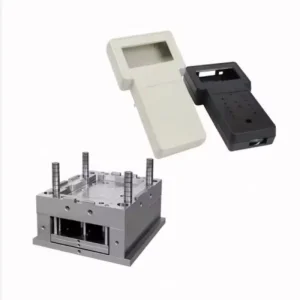
In modern high-reliability hardware architecture, the plastic enclosure serves as much more than a mere cosmetic protective shell. It operates as a complex, multi-functional engineered chassis responsible for thermal management, electromagnetic interference (EMI/RFI) shielding, structural shock absorption, dielectric isolation, and environmental ingress prevention. Achieving optimal balance between structural rigidity, dimensional stability, aesthetic surface texture, and unit cost demands an integrated engineering approach that bridges resin chemistry, mold tool metallurgy, and scientific injection process telemetry.
As premier plastic enclosure molding exporters, our engineering facilities utilize closed-loop, sensor-monitored electric injection molding machines paired with RJG Scientific Molding principles. By monitoring cavity pressure curves, melt viscosity shift, and gate freeze time in real-time, we eliminate common molding defects such as sink marks, weld-line degradation, warpage due to differential shrinkage, and short shots. Whether manufacturing medical diagnostic housings requiring ISO 10993 biocompatibility or heavy-duty outdoor industrial IoT gateways demanding UV-stabilized IP67 sealing, our production systems deliver batch-to-batch repeatability within strict statistical process control limits (Cpk ≥ 1.67).
Conventional molding relies on static packing pressures that often induce internal residual stress, leading to long-term warpage in planar enclosure covers. Our scientific molding protocol employs dynamic pressure profiling synchronized with mold surface temperature sensors and 3D conformal cooling channels, reducing thermal gradient variance to under 2°C across complex mold geometries.
Engineering Polymers & Technical Material Performance
Selecting the optimal resin formulation based on mechanical loading, thermal limits, chemical exposure, and regulatory standards.
| Resin Class | Key Mechanical Properties | Thermal & Flammability | Primary Industrial Applications | Shrinkage Rate |
|---|---|---|---|---|
| ABS (Acrylonitrile Butadiene Styrene) | High impact strength, superior dimensional stability, excellent surface finishability. | HDT: 85°C – 98°C UL 94 HB to V-0 grades |
POS Terminals, Consumer Electronics, Desktop Device Enclosures. | 0.4% – 0.7% |
| PC (Polycarbonate) | Exceptional impact resistance, optical clarity, structural rigidity. | HDT: 125°C – 140°C UL 94 V-0 flame rated |
Clear Display Lenses, Rugged Outdoor Meters, Electrical Junction Boxes. | 0.5% – 0.7% |
| PC/ABS Alloy | Balanced high-impact toughness, ductile failure behavior, stress-crack resistance. | HDT: 110°C – 125°C UL 94 V-0 flame rated |
Automotive Dashboards, Medical Device Housings, EV Charging Hubs. | 0.5% – 0.8% |
| PA66 + 30% GF (Nylon 66 Glass Filled) | Extreme tensile modulus (10,000+ MPa), high wear resistance, structural load bearing. | HDT: 200°C – 240°C High thermal resistance |
Under-hood Automotive Modules, Industrial Pump Housings, Heavy Brackets. | 0.3% – 0.5% |
| PEEK (Polyether Ether Ketone) | Ultra-high chemical resistance, radiation tolerance, continuous service up to 260°C. | HDT: 300°C+ UL 94 V-0 inherent |
Aerospace Avionics Boxes, Autoclavable Surgical Housings, Defense Electronics. | 1.0% – 1.3% |
| TPU / TPE Overmolding | Soft-touch tactile grip, excellent elastomeric damping, watertight gasket bonding. | Flexibility range: 30A – 95A Shore hardness | Handheld Scanner Grips, IP67 Dual-Shot Sealed Enclosures, Impact Bumpers. | 1.2% – 1.8% |
Optimized Wall Thickness
Maintaining uniform wall thickness (1.5mm – 3.2mm) prevents sink marks and internal void creation. Core-outs and gradual transitions are designed to eliminate localized stress concentration during polymer crystallization.
Draft Angle & Ejection Engineering
Precision tooling features a minimum of 1.0° to 2.0° draft per side, scaled up for textured finishes (1.0° per 0.025mm texture depth). Optimized ejector pin placement prevents part distortion during demolding.
Integrated Bosses & Rib Networks
Screw bosses are designed with wall thickness at 60% of main nominal wall and reinforced with gusset ribs to prevent sink marks while enduring thread-forming torque requirements up to 2.5 Nm.
Plastic Enclosure Molding Technology Roadmap & Future Outlook
Next-generation technological advancements defining the future of high-value plastic enclosure manufacturing.
1. Bio-Based Polymers & Circularity
Integration of post-consumer recycled (PCR) polycarbonates and bio-derived polyamides without sacrificing mechanical yield strength. Advanced closed-loop compounding ensures compliance with global ESG mandates while retaining UL flammability ratings.
2. In-Mold Electronics (IME) Integration
Transitioning from conventional PCB-and-wiring assemblies to 3D In-Mold Electronics. Conductive traces, capacitive touch sensors, and micro-LEDs are printed directly onto thermoformed films and overmolded into ultra-thin seamless enclosures.
3. AI-Driven Real-Time Mold Tuning
Implementation of artificial intelligence neural networks inside the injection controller. Sensor feeds adjust hydraulic holding pressure, melt temperature, and valve-gate timing on a stroke-by-stroke basis to correct for ambient humidity and resin batch variability.
4. Conformal Metal 3D Printed Inserts
Direct Metal Laser Sintering (DMLS) tooling inserts feature cooling fluid channels that follow the exact 3D contour of complex enclosure geometries, accelerating mold cycle times by 25% to 40% while preventing localized hotspots.
5. Multi-Shot 2K/3K Precision Overmolding
Simultaneous injection of hard structural skeletons (PC/PBT) alongside soft elastomeric seals (TPE/Silicone) in a single rotary tooling system. Eliminates manual gasket assembly processes while ensuring molecular-level bond interface strength.
6. Advanced Conductive EMI Surface Shielding
Selective robotic dispensing of conductive copper/nickel polyurethanes, vacuum metalizing (PVD), and structural carbon-nanotube filled compound molding to achieve >75dB shielding effectiveness across 100MHz to 10GHz spectrums.
Macro-Industry Enclosure Solutions
Tailored molding architectures designed to meet specialized sector-specific performance criteria.
Medical & Healthcare Equipment
Medical device enclosures require absolute chemical inertness against aggressive quaternary disinfectant cleaners, high impact tolerance for handheld monitors, and ISO 10993 cytotoxicity compliance. We process medical-grade PC/ABS and PEEK inside Class 8 cleanroom environments with zero mold-release agents to guarantee pristine bio-compatibility for blood analyzers, patient monitors, and point-of-care diagnostic tools.
Industrial Automation & Smart IoT Gateways
Industrial control cabinets and field IoT sensors demand IP67/IP68 dust-and-water tight enclosure designs able to withstand extreme temperature cycling (-40°C to +85°C). Utilizing co-injected TPE gasket lips, captive stainless brass threaded inserts, and UV-stabilized polycarbonate formulations, our enclosures protect sensitive PCBA logic boards in chemical plants, mining operations, and outdoor installations.
EV Infrastructure & Renewable Energy Systems
High-voltage junction boxes, EV charging connector handles, and solar inverter housings demand supreme dielectric breakdown strength and self-extinguishing flame resistance. We utilize glass-reinforced PBT/PC polymers rated UL 94 V-0 and f1 outdoor weatherability standards, incorporating metal-overmolded busbar channels that isolate electrical arc hazards under high amperage loads.
Defense, Aerospace & Telecommunications
Avionics housings and military radio gear require maximum weight reduction combined with high EMI attenuation. We engineer carbon-fiber-filled PEI (Ultem) and PEEK structural enclosures featuring vacuum metallized internal cavities that replace heavy die-cast aluminum boxes, cutting payload weight by over 40% while preserving structural stiffness.
Localization Support & Global Regulatory Assurance
Rigorous quality documentation and international regulatory alignment for smooth border clearance and audit approval.
Material Traceability & Chemical Compliance
Every shipment includes complete raw material certificates (CoA), masterbatch formulation sheets, and full compliance documentation for RoHS 3 (EU 2015/863), REACH SVHC, and California Proposition 65. X-Ray Fluorescence (XRF) spectrographic screening is performed on incoming resin lots.
Flame & Electrical Safety (UL Standards)
We work directly with certified resin compounders offering UL Yellow Card traceable materials. Molded enclosures comply with UL 94 V-0, V-1, V-2, and 5VA flammability standards, as well as Comparative Tracking Index (CTI) Level 0 electrical creepage safety ratings.
Quality System Certifications & Metrology
Operating under ISO 9001:2015 and IATF 16949 quality frameworks. Quality verification leverages automated Zeiss CMM systems, keyence optical measuring machinery, color spectrophotometers, and hydrostatic pressure testing rigs for IPX8 validation.
China Industry 4.0: Supply Chain Resilience & Efficiency Advantage
Combining Shenzhen's world-class tooling speed with automated high-cavitation injection infrastructure.
Located in the heart of China’s advanced precision manufacturing cluster, our production facilities represent the modern standard of Industry 4.0 automated molding. By integrating automated robotic arm unloading, centralized vacuum resin drying and conveying, automated hot runner mold temperature control, and machine-vision defect detection, we dramatically reduce cycle variability and operational overhead.
Rapid Tooling & Prototype Execution
Utilizing high-speed 5-axis CNC machining and mirror-EDM centers, we fabricate bridge tooling in aluminum or NAK80 steel in as few as 10 to 15 business days, delivering functional T1 injection samples for physical fit and compliance validation.
High-Cavitation & Hot Runner Efficiency
For multi-million unit production runs, we engineer 16, 32, and 48-cavity hardened H13/S136 steel molds (52-54 HRC) with valve-gated hot runner systems. Zero runner waste minimizes resin consumption while reducing part piece price by up to 35%.
IP Protection & Factory-Direct Transparency
We operate under legally binding Non-Disclosure Agreements (NDAs). All CAD data, mold tooling designs, and proprietary client geometries are encrypted on secure offline servers, ensuring zero risk of IP leakage or unauthorized broker handoffs.
Global Enterprise Sourcing & Total Cost of Ownership (TCO) Optimization
Maximizing ROI through strategic DFM, tool life expansion, and lean global logistics.
Evaluating plastic enclosure suppliers strictly on piece-part quote cost often overlooks critical hidden expenses associated with mold repair downtime, premature tool wear, scrap rates, and air-freight delays. A comprehensive TCO framework accounts for tool longevity, cavity balancing efficiency, DFM-driven mass optimization, and long-term supplier stability.
When clients invest in production hard tooling (H13/S136 steel) manufactured by our facility, we guarantee the tool for the lifetime of the product program (up to 1,000,000 shots). Mold maintenance, cavity polishing, core replacement, and preventive cleaning are performed entirely at our expense, eliminating unexpected capital expenditure during mass production.
Frequently Asked Questions (FAQ)
Expert technical answers regarding plastic enclosure molding, tooling engineering, and global export procedures.
Explore More Precision Hardware & Custom Molding Solutions
Direct factory quotes and engineered production solutions tailored to your technical drawings.