Top Precision Machined & Cast Stainless Steel Components
Explore our direct-factory custom components engineered with micrometer-level precision, superior surface integrity, and certified metallurgical compliance.
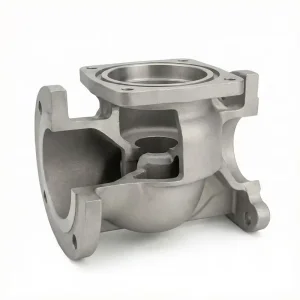
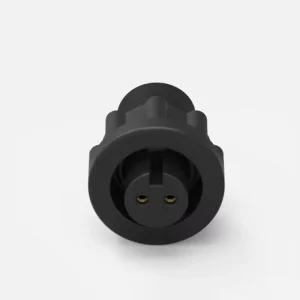
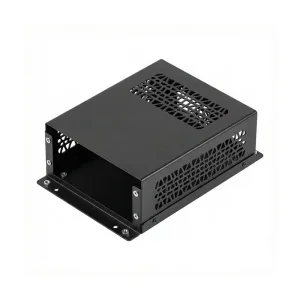
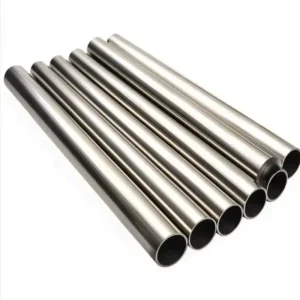
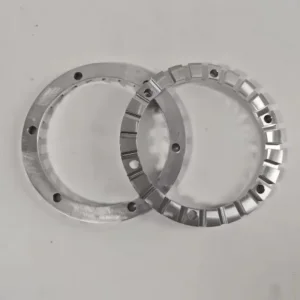
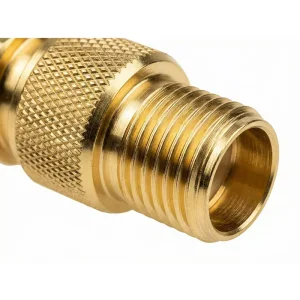
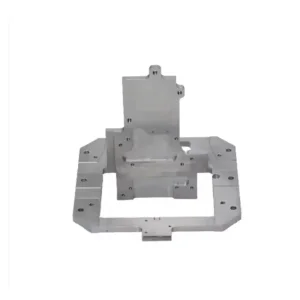
Global Commercial & Industrial Status of Custom Stainless Steel Machining
In the contemporary advanced manufacturing ecosystem, stainless steel machining stands as a cornerstone technology for high-integrity components across mission-critical sectors including semiconductor equipment, medical devices, aerospace fluid dynamics, nuclear power, and green hydrogen infrastructure. The global market demand for custom precision-machined stainless steel components has transitioned from standardized volumetric manufacturing to hyper-specialized, alloy-customized engineering solutions capable of enduring extreme mechanical stress, cryogenic thermal shocks, and highly corrosive chemical environments.
Work-Hardening Dynamics
Austenitic grades (e.g., 304L, 316L) exhibit high work-hardening rates during mechanical shearing. Cutting tools must maintain positive rake angles and constant feed rates to prevent premature tool flank wear and superficial thermal degradation.
Thermal Dissipation Barriers
Stainless steels possess low thermal conductivity (~15 W/m·K compared to aluminum's ~200 W/m·K). Heat concentrates at the tool-chip interface, requiring high-pressure coolant (HPC) systems at 70–100 bar to prevent built-up edge (BUE).
Corrosion & Passivation Integrity
Machining operations alter surface chemistry by introducing tramp iron contamination. Custom post-machining chemical passivation (ASTM A967) or electropolishing is essential to restore the protective chromium oxide ($\text{Cr}_2\text{O}_3$) passive film.
Stainless Steel Alloy Machinability & Technical Blueprint
Selecting the optimal stainless steel alloy requires a balanced evaluation of corrosion resistance, yield strength, thermal stability, and machinability index. Below is our engineering baseline matrix utilized for production route planning.
| Alloy Grade | Microstructure Class | Yield Strength (MPa) | Machinability Index (%) | Primary Industrial Applications | Key Machining Strategy |
|---|---|---|---|---|---|
| 304 / 304L | Austenitic | 215 – 240 | 45% (vs B1112) | Food processing, sanitary fittings, general hardware | High feed rates, sharp carbide inserts with TiAlN PVD coating |
| 316 / 316L | Austenitic (Mo-added) | 240 – 290 | 36% | Medical implants, marine hardware, chemical fluidics | Rigid toolholding, high-pressure coolant, positive geometry |
| 17-4 PH (630) | Precipitation Hardening | 790 – 1170 | 45% (H900 condition: 25%) | Aerospace structural brackets, pump shafts, nuclear valves | Machine in Condition A prior to aging; adjust expansion tolerances |
| Duplex 2205 | Austenitic-Ferritic | 450 – 550 | 30% | Offshore oil & gas, desalination pumps, aggressive fluid lines | Heavy duty 5-axis milling, low cutting speeds (SFM), sub-micron carbide |
| 440C | Martensitic (High Carbon) | 450 – 1900 | 35% (Annealed) | Precision bearings, surgical scalpels, wear-resistant nozzles | Annealed rough machining followed by vacuum heat treatment & ceramic grinding |
Sub-Micron Surface Roughness Engineering
By implementing dynamic vibration dampening toolholders, high-density polycrystalline diamond (PCD) or cubic boron nitride (CBN) tooling, and controlled single-point diamond turning (SPDT), our CNC turning centers achieve surface finishes down to Ra 0.2 µm (8 µin) without requiring manual polishing, maintaining precise geometric tolerances on seal faces and valve seats.
Geometric Dimensioning & Tolerancing (GD&T)
Our multi-axis Swiss lathe and 5-axis machining centers maintain strict feature positional accuracy down to ±0.002 mm. Utilizing thermal-stabilized factory environments ($20^\circ\text{C} \pm 0.5^\circ\text{C}$) eliminates thermal expansion variations during complex long-cycle micro-milling routines.
Industry Development Trends & Smart Machining Systems
The stainless steel machining industry is undergoing a structural transition toward digitizable quality control, continuous sensor integration, and sustainable closed-loop production. Below are the key technological pillars defining next-generation manufacturing.
5-Axis Mill-Turn Synchronization
Consolidating multiple setup operations into single-setup mill-turn operations eliminates cumulative fixturing errors, drastically reducing cycle times while assuring absolute axial concentricity and angular alignment across complex geometries.
AI Adaptive Feed Rate & Vibration Control
Real-time spindle acoustic emission sensors and dynamic strain monitoring feed real-time cutter load data into adaptive control algorithms, automatically adjusting feeds and speeds to eliminate micro-chatter before it impacts part finish.
Sustainable MQL & Cryogenic Machining
Replacing flood coolants with liquid nitrogen ($\text{LN}_2$) or Minimum Quantity Lubrication (MQL) reduces oil residue contamination, increases insert life by up to 180%, and yields biologically clean, dry chips suitable for direct recycling.
Localized Application Scenarios & Engineering Solutions
Custom machined stainless steel components serve as structural and functional backbones in harsh operating regimes. Our factory delivers tailored DFM and production routing based on application environment demands.
Semiconductor Ultra-High Purity (UHP) Gas Systems
UHP gas distribution blocks, mass flow controller bodies, and VCR fittings require 316L VAR (Vacuum Arc Remelt) material. Machining must prevent sulfur inclusions, followed by electropolishing to reach surface roughness Ra ≤ 0.13 µm for optimal corrosion resistance against corrosive process gases like $\text{Cl}_2$ and $\text{F}_2$.
Medical & Surgical Instrumentation
Implantable surgical tools, endoscopic wrist mechanisms, and orthopedic drill guides engineered from 17-4PH or Custom 455 stainless steel undergo high-precision micro-milling. Components receive full citric acid passivation (ASTM A967 Standard) and biocompatibility testing compliance validation.
Subsea Oil & Gas Fluid Control Components
Duplex 2205 and Super Duplex 2507 valve spools and choke valve trim operate under high hydrostatic pressures in chloride-rich seabed environments. Machining processes maintain strict surface wall uniformity, preventing localized stress corrosion cracking (SCC).
Aerospace Hydraulic Actuation Manifolds
Complex internal cross-drilled hydraulic manifolds machined from 15-5 PH condition H1025 require high-pressure deburring and thermal energy deburring (TEM) to guarantee zero residual chip entrapment that could cause valve failure in flight control actuators.
Metrology Verification, Material Traceability & Compliance
Engineering trust is derived from rigorous metrology, physical testing, and full supply chain transparency. Every lot leaving our facility includes documented material certifications and dimensional validation data.
3D Coordinate Measuring (CMM)
Equipped with Zeiss CMM systems featuring temperature-compensated scanning probes. Volumetric length measurement error $E_{0,\text{MPE}} = 0.8 + L/400\ \mu\text{m}$, validating complex geometric tolerances with high measurement certainty.
Spectrometric Material Verification
X-Ray Fluorescence (XRF) hand-held analyzers and Optical Emission Spectroscopy (OES) inspect 100% of raw stock incoming melt lots to guarantee chemical composition compliance per EN 10204 3.1 certification standards.
AS9102 First Article Inspection (FAI)
Comprehensive FAI documentation mapping every ballooned print dimension to verified actual values, material test reports (MTR), surface finish charts, and heat treatment certifications.
Frequently Asked Technical & Sourcing Questions
In-depth insights covering machining mechanics, material choices, quality standards, and design optimization for procurement and engineering teams.
How do you mitigate work-hardening during CNC milling of austenitic stainless steel 316L?
Work-hardening in 316L occurs when tools rub against the workpiece rather than shearing cleanly. We counteract this by using sharp, positive rake geometries, maintaining constant feed per tooth (never allowing the tool to dwell), and applying chip load parameters above the work-hardened depth layer produced by preceding passes. Additionally, high-pressure coolant (70+ bar) lowers interface temperatures to prevent thermal hardening.
What is the difference between Nitric Acid and Citric Acid passivation per ASTM A967?
Nitric acid passivation (ASTM A967 Nitric 1–5) is a traditional chemical treatment that quickly oxidizes free iron, but carries environmental disposal issues and can etch sensitive high-carbon stainless steels. Citric acid passivation (Citric 1–5) selectively dissolves free surface iron without leaching essential chromium or nickel ions, creating a higher chromium-to-iron surface ratio while being environmentally safer and suitable for medical/food grade components.
Why is 17-4 PH stainless steel preferred for high-stress aerospace brackets over 316L?
17-4 PH is a precipitation-hardening martensitic stainless steel offering significantly higher yield strengths (up to 1170 MPa in H900 condition vs ~290 MPa for 316L) while retaining strong corrosion resistance. It allows aerospace engineers to design lightweight, high-load structural brackets. Furthermore, 17-4 PH exhibits superior dimensional stability during low-temperature heat treatment cycles ($480^\circ\text{C}$ to $620^\circ\text{C}$).
Can you achieve a mirror surface finish (Ra < 0.2 µm) directly through CNC machining?
Yes. Utilizing ultra-rigid Swiss lathe equipment, customized wiper insert geometries, single-point diamond turning (SPDT), or CBN cutters operating at controlled micro-stepped feed rates, we regularly produce Ra 0.15–0.2 µm surface finishes on sealing surfaces, eliminating manual lapping steps that could compromise precise geometric tolerances.
How does your factory protect customer CAD files and intellectual property (IP)?
We maintain strict IP security protocols. Non-Disclosure Agreements (NDAs) are executed prior to receiving technical drawings. Internal CAD/CAM networks are air-gapped from external networks, and file access is restricted strictly to assigned manufacturing engineers via localized encrypted servers.
Explore Additional Machined & Custom OEM Assemblies
Direct factory access to multi-process hardware solutions including metal stamping, die casting, turned components, and precision enclosures.