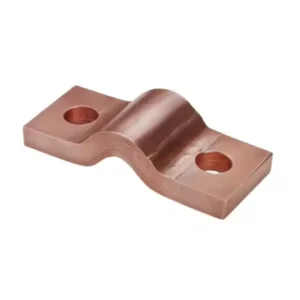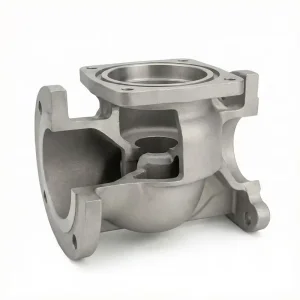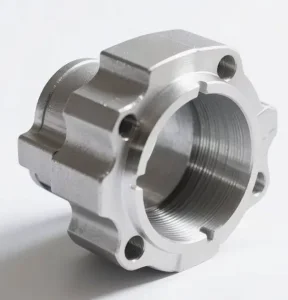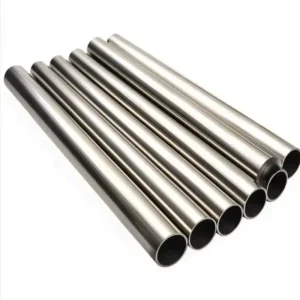
Precision Machined Hardware Portfolio (Part I)
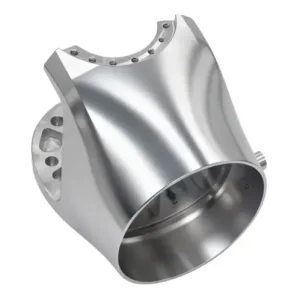
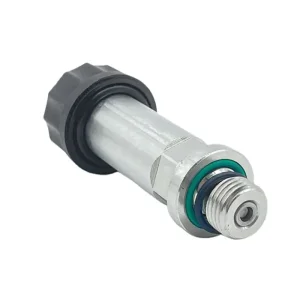
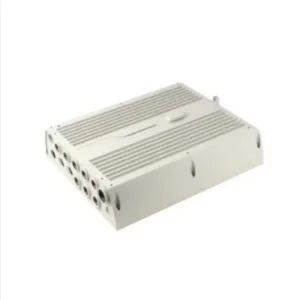
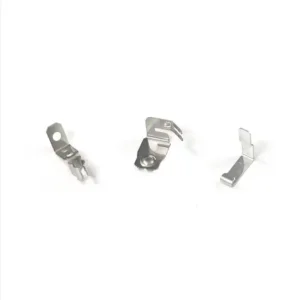
Engineered to drawing specs with full CMM inspection, material certifications, and micro-tolerance verification.


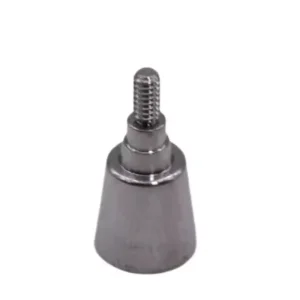
Navigating Strategic Sourcing in High-Precision CNC Machining
As global OEM manufacturers demand shorter development cycles and tighter tolerances, precision CNC machining suppliers must bridge the gap between advanced metallurgic engineering and scalable production efficiency.
1. Global Industrial Landscape: Sourcing Dynamics for Precision CNC Machining
The global market for custom precision CNC machining has undergone a fundamental structural shift. Modern procurement teams across North America, Europe, and Asia-Pacific are moving away from simple piece-price cost metrics toward a total cost of ownership (TCO) model. Industrial buyers face unprecedented complexity: supply chain volatility, strict environmental compliance mandates (RoHS/REACH), and aggressive miniaturization demands in robotics, medical technology, aerospace, and electric vehicles.
In this evolving paradigm, tier-1 OEMs require precision CNC machining factories that function not merely as build-to-print vendors, but as strategic co-engineering partners. China's manufacturing ecosystems—specifically advanced hardware hubs like Shenzhen—have responded by integrating multi-axis CNC milling, high-speed Swiss lathe turning, secondary surface treatings, and ISO-certified quality assurance into single-source manufacturing facilities. This vertical integration drastically mitigates lead-time risks, eliminates cross-vendor liability shifts, and ensures uncompromising geometrical fidelity across production batches.
Supply Chain Resiliency
Dual-sourcing capabilities, raw material lot-traceability (EN 10204 3.1 certification), and strategic safety stock buffering to insulate global production lines from shipping disruptions.
Risk-Mitigated DFM
Comprehensive Design for Manufacturability feedback provided prior to toolpath generation, identifying draft angles, deep-pocket radius constraints, and thin-wall vibration risks early.
Total Cost Optimization
Balancing high-speed machining (HSM) strategies with standardized stock sizes and optimized tool changeover protocols to deliver competitive piece-part costs without compromising quality.
2. Technical Engineering Matrix: Material Science & Tolerancing Capabilities
Selecting the optimal raw material standard and understanding machine-tool dynamics is paramount to preventing structural fatigue, galvanic corrosion, or thermal creep in demanding operational environments. Below is a comprehensive material matrix routinely processed in our precision machining facilities.
| Material Category | Specific Alloy / Grade | Key Mechanical Properties | Typical OEM Applications | Standard Tolerances |
|---|---|---|---|---|
| Aluminum Alloys | AL6061-T6, AL7075-T6, AL2024 | High strength-to-weight ratio, excellent machinability, superior anodizing response | Aerospace structural brackets, drone joint frames, RF enclosure housings | ±0.005 mm (Milled) ±0.002 mm (Ground) |
| Stainless Steels | SS304, SS316L, 17-4 PH, 440C | Exceptional corrosion resistance, high tensile strength, biocompatibility | Medical surgical fittings, hydraulic valve bodies, marine pump shafts | ±0.008 mm (Turned) ±0.005 mm (CMM verified) |
| Exotic Metals | Titanium Gr 5 (Ti-6Al-4V), Inconel 718 | Extreme heat resistance, low thermal expansion, biocompatible high tenacity | Implantable prosthetic connectors, turbine manifolds, racecar exhaust bungs | ±0.010 mm (5-Axis) ±0.005 mm (EDM wire) |
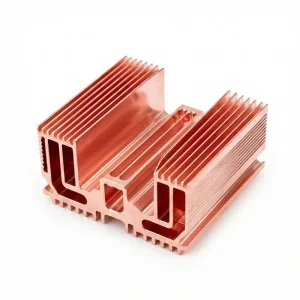
| Copper & Brass | C11000 Pure Copper, C36000 Brass | Superior thermal and electrical conductivity, self-lubricating properties | High-performance heatsinks, EV battery busbars, pneumatic hose barbs | ±0.005 mm (Swiss Turning) |
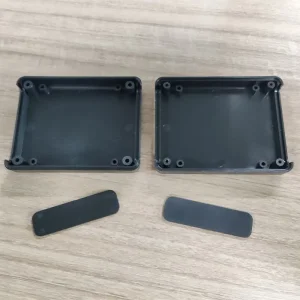
| Engineering Plastics | PEEK, POM (Delrin), Polycarbonate (PC) | Low friction coefficient, optical transparency (PC), high dielectric strength | Optical light guides, insulative electronics boxes, split-type bushings | ±0.015 mm (Plastic CNC) |
Note: Critical dimensions below ±0.005 mm are achieved using temperature-controlled machining environments (20°C ± 0.5°C) and verified using Zeiss Coordinate Measuring Machines (CMM) with optical probe head attachments.
Industry-Specific OEM Solutions & Engineering Case Studies
How precision CNC machined hardware drives innovation across major industrial sectors.
Robotics & Motion Control
Custom 5-axis CNC machined joint links, strain-wave gear housings, and finger actuators. Engineered for high rigidity and minimal weight to reduce inertia in humanoid and collaborative robotic arms.
Medical & Surgical Hardware
Micro-turned titanium abutments, stainless steel valve bodies, and biocompatible LSR components. Manufactured in ISO 13485 compliant environments with 100% surface roughness (Ra < 0.2µm) validation.
Automotive & Heavy Hydraulics
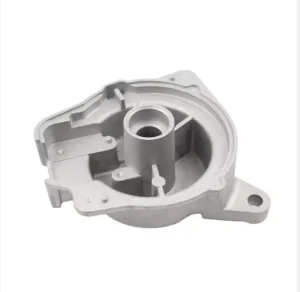
High-pressure hydraulic solenoid cores, excavator spare parts, and die-cast motor bell housings. Precision turned and post-machined to resist pressure spikes exceeding 35 MPa without fluid leakage.
Telecom & RF Electronics
Billet-machined aluminum housings, die-cast outdoor enclosures, and custom heatsinks. Featuring complex fin arrays, conductive surface plating, and IP67 weather-seal gasket channels.
Renewable Energy & Battery Systems
Flexible laminated copper busbars, coin-cell battery contacts (AG13, CR2032), and fluid power manifold blocks designed to handle high current densities while maintaining thermal stability.
Precision Optical Systems
Injection molded and ultra-precision diamond-turned Polycarbonate (PC) lenses and light pipes. Engineered with optical-grade clarity, low birefringence, and zero surface distortion.
4. Technological Roadmap & Future Outlook (2025–2030)
The next decade of precision hardware manufacturing will be defined by the convergence of cyber-physical machining systems, automated metrology feedback loops, and hybrid manufacturing processes. Factory suppliers who fail to adopt smart shopfloor architectures will inevitably struggle with cost escalation and quality instability. Our manufacturing technology roadmap focuses on four primary pillars:
A. AI-Driven Adaptive Machining & Sensor Fusion
Integration of vibration sensors, acoustic emission monitoring, and spindle thermal-expansion compensation into CNC controllers. Machine toolpaths dynamically adjust feedrates in real-time, preventing tool chatter, extending tool life, and keeping part tolerances consistent across 24/7 un-staffed shifts.
B. Multi-Tasking Mill-Turn & Swiss Automation
Migrating complex multi-process parts onto single-setup multi-axis mill-turn centers. By eliminating secondary manual fixture setups, geometric errors caused by datum re-clamping are eliminated, reducing total cycle times by up to 45%.
C. Hybrid Additive-Subtractive Manufacturing
Combining direct metal laser sintering (DMLS) for internal conformal cooling channels with 5-axis CNC high-speed finishing. Ideal for complex copper heatsinks, injection mold inserts, and aerospace fluid manifolds that cannot be produced via conventional machining alone.
D. Closed-Loop Sustainability & Zero-Defect QC
100% automated inline optical and laser scanning systems feeding real-time dimensional data directly into statistical process control (SPC) engines. Coupled with full chip briquetting, coolant reclamation, and 100% scrap metal recycling for carbon-neutral OEM supply chains.
5. Quality Infrastructure, Compliance & Global Procurement Guarantees
Procuring custom metal and plastic parts from overseas suppliers requires complete transparency, legal intellectual property safeguard protocols, and rigorous quality documentation. We ensure every shipment meets international enterprise engineering standards:
Traceable Material Certs
Raw materials shipped with physical EN 10204 3.1 chemical & mechanical test reports.
AS9102 FAI Inspection
Full First Article Inspection reporting verifying 100% of ballooned drawing dimensions.
Strict IP Protection
Enforceable NDAs signed before CAD data transfer. Isolated server data storage.
DDP Global Logistics
Seamless door-to-door air and ocean freight with clear custom duty handling.
Frequently Asked Questions (FAQ) for CNC Machining Sourcing
Expert engineering answers to technical procurement, tolerancing, surface finishing, and quality assurance queries.
How do precision CNC machining suppliers maintain sub-micron tolerances (±0.005 mm) consistently during mass production?
What DFM rules should engineers follow to lower custom CNC machining costs without sacrificing functionality?
How do buyers evaluate when to choose CNC machining versus aluminum die casting or plastic injection molding?
Which quality control documentation is supplied with custom precision component shipments?
How are surface finish specifications (Ra 0.8 to Ra 0.2) achieved on custom turned stainless steel components?
How does the factory protect client intellectual property (IP) and proprietary 3D CAD files?
What are the standard lead times for prototype CNC samples versus pilot mass production?
What international delivery terms and localized logistics support are available for EU and US buyers?
Precision Machined Hardware Portfolio (Part II)
Explore specialized turned parts, custom busbars, capillary tubing, and heavy cast OEM components.