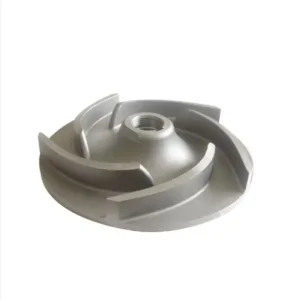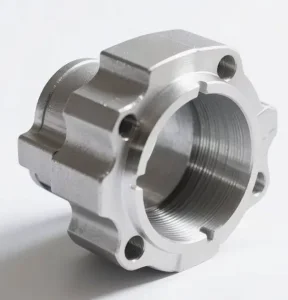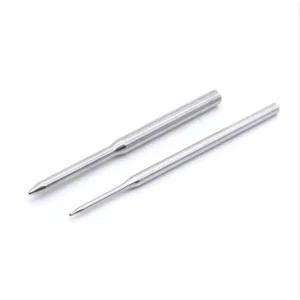
Featured Custom Molded Components & Metal Assemblies
Explore our high-tolerance custom products engineered for medical, electronics, telecommunications, and heavy industrial applications.
The Global Commercial Landscape of Polycarbonate (PC) Molding
Polycarbonate injection molding represents a multi-billion dollar global manufacturing domain driven by lightweighting, optical demands, and severe thermal-impact specifications.
In modern industrial engineering, Polycarbonate (PC) stands as the ultimate amorphous thermoplastic polymer. Renowned for its exceptional izod impact resistance (exceeding 600 J/m), glass-like transparency, heat deflection capabilities under load (up to 135°C–145°C), and inherent flame retardancy, PC molding has transitioned from basic housing manufacturing to ultra-precise micro-optics, EV structural battery modules, and medical diagnostic hardware.
As OEM design engineers migrate away from heavy die-cast alloys and fragile structural glass, custom PC molding factories face mounting technical pressure. Meeting global compliance (RoHS, REACH, UL94-V0, FDA 21 CFR) while eliminating complex internal thermal stresses demands state-of-the-art closed-loop injection presses, specialized mold steel metallurgy, and rigorous Moldflow DFM simulation prior to steel cutting.
Engineering Polycarbonate Grade Selection Matrix
Selecting the precise molecular weight resin blend is critical to balance mechanical toughness, melt flow index (MFI), optical clarity, and flammability ratings.
| Polycarbonate Grade Variant | Melt Flow Index (MFI g/10min) | Tensile Yield Strength (MPa) | Heat Deflection Temp (HDT @ 1.8 MPa) | Primary Industrial Use Cases |
|---|---|---|---|---|
| Optical Grade PC (High Purity) | 18 – 30 | 60 – 65 | 125°C – 130°C | Automotive Headlamp Lenses, Light Guides, Medical Sensors |
| Glass-Filled PC (10% - 30% GF) | 5 – 12 | 85 – 135 | 140°C – 150°C | Structural Frames, Robotic Gears, High-Rigidity Housings |
| Flame Retardant PC (UL94 V-0 / 5VA) | 10 – 22 | 62 – 70 | 130°C – 138°C | EV Battery Casing, Server Chassis, Electrical Junction Boxes |
| Medical Grade PC (USP Class VI) | 12 – 25 | 65 – 72 | 132°C – 140°C | Surgical Syringes, Dialyzers, Diagnostic Microfluidic Disks |
| PC / ABS Alloy (High Flow Blend) | 15 – 35 | 50 – 60 | 110°C – 125°C | Automotive Dashboards, Consumer Electronics Enclosures |
Glass Fiber Reinforcement
Integrating 10% to 30% glass fibers drastically elevates the flexural modulus (up to 8,000 MPa) and dimensional stability of PC parts, reducing volumetric thermal shrinkage from 0.7% down to 0.15%.
Halogen-Free Flame Retardancy
Our custom PC molding process utilizes eco-friendly sulfonate salt flame retardants to pass stringent UL94 V-0 flame ratings at wall thicknesses down to 0.75mm without giving off corrosive toxic halogen gases.
UV & Weather Stabilization
For outdoor industrial enclosures and lighting optics, hindered amine light stabilizers (HALS) and UV blockers prevent polymer chain scission, yellowing (YI < 2.0), and embrittlement under long-term solar radiation.
Precision Micro-Structure Design Rules for Polycarbonate
Because polycarbonate possesses high melt viscosity and notch sensitivity, strict compliance with tooling geometry guidelines is non-negotiable for zero-defect yield.
Wall Thickness Optimization
Nominal wall thickness should be maintained between 1.5mm and 4.0mm. Sudden cross-sectional wall transitions induce localized stress concentrations and sink marks. Wall transitions must feature smooth 3:1 taper gradients.
Radii & Notch Sensitivity
PC is highly sensitive to sharp internal corners. All internal radii must equal at least 50% to 60% of the adjacent nominal wall thickness (minimum R = 0.6mm). Radius design distributes impact energy uniformly.
Draft Angle Requirements
Due to PC's rigid amorphous structure, side walls require a minimum draft angle of 1.0° to 2.0° per side. Textured surfaces require an additional 1.0° of draft for every 0.025mm (0.001 in) of texture depth.
Rib & Boss Proportions
Structural ribs should not exceed 50% to 60% of the main wall thickness to avoid sink marks on class-A visual surfaces. Rib heights should be capped at 3x nominal wall thickness with 1.5° side draft.
Factory Insight: Moldflow simulation is executed for 100% of custom PC tooling projects at our facility. By analyzing shear rate, cooling channel efficiency, volumetric shrinkage, and weld line positioning before mold steel cutting, we eliminate up to 98% of potential tooling iterations.
End-to-End High-Precision PC Injection Manufacturing Flow
From raw resin desiccant dehumidification to 5-axis optical polishing and automated CMM inspection, every phase is engineered for zero failure.
Desiccant Drying
Polycarbonate hydrolyzes readily at high temperatures. Resin is dried in desiccant hoppers at 120°C for 3-4 hours until moisture levels drop below 0.02%.
Closed-Loop Injection
Injection pressures (80-140 MPa) and melt temperatures (280°C-320°C) are regulated via electric servomotors to control shot volume repeatability.
Conformal Cooling
3D-printed metal inserts with conformal cooling channels maintain uniform mold surface temperatures (80°C-115°C) to prevent internal warpage.
Annealing & Stress Relief
Complex parts undergo secondary thermal annealing at 120°C in circulating air ovens to relieve residual molding stress and prevent environmental stress cracking.
CMM & Optical Metrology
100% CMM dimensional validation, polarized stress testing, and optical transmission spectrophotometry confirm compliance before packing.
Turnkey Polycarbonate Solutions for Global Sectors
Deploying tailored resin formulations and multi-cavity tool geometries for mission-critical applications across worldwide OEM markets.
Automotive Lighting & LiDAR
Precision optical lenses, light pipes, and LiDAR sensor covers engineered with ultra-low birefringence PC resin. Coatings include anti-fog and hard-coat silicone for anti-scratch durability.
Medical Diagnostic Hardware
Molded under ISO Class 7 cleanroom conditions. Medical grade PC components withstand gamma ray, ethylene oxide (EtO), and autoclave sterilization cycles without discoloring.
Industrial & EV Power Enclosures
UL94-5VA flame retardant PC/ABS housings tailored for high-voltage junction boxes, EV charging stations, and smart grid meters requiring IP67 ingress protection and high impact resistance.
Physical AI & Robotics Shells
Thin-wall, high-rigidity PC framework structural components for autonomous mobile robots (AMR) and humanoid robot finger joints, combining ultra-light weight with extreme impact absorption.
Next-Gen PC Molding: Bio-Polycarbonates & Smart Factories
Pioneering green polymer technology and AI-assisted real-time cavity pressure monitoring for zero-carbon manufacturing.
The global polymer manufacturing sector is undergoing a massive shift toward environmental sustainability and digital continuous control. In response to global decarbonization mandates, custom PC molding factories are integrating mass-balance bio-attributed Polycarbonates. Synthesized from renewable post-consumer forestry waste and tall oil, these bio-based PC resins reduce carbon footprint by up to 70% while maintaining identical physical, thermal, and optical properties as fossil-fuel derived resins.
Simultaneously, Smart Factory Industry 4.0 architectures are transforming quality assurance. Cavity pressure transducers embedded directly behind ejector pins track viscosity shifts, gate freeze time, and melt front speed in real-time. Automated closed-loop sorting systems instantly isolate off-spec parts, ensuring 100% stable quality output for high-volume global OEM contracts.
Engineering & Procurement FAQ
Clear, technical answers to common questions regarding Polycarbonate molding parameters, tooling lifespan, and quality documentation.
How do you eliminate internal stress and premature cracking in molded PC parts?
What is the key to achieving optical clarity without silver streak (splay) defects?
What mold steel grades are recommended for custom PC injection tooling?
Can custom PC molded components be secondary processed (machined or bonded)?
What quality inspection documentation accompanies export shipments?
Additional High-Precision Custom OEM/ODM Products
Discover our extended line of precision hardware, waterproof connectors, turned components, and casting solutions.